
Is The Hermit a Yes or No Card for Love?

Is The Hermit a Yes or No Card for Love?
The Hermit is the card people fear in a love reading — the lone figure, the lantern, the figure walking away from the crowd. It looks like withdrawal, even rejection. But The Hermit in tarot is the archetype of necessary solitude, the deliberate turning inward that lets a real answer surface. So is The Hermit a yes or no card for love? The honest answer is: a conditional, and one that leans no for now — not against the relationship, but because the answer you are looking for cannot be found in another person until it has been found in yourself.
Quick Answer
The Hermit is a conditional for love, leaning no for now. It is not a no to the relationship itself — it is a no to rushing partnership before the inner work is done. The card’s archetype is the seeker who climbs the mountain alone to find what cannot be heard in the crowd, and its counsel in love is the same: the clarity you want about this person will only arrive after you have sat with yourself first. The yes becomes available once genuine reflection has clarified what you actually want; it stays no if the relationship is being sought to avoid being alone with yourself.
Is The Hermit Generally a Yes or No Card?
Across all questions, The Hermit leans conditional — and the condition is almost always the same: inner work first, outer action after. Its archetype is the inward turn — the lantern held high not to light the path ahead, but to illuminate the seeker’s own interior. Upright, this energy is genuinely favorable for reflection, study, and the deliberate gathering of inner clarity. It is the card of the answer that arrives only through stillness.
But The Hermit is never a comfortable yes in the usual sense, and that is the whole point of the card. Its wisdom lives in the distinction between chosen solitude that feeds clarity and isolation that hides from life. The upright Hermit withdraws in service of a truer return — he climbs the mountain because the answer cannot be heard in the noise, and he comes back down with the lantern lit. His shadow is the isolation that never returns at all, the withdrawal that becomes avoidance dressed up as wisdom. Same outward posture, entirely different inner motion.
So when readers ask whether The Hermit is generally a yes or no, the truthful answer is: yes, after reflection; no, while the inner work is being skipped. The card itself does not withhold the yes — it points to the work that has to happen before the yes can be received. The Hermit refuses to bless the answer extracted from the crowd, however badly that answer is wanted, because an answer found that way will not hold.
This is why the card leans so specifically conditional across questions. For love, the verdict follows whether you have done the inner work to know what you actually want. For career, the same archetype blesses a deliberate pause before the next move. For decisions, the lantern only illuminates after you have turned inward. The Hermit’s verdict is always about inner clarity first — and it declines to bless the choice made from outside opinion alone, however loud that opinion is.
The Hermit for Love: Yes or No?
In love specifically, The Hermit leans conditional, and the condition leans no for now. The card’s archetype is the deliberate turning inward, and its whole concern in a relationship reading is whether you have done the inner work to know what you are actually choosing. If you are asking about a relationship — whether to enter it, deepen it, repair it, or leave it — The Hermit may be telling you that the answer is not yet legible, because the part of you that would make the choice has not yet been heard.
But love is also where The Hermit’s energy is most easily misread, because withdrawal and reflection wear similar surfaces here. The same solitude that lets a real answer surface can also become the avoidance of the question itself — staying away from the relationship not to find clarity, but to escape having to choose at all. The Hermit’s gift is the lantern lit through chosen stillness; his shadow in love is the isolation that uses “needing space” as a way to never decide.
So the verdict splits along a clear line:
- The Hermit leans no for now when the relationship is being pursued before the inner work is done. If you are seeking the partnership to fill a question you have not answered for yourself — am I choosing this person, or am I choosing not to be alone? — The Hermit refuses to bless the rush. The no is not a rejection of the relationship; it is the card pointing out that the answer cannot be found in another person until it has been found in you.
- The Hermit’s yes becomes available when genuine reflection has clarified what you want. If you have done the inner work — sat with the question, separated your own knowing from the noise of opinion and longing — and the relationship still feels right, The Hermit’s yes opens. The card does not withhold clarity; it asks for the work that lets clarity arrive.
There is a subtler reading. The Hermit sometimes appears for a love question when the real work is not about the other person at all — when the solitude the card names is the meeting of a part of yourself you have been avoiding, and the relationship question cannot be answered until that meeting has happened. In that case the yes is for the inner reckoning that prepares the ground for any partnership, this one or another.
The card does not promise that reflection will return a particular verdict on the relationship, or that doing the inner work guarantees the partnership will succeed. What it points to is whether you are seeking the answer in another person before you have found it in yourself — whether you are choosing the relationship from clarity, or from the fear of being alone. Love readings want a clear yes or no; The Hermit offers something more honest: a question about whether the part of you making the choice has been heard.
What Would Shift It to Yes or No?
Because The Hermit is conditional, the question is not whether it will become a yes or a no — it is which one it already is, depending on whether the inner work has been done.
The no-for-now applies when the relationship is being sought to avoid solitude with yourself. This is not the same as wanting companionship — companionship is genuinely valuable, and a relationship built on real choice is one of the great goods. But there is a difference between choosing a partnership from clarity (which The Hermit does not oppose) and pursuing one to escape the unanswered question inside you (which his shadow serves). If you find that the longing for the relationship is also a longing not to sit with yourself, The Hermit’s no-for-now leans toward you with full weight.
The yes becomes available when genuine reflection has clarified what you want. If you are willing to do the inner work — to sit with the question alone, to separate your knowing from the noise, to meet the part of yourself you have been avoiding — and the relationship still calls to you, The Hermit’s yes opens. The card blesses the partnership chosen from clarity, not the one chosen from the fear of being alone.
Rose quartz as a reflection support. Some readers like to hold or wear rose quartz when working with The Hermit in a love reading — not to change the verdict, but to support the courage it takes to sit with yourself honestly. Rose quartz is traditionally associated with the heart and with compassion toward one’s own interior, and used as a focusing object it can help you sit with the question am I choosing this person from clarity, or am I choosing not to be alone with myself? The crystal does not turn a no into a yes. It supports the honest inner reading that lets you tell which kind of choice you are actually making.
The shift, in other words, is not in the card. It is in whether you have done the inner work the card has been asking for — which is exactly what The Hermit has been pointing to all along.
Free Will, FAQ, and a Note on Outcomes
Cards reflect current energy and patterns, not fixed outcomes — you always have free will to shape what happens next. For The Hermit, the card may point to a conditional verdict that follows whether you have reflected, but whether you do that inner work — and how honestly you meet what it surfaces — is your choice. No card decides for you; it clarifies the moment you are standing in.
FAQ
Is The Hermit a yes or no card when reversed?
Reversed, The Hermit tends toward isolation that has become avoidance rather than a flat no. The reversal often points to withdrawal that is no longer serving clarity — the “needing space” that has hardened into hiding, the solitude that never returns. Reversed does not mean cursed or doomed; it means the chosen stillness the upright card blesses has curdled into isolation, and the card is inviting you to look at whether your withdrawal is feeding reflection or avoiding the question.
Does The Hermit mean the relationship is over?
Not necessarily — and any reading that pronounces the partnership dead from this card alone is overreaching. The Hermit points to the inner work that needs to happen before the relationship question can be answered clearly, not to the end of the bond. It may mark a season of solitude within or around the relationship, but the verdict on the partnership itself follows the reflection, not the card.
Can The Hermit be a yes for a relationship?
Yes, once genuine reflection has clarified what you want — because the partnership chosen from inner clarity is exactly what the upright card blesses in its full form. The Hermit does not leave you on the mountain; he comes back down with the lantern lit, and the relationship built from that returned clarity is one he can affirm.
Common Mistakes Reading The Hermit for Love
A few classic misreadings tend to flatten this card in love readings:
- Reading The Hermit as a flat no or a rejection. The card is conditional, and the condition (inner work first) is the whole point. Treating it as “the relationship is doomed” skips the reflection the card exists to demand and misreads solitude as sentence.
- Confusing chosen solitude with isolation. Withdrawal in service of clarity is one thing; withdrawal that avoids the question is another. The Hermit concerns himself with the first and names the second as his shadow.
- Reading the card as a curse of loneliness. When The Hermit points to needed reflection, it is not a bad omen — it is an invitation. The card’s gift is the clarity that makes a real partnership possible, not a verdict that you are meant to be alone.
- Treating rose quartz (or any crystal) as a fix. Crystals support reflection; they do not change verdicts. If the card leans no-for-now because the inner work has not been done, no crystal flips it to a clean yes.
Read honestly, The Hermit for love is one of the most clarifying mirrors in the deck: it asks whether you are choosing the relationship from clarity or from the fear of being alone, and it leaves the meeting of that question — and the reflection — to you.
Shop Crystals for This Guide
Explore crystal jewelry and stones from our current collection.


Om Mani Padme Hum Copper Ring


Om Namah Shivay Mantra Copper Bangle


Fair Trade Astamangala Copper Bangle
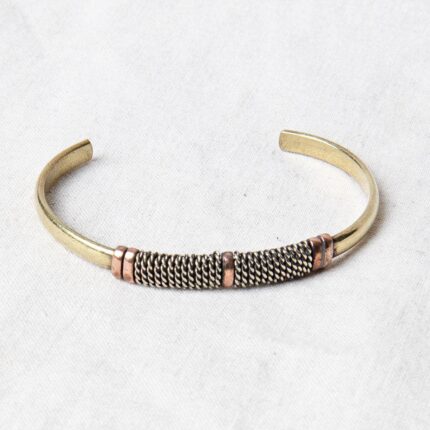

Tibetan Handcrafted Copper Bracelet
Shop Crystals for This Guide
Explore crystal jewelry and stones from our current collection.
Om Mani Padme Hum Copper Ring
Om Namah Shivay Mantra Copper Bangle
Fair Trade Astamangala Copper Bangle