
Is The Hanged Man a Yes or No Card for Love?
Is The Hanged Man a Yes or No Card for Love?
The Hanged Man is the card that puzzles people most in a love reading — the figure suspended upside down, the serene expression, the sense that everything has been deliberately inverted. It does not look like the yes people are hoping for, and it does not look like a no either. That is exactly the point. The Hanged Man in tarot is the archetype of willing reversal — the chosen pause that lets you see what you could not see right-side up. So is The Hanged Man a yes or no card for love? The honest answer is: a conditional, and one that turns on whether the pause is serving insight or has become avoidance — yes once a genuine new angle on the relationship has surfaced, no while “giving it space” is really a way to dodge the real question.
Quick Answer
The Hanged Man is a conditional for love. It leans pause, not push — a willing surrender that lets you see the relationship from a new angle rather than forcing the next move from the old one. The yes becomes available after the perspective shift has actually arrived, not before. It stays no where “giving it space” has become avoidance of the real question — the indefinite pause that uses patience as a cover for not deciding. The verdict follows whether the suspension is serving insight or serving delay.
Is The Hanged Man Generally a Yes or No Card?
Across all questions, The Hanged Man leans conditional — and its condition is unusually consistent. Its archetype is the surrendered: the willing suspension, the deliberate inversion of perspective, the pause chosen in service of seeing what the upright view cannot show. Upright, this energy is genuinely favorable for reframing — letting go of the fixed angle, releasing the grip on how things should look, allowing a new perspective to arrive before acting.
But The Hanged Man is never a clean yes, and that is the whole point of the card. Its wisdom lives in the distinction between a chosen pause that reframes et stalling that calls itself patience. The upright Hanged Man surrenders his fixed perspective in service of insight — he hangs so that he can see differently, and the pause has a purpose. His shadow is stalling disguised as surrender — the suspension that has become avoidance, the patience that is really a refusal to decide, the “giving it space” that has no intention of ever returning to the question. Same posture of waiting, entirely different ground underneath.
So when readers ask whether The Hanged Man is generally a yes or no, the truthful answer is: yes, where the pause genuinely reframes and the new perspective is allowed to arrive; no, where the suspension has become a way to avoid the question. The card itself does not bring the insight — it points to the willingness to suspend the fixed angle and asks whether that suspension is serving seeing or serving delay. The Hanged Man blesses the chosen reversal that leads to clarity and withholds his weight from the stalling that uses his posture to dodge.
This is why the card leans so specifically across questions. For career, the verdict follows whether a deliberate pause reframes the problem. For decisions, it blesses the choice made after releasing the fixed perspective. For love, the verdict follows whether the pause is letting you see the relationship anew or whether it has become a way to avoid the real question the relationship is asking.
The Hanged Man for Love: Yes or No?
In love specifically, The Hanged Man leans conditional — and the condition is unusually sharp because relationships so easily invite the pause that becomes avoidance. The card’s whole archetype is the willing reversal of perspective, and its concern in a love reading is whether the suspension is letting you see the relationship from a new angle or whether it has become an indefinite delay.
The first face of The Hanged Man in love is the genuine reframe. If you are asking about a relationship where the usual angle has stopped yielding insight — where the same argument repeats, where the same story is being told, where the way you have been seeing the situation has run into its limit — The Hanged Man may invite a deliberate inversion. The pause here is in service of seeing differently: what does the relationship look like from the partner’s angle, from the angle of someone who has let go of the fixed expectation, from the angle that the upright view could not show? Where the pause genuinely surfaces a new perspective, the yes becomes available — not because the card has decided for you, but because the reframe has clarified what the next move actually is.
The second face is stalling in the guise of patience. The same suspension that serves insight can also become the indefinite “giving it space” that never returns to the question — the pause used to avoid deciding, the patience that is really a refusal to face what the relationship is asking, the waiting that has no plan to ever reach a verdict. Here The Hanged Man’s verdict turns: he refuses to bless the avoidance, because his archetype is willing reversal in service of seeing, not stalling in service of dodging.
So the verdict splits along a clear line:
- The Hanged Man leans yes (after reframe) once a genuine new angle on the relationship has surfaced. If the willing pause has let you see the partner differently, has released the fixed story, has surfaced what the upright view could not — the card’s yes becomes available. The yes is not for rushing the next move; it is for the clarity that the reframe has earned.
- The Hanged Man leans no (as avoidance) while “giving it space” has become a way to avoid the real question. If the pause has no intention of returning to the decision, if “patience” is really a refusal to face what the relationship is asking, if the suspension is serving delay rather than seeing — The Hanged Man withholds his blessing. The no is not a verdict on the relationship; it is a verdict on the avoidance.
There is a subtler reading. The Hanged Man sometimes appears for a love question when the work is not really about the relationship at all — when the card is asking whether you are willing to release the fixed perspective you have been holding about love itself, about what it should look like, about what it owes you. In that case the yes is for the inner inversion that prepares the ground for any outer clarity, the reframe that lets the relationship be seen as it actually is rather than as the old story insists.
The card does not promise that the reframe will be comfortable, or that the new perspective guarantees a particular outcome. What it points to is whether the pause is serving seeing or serving delay — and it leaves the willingness to actually look to you.
What Would Shift It to Yes or No?
Because The Hanged Man is conditional, the question is not whether it will become a yes or a no — it is whether the pause is genuinely serving insight or has collapsed into avoidance.
The yes becomes available when the willing pause has surfaced a new angle. This is not the same as waiting for the answer to arrive on its own — the upright Hanged Man surrenders his fixed perspective actively, in service of seeing differently. But there is a difference between a pause that genuinely reframes the relationship (which the upright card blesses) and a pause that uses “space” to avoid the question (which its shadow serves). If the reframe is real and the new perspective has clarified the situation, The Hanged Man’s yes leans toward you.
The no applies when the suspension has become avoidance. If you find that “giving it space” has no plan to return to the question — that the patience is really a refusal to face what the relationship is asking, that the waiting is serving delay rather than seeing — The Hanged Man leans toward the honest reframe rather than a clean yes over avoidance. This is the card’s invitation: to let the pause serve its purpose, which is seeing, not dodging.
Rose quartz as a reflection support. Some readers like to hold or wear rose quartz when working with The Hanged Man in a love reading — not to change the verdict, but to support the open-hearted willingness to see the relationship anew that the card asks for. Rose quartz is traditionally associated with the heart and with the capacity to release fixed stories about love so that the actual relationship can be seen, and used as a focusing object it can help you sit with the question is my pause genuinely reframing the relationship, or has it become a way to avoid the real question? The crystal does not turn a no into a yes. It supports the honest inner reading that lets you tell whether your suspension is serving seeing or serving delay.
The shift, in other words, is not in the card. It is in whether the pause genuinely reframes — which is exactly what The Hanged Man has been asking of you all along.
Free Will, FAQ, and a Note on Outcomes
Cards reflect current energy and patterns, not fixed outcomes — you always have free will to shape what happens next. For The Hanged Man, the card may point to a conditional verdict that follows whether the pause serves insight, but whether you genuinely reframe or use the suspension to avoid the question — and how honestly you make that choice — is your choice. No card decides for you; it clarifies the moment you are standing in.
FAQ
Is The Hanged Man a yes or no card when reversed?
Reversed, The Hanged Man tends toward the pause that has become stalling rather than a flat no. The reversal often points to a suspension that has lost its purpose — the patience that has hardened into avoidance, the waiting that has no plan to return to the question. Reversed does not mean cursed or doomed; it means the chosen reversal the upright card blesses has tipped into delay, and the card is inviting you to look at whether the pause is still serving seeing.
Does The Hanged Man mean I should wait on the relationship?
It leans toward a chosen pause — but a pause in service of reframing, not indefinite waiting. The Hanged Man invites you to see the relationship from a new angle before deciding; he does not bless using “space” to avoid the decision. The yes becomes available after the reframe, not before.
Can The Hanged Man be a yes for a relationship?
Yes, often — once the willing pause has surfaced genuine new perspective. The card’s archetype is willing reversal in service of clarity, and where the reframe has let the relationship be seen honestly, The Hanged Man’s yes is one of the most clarifying readings in the deck.
Common Mistakes Reading The Hanged Man for Love
A few classic misreadings tend to flatten this card in love readings:
- Reading The Hanged Man as a flat no. The card is conditional, and its pause is in service of insight, not rejection. Treating it as a no skips the reframe the card exists to offer.
- Confusing patience with avoidance. The upright Hanged Man suspends his perspective to see differently; the shadow uses “space” to dodge the question. The posture is identical — the difference is whether the pause returns to the decision.
- Reading the card as a sentence of stagnation. When The Hanged Man points to stalling, it is not a bad omen — it is a mirror. The shadow form is an invitation to let the pause serve its purpose, not a curse on the relationship.
- Treating rose quartz (or any crystal) as a fix. Crystals support reflection; they do not change verdicts. If the card leans no because the pause has become avoidance, no crystal flips it to a clean yes.
Read honestly, The Hanged Man for love is one of the most clarifying mirrors in the deck: it asks whether your pause is serving seeing or serving delay, and it leaves the willingness to actually look — and the decision that follows — to you.
Shop Crystals for This Guide
Explore crystal jewelry and stones from our current collection.


Om Mani Padme Hum Copper Ring


Om Namah Shivay Mantra Copper Bangle


Fair Trade Astamangala Copper Bangle
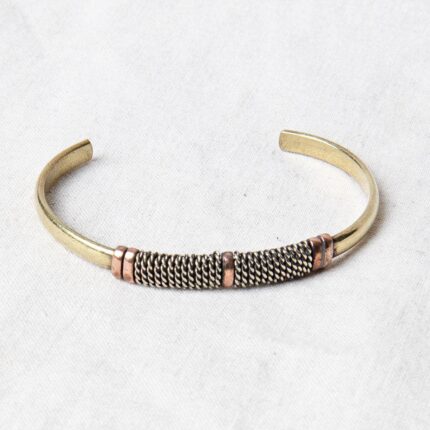

Tibetan Handcrafted Copper Bracelet
Shop Crystals for This Guide
Explore crystal jewelry and stones from our current collection.
Om Mani Padme Hum Copper Ring
Om Namah Shivay Mantra Copper Bangle
Fair Trade Astamangala Copper Bangle