Death and Temperance Together: Tarot Combination Meaning
Death and Temperance Together: Tarot Combination Meaning
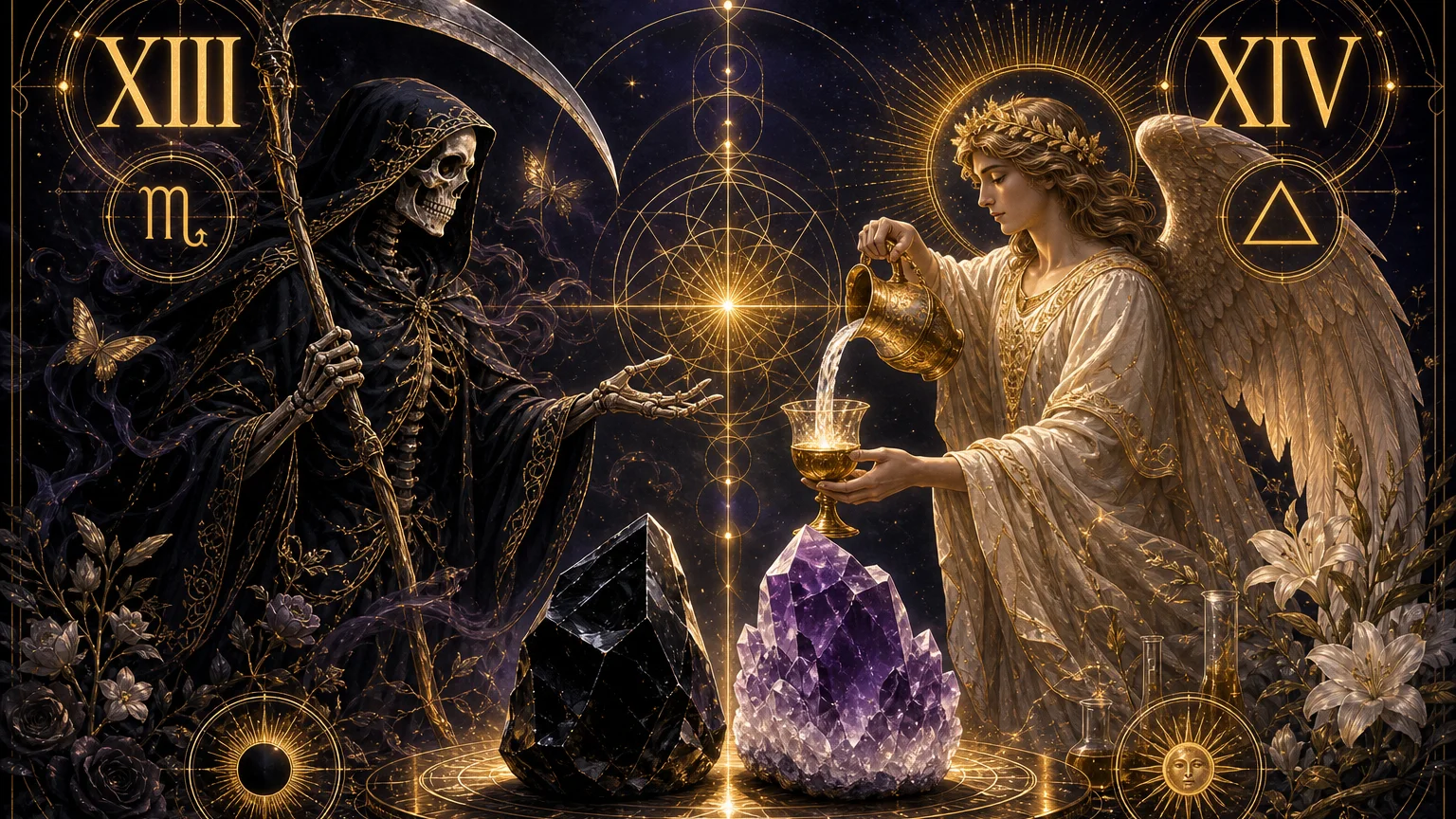
When Death and Temperance appear together in a reading, the question is rarely whether something is ending — it is what gets built from the space that ending opens. This is a causal pair: Death (Water) clears what has already completed, and Temperance (Fire) steps in with the patient, unhurried blending that slowly mixes what remains into a new form. The skeleton on the pale horse rides toward the angel pouring between two cups, and the rising sun between two towers meets the path that leads to a crown of light.
Death and Temperance at a Glance
This combination names a sequence, not a standoff: an honest clearing followed by a measured rebuilding. Death empties the old vessel; Temperance fills the emptied space slowly, mixing rather than rushing. Read together, the pair points to a transformation that does not skip its grief — the ending is allowed to do its clearing work because the patient alchemy of Temperance is there to receive what’s left. The supporting crystals are Obsidian (for the honest clearing) and Améthyste (for the calm, measured rebuilding).
The Two Cards: Quick Recap
Death — In this pairing, take only Death’s clearing function: the necessary ending that empties a form already completed. The armored skeleton rides past a fallen king and a pleading bishop; what looked permanent is shown to have finished. Death here is not catastrophe — it is the unflinching honesty that releases a phase, role, or identity whose time is done, so that life can continue past it.
Temperance — In this pairing, take only Temperance’s post-clearing blending: the winged figure stands with one foot in water and one on land, pouring liquid between two cups in a continuous, unhurried flow. After the old form has been emptied, Temperance is the slow art of mixing what remains — not a generic “balance,” but the specific patience required to build something new from a vessel that has just been cleared.
Death and Temperance in a Spread: Position Readings First
Because this is a causal pair, the reading shifts sharply depending on which card sits in which position. Read the positions before the story — the same two cards mean very different things as a completed sequence versus an incoming one.
| Spread position | What the pair points to | |—|—| | **Death in the past, Temperance in the present** | A clearing has already happened — a role, relationship, or identity has ended — and the current work is the slow, patient blending that follows. You are in the “mixing what remains” phase; honor its pace rather than forcing a quick replacement. | | **Death in the present, Temperance in the future** | An ending is underway now, and the future holds the rebuilding that the ending makes possible. This is a *hopeful* sequence: the clearing is not the last word, because measured integration is already on its way. | | **Both in the present (drawn together)** | A simultaneous tension between letting something close and patiently rebuilding. The two are not in conflict — they are two halves of one process: empty the vessel, then fill it slowly. |The pair’s meaning is therefore directional: it reads as a chain (clear → blend), and the positions tell you how far along that chain the querent currently stands.
What Death and Temperance Mean Together
Start with what Temperance is doing, and you can see why Death had to come first.
The angel pours between two cups in a flow that never hurries, never spills, never stops. For that slow mixing to produce anything new, the cups cannot already be full of something finished. This is where Death enters the picture — not as a disaster riding in on a pale horse, but as the clearing that empties a form whose work is done. The skeleton in armor passes a fallen king and a bishop still pleading with what is already over; the old shape is released, and the vessel it occupied becomes available again.
The chemistry between the two cards lives in that transfer: what Death empties becomes the material Temperance mixes. The role you have outgrown, the version of a relationship that already completed, the identity that no longer fits — these do not simply vanish. They become the raw substance the angel pours slowly from one cup to the other, blended at a pace that honors both the loss and what is being built from it.
Two images from the Rider-Waite plates lock this causal sequence in place. Between Death’s two towers, a sun rises — and Temperance’s path leads up toward a crown of light. The dawn that breaks at the end of the clearing is the same light the angel walks toward. The ending and the rebuilding are not two events that happen to occur together; the second is the fruit of the first. Skip the clearing, and the cups stay full of something finished, and Temperance has nothing left to blend. Force the clearing without Temperance’s patience, and the emptied vessel gets refilled too fast, with whatever is nearest, before the slow mixing can do its work.
So the pair asks a precise question, not a vague one. Not is change coming — change is already in motion. The question is whether you will let the ending do its full clearing, and whether you will then give the rebuilding the unhurried pace it requires. Death provides the honesty; Temperance provides the patience; and between the pale horse and the two cups, the transformation actually has room to happen.
In love readings, the same sequence applies: a connection may be clearing an old form — a dynamic, a season, a way of being together that has completed — so that something more honest can be slowly blended from what remains. The pair does not announce a rupture; it describes a careful renovation, where the ending is in service of a truer rebuild rather than a replacement.
Are Death and Temperance a Yes or No?
This combination leans conditional yes — but the condition is the sequence itself. If the question is “should I let this end and rebuild?” the answer points toward yes, slowly, after the clearing is complete. If the question demands an immediate, all-at-once outcome, the pair says not yet — Temperance does not rush, and Death does not partial-clear. For deeper yes/no logic across positions, see the dedicated yes-or-no framework.
Crystals for the Death–Temperance Combination
The two crystals supporting this pair do not work in parallel — they work in sequence, mirroring the cards themselves.
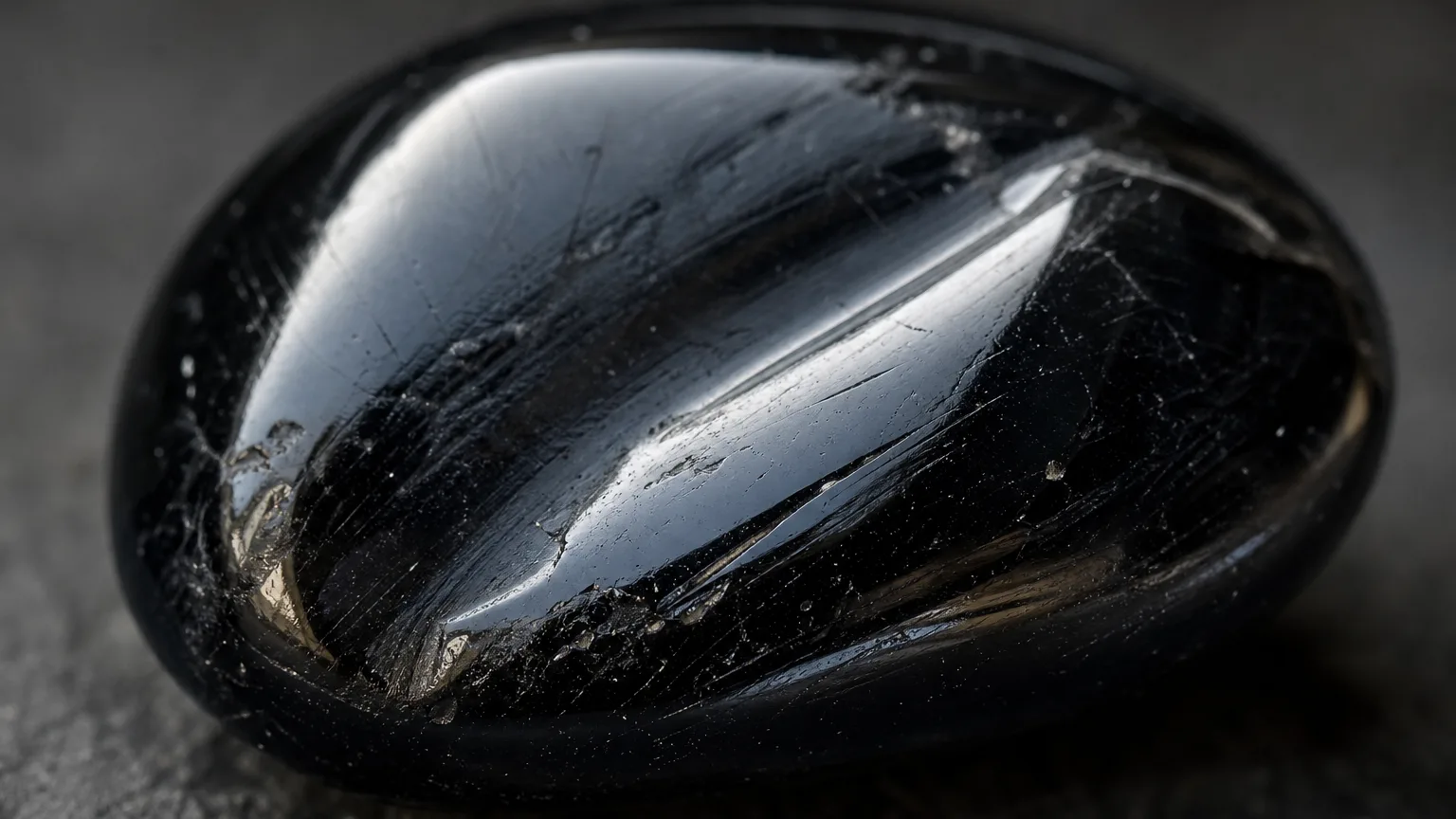
Obsidian carries Death’s clearing function. Historically used in Mesoamerican and Eastern traditions for truth-telling and release, it is the unflinching mirror that helps you face what has already ended without softening it. In this combination, Obsidian is held when the clearing is underway — when an old form needs to be honestly named and released so the vessel can empty.
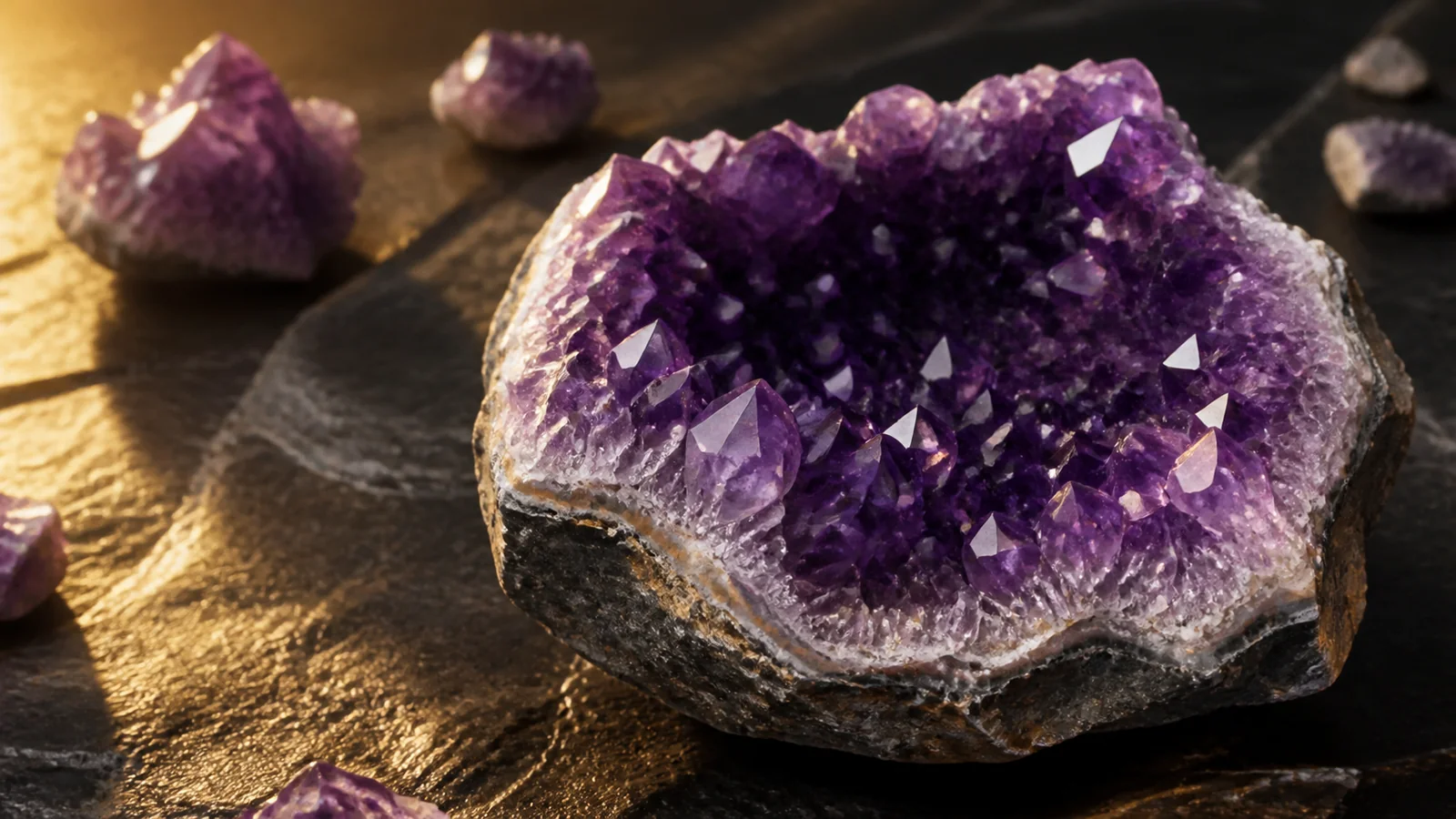
Améthyste carries Temperance’s rebuilding function. Its very name, amethystos, means “not intoxicated” — the measured, unclouded mind the angel embodies while pouring between two cups. In this combination, Amethyst is held when the slow blending begins, supporting the patience required to mix what remains into something new rather than rushing to refill the emptied space.
The synergy: Obsidian clears; Amethyst rebuilds. Used together, they support the full causal chain — clear cleanly, then build steadily — so that the ending lands as patient alchemy rather than either denial or collapse. Hold Obsidian while you name what is ending; set it down and pick up Amethyst when the rebuilding begins. (Explore Obsidian meaning et Amethyst meaning for each stone’s full symbolism; both are available as Obsidian crystals et Amethyst crystals.)
Death and Temperance in the Eastern Tradition
In the Eastern lens, this pair traces a clean causal line from Water to Fire. Death resonates with the contemplation of impermanence — not as morbidity, but as the clarity that frees you to release what is already gone, because nothing is held as permanent. Temperance resonates with the middle way — not the mediocre average, but the dynamic balance that patiently holds opposites while a new form is mixed into being.
Read together, they describe the Eastern sequence of die-then-harmonize, clear-then-blend (死而后和、清而后调): the selfless clearing of impermanence creates the very space in which the middle way can do its rebuilding. Water empties; Fire re-forges. The impermanence is not the end of the story — it is the precondition for the slow alchemy that follows.
FAQ & Related Combinations
Is Death and Temperance a yes or no?
A conditional yes — if you let the ending do its full clearing and then give the rebuilding Temperance’s unhurried pace. For questions demanding an immediate outcome, the pair reads not yet.
What does this pair mean in love?
A relationship is clearing an old form — a dynamic or season that has completed — so that something more honest can be slowly rebuilt from what remains. It describes careful renovation, not rupture: the ending is in service of a truer rebuild.
Is this a bad omen?
No. Death is almost never literal and is not a curse; here it names a necessary clearing, and Temperance immediately supplies the patient rebuilding that follows. The pair points toward renewal, not loss.
Which crystals support this combination?
Obsidian for the honest clearing (Death), and Amethyst for the calm, measured rebuilding (Temperance) — used in sequence, clear then blend.
What if either card is reversed?
Reversed Death often signals resistance to the ending — clinging to a form already completed. Reversed Temperance often signals impatience with the slow pace of rebuilding, or a swing into excess. Together reversed, the pair warns of a clearing being refused et a rebuilding being rushed.
Related combinations to explore: Death and The Sun (ending that opens into radiance), Death and Judgment (clearing that leads to awakening), and the individual Death et Temperance card pages.
This article offers symbolic reflection, not prediction. Endings, rebuildings, and relationship shifts are lived experiences; for health or mental-health concerns, please consult a qualified professional. Crystals are used here as supportive symbolism, not as medical treatment.
Crystals Referenced in This Reading