
Adamite Meaning: Healing Properties & Uses
Adamite is a rare yellow-green arsenic mineral that forms bright, radiating crystal clusters — valued in modern crystal practice for joy, creativity, and a lighter mood. Because it’s rare and relatively new to crystal work, its meaning is modern and personal rather than ancient. This guide covers what adamite is (and why it needs careful, dry handling), what it has come to mean, and how people work with it. Crystal meanings reflect tradition and personal practice, not medical advice.
What Is Adamite Meaning?
At its simplest, adamite means a lighter heart and a spark of creative joy. As a rare stone with no deep ancient tradition, its meaning is mostly modern: a bright yellow-green piece people reach for when they want a mood lift, a creative nudge, or simply something cheerful nearby.
For many people that’s exactly the appeal — a vivid, glowing cluster you keep where you create or work as a cue to lighten up. You don’t need to believe anything about energy to use it that way; the value often comes from choosing the piece, giving it a job (“spark some joy”), and letting its bright color pull your mood upward. In that sense adamite is a cue to a lighter mood.
Adamite Meaning and Symbolism
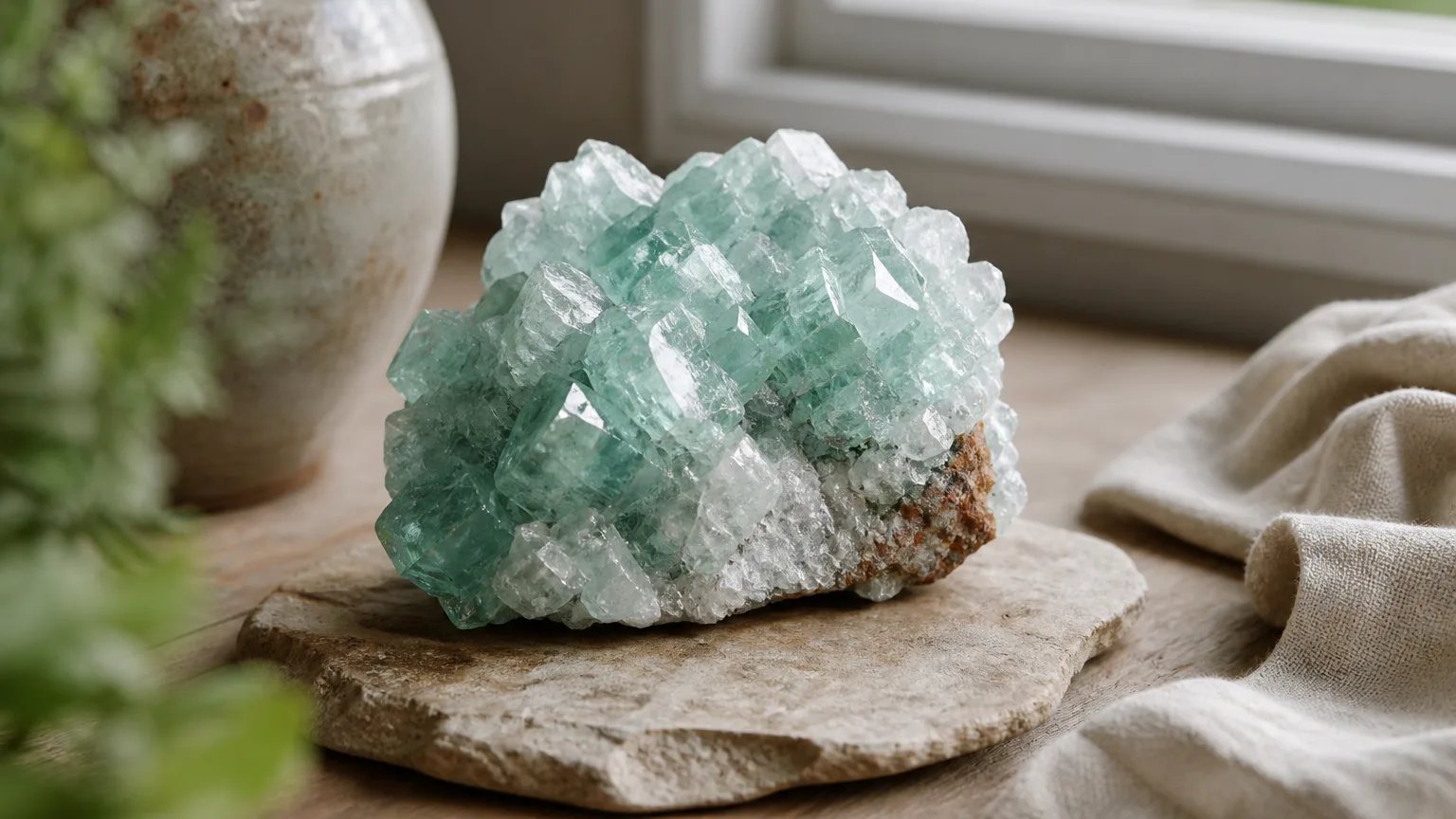
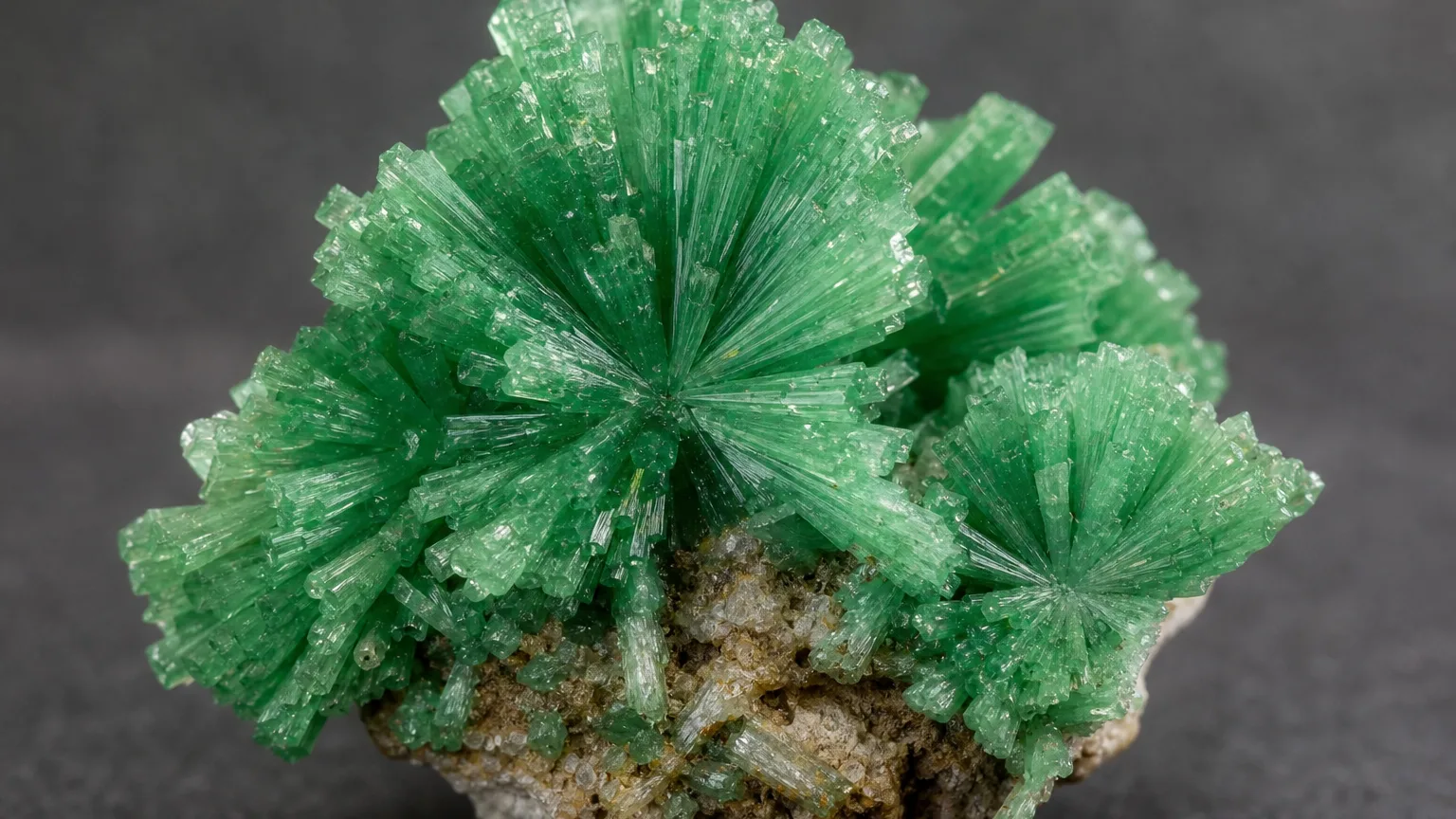
Adamite is named after the French mineralogist Gilbert-Joseph Adam — a modern, scientific naming, not an ancient one. It’s a rare zinc arsenate hydroxide mineral, Zn₂(AsO₄)(OH), that forms in bright, radiating clusters and drusy crusts. Its classic color is a glowing yellow-green, sometimes yellow, white, or (with copper) pink and purple. Because it contains arsenic, it’s a stone for display and careful handling, not for water cleansing or jewelry worn against the skin.
Adamite has no ancient mythology — it was identified as a mineral species in the 1800s and only entered crystal practice recently. Its meaning is therefore entirely modern and built around its bright, joyful color: crystal writers describe it as a stone of optimism, creative energy, and a lighter heart. That’s an honest, limited tradition rather than a deep one — the stone doesn’t carry thousands of years of symbolism the way quartz or jade do. Its value today comes mostly from the cheer of its color and the personal meaning people attach to it.
The thread through all of it is the same: joy, creativity, and a lighter mood. Today adamite is usually described as a bright, uplifting stone — reached for to lift a flat mood, to spark creative work, or simply for its vivid, cheerful color. How much of that lands for you personally is, honestly, up to you — and with adamite more than most stones, the meaning is yours to build. To explore more stones, browse the full Crystal Guide.
Adamite Properties
The Science
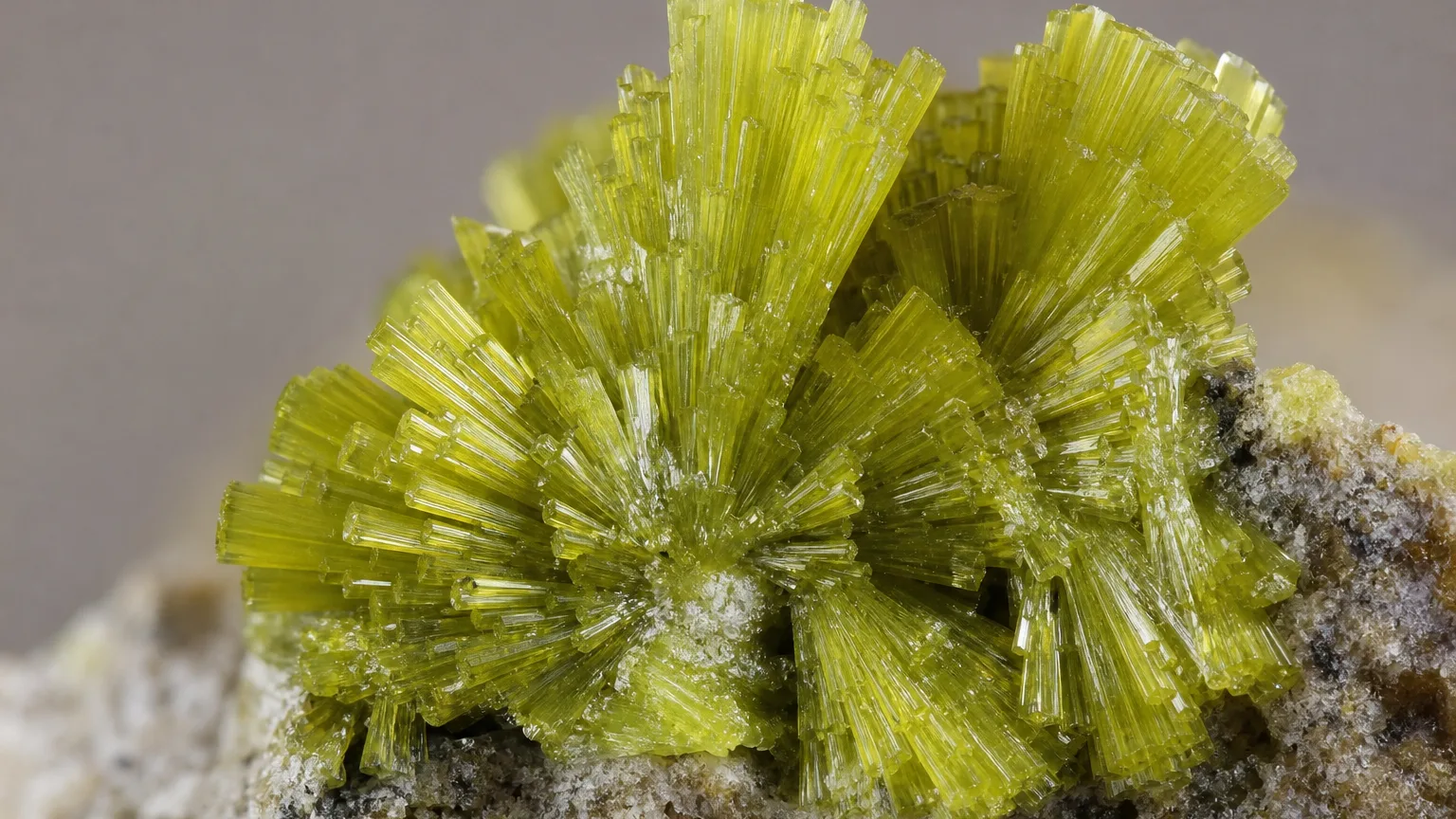
Adamite is a zinc arsenate hydroxide — Zn₂(AsO₄)(OH) — a relatively soft mineral at about 3.5 on the Mohs scale. It forms in the oxidation zones of zinc-arsenic ore deposits, typically as bright, radiating clusters and drusy crusts on a matrix. Its classic color is a glowing yellow-green, often tied to traces of copper; it can also be yellow, white, pink, or purple. Some specimens fluoresce under UV light. Because adamite contains arsenic, it should be handled with care: keep it dry, don’t soak or ingest, and wash your hands after handling. Major sources include Mexico (the famous Mapimí locality), Greece (Laurium), and Namibia. None of this is mystical — it’s standard mineralogy.
Traditional Meaning
Tradition ties adamite to joy, creativity, and a lighter heart — but this is a modern and limited tradition. As a rare stone only identified in the 1800s, it carries no ancient symbolism, and its associations are built around its bright yellow-green color. Crystal writers describe it as an uplifting stone that supports a cheerful mood and creative energy, sometimes linked to the heart and solar plexus centers. Because the tradition is recent and personal, how you read adamite is largely up to you. These associations come from modern spiritual practice rather than clinical study.
Mindfulness & Psychology
From a psychological angle, adamite works as a bright, cheerful visual cue — the kind of object you place where you want a lift. Warm yellow-green tones read in color psychology as optimistic and gently energizing, and the act of keeping a vivid piece nearby and pairing it with an intention (“spark some joy today”) turns it into a small environmental cue. Like any ritual object, part of its value is simply marking a workspace as a place for creativity and play. These effects come from tradition and personal practice, not clinical research. Crystals complement — but never replace — professional care.
Adamite Benefits
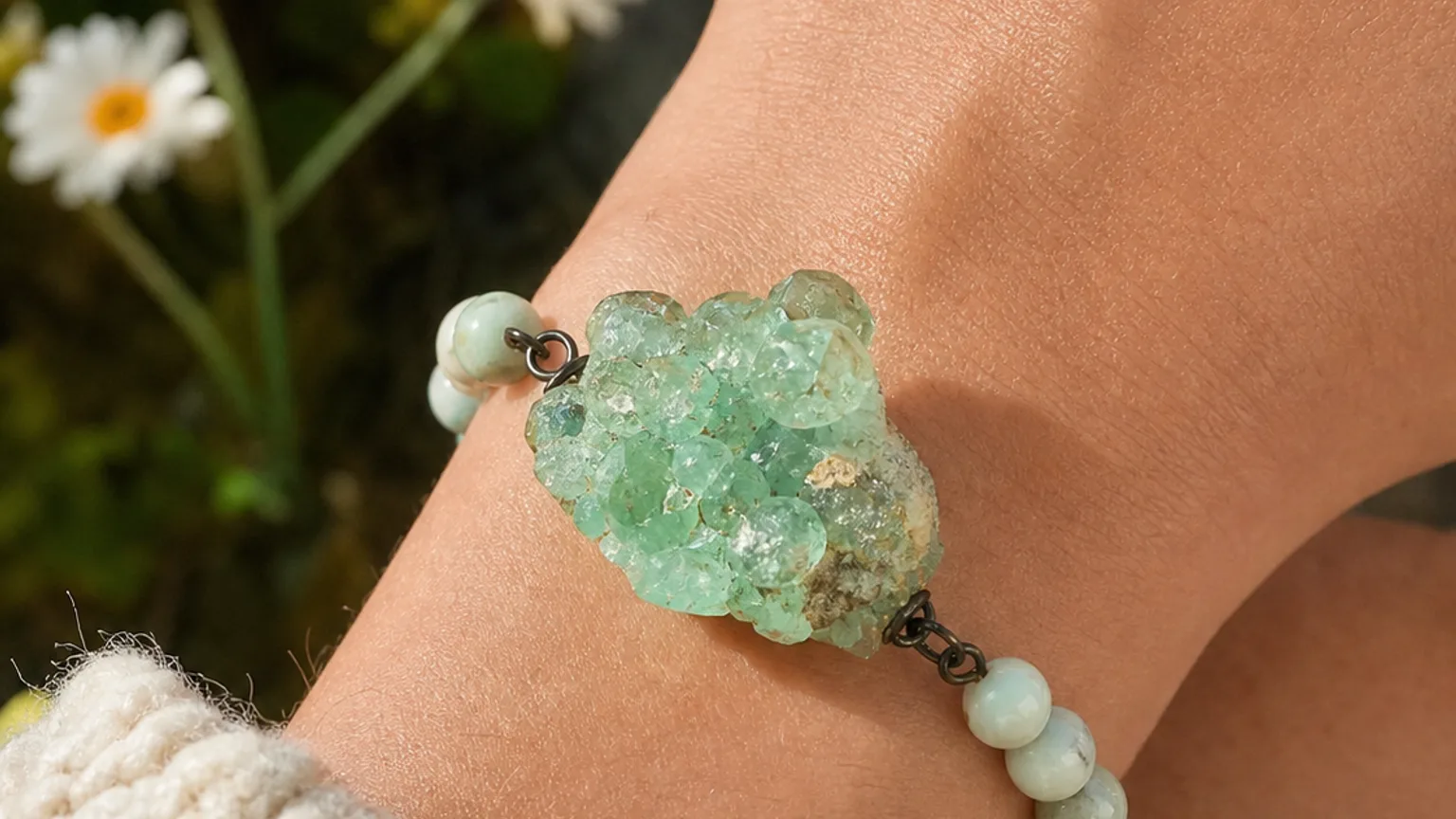
People who work with adamite usually describe it in terms of a lighter mood and a creative spark, not dramatic shifts. It tends to show up as a brighter, more playful feeling — useful when you’re flat, stuck, or just want more color in your day. A few of the benefits people mention most:
A lighter mood
A bright adamite cluster where you can see it gives you a cheerful visual cue — a small, low-effort lift when a day feels flat or grey.
A creative spark
Many keep a piece where they create — a desk, a studio, a writing corner — as a cue to play and experiment rather than overthink.
A brighter workspace
Its vivid yellow-green color adds warmth and cheer to a corner — a gentle shift in the feeling of a room where you spend hours.
A playful reminder
As a rare, unusual stone, it’s a cue to take things a little less seriously — to make room for curiosity and a lighter touch.
The pattern underneath all of these is the same: adamite isn’t lifting your mood by magic, but it gives your day a bright cue toward play and optimism. If you’re exploring stones for specific needs, see our guide to crystals for stress.
Adamite Chakra, Zodiac, and Element Associations
In traditional systems, adamite is most often linked to the solar plexus (will, creativity) and the heart (warmth, joy) centers. Astrologically, it’s sometimes paired with Leo. Its element is usually given as Fire, fitting for a bright, energizing stone. For related stones, see solar plexus chakra crystals.
These are correspondences built up through modern tradition, not fixed rules — and for a rare, recent stone like adamite, they’re especially open to personal interpretation. If your own sense of adamite points somewhere else, that’s completely fine. Many people work with stones intuitively, following what feels right rather than a textbook chart.
How to Use Adamite
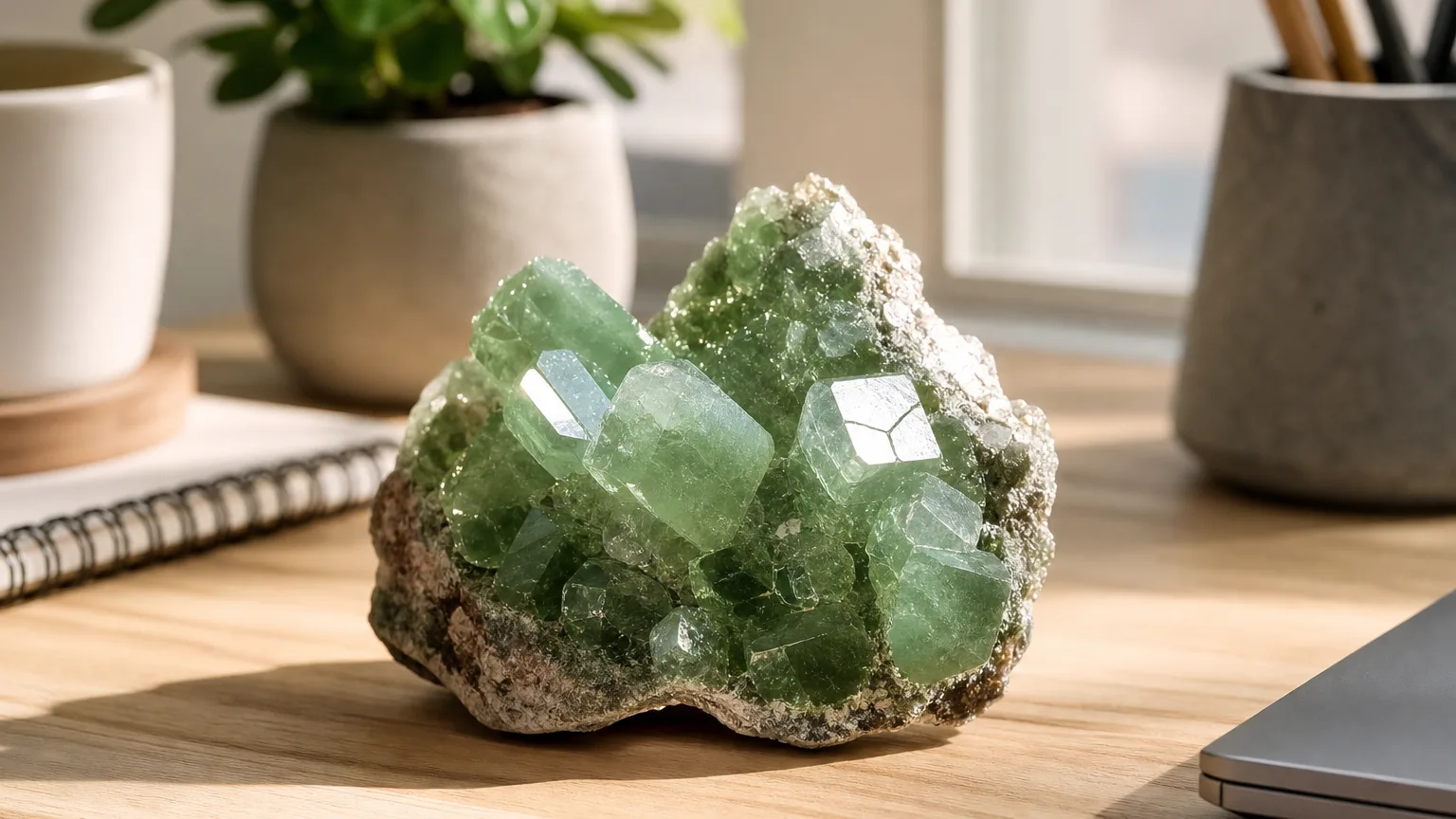
Adamite is a display stone, not an everyday-wear stone. It’s soft (Mohs 3.5) and contains arsenic, so it’s best kept on a shelf or in a cabinet rather than worn against the skin or handled constantly.
Display it where you work or create. A cluster on a desk or shelf acts as a bright, cheerful visual cue — somewhere you want a creative lift.
Sit with it briefly. Hold the piece (then wash your hands) for a few minutes of focused attention when you want a mood shift; the goal is presence, not duration.
Pair it with an intention. Give the stone a job each time you notice it — “spark some joy,” “play a little” — and let its bright color cue you toward lightness.
Keep it out of reach of children and pets. Because it’s an arsenic mineral, treat it like a specimen to admire, not a casual palm stone to pass around.
Which Adamite Form Is Right for You?
| Form | Best for | Choose it if |
|---|---|---|
| Radiating cluster (on matrix) | Display only | You want a vivid, natural specimen for a desk or cabinet |
| Drusy crust | Display only | You like the sparkling crust look on its host rock |
| Small loose crystals | Handled with care | You want to study the crystal shape (wash hands after) |
| Cabinet specimen | Collection display | You’re a mineral collector building a display |
| Under UV light | Display novelty | You enjoy fluorescent minerals that glow under UV |
| Photographed / framed | Wall or shelf | You want the bright color without handling a toxic mineral |
How to Tell Real Adamite from Fakes
Adamite is rare, so outright fakes are uncommon — but misidentified minerals and the occasional resin or dyed cluster do turn up. A few checks help:
- Radiating cluster habit. Genuine adamite forms distinctive bright, radiating needle- or blade-like clusters on a matrix. If a “adamite” cluster looks molded, too perfect, or lacks natural crystal terminations, suspect resin.
- Color. Natural adamite is a glowing yellow-green to yellow. A vivid, unnatural green or a flat, painted-looking color may be dyed or a different mineral (like a green quartz or dyed calcite).
- Hardness. At Mohs 3.5, real adamite is soft — a copper coin or knife can scratch it. A hard, unscratchable “adamite” is a different mineral.
- UV fluorescence. Many adamite specimens fluoresce under UV light. A glow is a useful sign (not all fluoresce, but many do).
- Seller honesty. Adamite is sometimes confused with related arsenate minerals (olivenite, austinite). A reputable mineral dealer will identify it correctly and confirm the locality.
How to Cleanse and Charge Adamite
Adamite is the one stone where the usual care rules don’t apply — keep it dry. As a soft arsenic mineral, water and handling both carry risks.
- Water — avoid. Don’t soak or rinse adamite. Water can interact with the arsenic content over time, and soaking is unnecessary. Clean it gently with a dry, soft brush or cloth.
- Sunlight. Brief light is fine for display; keep it out of prolonged harsh sun mainly to protect the color.
- Sound. A singing bowl or bell near the piece is a gentle, no-contact reset many prefer — and it avoids touching the mineral.
- Visualization. For a stone you shouldn’t handle much, a simple moment of focused attention — holding the intention of “lightness” without touching — is the safest cleansing option.
Two things to keep in mind: wash your hands after handling adamite, and keep it away from children, pets, and food surfaces. It’s a beautiful specimen to admire, not a stone to live in your pocket. For the full routine, see our guide to cleansing crystals — and treat adamite as the dry, handle-with-care exception in that guide.
Best Crystals to Pair With Adamite
Pairing is about layering intentions — picking stones whose qualities complement rather than compete. A few combinations that work well with adamite’s bright, joyful energy:
- Adamite + Citrine — two bright, cheerful stones; a pairing many reach for to lift mood and creative drive.
- Adamite + Carnelian — joy meets motivation; a warm, energizing combo for creative work.
- Adamite + Clear Quartz — clear quartz is said to amplify; many use it to lift adamite’s uplifting intentions.
- Adamite + Rose Quartz — joy softened with warmth; a gentle pairing for a lighter, kinder mood.
The logic of pairing is about complementary intentions, not strict rules. Pick combinations that match what you’re actually working on, and trust your own sense of what feels bright.
Who Should Use Adamite?
Adamite suits people who want a bright, cheerful display stone for joy and creativity — collectors, anyone in a creative rut, or people drawn to its vivid color. It’s a stone for admiration and intentional moments, not for constant handling, so it fits people who enjoy minerals as much as crystal practice.
A few honest expectations: adamite isn’t a treatment for depression, low mood, or any condition — if you’re dealing with something persistent, a healthcare professional is the right call, and the stone can be a comfort alongside that. Its value comes from the meaning you build around it and the cheer of its color. And because it contains arsenic, it’s a specimen to handle with care, not a daily talisman. If you go in expecting a stone to fix your mood for you, you’ll be disappointed; if you go in expecting a bright cue and a beautiful specimen, it tends to fit well.
FAQ About Adamite Meaning
What is adamite good for?
In modern crystal practice, joy, creativity, and a lighter mood. People display it where they work or create as a bright, cheerful cue — though its tradition is recent and limited.
Is adamite toxic?
Adamite contains arsenic, so it should be handled with care. Keep it dry, don’t soak or ingest it, wash your hands after handling, and keep it away from children and pets. Display it; don’t live with it in your pocket.
Why doesn’t adamite have an ancient meaning?
It was only identified as a mineral in the 1800s and entered crystal practice recently. Its meaning is modern, built around its bright color — an honest, limited tradition rather than a deep ancient one.
What chakra is adamite linked to?
Mostly the solar plexus (creativity, will) and the heart (joy, warmth) — though as a recent stone, these are open to personal interpretation.
Can adamite go in water?
No — keep it dry. As a soft arsenic mineral, soaking is unnecessary and best avoided. Clean it with a dry, soft brush or cloth.
How hard is adamite?
About 3.5 on the Mohs scale — quite soft. It scratches easily, which is another reason it’s better as a display specimen than a worn stone.
Does adamite glow under UV?
Many specimens do fluoresce under UV light. Not all adamite glows, but a fluorescent response is a useful sign you have a genuine specimen.
Final Thoughts on Adamite
Adamite earns its place as a bright, cheerful display stone — vivid yellow-green clusters that people reach for when they want a lighter mood and a creative spark. If you’re curious, the simplest start is one specimen you’ll admire where you work, paired with a small moment of attention when you notice it. Let its color do the work, and handle it with care.
From there, adamite tends to brighten a corner — a lighter mood, a more playful workspace, or simply a beautiful, unusual mineral to enjoy. For more, explore the Crystal Guide or browse adamite pieces.