
Amber Meaning: Healing Properties & Uses
Amber isn’t a mineral at all — it’s fossilized tree resin, often 30 to 90 million years old, and sometimes with an ancient insect or leaf trapped inside. Long prized for its warm golden glow, it’s tied to sunlight, protection, and a sense of deep time. This guide covers what amber is, what it means, and how people work with it. Crystal meanings reflect tradition and personal practice, not medical advice.
What Is Amber Meaning?
At its simplest, amber means warmth, light, and protection. With its honey-gold color and the ancient life sometimes sealed inside it, it’s often described as a stone that carries sunlight and a sense of deep time — a comforting presence for people who want to feel warm, safe, and connected to something older than themselves.
For many, that’s the whole draw: a light, warm piece that feels like solidified sunshine and nudges you toward comfort. You don’t need to hold any specific belief to get something from it — the value often comes from choosing, holding, or wearing the piece as a cue to return to a calmer, warmer baseline.
Amber Meaning and Symbolism
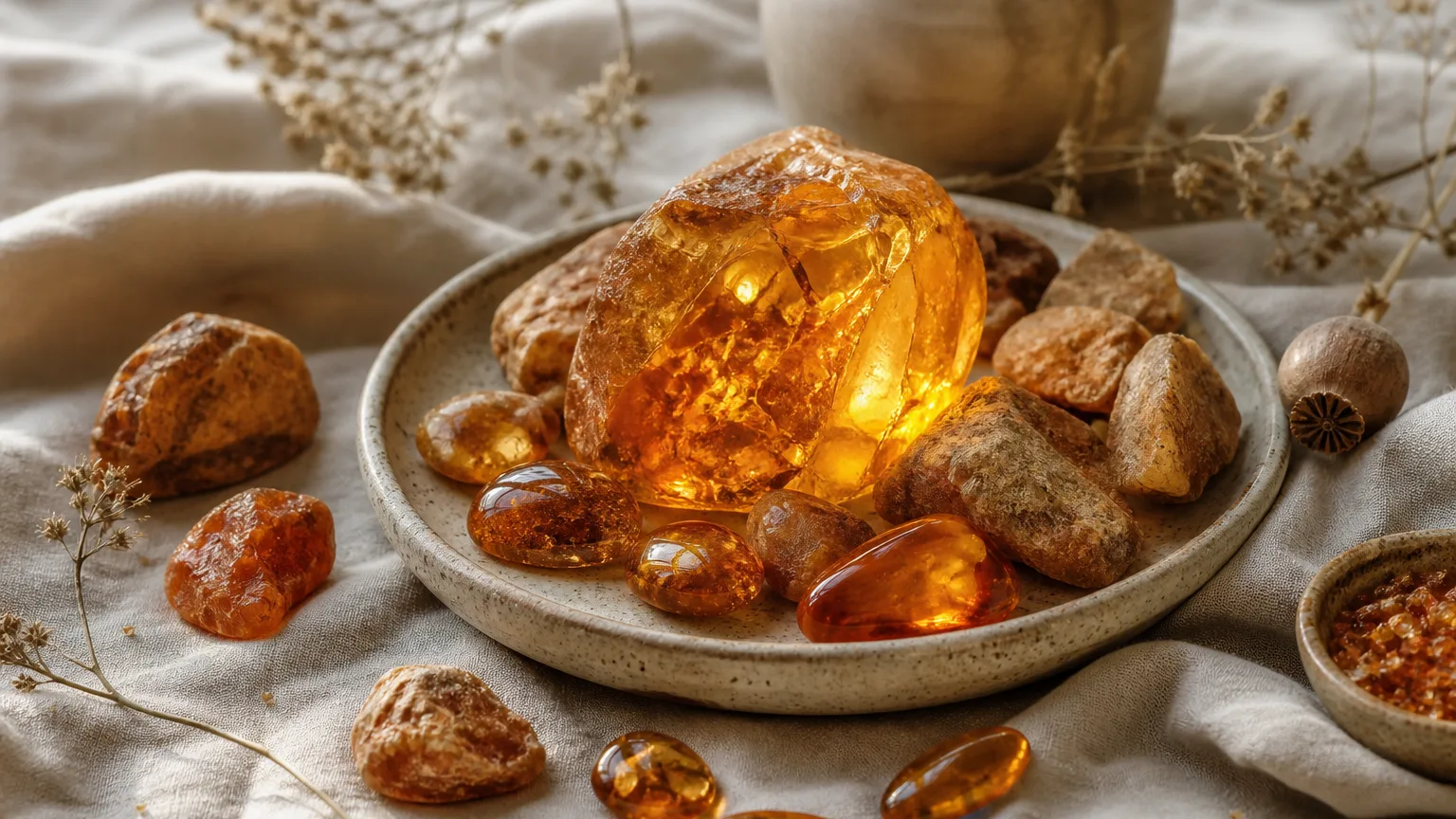
Few “stones” carry as much history as amber. People have worked it into beads, amulets, and trade goods since the Stone Age. The Baltic coast supplied a vast ancient trade — the so-called “Amber Road” — that carried it across Europe to the Mediterranean. The ancient Greeks noticed that rubbing amber attracted light objects, which is why their word for it, elektron, gave us the word “electricity.” In Chinese tradition, amber was historically used in medicine, which we now read as cultural history rather than proven therapy.
In modern crystal practice, amber is most often tied to warmth, light, protection, and a gentle, comforting energy — it’s a traditional choice for children’s talismans. Some sellers claim Baltic amber “releases succinic acid” through the skin to soothe pain, especially in teething necklaces; that effect isn’t established, and you should be cautious of medical-style claims. The warmth and comfort people feel is best read as tradition and personal practice. To explore more stones, browse the full Crystal Guide.
Amber Properties
The Science
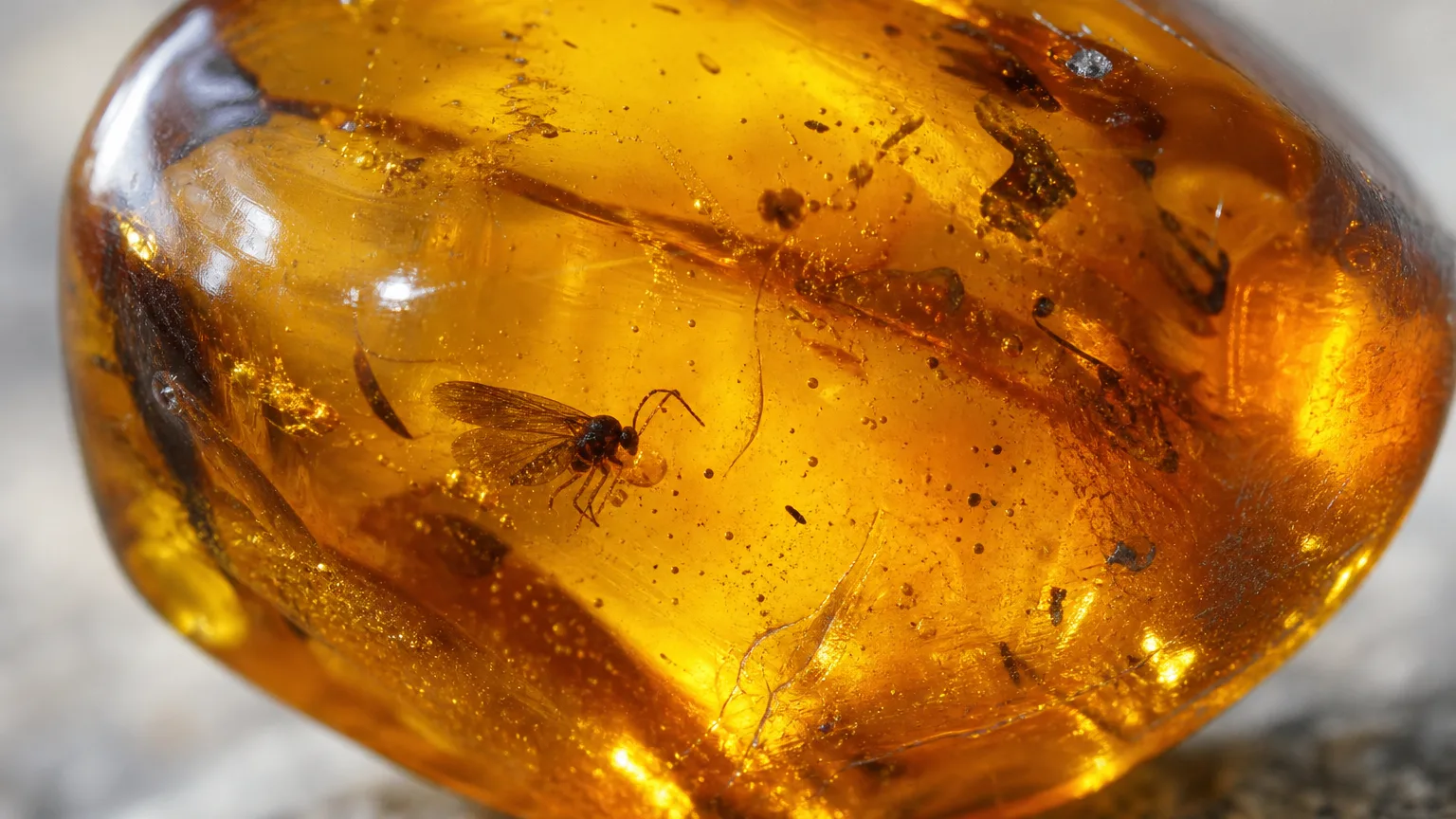
Amber isn’t a mineral — it’s fossilized tree resin, an organic gemstone. Resin from ancient trees hardened and, over tens of millions of years, slowly polymerized into amber. It’s amorphous (no crystal structure), very soft at about 2–2.5 on the Mohs scale, and remarkably light — with a specific gravity around 1.05–1.10, it floats in salt water, a classic field test. Color ranges from pale lemon to cognac, red, and a rare blue (Dominican blue amber), transparent to opaque with a resinous shine. Its most famous feature is inclusions — ancient insects, pollen, or plant material sealed inside. Notable sources include the Baltic region, the Dominican Republic, and Myanmar. None of this is mystical — it’s paleontology and chemistry, and the inclusions are genuinely prehistoric.
Traditional Meaning
Amber carries one of the oldest and richest traditions of any material in the crystal world. Across Stone Age Europe, the ancient Mediterranean, and Chinese tradition, it was valued for warmth, protection, beauty, and sometimes healing — used in amulets, beads, and medicine. In modern crystal practice it’s tied to the sacral and solar plexus centers and described as a stone of warmth, light, and gentle protection — many believe it brings a comforting, sunny energy, and it’s a traditional talisman for children. These associations draw on both genuine ancient use and modern practice, though the medical side is cultural history rather than established therapy.
Mindfulness & Psychology
From a psychological angle, amber works as a tactile anchor — a light, warm piece to hold when you want comfort or a sense of steadiness. There’s something quietly grounding about holding a piece of deep time, and the act of choosing and carrying it can support intention-setting: you decide it stands for “warmth” or “feel safe,” and the feel of it draws you back. Honey-gold reads as warm, comforting, and gently optimistic in color psychology, and the simple ritual of noticing the piece creates a brief pause to reset. These effects come from tradition and personal practice, not clinical research. Crystals complement — but never replace — professional care.
Amber Benefits
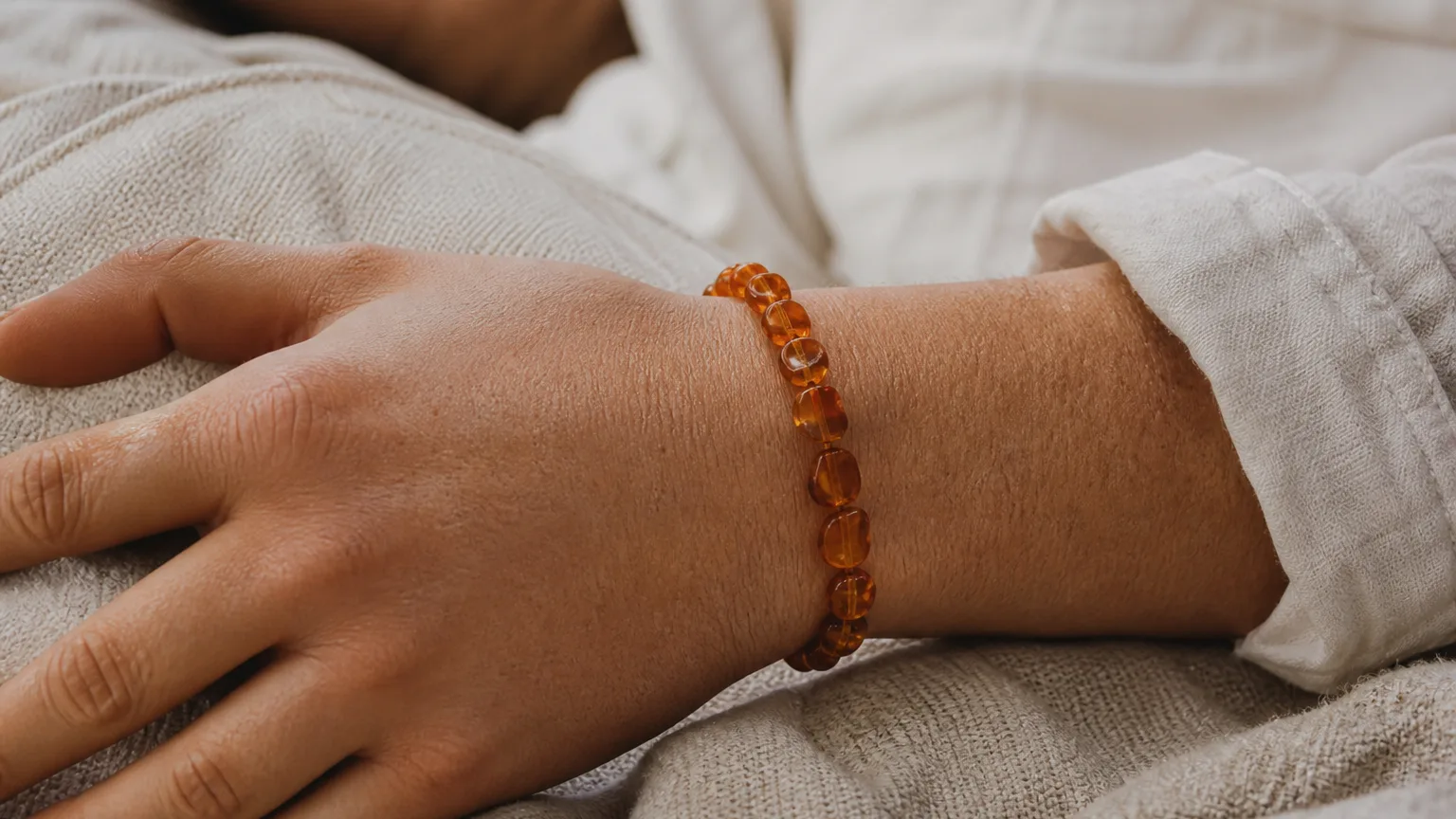
People who work with amber usually describe it in terms of feeling warmer and more comforted, not dramatic changes. The piece tends to show up when you want comfort or steadiness — the warmth of it in your hand, the glance at it during a grey stretch, the feel of it against the skin. A few benefits people mention most:
A warmer mood
Holding amber gives a flat or low mood a warm focus point, which makes it easier to find a bit of comfort and optimism on grey or difficult days.
A sense of protection
Many wear amber as a traditional talisman — a small, comforting reminder of safety and steadiness, especially for children in family tradition.
A connection to deep time
Holding a piece that’s millions of years old, sometimes with an inclusion, can put present worries in perspective and bring a quiet sense of calm.
A gentle focus for meditation
Held during a sit, its light, warm feel gives your hand something to notice, which can quiet a restless mind and bring you into the moment.
The pattern underneath is the same: the piece isn’t doing the work for you, but it gives your day a small structure that makes warmth and comfort more likely. If you’re exploring stones for specific needs, see our guides to crystals for anxiety and solar plexus chakra crystals.
Amber Chakra, Zodiac, and Element Associations
In traditional systems, amber is most often linked to the sacral and solar plexus centers — the areas tied to warmth, creativity, and personal energy. It’s commonly paired with Leo and Aquarius, and its element is usually given as Fire (sometimes Earth). For related stones, see solar plexus chakra crystals.
These are correspondences built up across both ancient and modern tradition, not fixed rules. If your own sense of a piece points somewhere else, that’s completely fine. Many people work with stones intuitively, following what feels right rather than a chart.
How to Use Amber
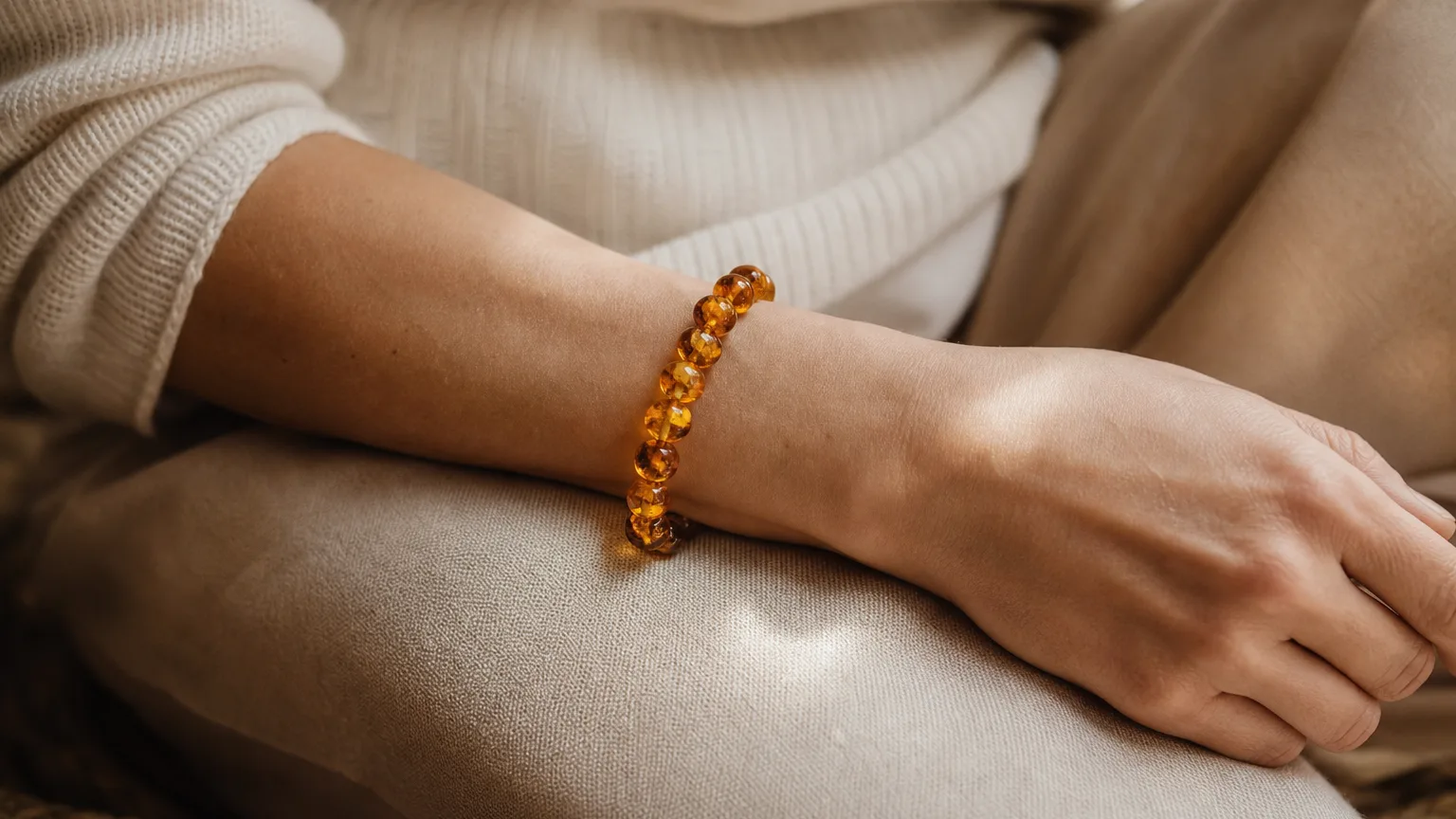
Amber is gentle and a little delicate — there’s no single right way, only what fits your routine. The key is consistency: a piece you actually see and wear each day does far more than one that sits in a drawer.
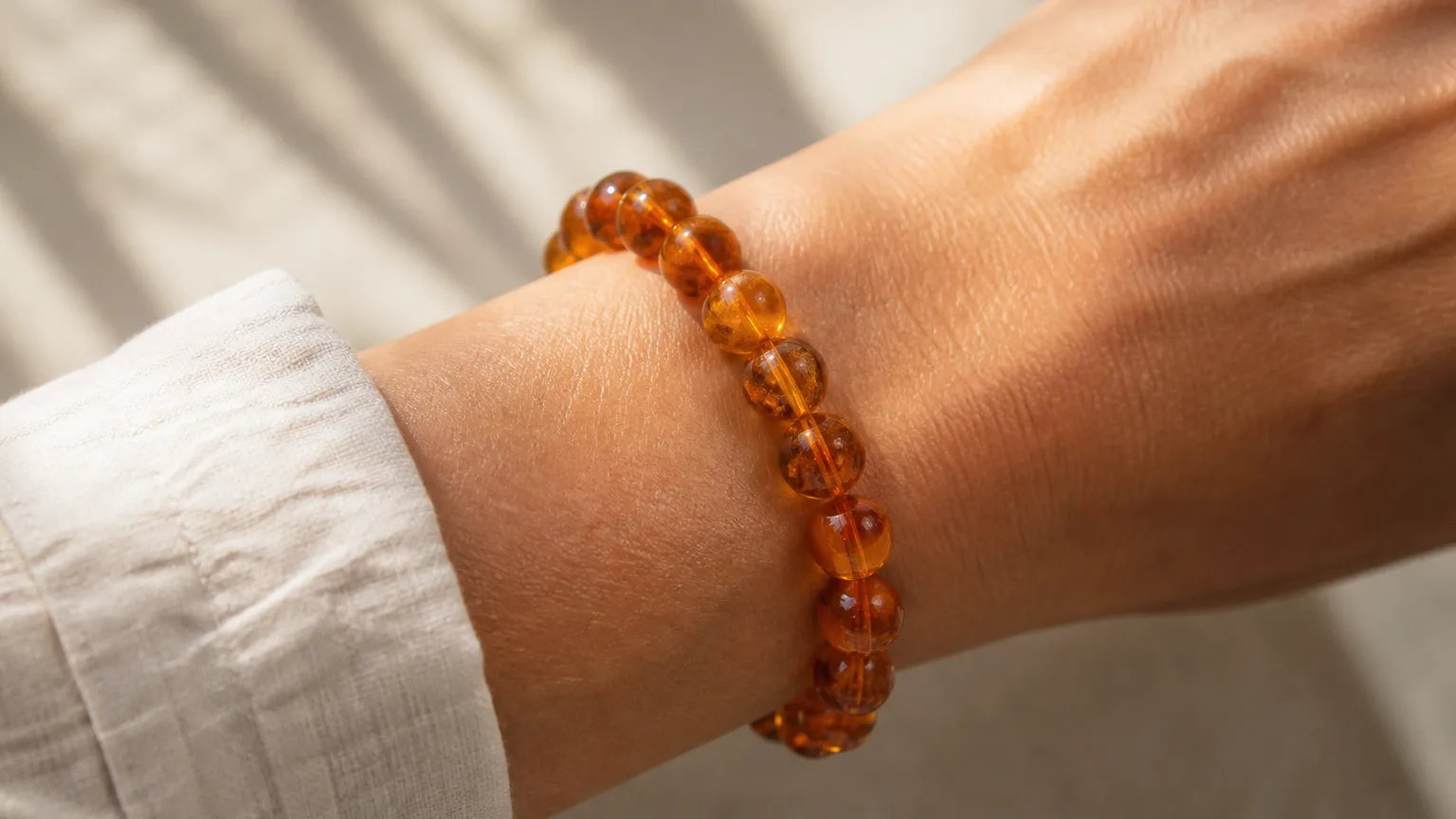
Wear it. A beaded necklace or bracelet is the classic way to wear amber — it warms against the skin and stays with you through the day. Pair it with a simple intention each morning — “feel warm,” “stay steady.”
Meditate with it. Hold a tumbled piece in your palm while you sit. Its light, warm feel gives your attention somewhere to rest; a few focused minutes count.
Place it at home. A polished free-form or inclusion specimen on a desk or shelf works as décor and a visual cue. The warm glow brings a sunny feel to a room.
Carry a tumbled piece. Amber’s lightness and warmth make it a natural pocket piece — something to hold when you want comfort and a quick reset.
Which Amber Form Is Right for You?
| Form | Best for | Choose it if |
|---|---|---|
| Bead bracelet / necklace | Daily wearing | You want a warm, wearable piece against the skin |
| Tumbled stone | Pocket or meditation | You want something light, smooth, and easy to hold |
| Inclusion specimen | Collection or display | You’re drawn to ancient insects or plant material trapped inside |
| Cabochon pendant | Personal meaning | You want a polished stone worn near the chest |
| Free-form | Desk or shelf display | You like a natural polished shape that catches the light |
| Earrings | Everyday jewelry | You want the warm glow worn near the face |
How to Tell Real Amber from Fakes
Because genuine amber is valuable, the market is full of imitations — plastic, copal (young, not-fully-fossilized resin), pressed/reconstructed amber, and glass. A few checks help before you buy:
- The saltwater test. Real amber floats in saturated salt water; most plastic and glass imitations sink. It’s a classic, simple field test.
- Weight and warmth. Amber is remarkably light and warms quickly in your hand. Glass feels heavy and cold; many plastics feel “wrong.”
- Inclusions. If a piece has an insect, look closely — real inclusions often show some struggle or decay, and the surrounding material has natural flow lines. Perfect, pristine, “posed” insects are a red flag for fakes.
- UV glow. Many ambers fluoresce a soft blue or green under ultraviolet light. Plastics usually don’t react the same way.
- Hot needle. A discreet hot needle produces a resinous, pine-like smell on real amber (and copal), but an acrid plastic smell on plastic fakes. Use with care.
- Price and seller. Large, flawless, vivid pieces at very low prices are usually pressed amber, copal, or plastic. Buy from sellers who name the source and type.
A note on types. Baltic amber (succinite) is the most common and abundant; Dominican amber is prized for clarity and inclusions (and rare blue color); Burmese amber (burmite) is the oldest, from the age of dinosaurs. Each has its own look and price point.
How to Cleanse and Charge Amber
In crystal practice, “cleansing” clears accumulated energy and “charging” refreshes the piece. Because amber is soft, light, and organic, it needs gentle care. A few safe methods:
- Moonlight. Leave it out overnight under a full moon — the gentlest option and well-suited to light-sensitive amber.
- Smoke. Pass it through sage or palo santo smoke and let it drift over every side.
- Sound. A singing bowl or bell nearby. At minimum, it’s a mindful pause.
- Soft cloth. A brief wipe with a soft, slightly damp cloth is fine for cleaning — then dry it gently.
Things to avoid: prolonged direct sunlight and heat — amber can darken, dry out, and become brittle with too much sun or warmth over time, so keep it out of bright, hot spots. Avoid soaking, salt water, chemicals, perfumes, and ultrasonic cleaners, all of which can dull or damage soft amber. For the full routine, see our guide to cleansing crystals.
Best Crystals to Pair With Amber
Pairing is about layering intentions — picking stones whose qualities complement rather than compete. A few combinations that work well with amber’s warm, comforting energy:
- Amber + Citrine — two warm, golden stones layered for optimism, joy, and a bright, sunny mood.
- Amber + Carnelian — warm meets warm. A popular pairing for vitality, courage, and a steady, active energy.
- Amber + Sunstone — two light-filled, warm stones; many layer them for confidence and a comforting sense of brightness.
The logic of pairing is about complementary intentions, not strict rules. Pick combinations that match what you’re actually working on, and trust your own sense of what feels balanced.
Who Should Use Amber?
Amber suits people who want a warm, comforting, protective presence — anyone dealing with low mood, a need for comfort, or a pull toward something ancient and grounding, who wants a light, sunny reminder of warmth and safety.
A few honest expectations: amber isn’t a treatment for pain, anxiety, or any condition — and despite the popular “succinic acid” claims around teething necklaces, that soothing effect isn’t established, so don’t rely on it as medicine. If you’re dealing with something persistent, a healthcare professional is the right call, and the amber can be a comfort alongside that. It won’t “do” anything on its own; its value comes from the intention and routine you build around it. If you go in expecting a piece to fix things for you, you’ll be let down. If you go in expecting a warm support for your own practice, it tends to fit well.
FAQ About Amber Meaning
Is amber really a stone?
No — amber is fossilized tree resin, an organic gemstone, not a mineral. That’s why it’s so light, soft, and sometimes holds ancient insects inside.
How old is amber?
Most amber is between 30 and 90 million years old. Burmese amber (burmite) is among the oldest, dating back to the age of dinosaurs.
Does Baltic amber really soothe pain through succinic acid?
That’s a popular claim, especially for teething necklaces, but the effect isn’t established. Treat any medical-style claim as a marketing red flag and don’t rely on amber as medicine.
Can amber go in water?
A brief wipe with a damp cloth is fine, but avoid soaking it. Amber is soft and can be dulled or damaged by long soaks, salt water, and chemicals.
How can I tell if my amber is real?
The saltwater test is classic — real amber floats in saturated salt water while most fakes sink. Also check its light weight, warmth, natural inclusions, and UV glow.
Does amber fade or get damaged in sunlight?
Yes, over time. Prolonged sun and heat can darken, dry, and make amber brittle, so keep it out of bright, hot spots.
Is amber good for beginners?
Yes, with gentle care. It’s beautiful, meaningful, and light — just keep it soft, dry, and out of strong sun, heat, and chemicals.
What is burmite?
Burmite is amber from Myanmar (Burma), dating to the Cretaceous period (~100 million years). It is the same amber (fossil resin), from an older source than Baltic amber.
Final Thoughts on Amber
Amber has earned its long place as a symbol of warmth and protection — and it earns it again for each person who picks up a piece and gives it a job to do. If you’re curious, the simplest start is one piece, one intention, and a small daily moment to notice it. You don’t need the largest inclusion; you need a piece you’ll actually see and hold. Let the routine do the work, and let the amber be the warm reminder that brings you back.
From there, amber tends to open a door — to a warmer day, a steadier mood, or simply a sense of carrying a little sunlight with you. For more, explore the Crystal Guide or browse amber jewelry.