Bavenite Meaning: Healing Properties & Uses
Bavenite is a white to pale green calcium beryllium aluminum silicate mineral, Ca₄Al₂Be₂Si₉O₂₆(OH)₂, moderately hard at Mohs 5½–6, recognized by its fibrous to radiating crystal masses. Named in 1901 after Baveno, Italy, where it was first found, it forms in granite pegmatites as an alteration of beryl, with sources in Italy, Norway, and Brazil. It’s a rare collector’s mineral rather than a gem. In modern practice it’s tied to clarity and protection. It has no ancient tradition. This guide covers what it is. Crystal meanings reflect tradition and personal practice, not medical advice.
What Is Bavenite Meaning?
At its simplest, Bavenite means clarity and protection. As a light, fibrous mineral carrying beryllium — the element behind beryl and emerald — it reads as clear and a little protective, a cue for clear thinking and steady protection.
For many, that’s the whole draw: a white, fibrous mineral that brings a sense of clear calm to a shelf. You don’t need to hold any specific belief — the value often comes from keeping it visible as a cue of clarity. Because it’s a rare collector’s mineral rather than a gem, it’s a prized piece rather than worn jewelry.
Bavenite Meaning and Symbolism
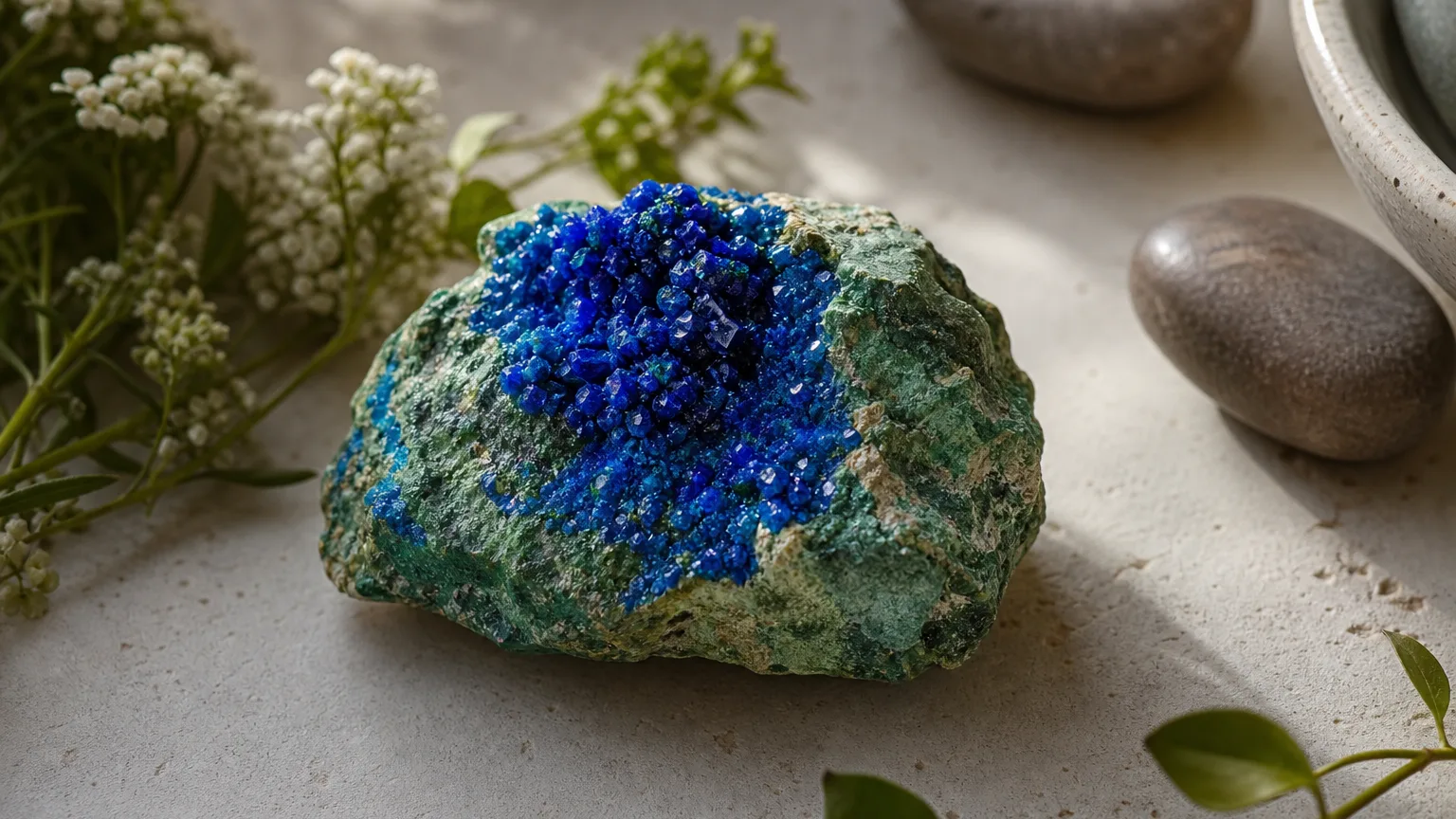
Bavenite was named in 1901 after Baveno, Italy, where it was first found. As a mineral recognized in modern science, it has no ancient healing tradition of its own.
What gives Bavenite its modern meaning is its beryllium content: it’s a calcium-beryllium silicate that forms as beryl breaks down, so it’s a “daughter” of the beryl family. Its symbolism is honestly a recent one, built around that connection to clarity and its fibrous, organized form. It carries beryllium, but finished specimens are safe to handle — only cutting dust needs care.
In modern practice, Bavenite is tied to clarity and protection, often linked to the third-eye center. A useful frame: the meaning comes from its beryllium connection and organized form, rather than invented lore. To explore more stones, browse the full Crystal Guide.
Bavenite Properties
The Science
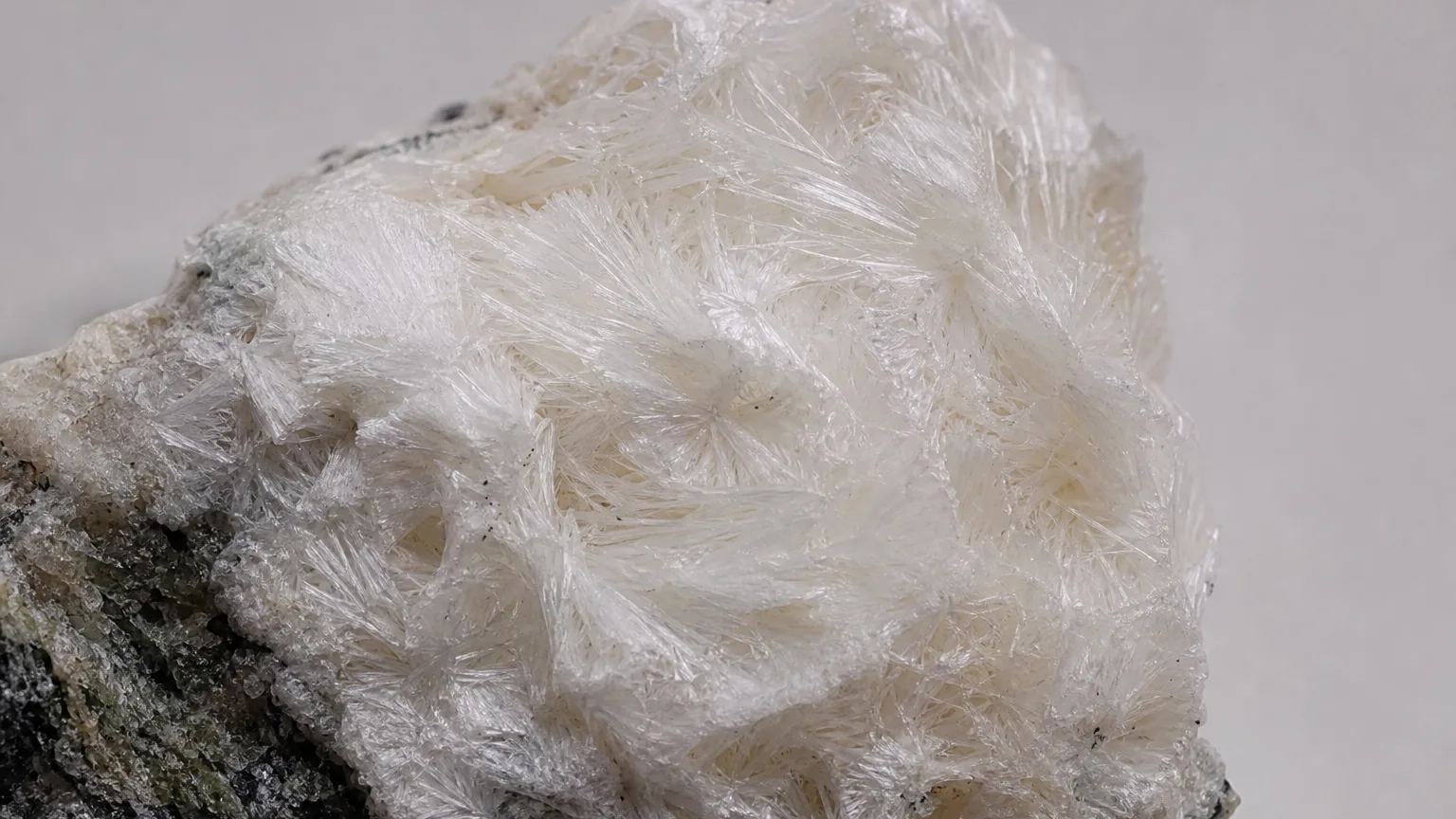
Bavenite is a white calcium beryllium aluminum silicate — Ca₄Al₂Be₂Si₉O₂₆(OH)₂, orthorhombic. It rates 5½–6 on the Mohs scale with a specific gravity around 2.7–2.8. Its white, pale green, or yellow-white tones come from trace impurities, and it forms fibrous to radiating crystal masses with a vitreous to silky luster. It forms in granite pegmatites as an alteration product of beryl — it’s literally beryl that has chemically transformed. It carries beryllium; finished specimens are safe to handle, but cutting or grinding dust should be avoided. Notable sources include Italy (Baveno, the type locality), Norway, and Brazil. This is mineralogy, not mysticism.
Traditional Meaning
Bavenite has no ancient healing tradition. It was named in 1901 after Baveno, Italy, where it was first found, so its meaning is honestly a recent one, built within modern crystal practice around its beryllium connection. In that reading, it’s valued as a stone of clarity and protection, tied to the third-eye center. The clearest honest statement is that its meaning comes from its beryllium-bearing, beryl-alteration character and its organized fibrous form, plus the intentions people bring to it.
Mindfulness & Psychology
From a psychological angle, Bavenite works as a “clear calm” cue — a light, fibrous mineral for moments when you want clarity and steady protection. The act of keeping it visible can support intention-setting: you decide it stands for “think clearly, stay steady,” and its pale, fibrous look draws the eye. The idea of a mineral that forms from beryl — the family of emerald and aquamarine — reads as a clear, refined metaphor, and the small ritual of noticing it during a foggy moment is a brief lift. For people who want a visual cue of clarity, that little structure is most of the value. These effects come from tradition and personal practice, not clinical research. Crystals complement — but never replace — professional care.
Bavenite Benefits
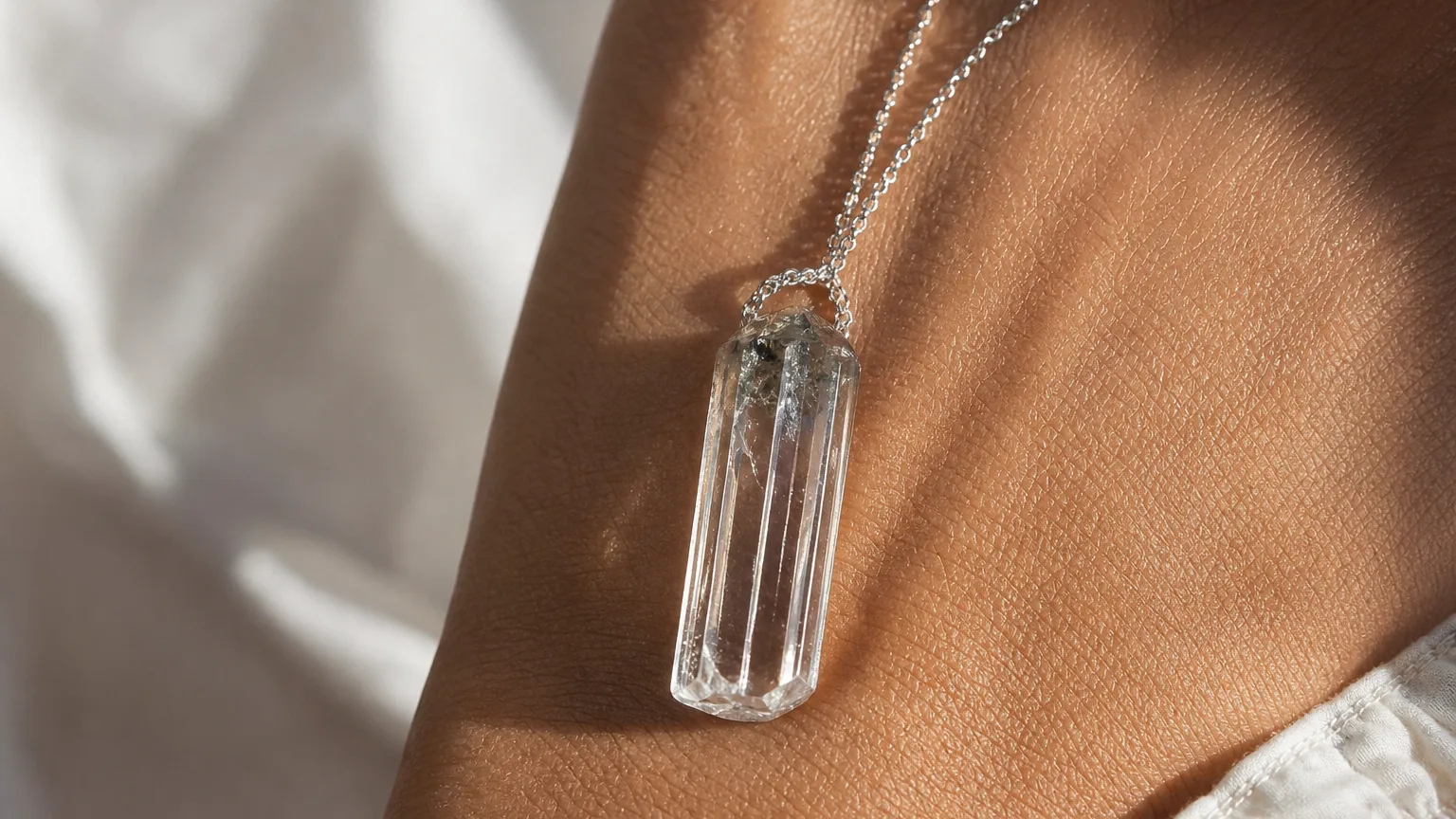
People who keep Bavenite usually describe it in terms of feeling clearer and more steady, not dramatic shifts. The specimen tends to come up when clarity matters — the look of its pale fibers during a muddled moment, the feel of it when you need clear thinking. A few benefits people mention most:
Clarity
Its pale, fibrous look reads as clear and organized; many keep it as a cue for sharp thinking.
Protection
Tied to the third-eye center, it’s a popular cue for steady, protected calm.
Refined calm
Its beryllium-beryl connection lends itself to a refined, clear mood.
A rare Be silicate
As a Ca-Be silicate that alters from beryl, it’s a prized collector’s piece.
The pattern underneath is the same: the stone isn’t doing the work for you, but it gives your space a small structure that makes clarity more likely. If you’re exploring stones for specific needs, see our guide to third-eye chakra crystals.
Bavenite Chakra, Zodiac, and Element Associations
In modern systems, Bavenite is most often linked to the third-eye center — clarity, protection, and refined calm. It’s sometimes paired with Virgo, and its element is Air. For related stones, see third-eye chakra crystals.
These are correspondences built up through very recent crystal practice, not fixed rules. If your own sense of a piece points somewhere else, that’s completely fine. Many people work with stones intuitively, following what feels right rather than a chart.
How to Use Bavenite
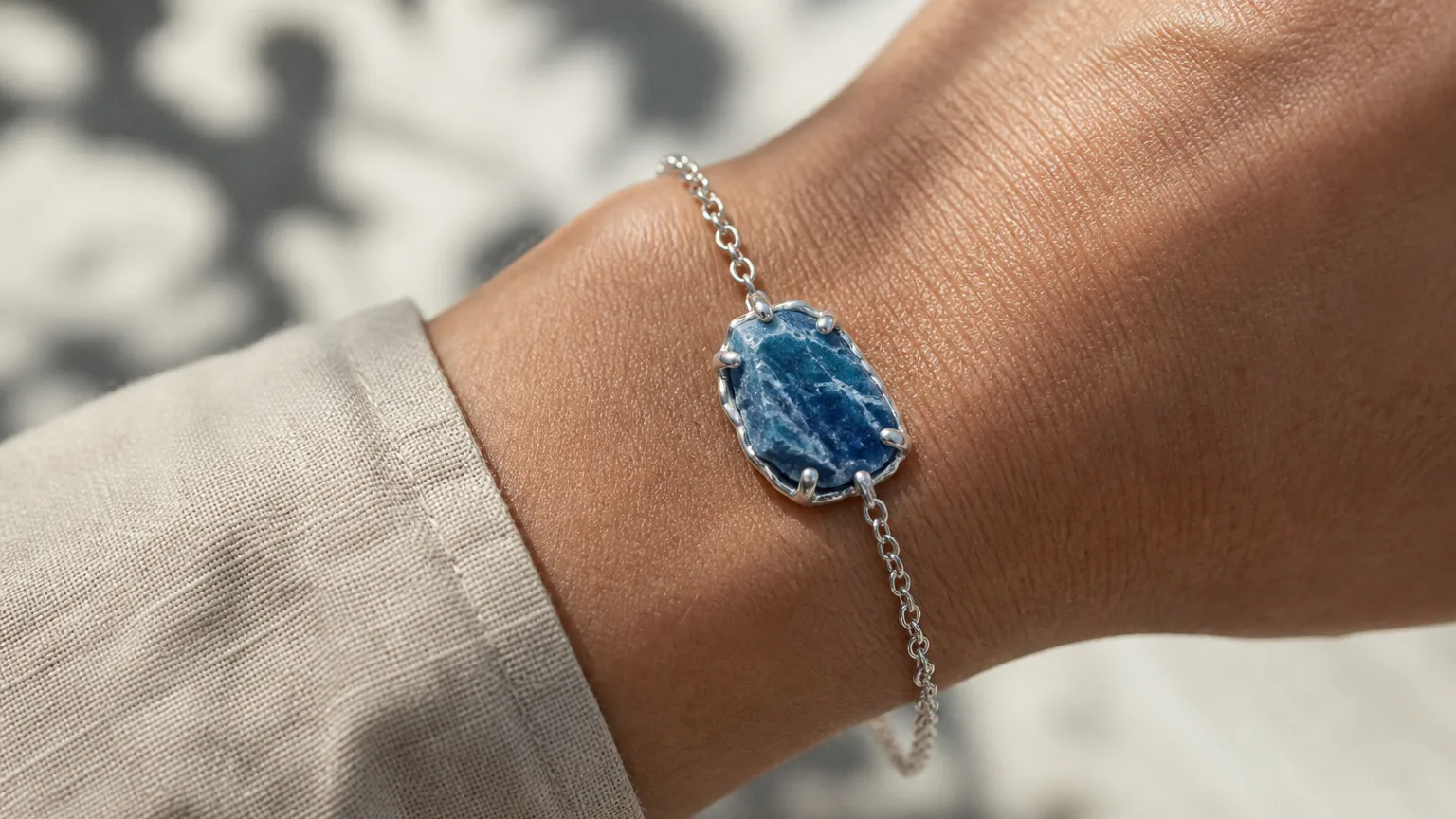
Bavenite is moderately hard (Mohs 5½–6) and stable, so it’s easy to keep on display. It’s a rare collector’s mineral rather than a gem, and finished specimens are safe to handle.
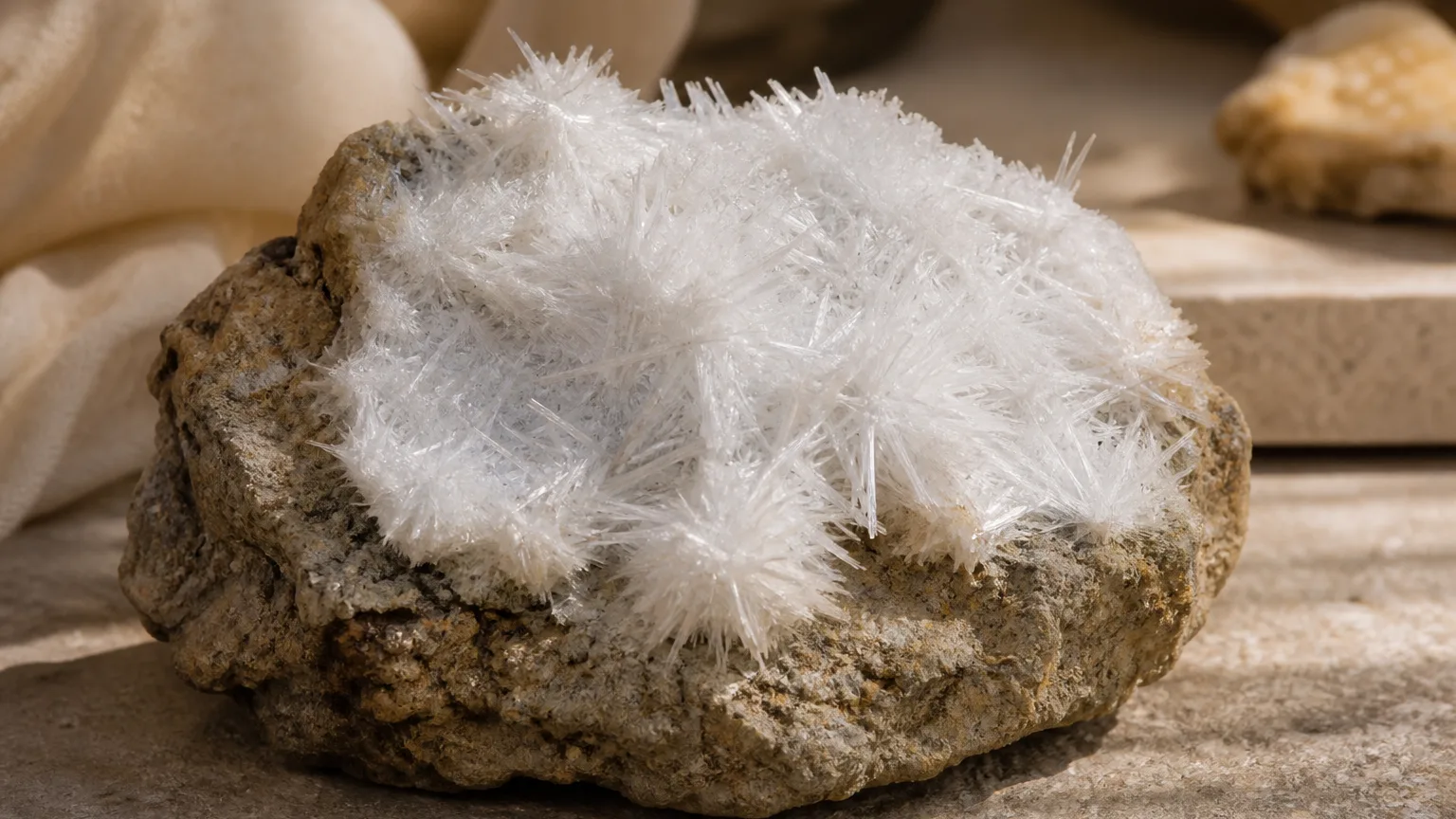
Keep it on display. White fibrous masses on matrix work as décor and a daily “think clearly” cue.
Meditate near it. Sit with its pale look in view. Even a few minutes of calm focus counts; the goal is presence, not duration.
Handle gently. As a rare collector’s piece, admire it where it sits; avoid cutting or grinding (beryllium dust hazard).
Cleanse gently. Brief mild soapy water is fine; it’s a stable mineral.
Which Bavenite Form Is Right for You?
| Form | Best for | Choose it if |
|---|---|---|
| Fibrous radiating mass on matrix | Display, collection | You want the classic white fibrous fan on host rock |
| Coating on beryl | Display, collection | You want bavenite coating its parent beryl crystal |
| Micro crystal cluster | Display, micro-mount | You want a small white cluster to study under magnification |
How to Tell Real Bavenite from Fakes
Bavenite isn’t faked — genuine pieces are a rare collector’s niche — but its fibrous look can mimic other minerals. A few checks help:
- Habit. Real Bavenite forms fibrous to radiating white masses, often as a coating on beryl — the parent mineral it alters from.
- Beryllium test. It carries beryllium, which a lab can confirm. Its association with beryl in pegmatites is a strong field hint.
- Hardness. At Mohs 5½–6, a steel knife barely scratches it — harder than most zeolites.
- Rarity. It’s a rare mineral from specific pegmatite localities; a common, cheap “bavenite” is a red flag.
- Reputable seller. Buy from dealers who describe it honestly as a Ca-Be silicate from Italy, Norway, or Brazil.
For a first Bavenite, a white fibrous mass on matrix from a reputable dealer is a sound start.
How to Cleanse and Charge Bavenite
Bavenite is a moderately hard, stable mineral, so it’s easy to care for. A few safe methods:
- Running water. A brief rinse under cool water is fine — it’s a stable mineral.
- Moonlight. A night under the moon is gentle and effective.
- Sound. A singing bowl nearby is a safe no-contact cleanse.
- Brief sunlight. A short time in daylight is fine; it won’t fade easily.
Things to avoid: salt water soaks, harsh chemicals, and cutting or grinding (beryllium dust). For the full routine, see our guide to cleansing crystals.
Best Crystals to Pair With Bavenite
Bavenite pairs well with other beryllium-bearing or clear, fibrous stones. A few combinations people enjoy:
- Bavenite + Emerald — beryl family connection; the beryl-alteration mineral beside the gem it forms from.
- Bavenite + Amethyst — pale clarity beside calm violet for clear, steady thinking.
- Bavenite + Selenite — light, fibrous stones for clarity and refined calm.
- Bavenite + Aquamarine — beryl family connection; two pegmatite minerals for clarity.
The logic of pairing is about complementary character, not strict rules. Pick pieces that feel right together and match the energy you want.
Who Should Use Bavenite?
Bavenite suits people drawn to clarity and protection — anyone wanting a rare, pale display piece, anyone who loves beryllium minerals and pegmatite geology, or anyone who wants a cue of clear, refined calm on the shelf.
A few honest expectations: Bavenite isn’t a treatment for confusion, brain fog, or any condition — if you’re dealing with something persistent, a healthcare professional is the right call. Its meaning is modern and personal, with no ancient healing tradition behind it. It won’t “do” anything on its own; its value comes from the intention you build around it. It’s moderately hard (Mohs 5½–6) and stable; finished specimens are safe to handle, but avoid cutting or grinding (beryllium dust). Go in expecting a rare, pale collector’s piece for clarity and protection, and it tends to fit well.
FAQ About Bavenite Meaning
What is Bavenite?
A white calcium beryllium aluminum silicate, Ca₄Al₂Be₂Si₉O₂₆(OH)₂, Mohs 5½–6, fibrous to radiating white masses. Named in 1901 after Baveno, Italy, it’s a rare collector’s mineral that alters from beryl.
How is it related to beryl?
Bavenite forms as an alteration product of beryl — it’s what beryl becomes when it chemically breaks down in pegmatites. So it’s literally a “daughter” of the beryl family (emerald, aquamarine, morganite).
Is Bavenite safe to handle?
Finished specimens are safe to handle. It carries beryllium, but only cutting or grinding dust is hazardous. Admire it as a display piece and wash hands after handling.
Can Bavenite go in water?
A brief rinse is fine — it’s a stable mineral. Avoid salt water soaks and harsh chemicals.
How hard is Bavenite?
5½–6 on the Mohs scale — moderately hard, fine for a display piece but not a worn gem.
What chakra is it linked to?
In modern practice, mostly the third-eye center — clarity, protection, and refined calm.
Where does Bavenite come from?
Notable sources include Italy (Baveno, the type locality), Norway, and Brazil — from granite pegmatites.
Final Thoughts on Bavenite
Bavenite earns its place as a stone of clarity and protection — and it earns it again for each person who keeps one and gives it a meaning. If you’re curious, the simplest start is one pale fibrous specimen on a shelf, one intention, and a small daily moment to notice it. You don’t need the finest crystal; you need a piece whose calm clarity you can feel. Let it sit and do its quiet work, and let the Bavenite be the pale reminder that brings you back to clear thinking and steady protection.
From there, it tends to bring a clearer, more refined presence to a space — a note of pale fibers, a cue of clarity, or simply the pleasure of keeping a rare beryllium collector’s piece. For more, explore the Crystal Guide or browse bavenite pieces.