
Bismoclite Meaning: Healing Properties & Uses
Bismoclite is a rare white bismuth oxychloride mineral, BiOCl, very soft at Mohs 2–2½ and notably heavy, recognized by its scaly, pearly white crystals. Named for its bismuth and chlorine content, it forms in the oxidized zones of bismuth deposits, with sources in Germany, Australia, and Bolivia. It’s a rare collector’s mineral rather than a gem. In modern practice it’s tied to clarity and transformation. It has no ancient tradition. This guide covers what it is. Crystal meanings reflect tradition and personal practice, not medical advice.
What Is Bismoclite Meaning?
At its simplest, Bismoclite means clarity and transformation. As a rare, heavy, pearly white mineral carrying bismuth — the element known for its colorful, change-ready iridescence — it reads as clear and changing, a cue for honest seeing and steady change.
For many, that’s the whole draw: a rare, heavy, pearly white mineral that brings a sense of clear calm to a shelf. You don’t need to hold any specific belief — the value often comes from keeping it visible as a cue of clarity. Because it’s very soft and a rare collector’s mineral rather than a gem, it’s a display piece rather than worn jewelry.
Bismoclite Meaning and Symbolism
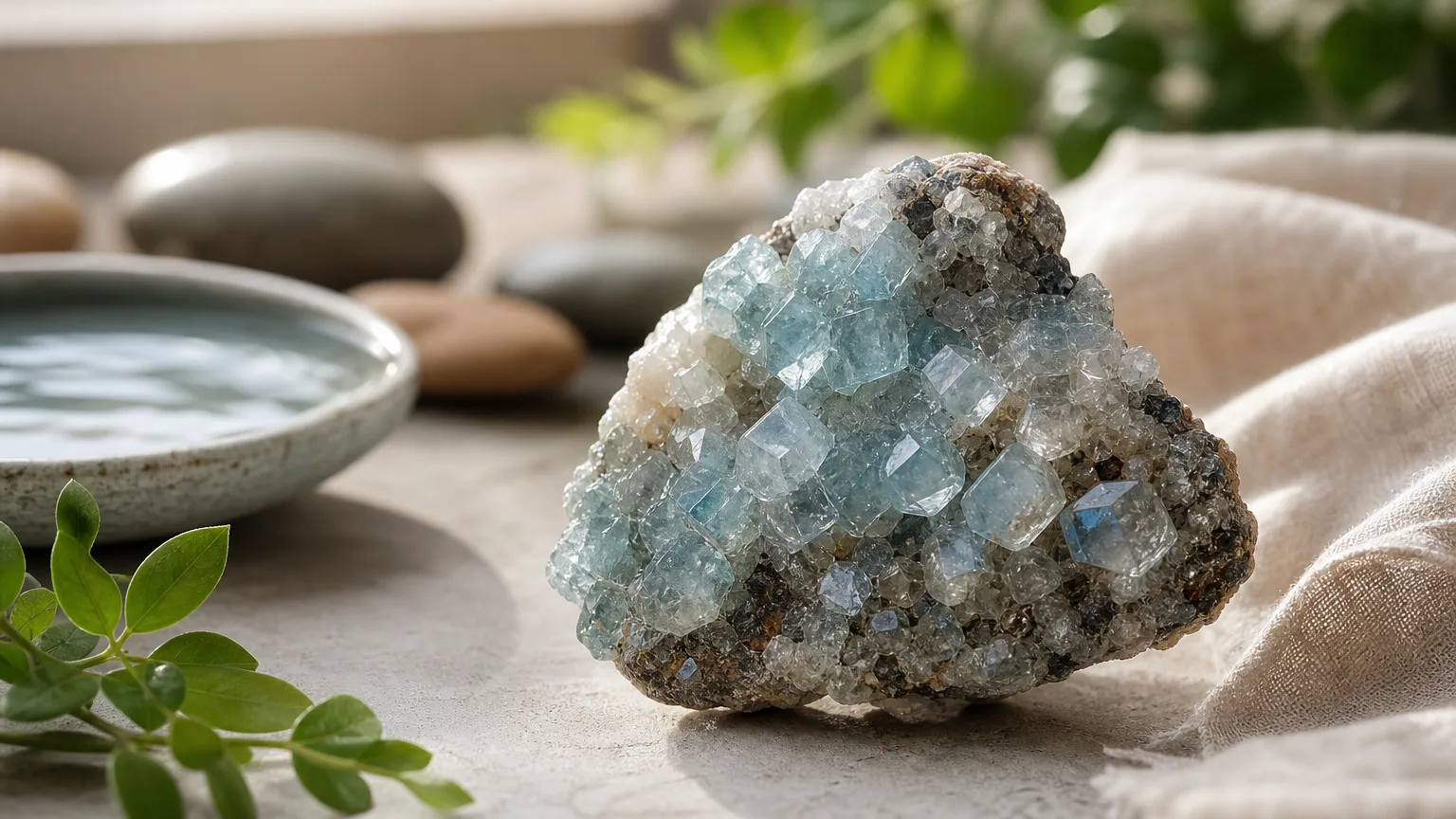
Bismoclite was named for its chemistry — bismuth (Bi), oxygen (O), and chlorine (Cl). As a mineral recognized in modern science, it has no ancient healing tradition of its own.
What gives Bismoclite its modern meaning is its bismuth content: it’s tied to the element behind lab-grown bismuth crystals, with their famous rainbow iridescence. Its symbolism is honestly a recent one, built around that connection to clarity and transformation. It’s a rare oxychloride, part of the matlockite group of minerals.
In modern practice, Bismoclite is tied to clarity and transformation, often linked to the third-eye center. A useful frame: the meaning comes from its bismuth-bearing, pearly character, rather than invented lore. To explore more stones, browse the full Crystal Guide.
Bismoclite Properties
The Science
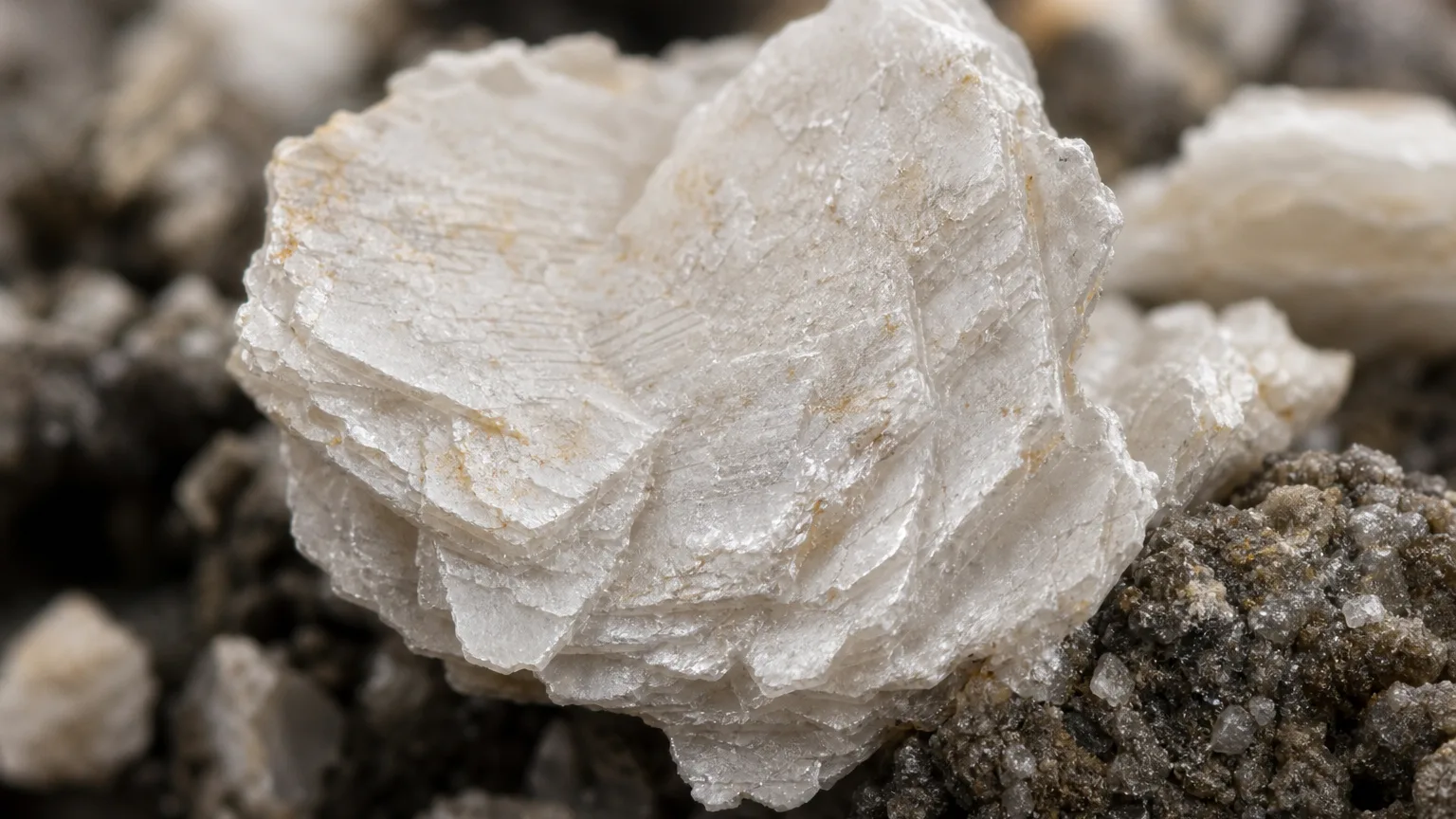
Bismoclite is a rare white bismuth oxychloride — BiOCl, tetragonal (the matlockite group). It’s very soft at 2–2½ on the Mohs scale with a very heavy specific gravity around 7.3–7.8. Its white, grey-white, yellow-white, or pale green tones come from its bismuth-oxychloride chemistry, and it forms scaly, platy to micaceous crystals with an adamantine to pearly luster. It forms in the oxidized zones of bismuth deposits. Notable sources include Germany (Schneeberg), Australia, and Bolivia. This is mineralogy, not mysticism.
Traditional Meaning
Bismoclite has no ancient healing tradition. It was named for its chemistry — bismuth, oxygen, and chlorine — so its meaning is honestly a recent one, built within modern crystal practice around its bismuth-bearing character. In that reading, it’s valued as a stone of clarity and transformation, tied to the third-eye center. The clearest honest statement is that its meaning comes from its rare bismuth-oxychloride chemistry and its pearly white look, plus the intentions people bring to it.
Mindfulness & Psychology
From a psychological angle, Bismoclite works as a “clear change” cue — a rare, heavy, pearly mineral for moments when you want clarity and steady transformation. The act of keeping it visible can support intention-setting: you decide it stands for “see clearly, change steadily,” and its pearly white draws the eye. The idea of a mineral carrying bismuth — the element of rainbow transformation — reads as a clear, changing metaphor, and the small ritual of noticing it during a stuck moment is a brief lift. For people who want a visual cue of clarity and transformation, that little structure is most of the value. These effects come from tradition and personal practice, not clinical research. Crystals complement — but never replace — professional care.
Bismoclite Benefits
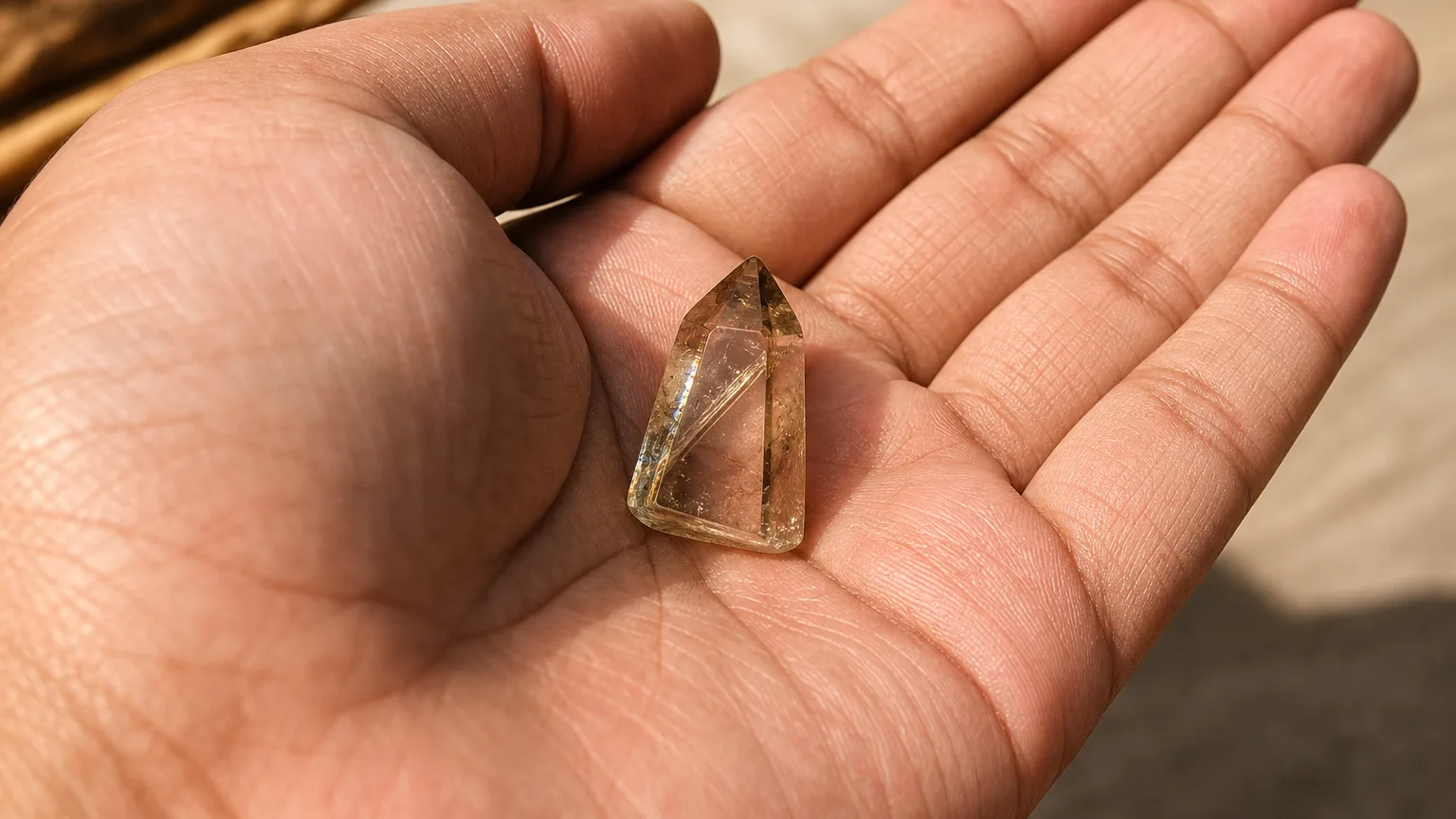
People who keep Bismoclite usually describe it in terms of feeling clearer and more open to change, not dramatic shifts. The specimen tends to come up when transformation matters — the look of its pearly white during a stuck moment, the feel of it when you need to shift. A few benefits people mention most:
Clarity
Its pearly white reads as clear and honest; many keep it as a cue for clear sight.
Transformation
Tied to the third-eye center, it’s a popular cue for steady, honest change.
Adaptability
Its bismuth connection lends itself to flexible, changing energy.
A rare Bi oxychloride
As a bismuth oxychloride, it’s a prized, rare collector’s piece.
The pattern underneath is the same: the stone isn’t doing the work for you, but it gives your space a small structure that makes clarity more likely. If you’re exploring stones for specific needs, see our guide to third-eye chakra crystals.
Bismoclite Chakra, Zodiac, and Element Associations
In modern systems, Bismoclite is most often linked to the third-eye center — clarity, transformation, and adaptability. It’s sometimes paired with Aquarius, and its element is Air. For related stones, see third-eye chakra crystals.
These are correspondences built up through very recent crystal practice, not fixed rules. If your own sense of a piece points somewhere else, that’s completely fine. Many people work with stones intuitively, following what feels right rather than a chart.
How to Use Bismoclite

Bismoclite is very soft (Mohs 2–2½) and heavy, so it’s best as a display specimen — admired, not worn or knocked. Handle it gently.
Keep it on display. Pearly white scaly crystals on matrix work as décor and a daily “see clearly” cue.
Meditate near it. Sit with its pearly look in view. Even a few minutes of calm focus counts; the goal is presence, not duration.
Handle gently. As a very soft, rare collector’s piece, admire it where it sits; don’t carry it roughly.
Cleanse gently. Brief dampness is fine; avoid acids and long soaks.
Which Bismoclite Form Is Right for You?
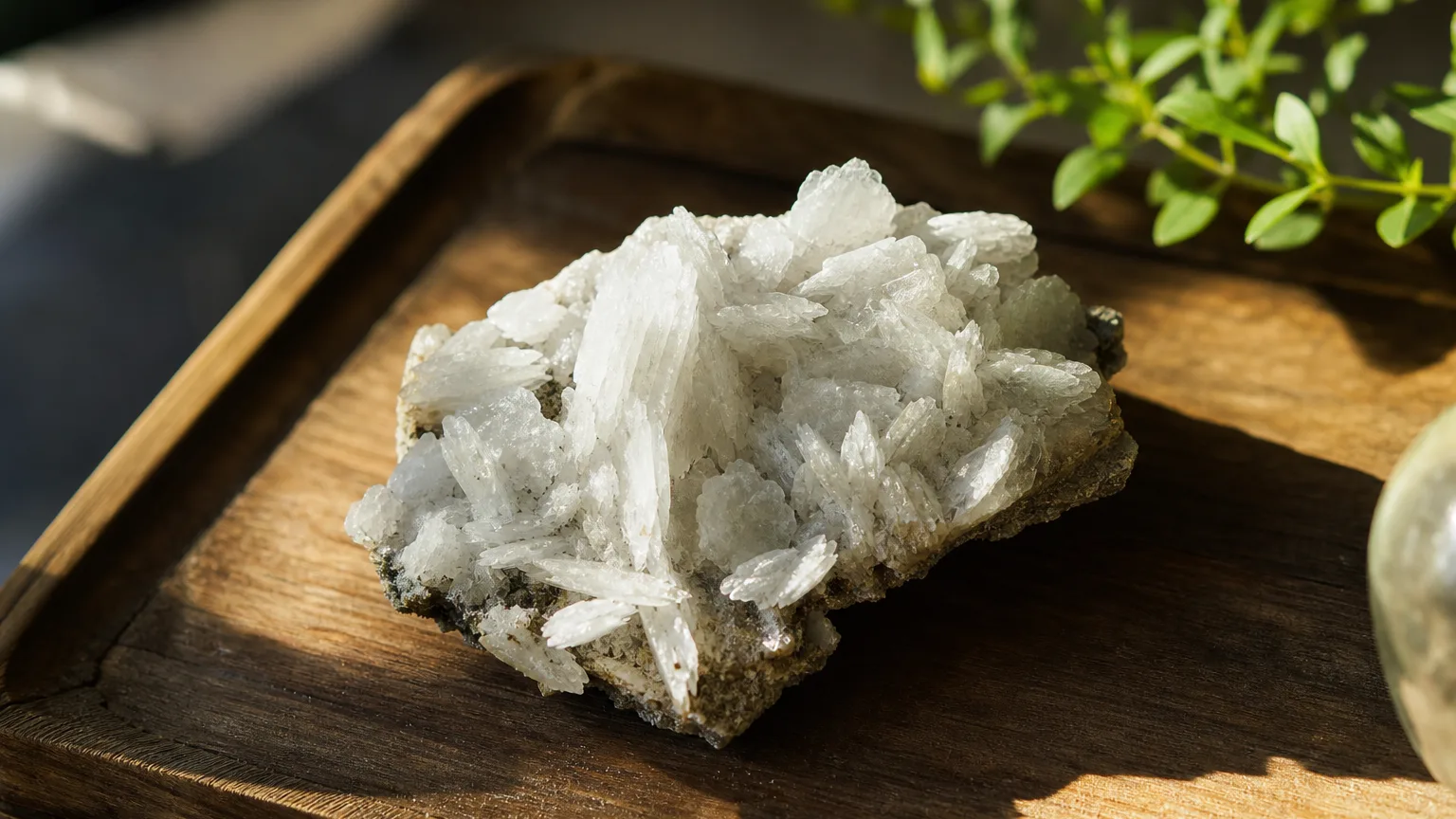
| Form | Best for | Choose it if |
|---|---|---|
| White scaly crystals on matrix | Display, collection | You want the classic pearly white scales on host rock |
| Earthy white coating | Display, geology | You want an earthy white coating on bismuth ore |
| Micro crystal cluster | Display, micro-mount | You want a small pearly cluster to study under magnification |
How to Tell Real Bismoclite from Fakes
Bismoclite isn’t faked — genuine pieces are a very rare collector’s niche — but its pearly look can mimic other minerals. A few checks help:
- Weight. At SG ~7.3–7.8, Bismoclite feels extremely heavy for its size — a clear sign of its bismuth content.
- Softness. At Mohs 2–2½, a fingernail easily scratches it — it’s very soft.
- Rarity. It’s an extremely rare mineral from specific localities; a common, cheap “bismoclite” is a red flag.
- Luster. Real Bismoclite has an adamantine to pearly luster on its scaly crystals — a distinctive sheen.
- Reputable seller. Buy from dealers who describe it honestly as a bismuth oxychloride from Germany, Australia, or Bolivia.
For a first Bismoclite, white scaly crystals on matrix from a reputable dealer is a sound start.
How to Cleanse and Charge Bismoclite
Bismoclite is very soft, so it needs gentle, mostly no-contact care. A few safe methods:
- Sound. A singing bowl nearby is the safest cleanse — no contact with the soft surface.
- Moonlight. A night under the moon is gentle and effective.
- Brief dust. Clean dust with a soft dry brush. Never soak it or use acids.
- Avoid heat and acids. Keep it away from strong heat and chemicals.
Things to avoid: acids, water soaking, salt, and rough handling. For the full routine, see our guide to cleansing crystals.
Best Crystals to Pair With Bismoclite
Bismoclite pairs well with other bismuth-bearing or clear, pearly stones. A few combinations people enjoy:
- Bismoclite + Bismuth — bismuth family kin; the oxychloride beside the element for clarity and transformation.
- Bismoclite + Selenite — pearly, clear stones for clarity and bright sight.
- Bismoclite + Amethyst — pearly clarity beside calm violet for clear, steady thinking.
- Bismoclite + Moonstone — two pearly stones for reflective, clear energy.
The logic of pairing is about complementary character, not strict rules. Pick pieces that feel right together and match the energy you want.
Who Should Use Bismoclite?
Bismoclite suits people drawn to clarity and transformation — anyone wanting a rare, heavy display piece, anyone who loves bismuth minerals and collector’s pieces, or anyone who wants a cue of clear sight and steady change on the shelf.
A few honest expectations: Bismoclite isn’t a treatment for confusion, resistance to change, or any condition — if you’re dealing with something persistent, a healthcare professional is the right call. Its meaning is modern and personal, with no ancient healing tradition behind it. It won’t “do” anything on its own; its value comes from the intention you build around it. It’s very soft (Mohs 2–2½) and heavy, so it’s a display specimen handled gently, kept from acids and rough wear. Go in expecting a rare, pearly white collector’s piece for clarity and transformation, and it tends to fit well.
FAQ About Bismoclite Meaning
What is Bismoclite?
A rare white bismuth oxychloride, BiOCl, Mohs 2–2½, very heavy and pearly-scaly. Named for its bismuth-oxygen-chlorine chemistry, it’s a rare collector’s mineral from Germany, Australia, and Bolivia.
How is it related to bismuth?
It’s a mineral that contains bismuth — specifically bismuth oxychloride. It’s part of the bismuth mineral family, related to the element bismuth (Bi) and its other minerals.
Can Bismoclite go in water?
Brief dampness is fine, but never soak it or use acids. As a very soft mineral it cleanses best by sound or moonlight.
How hard is Bismoclite?
2–2½ on the Mohs scale — very soft, fine for a display piece but not a worn gem.
What chakra is it linked to?
In modern practice, mostly the third-eye center — clarity, transformation, and adaptability.
Where does Bismoclite come from?
Notable sources include Germany (Schneeberg), Australia, and Bolivia — from the oxidized zones of bismuth deposits.
Is Bismoclite rare?
Yes — it’s a very rare collector’s mineral from only a few bismuth-deposit localities worldwide. Genuine pieces are prized by specialists.
Final Thoughts on Bismoclite
Bismoclite earns its place as a stone of clarity and transformation — and it earns it again for each person who keeps one and gives it a meaning. If you’re curious, the simplest start is one pearly white specimen on a shelf, one intention, and a small daily moment to notice it. You don’t need the finest crystal; you need a piece whose clarity you can feel. Let it sit and do its quiet work, and let the Bismoclite be the pearly reminder that brings you back to clear sight and steady, honest change.
From there, it tends to bring a clearer, more adaptable presence to a space — a note of pearly white, a cue of transformation, or simply the pleasure of keeping a rare bismuth collector’s piece. For more, explore the Crystal Guide or browse bismoclite pieces.