
Clinoptilolite Meaning: Healing Properties & Uses
Clinoptilolite is the most common natural zeolite — a hydrated aluminosilicate with a porous, honeycomb-like structure that gives it remarkable filtering and ion-exchange power. It’s a soft, white mineral (Mohs 3.5–4) widely used in industry and water treatment. This guide covers what clinoptilolite is, its porous structure, and how people understand it. Crystal meanings reflect tradition and personal practice, not medical advice.
What Is Clinoptilolite Meaning?
At its simplest, clinoptilolite means quiet order, filtering, and a steady process of clearing. As the most abundant natural zeolite — a mineral whose porous structure literally filters and sorts at the molecular level — it carries a feel of quiet, patient order. There’s no ancient tradition behind it; clinoptilolite is meaningful to mineral collectors and to industry for its real, measurable properties.
For most people the appeal is its story: a common, white mineral whose invisible honeycomb structure quietly filters water, air, and soil all over the world. You don’t need to hold any belief to appreciate it — the value sits in the mineral’s genuine, practical power and in the curiosity of something so ordinary being so useful.
Clinoptilolite Meaning and Symbolism
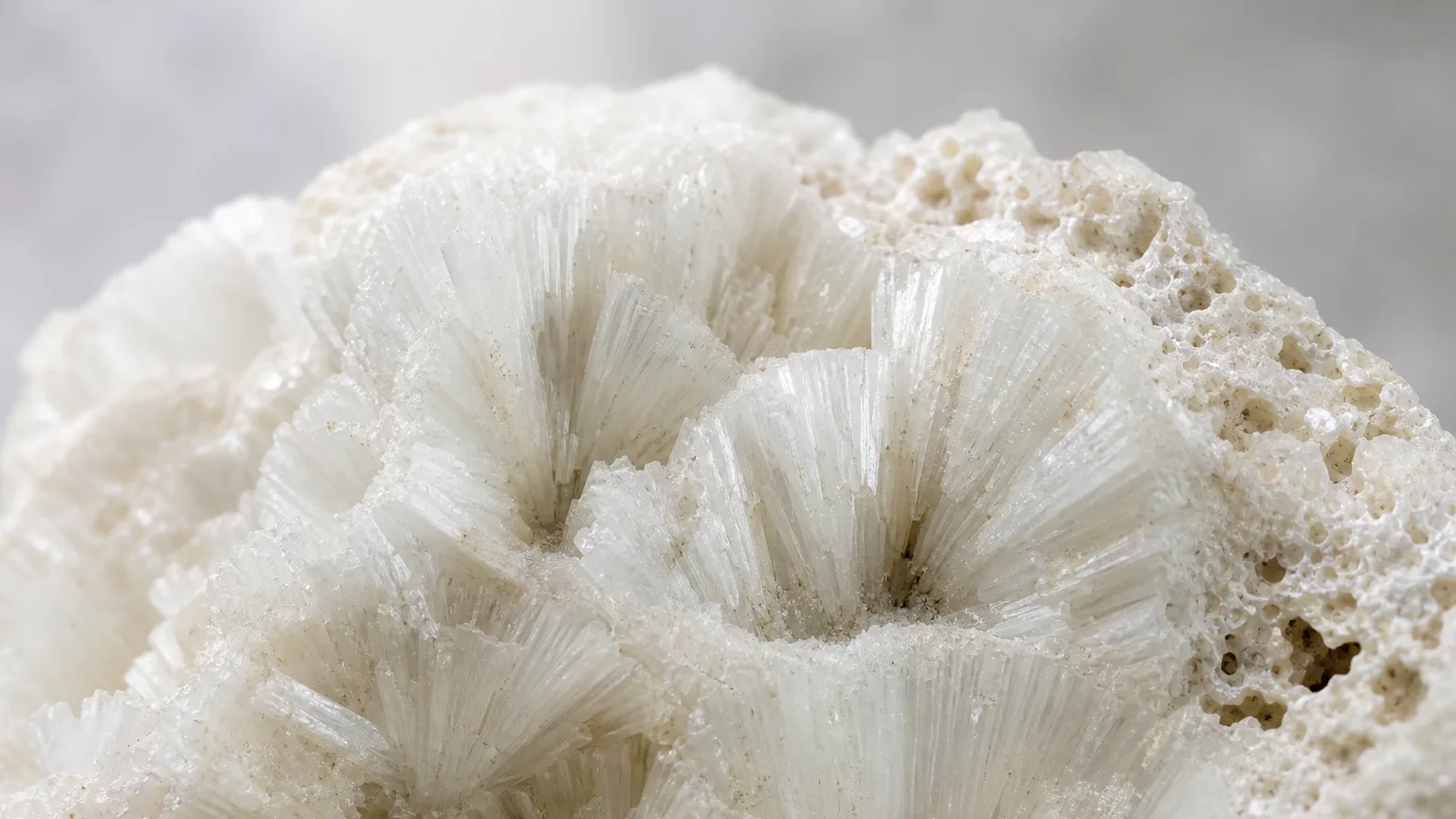
The name is descriptive and old. Clinoptilolite comes from three Greek words: klino (“inclined”), ptilos (“feather”), and lithos (“stone”), for its inclined, feather-like crystal habit. It belongs to the heulandite group of zeolites.
Symbolically, thin modern tradition ties clinoptilolite to quiet order and a steady process of filtering — a meaning drawn from its real porous structure rather than any established lore. The image of a mineral whose honeycomb framework quietly filters and sorts at the molecular level can prompt a reflection on patient, quiet work. How much meaning you find in it is genuinely personal, and the associations sit in modern tradition. It’s a cousin of other zeolites like mordenite. To explore more stones, browse the full Crystal Guide.
Clinoptilolite Properties
The Science
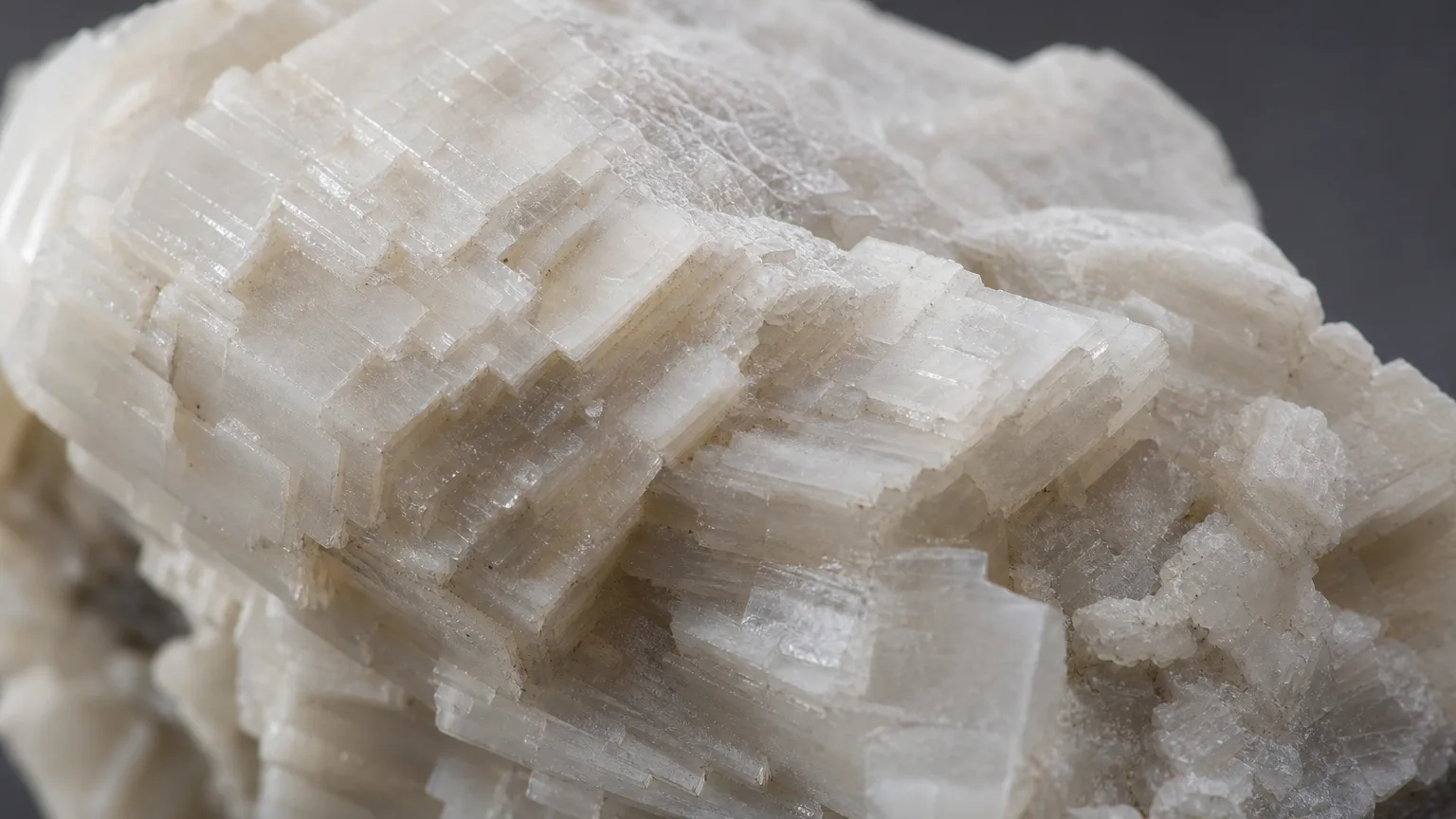
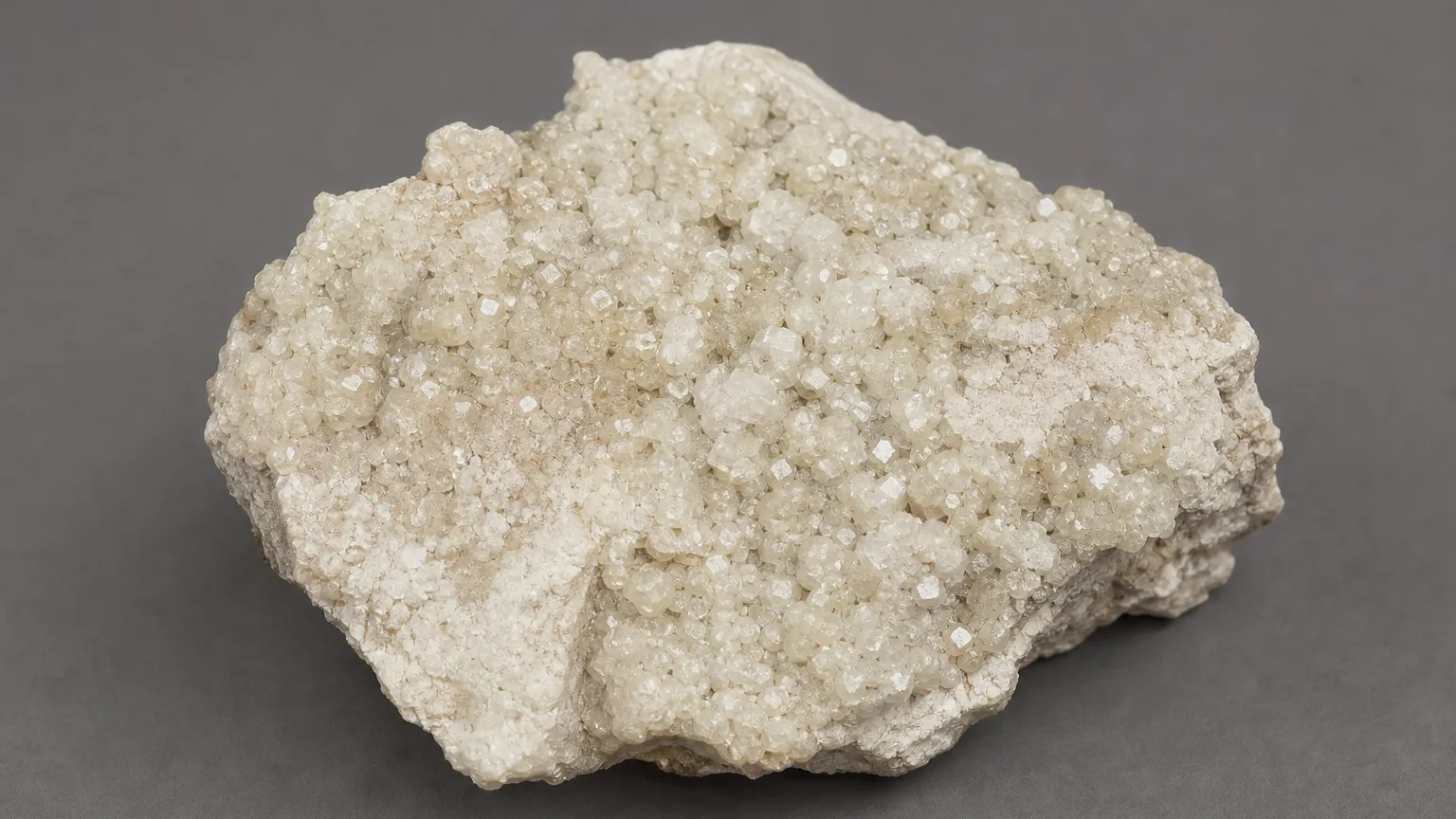
Clinoptilolite is a hydrated alkali aluminosilicate — roughly (Na,K)₆(Al₆Si₃₀O₇₂)·20H₂O — and the most abundant natural zeolite in the Earth’s crust, in the heulandite group. It crystallizes in the monoclinic system as white to pale-colored tabular crystals, with a low Mohs hardness of 3.5 to 4 and a light specific gravity near 2.1. Its defining feature is its porous, three-dimensional honeycomb framework: linked SiO₄ and AlO₄ tetrahedra form channels and cavities that can trap ions, water molecules, and even gases. This structure gives clinoptilolite its real, measurable powers — ion exchange, adsorption, and molecular sieving — which is why it’s used worldwide in water treatment (removing ammonia and heavy metals), agriculture (soil amendment and slow-release nutrients), animal feed (binding harmful compounds), and even nuclear waste management (capturing radioactive cesium and strontium). None of this is mystical — it’s zeolite chemistry, with the porous framework supplying both the industrial value and the “filtering” metaphor.
Traditional Meaning
Clinoptilolite has essentially no traditional metaphysical layer, and it’s most honest to say so. It’s a mineral valued by industry and science, not a stone with centuries of spiritual use. In the thin modern crystal practice that notices it, clinoptilolite gets loosely tied to quiet order and steady filtering. These ties are thin, recent, and personal rather than an established tradition.
Mindfulness & Psychology
From a psychological angle, clinoptilolite works less as a calming anchor and more as a reminder of quiet, patient order. A mineral whose invisible honeycomb structure quietly filters water all over the world can prompt a useful reflection — some of the most important work is quiet, steady, and invisible. Like many specimens, part of the value is simply the focused attention of looking closely. These effects come from tradition and personal practice, not clinical research. Crystals complement — but never replace — professional care.
Clinoptilolite Benefits
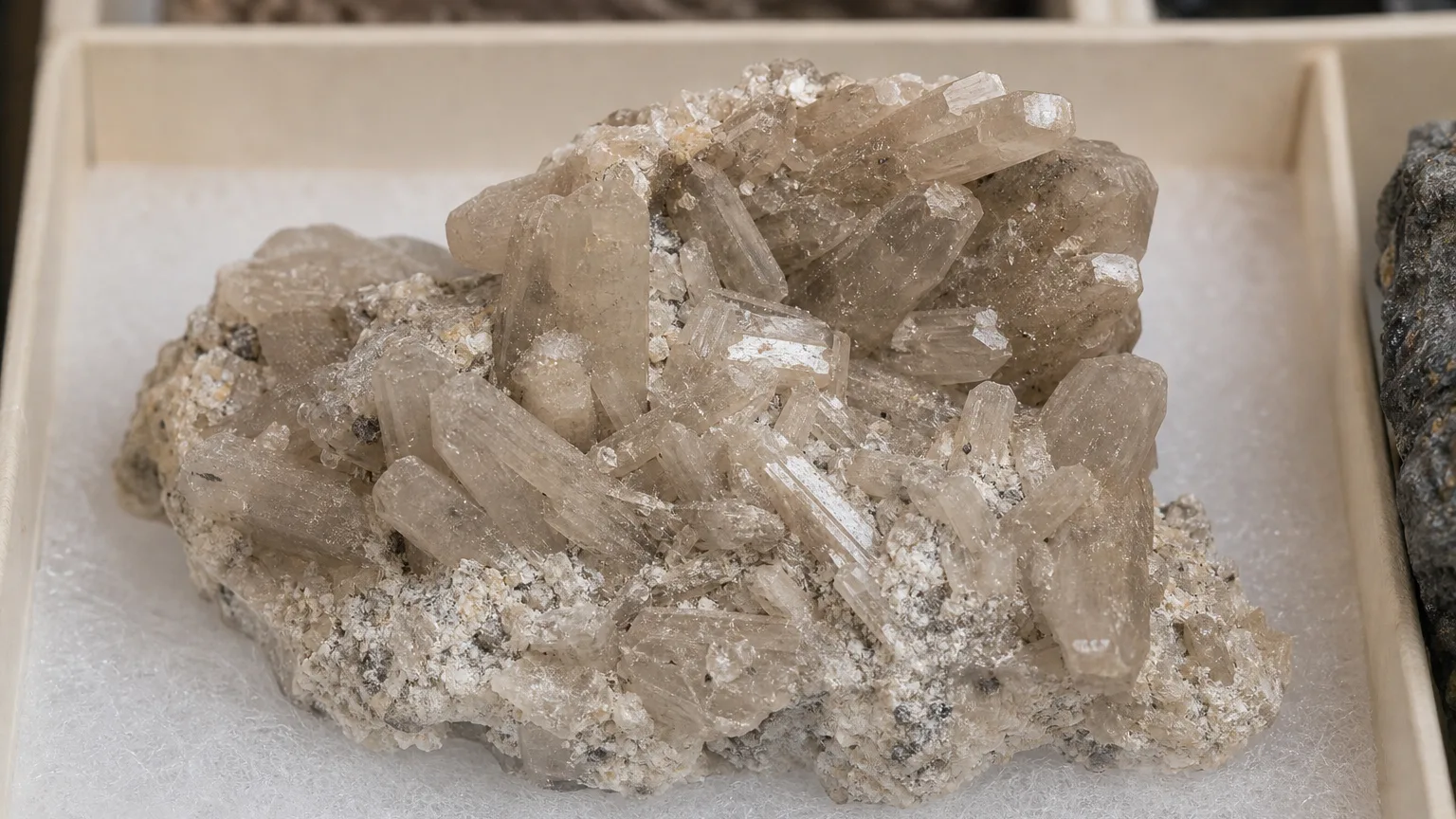
Because clinoptilolite is an industrial mineral with little metaphysical tradition, it’s best to keep its benefits honest and grounded. What people who keep a piece describe is quiet and practical:
A study in quiet order
Knowing this common mineral quietly filters water and soil worldwide can prompt a reflection on patient, invisible work.
A teaching specimen
Its porous framework and ion-exchange power make clinoptilolite a striking example of how structure drives function in nature.
A focus on filtering
The honeycomb metaphor offers a quiet cue to filter what you take in — information, worry, noise — and let the useful through.
A piece of quiet industry
Its ties to water treatment, agriculture, and nuclear waste management connect a shelf to real, practical human work.
The pattern is simple: clinoptilolite isn’t doing mystical work, but it gives a collection a genuinely useful mineral with a real story. If you’re looking for stones tied to specific intentions, see our guides to crystals for grounding and crystals for anxiety.
Clinoptilolite Chakra, Zodiac, and Element Associations
Clinoptilolite has no established chakra or zodiac tradition — it’s a modern, industrially important mineral. If pressed, its element is plainly Earth, fitting for a mineral dug from volcanic sediments. Take any chakra mapping as a personal starting point, not a rule.
For stones with a deeper energetic tradition, see root chakra crystals — clinoptilolite sits closer to geology and industry than to those systems.
How to Use Clinoptilolite
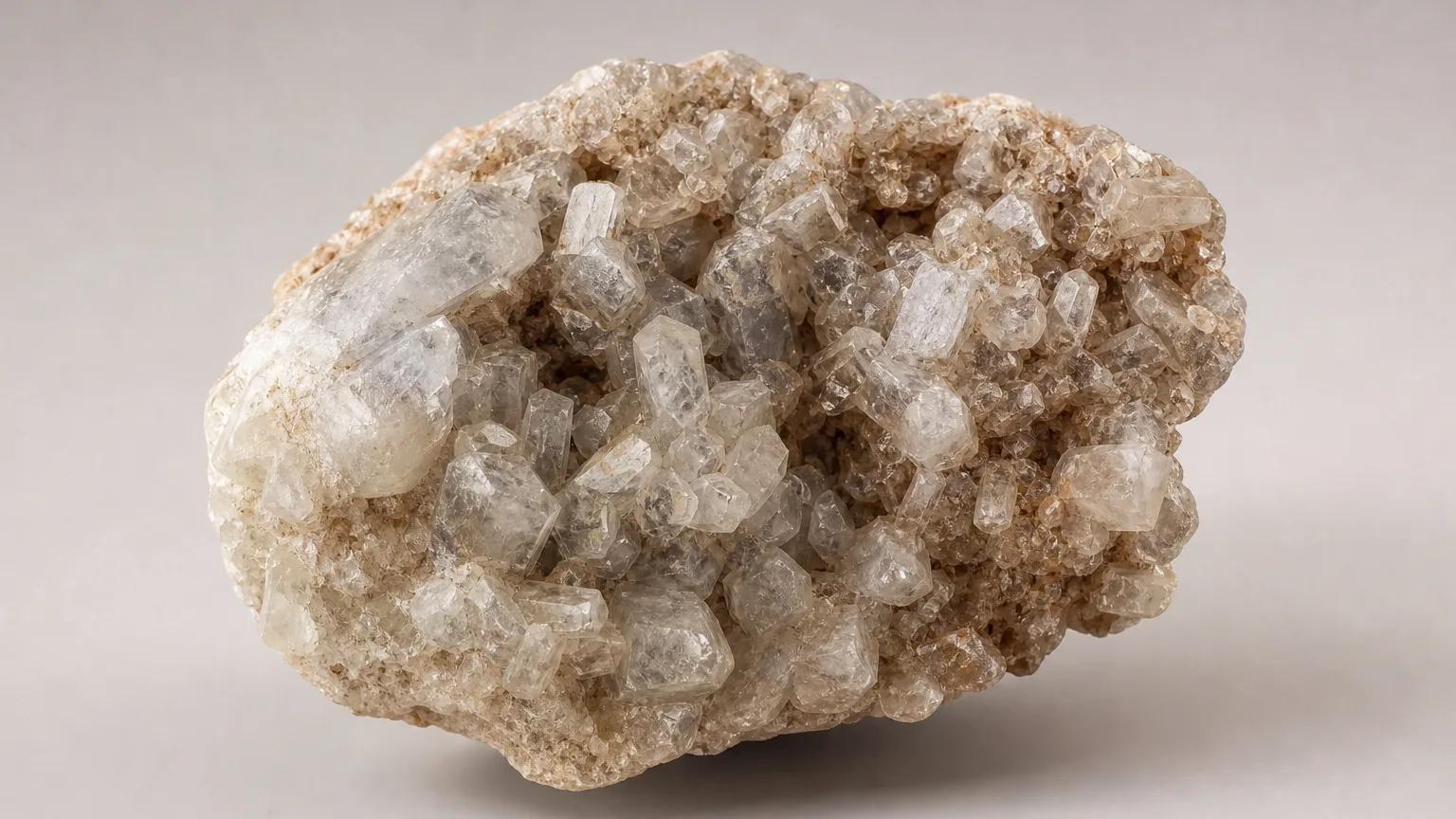
Clinoptilolite is soft (Mohs 3.5–4) and comes in massive, granular, or thin platy forms rather than striking crystals, so it’s best kept as a specimen or study piece rather than set in jewelry.
Display it. A piece on a shelf or in a study collection works as both a mineral specimen and a quiet reminder of patient, filtering work.
Handle it gently. It’s soft with perfect cleavage, so avoid bumping or scraping it.
Use it to learn. Its porous framework and ion-exchange power make clinoptilolite one of the best teaching examples of how a mineral’s structure drives its function.
Which Clinoptilolite Form Is Right for You?
| Form | Best for | Choose it if |
|---|---|---|
| Massive / granular specimen | Cabinet or shelf display | You want a raw example of the most common natural zeolite |
| Tabular crystal specimen | Study collection | You want to see the inclined, feather-like crystal habit |
| Micro crystals | Micromount collection | You enjoy small zeolite crystals viewed up close |
| Tumbled granules | Study or teaching | You want a hands-on example of a porous, ion-exchanging mineral |
How to Tell Real Clinoptilolite from Look-alikes
Clinoptilolite isn’t usually faked — it’s common enough. The main challenge is separating it from other white zeolites like heulandite, mordenite, or stilbite. A few notes help:
- The zeolite family. Clinoptilolite is closely related to heulandite (same group) and can be hard to distinguish visually. Reliable ID may need X-ray diffraction.
- Softness. At Mohs 3.5–4, it’s scratched easily by a steel knife and even a copper coin — softer than quartz, harder than talc.
- The platy habit. Its inclined, tabular to bladed crystals with perfect cleavage on {010} are characteristic, though easily confused with heulandite.
- Source and label. Buy from mineral dealers who name the zeolite species and locality, since the heulandite-clinoptilolite group is often grouped loosely.
For most buyers the honest path is simple: think of clinoptilolite as the most common natural zeolite, often granular and white, from a dealer who names the species.
How to Cleanse and Charge Clinoptilolite
Clinoptilolite is soft (Mohs 3.5–4) with perfect cleavage, so gentle, no-contact methods suit it best. A few safe options:
- Sound. A singing bowl or bell near the specimen resets it without contact — the safest option for a soft zeolite.
- Moonlight. Set it on a dry shelf overnight under a full moon.
- Smoke. A brief pass through sage or palo santo smoke is fine, done gently and away from heat.
- Brief rinse. A quick rinse under cool water is fine; avoid long soaks and salt.
The things to avoid: hard knocks (soft with perfect cleavage), salt water, and long soaks. For general crystal care, see our guide to cleansing crystals.
Best Crystals to Pair With Clinoptilolite
Because clinoptilolite’s meaning is thin and it’s an industrial mineral, pairings are about context, not layering intentions. A couple of honest notes:
- Clinoptilolite + Mordenite — two zeolite minerals; a natural pairing for a study shelf around quiet order and structure.
- Clinoptilolite + Clear Quartz — clear quartz makes a neutral display neighbor that lets clinoptilolite’s story stand out.
The logic here is about context and contrast, not strict rules. Keep clinoptilolite’s softness in mind, and choose pairings that suit a specimen cabinet.
Who Should Use Clinoptilolite?
Clinoptilolite suits a narrow, specific crowd: mineral collectors, geology teachers, and anyone fascinated by how a mineral’s structure drives its function. If you enjoy minerals with a real, practical story — water treatment, agriculture, nuclear waste management — clinoptilolite delivers that without dressing up as something it isn’t.
A few plain expectations: clinoptilolite isn’t a treatment for anxiety, low mood, or any condition, and it has no real metaphysical tradition — if you want a stone with deep spiritual history, look elsewhere. Its industrial adsorption and ion-exchange powers are real, but they belong in water-treatment plants and laboratories, not in crystal lore. It’s a soft specimen to be studied, not a working energy stone. Go in expecting a genuinely useful, quiet mineral with a real story, and it fits well.
FAQ About Clinoptilolite Meaning
What is clinoptilolite?
The most abundant natural zeolite — a hydrated aluminosilicate with a porous, honeycomb-like framework that gives it remarkable ion-exchange and adsorption power. Named from Greek for “inclined feather stone.”
Why is clinoptilolite so useful?
Its porous three-dimensional framework of SiO₄ and AlO₄ tetrahedra forms channels that trap ions, water, and gases — giving it ion-exchange, adsorption, and molecular-sieving power used in water treatment, agriculture, and industry.
Is clinoptilolite the same as mordenite?
Both are zeolites, but different species. Clinoptilolite is in the heulandite group and is the most common natural zeolite; mordenite is a different zeolite with a fibrous needle habit.
What chakra is clinoptilolite linked to?
None with any tradition. It’s a modern, industrially important mineral; its element is plainly Earth.
Can clinoptilolite go in water?
A brief rinse is fine — it’s a soft zeolite (Mohs 3.5–4). Avoid long soaks and salt water.
Does clinoptilolite have wellness uses?
Its adsorption and ion-exchange powers are real and studied, but those belong in industrial, agricultural, and medical contexts — not in crystal-meaning claims. This page describes the mineral’s industrial value as fact, not as a personal wellness practice.
How do I care for clinoptilolite?
Handle it gently — it’s soft (Mohs 3.5–4) with perfect cleavage. Cleanse with sound or moonlight; avoid hard knocks, salt water, and long soaks.
Final Thoughts on Clinoptilolite
Clinoptilolite earns its place by being exactly what it is: the most common natural zeolite, a quiet, porous mineral whose invisible honeycomb structure filters water and soil all over the world. If that speaks to you, the simplest start is one labeled specimen from a reputable dealer, kept on a shelf and appreciated for its genuine, practical power. You don’t need the finest crystal; you need a piece you can learn from.
From there, clinoptilolite tends to do what quiet, useful specimens do — it reminds you that some of the most important work is invisible, steady, and patient. If that’s what you’re after, you’re in the right place. For more, explore the Crystal Guide.