Cloud Agate Meaning: Healing Properties & Uses
Cloud agate is a trade name for chalcedony — microcrystalline quartz, SiO₂ — that shows soft, cloudy, milky-white patterns instead of the sharp bands of a typical agate. It’s a hard, durable stone (Mohs 6.5–7) prized for its dreamy, calming look. This guide covers what cloud agate is, how it differs from banded agate, and how people use it. Crystal meanings reflect tradition and personal practice, not medical advice.
What Is Cloud Agate Meaning?
At its simplest, cloud agate means calm, serenity, and a quiet, balanced mind. In modern crystal practice it’s a soft, white chalcedony carried for a calmer mood, a steadier mind, or a gentler sense of inner peace. The name is descriptive, from its cloud-like patterns.
For many people the appeal is its look: a milky, swirling white stone that reads as calm and mist. You don’t need to hold a particular belief to get something from it — the value often comes from choosing the stone, carrying it, and letting its soft, cloudy tone mark a calmer, more settled mood.
Cloud Agate Meaning and Symbolism
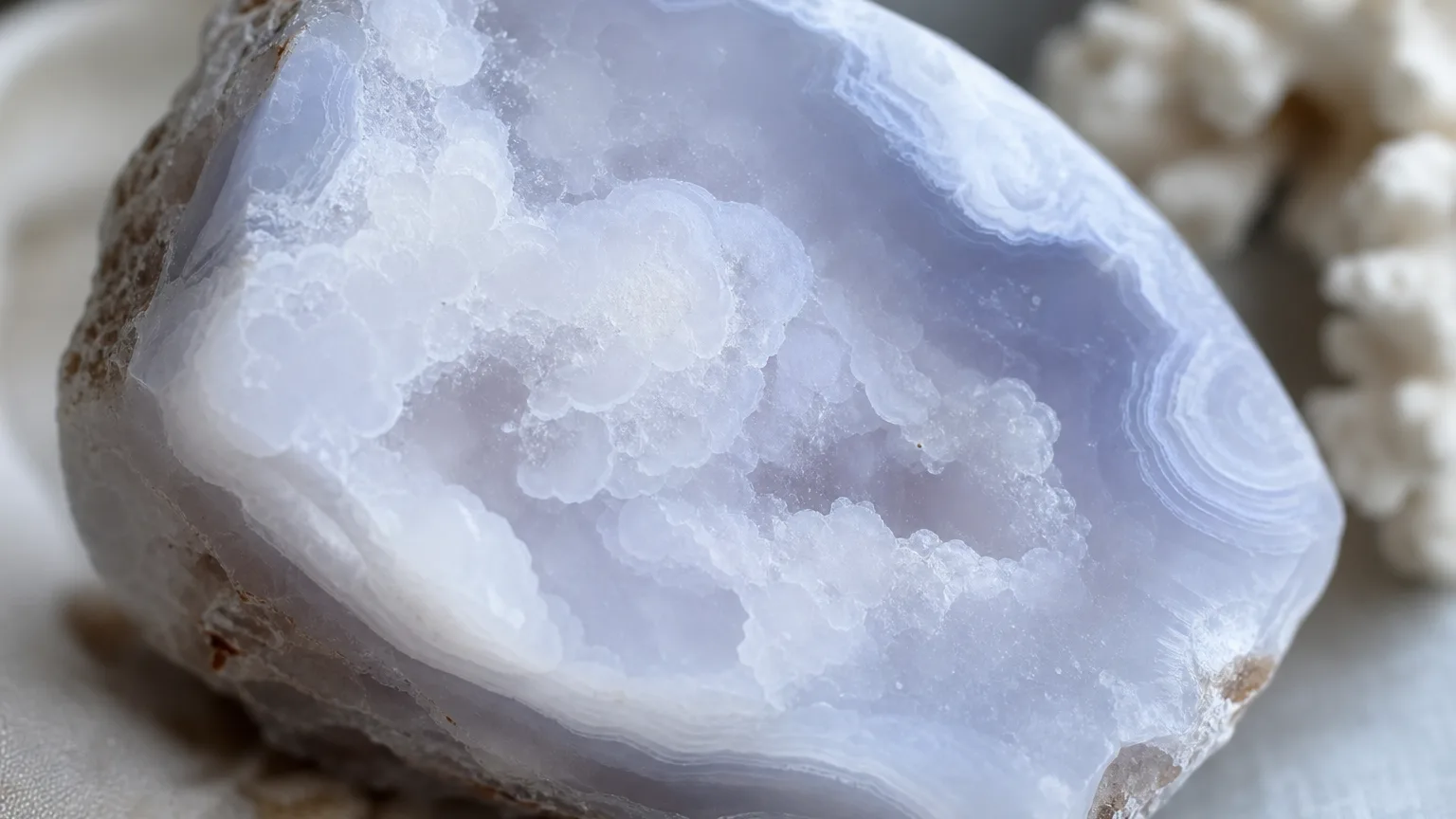
The name is descriptive and visual. Cloud agate comes from its soft, cloud-like, milky-white patterns — swirls of white and grey that look like mist trapped in stone. It’s technically chalcedony rather than a true banded agate, but the trade name has stuck for its dreamy look.
Symbolically, modern tradition ties cloud agate to calm, serenity, and a quiet, balanced mind. Its soft white tone reads as peace and clarity, and people reach for it to soften a tense mood or find a steadier frame of mind. How much meaning you find in it is genuinely personal, and the associations sit in the shared tradition of agate and chalcedony. To explore more stones, browse the full Crystal Guide.
Cloud Agate Properties
The Science
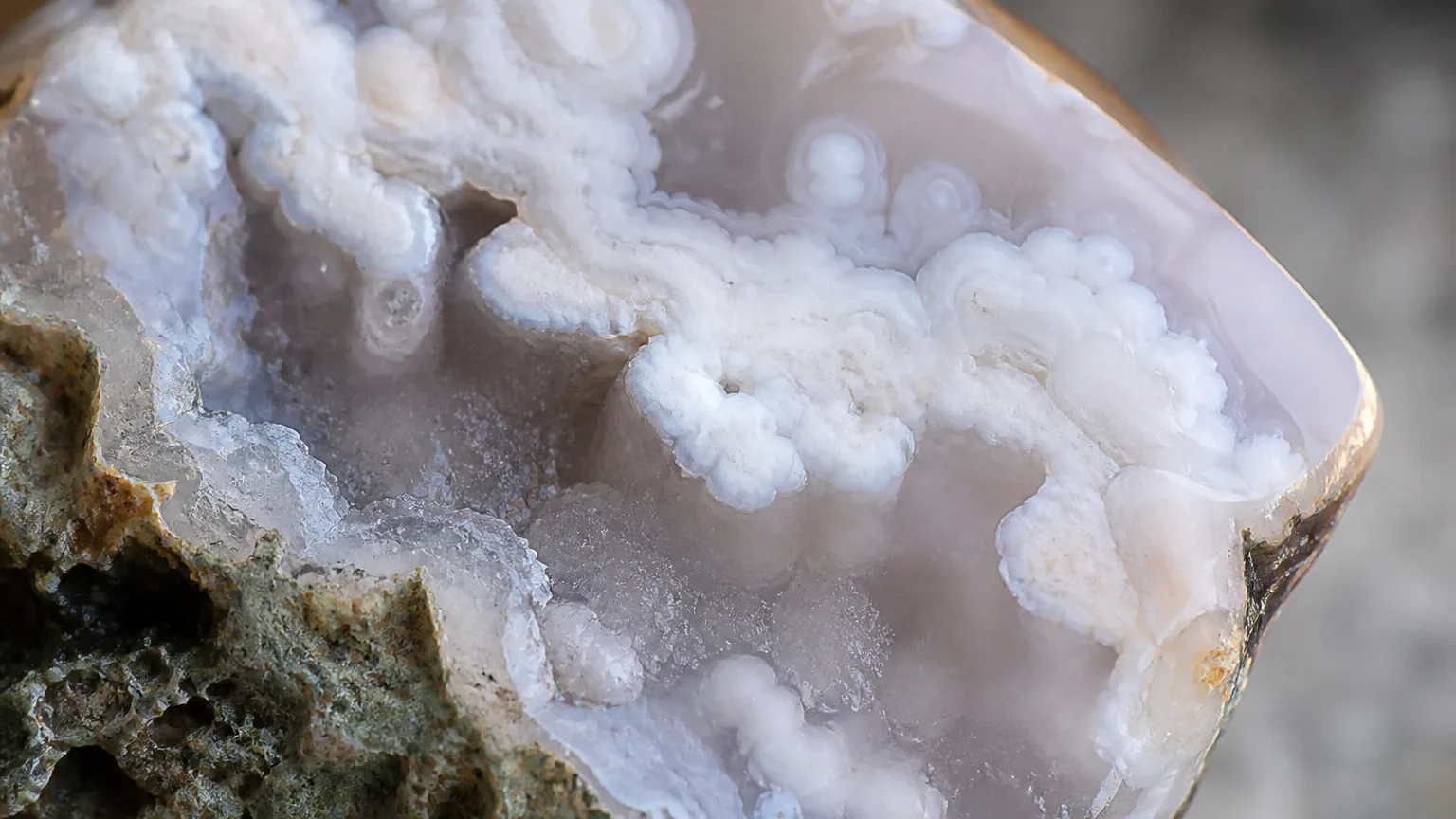
Cloud agate is chalcedony — microcrystalline quartz, SiO₂ — that shows soft, cloudy, milky-white patterns rather than the sharp, alternating bands of a typical agate. It crystallizes in the trigonal system, with a Mohs hardness of 6.5 to 7, a specific gravity near 2.6, and a waxy to vitreous luster. Its cloudy look comes from microscopic mineral inclusions (often manganese or iron oxides) scattered through the silica, creating the misty, swirling effect instead of clean banding. Like all agates and chalcedonies, it forms when silica-rich groundwater seeps into cavities in volcanic rock and deposits microcrystals layer by layer over long periods — the difference is simply that cloud agate’s deposition was more chaotic, producing misty swirls rather than rhythmic bands. None of this is mystical — it’s silica geology, with microscopic inclusions supplying the cloudy look.
Traditional Meaning
Tradition ties cloud agate to calm, serenity, and a quiet, balanced mind — the shared chalcedony symbolism, deepened by the stone’s soft, misty look. White agate and chalcedony have a long folk history as stones of balance, protection, and soothing. These ties come from tradition and personal practice rather than clinical study.
Mindfulness & Psychology
From a psychological angle, cloud agate works as a calm-and-serenity anchor. Its soft, milky white reads in color psychology as peace, clarity, and openness, and the act of holding the stone and giving it a quiet job — “settle,” “soften” — turns it into a small repeated cue. Like any ritual, part of the value is simply carving a moment of attention out of a noisy day. These effects come from tradition and personal practice, not clinical research. Crystals complement — but never replace — professional care.
Cloud Agate Benefits
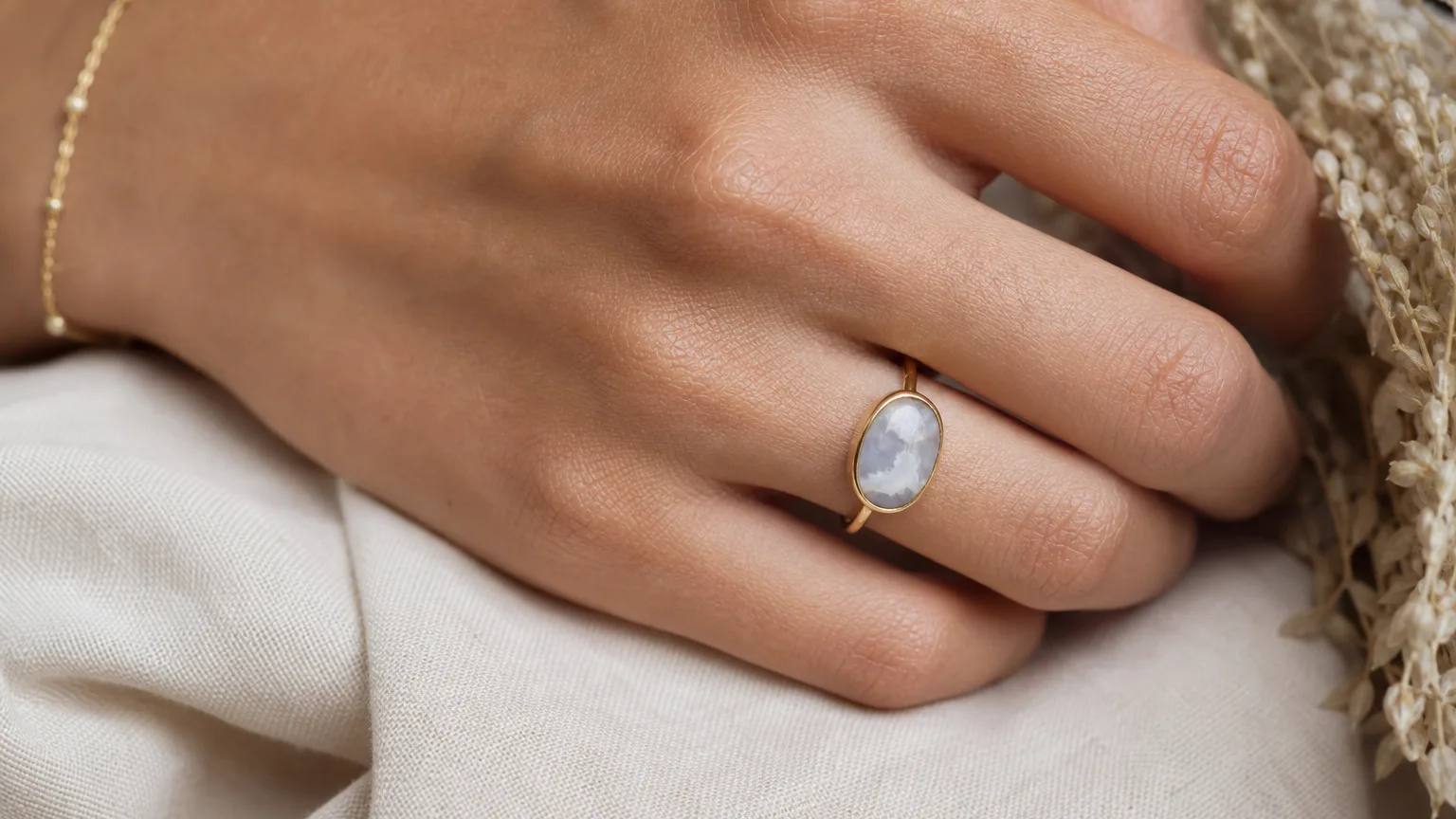
People who work with cloud agate usually describe it in terms of a calmer, more settled mood rather than dramatic shifts. The stone tends to show up in quiet, repeatable moments — a slow breath, a softer pause, a steadier frame of mind. A few of the benefits people mention most often:
A calmer mood
Held through a tense stretch, the soft, milky stone acts as a cue to soften and settle rather than tighten.
A balanced mind
Its even, misty tone reads as balance — a quiet prompt to hold the middle when things swing.
Inner serenity
The dreamy, cloud-like look invites a gentler, more peaceful frame of mind.
A soft focus
Its smooth, polished surface gives your fingers and attention something calm to rest on during a sit.
The pattern is the same underneath: the stone isn’t doing the work for you, but it gives your day a calmer, more balanced structure. If you’re exploring stones for specific needs, see our guides to crystals for anxiety and crystals for sleep.
Cloud Agate Chakra, Zodiac, and Element Associations
In modern systems, cloud agate is most often linked to the crown — for clarity and peace — and the heart, for its soothing note. Its element is usually given as Air or Earth. It has no strong zodiac tradition. For related stones, see crown chakra crystals.
These are correspondences built up through tradition, not rules. If your own sense of cloud agate points elsewhere, that’s completely fine — many people work intuitively, following what feels right.
How to Use Cloud Agate
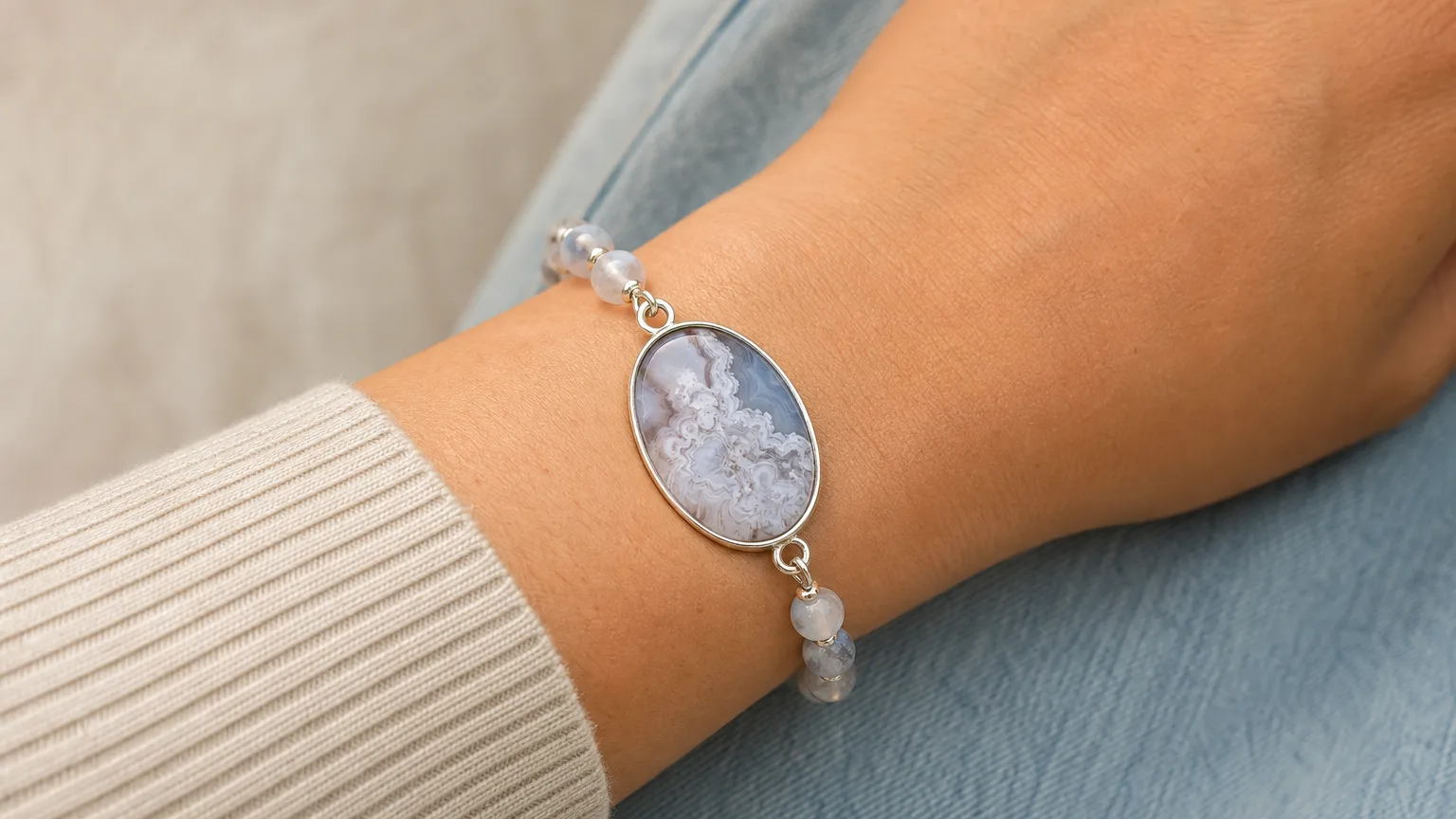
Cloud agate is hard and durable chalcedony (Mohs 6.5–7), so it wears well in cabochons, beads, and tumbled stones. The key is consistency: a stone you actually see and touch each day does far more than one that stays in a drawer.
Wear it. A cabochon pendant or bead bracelet keeps the milky stone with you through the day. Pair one piece with a simple intention each morning — “settle,” “soften.”
Meditate with it. Hold a tumbled or cabochon piece in your palm while you sit. Its smooth, dreamy look gives your attention a calm place to rest.
Place it at home. A polished piece on the nightstand or desk works as both décor and a quiet serenity cue.
Build a calm ritual. When stress builds, hold the stone and take three slow breaths. Repetition turns a gesture into a habit.
Which Cloud Agate Form Is Right for You?
| Form | Best for | Choose it if |
|---|---|---|
| Cabochon / Pendant | Personal meaning, daily wear | You want a soft, milky stone near the face or neckline |
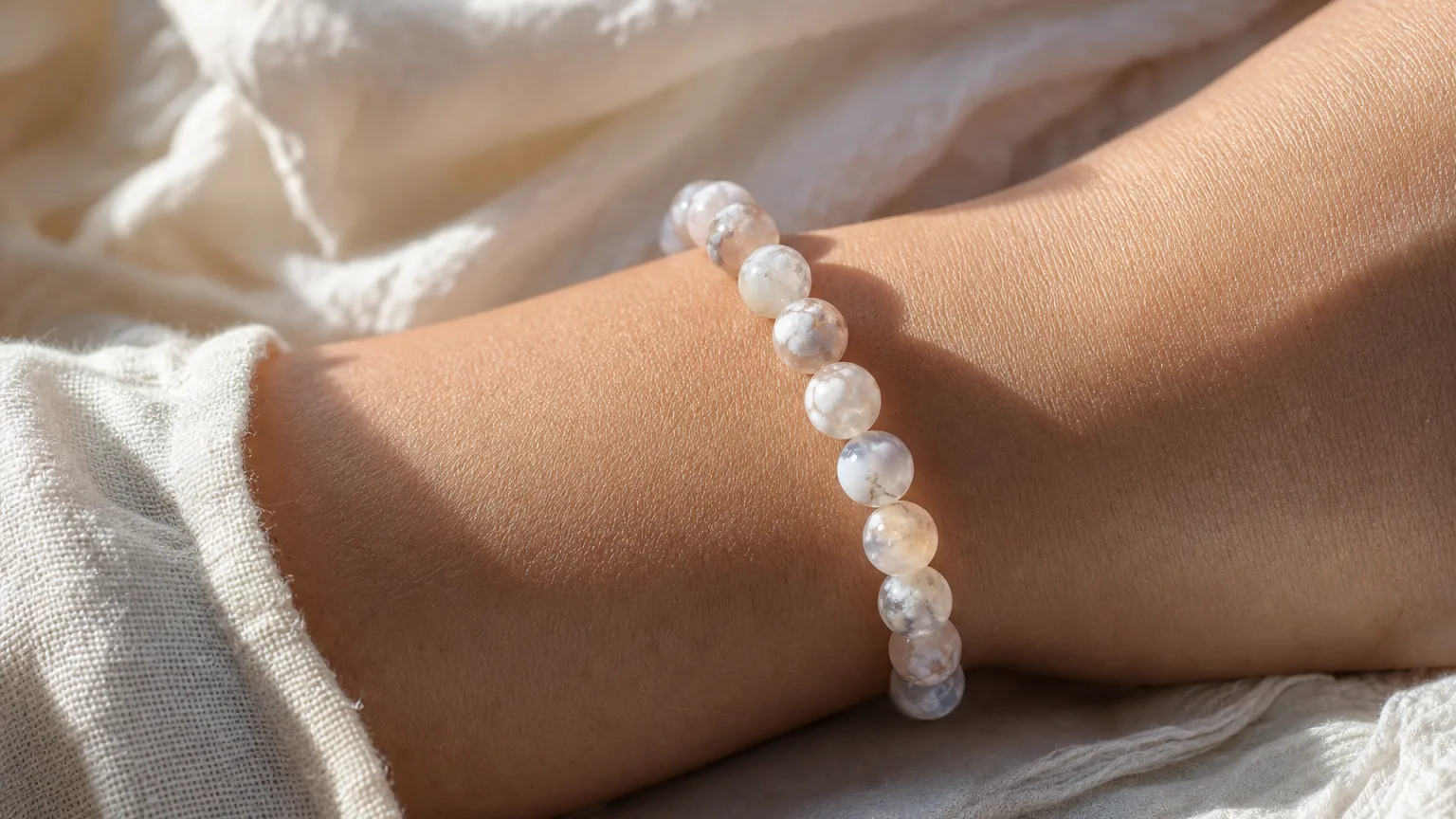
| Bead bracelet | Daily wearing | You want a calm, misty reminder through the day |
| Tumbled stone | Pocket or meditation | You want something smooth and easy to hold |
| Polished slab | Desk, shelf, or collection | You want the full cloudy pattern on display |
| Palm stone | Meditation and handling | You want a smooth, rounded piece to hold during a sit |
How to Tell Real Cloud Agate from Fakes
Because milky white stones sell well, look-alikes circulate — dyed howlite or magnesite, glass, or resin. A few checks help:
- The cloud pattern. Genuine cloud agate shows natural, soft swirls of milky white and grey — uneven, organic, and flowing. Flat, uniform white or painted-on patterns suggest dye or glass.
- Hardness. At Mohs 6.5–7, cloud agate scratches glass. Softer look-alikes like howlite (Mohs 3.5) or plastic won’t.
- Waxy luster. Real chalcedony has a characteristic waxy to vitreous luster that glass and resin can’t quite match.
- Bubbles. Round bubbles inside point to glass, not natural chalcedony.
- Source and label. Buy from dealers who name it as chalcedony or agate, since “cloud agate” is a trade name that can cover several white chalcedonies.
For most buyers the honest path is simple: look for natural, cloudy swirls in a hard, waxy-luster stone from a reputable dealer.
How to Cleanse and Charge Cloud Agate
Cloud agate is hard, durable chalcedony (Mohs 6.5–7), so most standard methods work well. A few reliable options:
- Moonlight. Leave it out overnight under a full moon — the gentlest, most-recommended option, and fitting for a misty stone.
- Smoke. Pass it through sage or palo santo smoke, letting the smoke drift over every side.
- Sound. A singing bowl or bell near the stone works well and needs no contact.
- Other crystals. Resting it on a selenite plate or clear quartz cluster is popular for an overnight reset.
Two things to avoid: salt water (salt can dull the polished surface over time) and hard impacts. A brief rinse under cool water is fine. For the full routine, see our guide to cleansing crystals.
Best Crystals to Pair With Cloud Agate
Pairing is about layering intentions — picking stones whose qualities complement rather than compete. A few classic combinations that work well with cloud agate’s calm, misty tone:
- Cloud Agate + Amethyst — calm white meets calm purple; a popular pairing for meditation and a quieter mind.
- Cloud Agate + Howlite — two white, calming stones; a natural pairing for a softer, more peaceful mood.
- Cloud Agate + Clear Quartz — clear quartz is said to amplify; many use it to sharpen cloud agate’s calm focus.
The logic of pairing is about complementary intentions, not strict rules. Pick combinations that match what you’re actually working on, and trust your own sense of balance.
Who Should Use Cloud Agate?
Cloud agate suits people who want a soft, calming stone for serenity and a balanced mind — meditators, anyone building a wind-down routine, or people drawn to its dreamy, milky look. Its hard, polished character makes it a practical, durable piece to carry or wear as beads.
A few honest expectations: cloud agate isn’t a treatment for anxiety, low mood, or any condition — if you’re dealing with something persistent, a healthcare professional is the right call, and the stone can sit alongside that. Go in expecting a calm, supportive anchor for serenity and balance, and it fits well.
FAQ About Cloud Agate Meaning
What is cloud agate?
A trade name for chalcedony — microcrystalline quartz (SiO₂) — that shows soft, cloudy, milky-white patterns instead of the sharp bands of a typical agate. Mohs 6.5–7.
Is cloud agate a real agate?
It’s technically chalcedony rather than a true banded agate. The trade name “cloud agate” has stuck for its dreamy look, but the key difference from true agate is the absence of distinct banding.
What causes the cloudy pattern?
Microscopic mineral inclusions (often manganese or iron oxides) scattered through the silica, creating a misty, swirling effect instead of clean banding.
What chakra is cloud agate linked to?
In modern practice, the crown — for clarity and peace — and the heart, for its soothing note.
Can cloud agate go in water?
A brief rinse is fine — it’s hard chalcedony (Mohs 6.5–7). Avoid long soaks and salt water, which can dull the surface.
How do I care for cloud agate?
Moonlight, smoke (sage/palo santo), or sound. It’s durable; just avoid salt water and hard impacts that could chip the polished surface.
Is cloud agate the same as white agate?
Closely related — both are white chalcedony. “Cloud agate” specifically refers to the misty, swirling pattern, while “white agate” can be more uniform. They overlap in the market.
Final Thoughts on Cloud Agate
Cloud agate earns its place as a stone of calm and serenity — soft, milky, and quietly dreamy, with a look that reads as mist and peace. If you’re curious, the simplest start is one cabochon or tumbled piece, one clear intention, and a small daily moment to notice it. You don’t need the rarest pattern; you need a stone you’ll actually see and use.
From there it tends to open a door — to a calmer mood, a steadier mind, or simply a softer pause in the day. If that’s what you’re after, you’re in the right place. For more, explore the Crystal Guide or browse cloud agate jewelry.