
Coral Meaning: Healing Properties & Uses
Coral is an organic gem — the calcium carbonate skeleton of marine polyps, not a mineral. For thousands of years it has been carried as a protective talisman, especially around the Mediterranean. If you’re drawn to coral for grounding, protection, or a sense of steady vitality, this guide covers what coral actually is, what it has meant across cultures, and how people work with it today. Coral meanings reflect tradition and personal practice, not medical advice.
Crystal meanings reflect tradition and personal practice, not medical advice. Coral is also a protected marine resource — see the ethical note in Care.
What Is Coral Meaning?
At its simplest, coral means protection and steady, rooted vitality. Unlike stones formed deep in the earth, coral comes from living creatures — tiny marine polyps that build reefs over decades and centuries. That origin is part of why it has been treated, across very different cultures, as a stone of life force and guardianship rather than something inert.
For a lot of people, coral’s appeal is exactly its warmth and weight: a piece you can hold, wear, or keep nearby as a reminder to stay grounded and present. You don’t need to hold any particular belief to benefit — the value often comes from choosing the piece, giving it a job (“help me stay calm today”), and letting it quietly anchor your attention. In that sense coral is less a magic object and more a tactile cue you train yourself to return to.
Coral Meaning and Symbolism
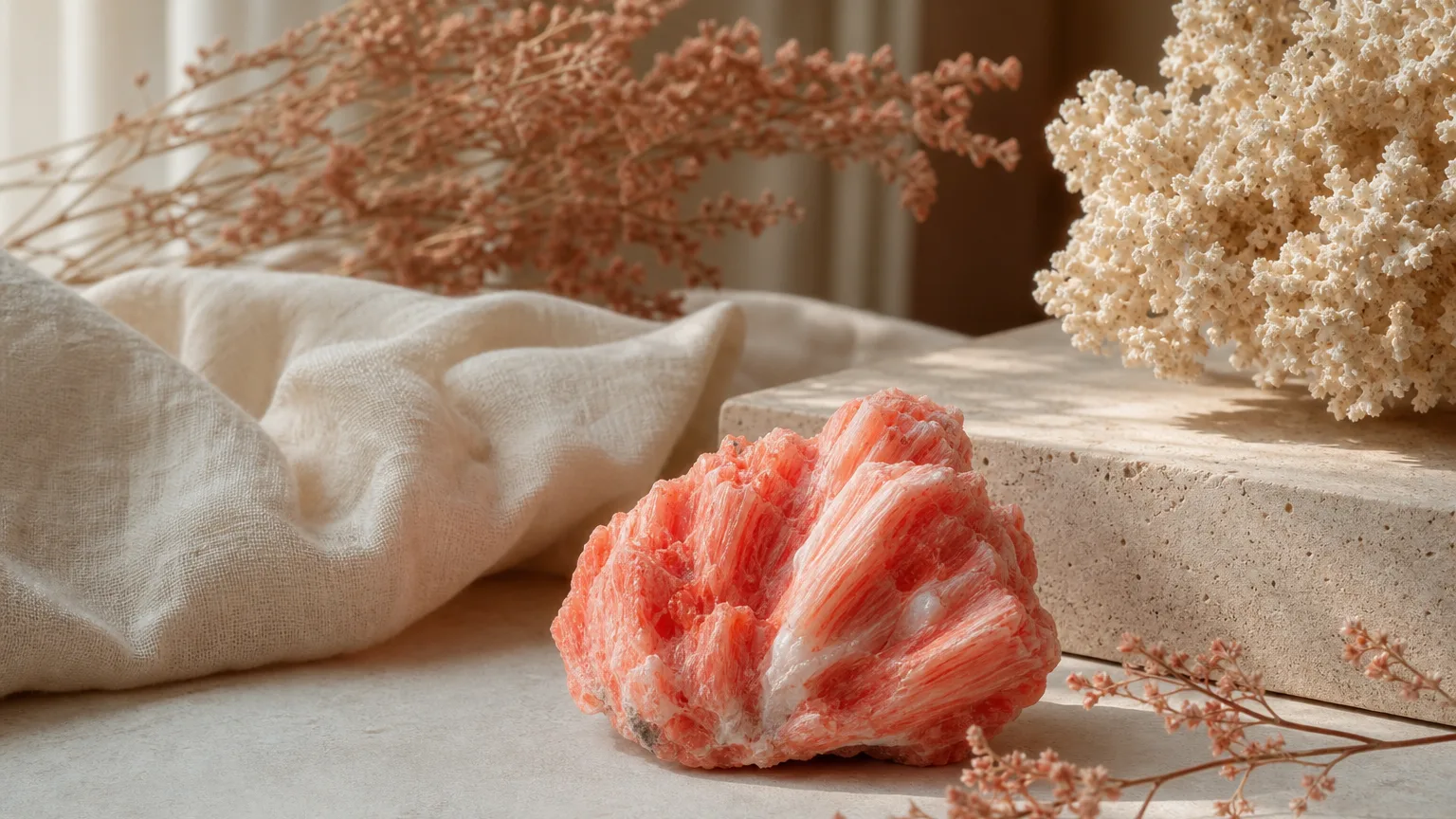
Coral’s symbolism is one of the oldest in the gem world, and it centers on protection. In ancient Mediterranean cultures, coral was the classic amulet against the evil eye and misfortune. The Romans hung coral branches on babies’ cradles and carried them as safeguards; the Greek myth of Perseus tells that coral was born when drops of Medusa’s blood fell on seaweed — a story that ties the stone to both danger and the power to withstand it.
That protective thread carried forward for centuries. In parts of Italy — especially around Naples and Sardinia, where red coral fishing has deep roots — coral has been carved into cameos, horns (the cornicello), and beads for generations, worn as much for meaning as for beauty. In Tibetan and Nepalese traditions, coral was prized alongside turquoise as one of the most important gem materials for ritual objects, linked to life force and the blood. Across these very different settings, the common language is consistent: a material of vitality, protection, and the living energy of the sea.
Today the threads are much the same: grounding, protection, and a gentle, rooted warmth. How much of that resonates for you personally is, honestly, up to you — but the symbolism has held for thousands of years across coastal and highland cultures alike. To explore more stones, browse the full Crystal Guide.
Coral Properties
The Science
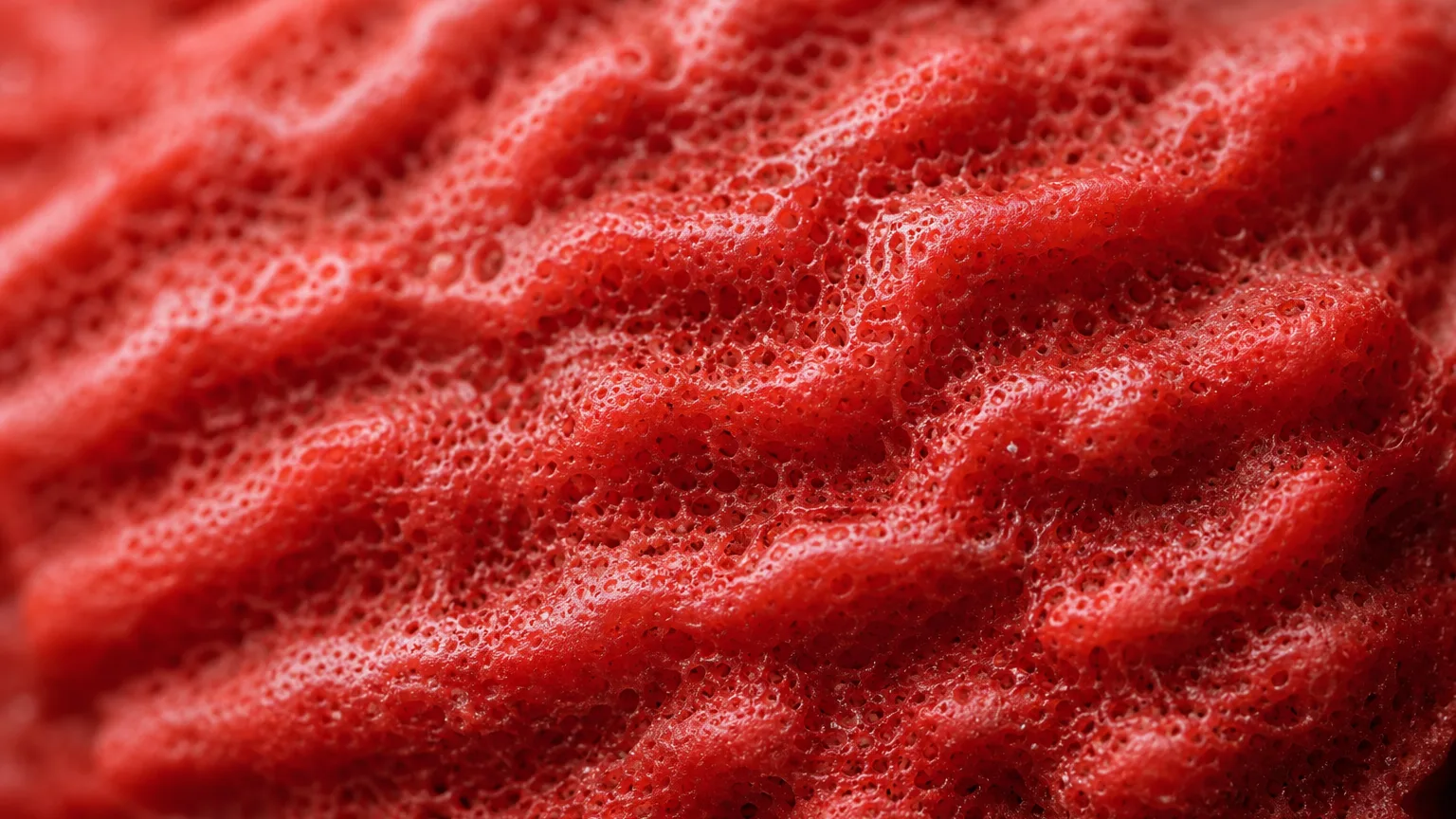
Coral is not a mineral — it is an organic gem, a biogenic material built by living marine animals called coral polyps. The hard skeleton is calcium carbonate (CaCO₃), mostly in the form of aragonite, held together by an organic protein matrix (conchiolin). That is the same chemistry as shell and pearl, not the silicate chemistry of stones like amethyst or quartz. It is relatively soft at 3.5–4 on the Mohs scale, which is why it scratches more easily than most gems and needs gentler handling. The red and pink colors come from organic pigments taken in as the coral grows; white coral lacks those pigments, and so-called “sponge coral” has a visible porous texture. None of this is mystical — it is standard marine biology and chemistry, and it explains the simple care rules that matter most for coral.
Traditional Meaning
Tradition ties coral to protection, vitality, and the energy of the blood and sea. In Mediterranean folk practice it is the classic ward against the evil eye; in Tibetan practice it is tied to life force and is set alongside turquoise in ritual objects. Many believe red coral carries a warming, grounding energy tied to the root of the body, while pink and angel-skin coral are described as softer and more heart-centered. Across cultures, coral has been carved into amulets, prayer beads, and cameos meant to be kept close. These associations come from spiritual tradition and folk practice rather than clinical study.
Mindfulness & Psychology
From a psychological angle, coral works well as a warm, tactile anchor — something with real weight and temperature that pulls your attention back to the body. Red is linked in color psychology to vitality and presence, and the act of choosing a piece of coral and giving it a purpose (“stay grounded through this meeting”) turns it into a small, repeatable cue. Many people who carry ocean-connected stones describe them as reminders to slow down and breathe, the way you might near water. Like any ritual object, part of its value is simply creating a moment of attention in a noisy day. These effects come from tradition and personal practice, not clinical research. Crystals complement — but never replace — professional care.
Coral Benefits
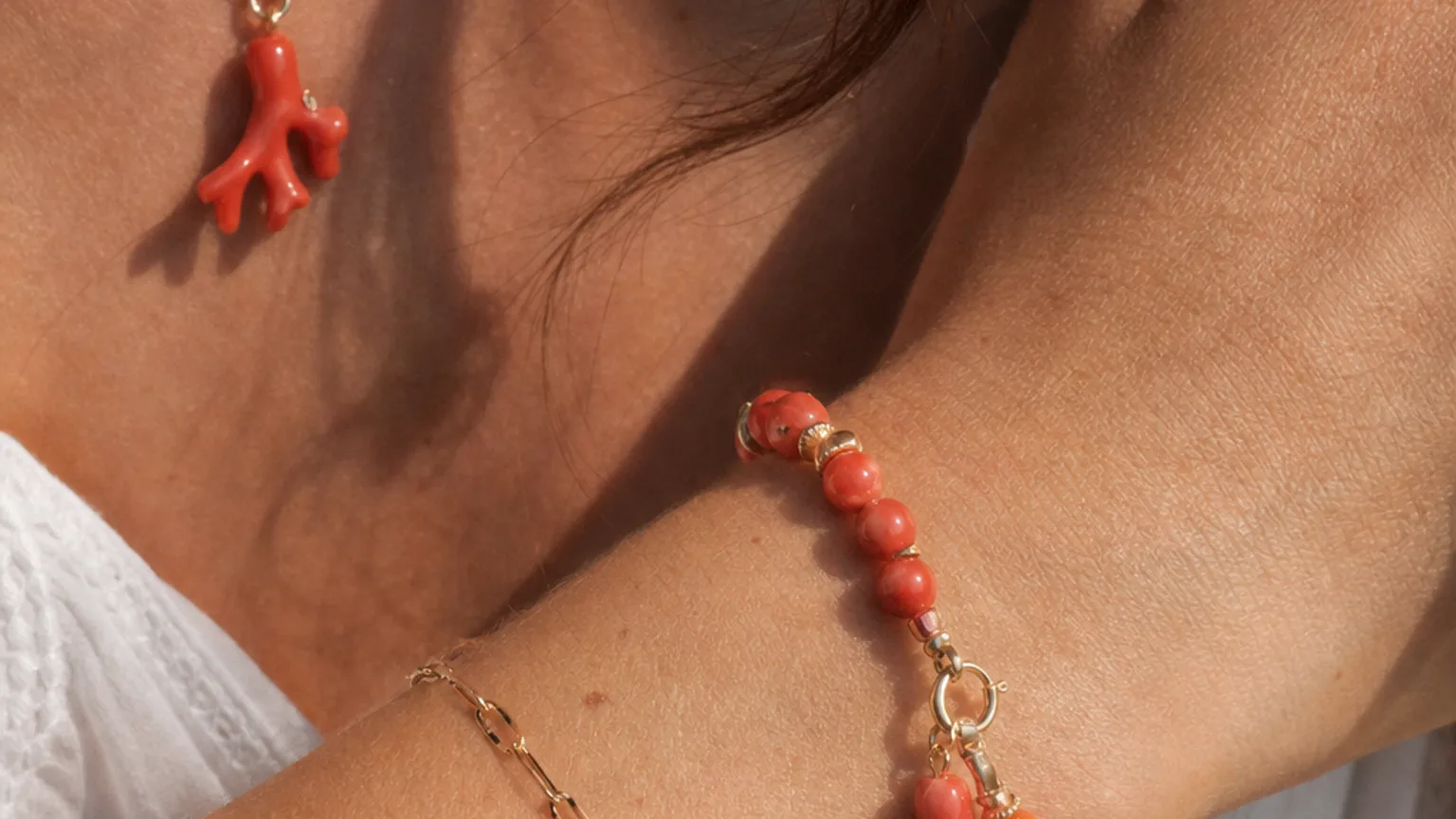
People who work with coral usually describe it in terms of quiet, everyday steadiness, not dramatic shifts. It tends to show up as a low, warm hum beneath the day — a grounding presence when things feel scattered. Here are a few of the benefits people mention most often:
A grounding anchor
Carrying or wearing coral gives you something warm and solid to return to when your thoughts start to race — a physical cue to drop back into the body.
A sense of protection
For people who feel easily drained by crowds or tense settings, coral has a long reputation as a buffer — a small, kept-close reminder that you’re looked after.
Warmth when you feel flat
Its red-to-orange warmth is often reached for during low, tired stretches, as a gentle nudge toward presence rather than a push.
A calmer ritual object
Held during meditation or kept on a desk, coral acts as a focal point that’s easy to come back to — especially for anyone drawn to ocean imagery.
The pattern underneath all of these is the same: coral isn’t doing the work for you, but it gives your day a warm, grounded reference point that makes steadiness more likely. If you’re exploring stones for specific needs, see our guides to crystals for protection and crystals for grounding.
Coral Chakra, Zodiac, and Element Associations
In traditional systems, red coral is most often linked to the root center — the foundation tied to safety, stability, and the body. Pink and angel-skin corals are more often connected to the heart. Astrologically, red coral has a long connection with Mars (and by extension Aries and Scorpio). Its element is Water — fittingly, given its ocean origin. For related stones, see amethyst meaning as a complementary calming stone.
These are correspondences built up through tradition, not fixed rules. If your own sense of coral points somewhere else, that’s completely fine. Many people work with stones intuitively, and there’s a long history of practitioners doing exactly that.
How to Use Coral
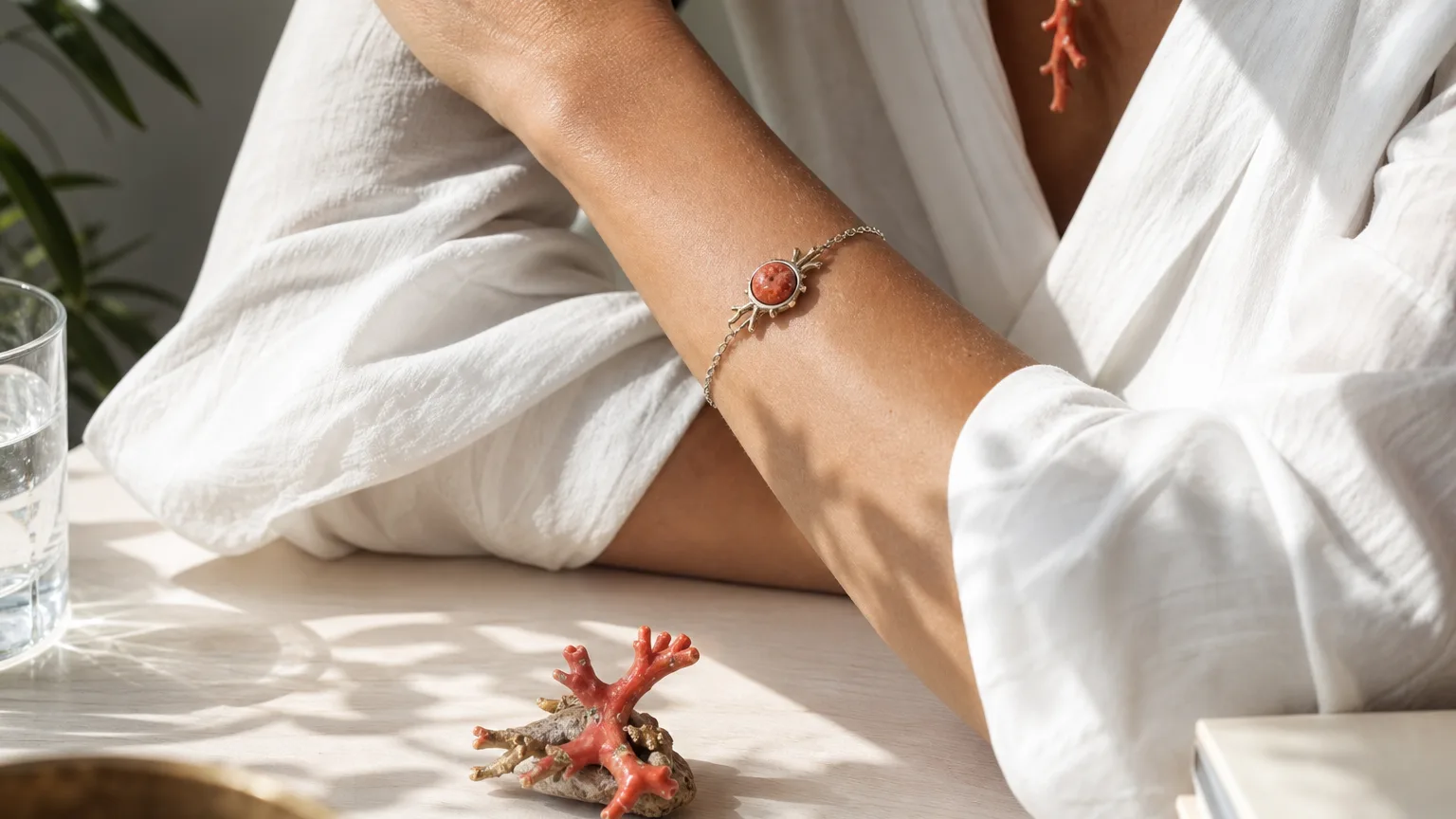
Coral is flexible — there’s no single right way, only what fits your routine. The key is keeping it close enough that you actually notice it.
Wear it. A coral bead bracelet, pendant, or set of beads keeps the piece against your skin through the day. For a grounding practice, pair it with one intention each morning — “stay steady under pressure,” “come back to my breath.”
Meditate with it. Hold a polished coral piece in your palm or rest it at the base of your spine during seated practice. The warmth and weight give attention somewhere gentle to land.
Keep it at home. A small branch or polished stone on a desk or nightstand works as both décor and a visual cue. It needs a stable, padded spot — coral is soft and chips if knocked around.
Build a small ritual. Set the stone down, slow your breathing, and let it mark a shift in pace. Repetition is what turns a gesture into a habit.
Which Coral Form Is Right for You?
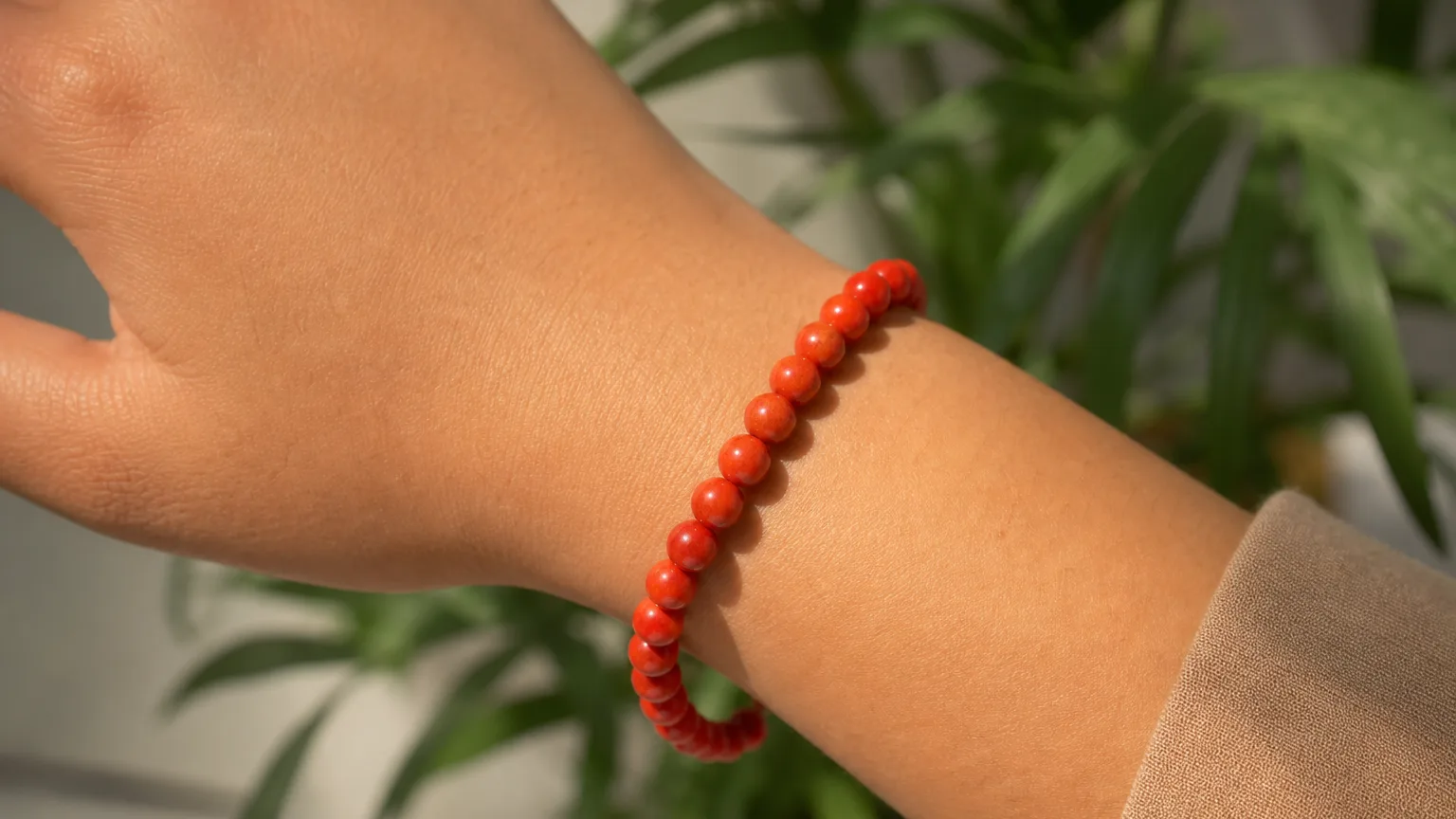
| Form | Best for | Choose it if |
|---|---|---|
| Bracelet | Daily wearing | You want a warm, visible reminder through the day |
| Pendant / Beads | Close-to-body protection | You prefer a single piece worn near the chest or wrist |
| Polished stone | Meditation or pocket | You want something smooth to hold and carry |
| Raw branch | Altar or display | You like natural texture and a sculptural shape on a shelf |
| Cameo / Carving | Heritage / symbolic | You’re drawn to the Italian carving tradition and a wearable amulet |
How to Tell Real Coral from Fakes
Because genuine coral is protected and expensive, the market has many imitations. A few checks help you tell them apart before you buy:
- Texture and grain. Real coral often shows faint longitudinal grain or tiny tube marks along a branch. Plastic and glass imitations look too smooth or perfectly uniform.
- Weight and warmth. Coral feels denser and warms slowly in the hand. Plastic feels light and warms fast; glass feels cool and heavy.
- The acid test (for loose pieces). A tiny drop of vinegar on an inconspicuous spot will fizz on real coral (calcium carbonate reacts with acid). Plastic, glass, and dyed howlite won’t. Use this only on rough or unimportant spots.
- Dyed substitutes. Much “coral” on the market is dyed howlite, sponge coral pressed and stabilized, or bamboo coral — cheaper materials that mimic the color. Consistent, flat color with no grain is a red flag.
- Price. Large, clean, deep-red coral pieces at low prices are almost always too good to be true. Know the source.
An ethical note. Many coral species are protected, and reef damage is a real concern. Reputable sellers offer vintage, pre-ban, or farmed material and can tell you where a piece came from. If a source can’t answer basic provenance questions, that itself is information. To explore more stones, browse the full Crystal Guide.
How to Cleanse and Charge Coral
Coral needs gentler care than hard stones — its softness and calcium-carbonate chemistry mean a few things are off-limits.
- Salt water is for the look, not the soak. Wiping coral with a soft, barely-damp cloth is fine; soaking it in salt water or any cleaner is not — salt and acid both dull and etch the surface over time.
- Avoid acids entirely. Perfume, citrus, vinegar, and many household cleaners will damage coral. Put jewelry on after cosmetics, not before.
- Smoke or sound. Passing coral through sage or palo santo smoke, or using a singing bowl nearby, is a gentle option many prefer — no liquid, no abrasion.
- Moonlight. Resting coral overnight under moonlight is the gentlest ritual option and the most-recommended for soft, porous stones.
Two things to avoid: prolonged direct sunlight (red coral can fade) and any acid or chemical contact. Store coral away from harder stones so it doesn’t get scratched. For a general cleansing routine, see our guide to cleansing crystals — and treat coral as the soft, water-shy exception in that guide.
Best Crystals to Pair With Coral
Pairing is about layering intentions — picking stones whose qualities complement rather than compete. A few classic combinations:
- Coral + Amethyst — warm grounding meets cool calm; a balanced pairing many reach for when they want to feel both protected and settled.
- Coral + Turquoise — a traditional Tibetan pairing (life force + sky), often set together in ritual and jewelry for vitality and protection.
- Coral + Clear Quartz — clear quartz is said to amplify; many use it to “boost” coral’s grounding presence without adding another strong color.
The logic of pairing is about complementary intentions, not strict rules. Pick combinations that match what you’re actually working on, and trust your own sense of what feels balanced.
Who Should Use Coral?
Coral suits people who want a warm, grounding anchor for protection and presence — anyone who feels easily scattered or drained, meditators who like tactile focal points, or people simply drawn to ocean imagery. It’s one of the more approachable organic stones because its color and weight make it easy to keep close.
A few honest expectations: coral is not a treatment for anxiety, fatigue, or any condition — if you’re dealing with something persistent, a healthcare professional is the right call, and the stone can be a comfort alongside that. It also needs gentler care than most gems (soft, acid-shy), so it’s a piece for someone willing to treat it with a little attention. And because genuine coral raises sourcing questions, it rewards buying from sellers who can speak to where their material came from.
FAQ About Coral Meaning
Is coral a mineral?
No. Coral is an organic gem — the calcium-carbonate skeleton built by marine coral polyps, with an organic matrix. Its chemistry (CaCO₃) matches shell and pearl, not the silicates of most gems.
Can coral go in water?
Brief wiping with a damp cloth is fine. Avoid soaking, salt water, and especially acids — calcium carbonate reacts with acid and salt will dull the surface over time.
What chakra is coral associated with?
Red coral is traditionally linked to the root center; pink and angel-skin corals are more often associated with the heart.
How can I tell if my coral is real?
Look for faint grain or tube marks, test weight and warmth, and try a tiny drop of vinegar on a rough spot (real coral fizzes; imitations don’t). Flat, perfectly uniform color suggests dyed howlite or pressed sponge coral.
Why does coral need special sourcing?
Many coral species are protected and reefs are under pressure. Reputable sellers offer vintage, pre-ban, or farmed material and can explain provenance — a seller who can’t is a red flag.
Does coral fade in sunlight?
Yes — red coral can lighten with prolonged direct sun. Display it in indirect light to keep the color rich.
Is coral good for beginners?
It can be, with one caveat: it needs gentler care than hard stones (soft, acid-shy, prone to scratching). If you’re happy to give it a little attention, it’s a warm and rewarding first organic stone.
Final Thoughts on Coral
Coral earns its long reputation as a stone of protection and vitality — and it earns it again for each person who picks up a piece and gives it a job to do. If you’re curious, the simplest start is one piece, one intention, and a small daily moment to notice it. Coral asks for a little more care than most gems, and it asks that you buy it thoughtfully; in return it offers a warmth and rootedness that’s hard to find in harder, colder stones.
From there, coral tends to open a door — to a steadier day, a calmer evening, or simply a habit of pausing. If that’s what you’re after, you’re in the right place. For more, explore the Crystal Guide or browse coral jewelry and pieces.