Jadeite Meaning: Healing Properties & Uses
Jadeite is the hard, vivid-green form of jade — a tough pyroxene mineral prized across cultures for purity, wisdom, and steady good fortune. If you’re drawn to jadeite for its meaning, its long history in Chinese and Mesoamerican culture, or simply its calm, valued presence, this guide covers what jadeite is (and how it differs from nephrite), what it has meant, and how people work with it. Crystal meanings reflect tradition and personal practice, not medical advice.
What Is Jadeite Meaning?
At its simplest, jadeite means purity and steady good fortune — the calm, confident weight of a stone valued for thousands of years. Where some stones read as energizing or grounding, jadeite sits in the middle: linked to harmony, wisdom, and a sense of balance rather than intensity.
For many people that’s exactly the appeal — a smooth, cool stone you wear or keep close as a cue to stay steady and centred. You don’t need to believe anything about luck to use it that way; the value often comes from choosing the piece, giving it a job (“keep me balanced”), and letting its quiet presence pull you toward something steadier. In that sense jadeite is a calm cue to harmony and presence.
Jadeite Meaning and Symbolism
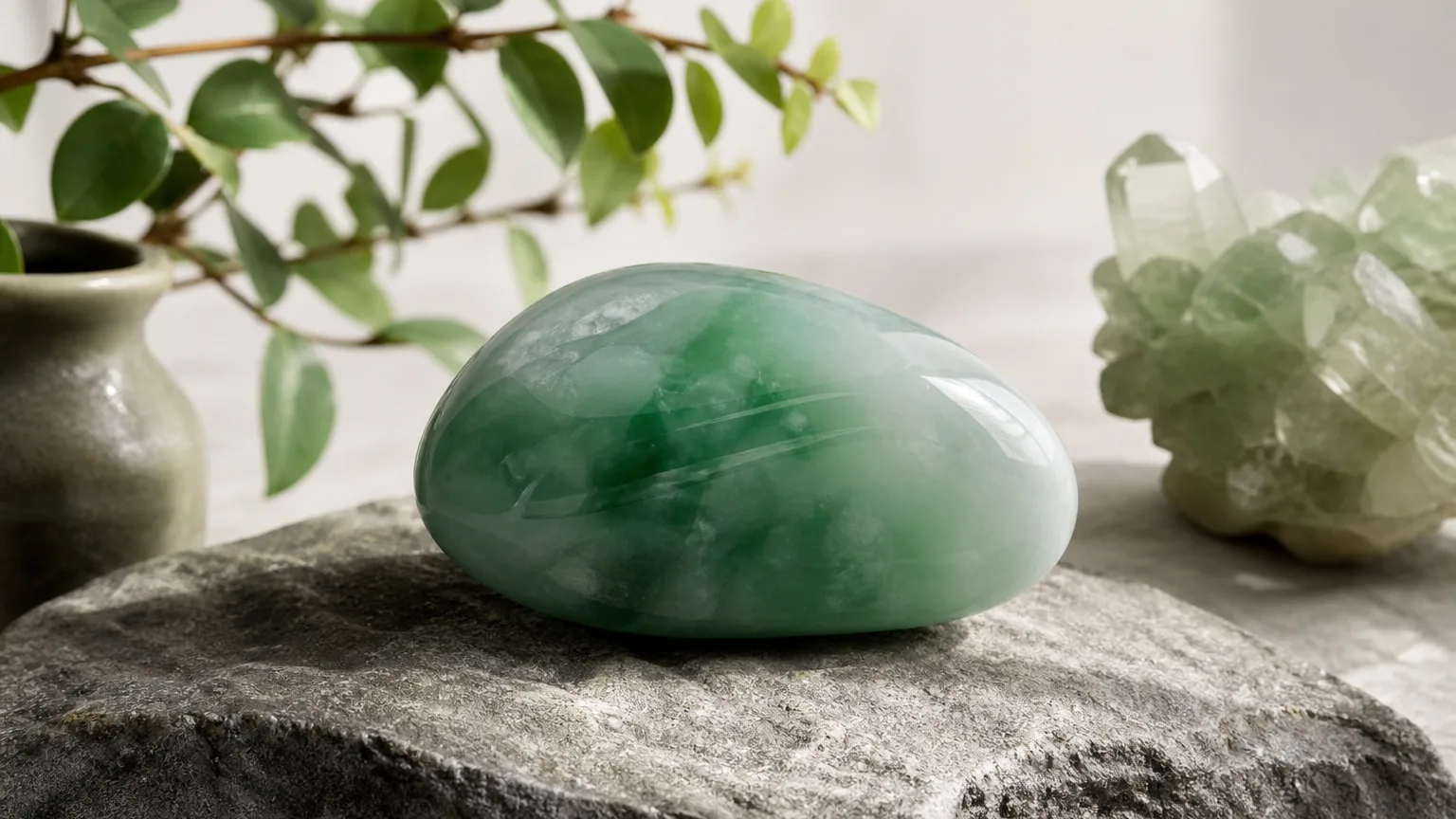
The word jade covers two different minerals, and jadeite is the rarer, harder one. Its name traces back to the Spanish piedra de la ijada, “stone of the side” — Spanish colonizers saw Indigenous Mesoamericans holding it against the side to ease pain, and the name stuck, shortened over time to “jade.” Gemologists use jadeite for the pyroxene mineral specifically, distinct from nephrite, the softer amphibole that was the original “stone of heaven” in early Chinese jade carving.
Jade has one of the longest continuous histories of any ornamental stone. In China, jade carving goes back roughly 5,000 years — though for most of that history the material was nephrite; fine jadeite only arrived from Burma (Myanmar) in the 18th century and quickly became the most prized form. In Mesoamerica, the Olmec, Maya, and Aztec carved jadeite into masks, beads, and ritual objects, valuing it above gold. Across both traditions the meaning was remarkably similar: purity, wisdom, harmony, and a connection to long life and the divine. That cross-cultural agreement is part of why jade’s reputation has held for so long.
The thread through all of it is the same: purity, wisdom, harmony, and steady good fortune. Today jadeite is usually described as a calming, balancing stone — reached for to feel centred, to mark a meaningful transition, or simply treasured as an heirloom. How much of that lands for you personally is, honestly, up to you — but the stone has carried that reputation across thousands of years and very different cultures. To explore more stones, browse the full Crystal Guide.
Jadeite Properties
The Science
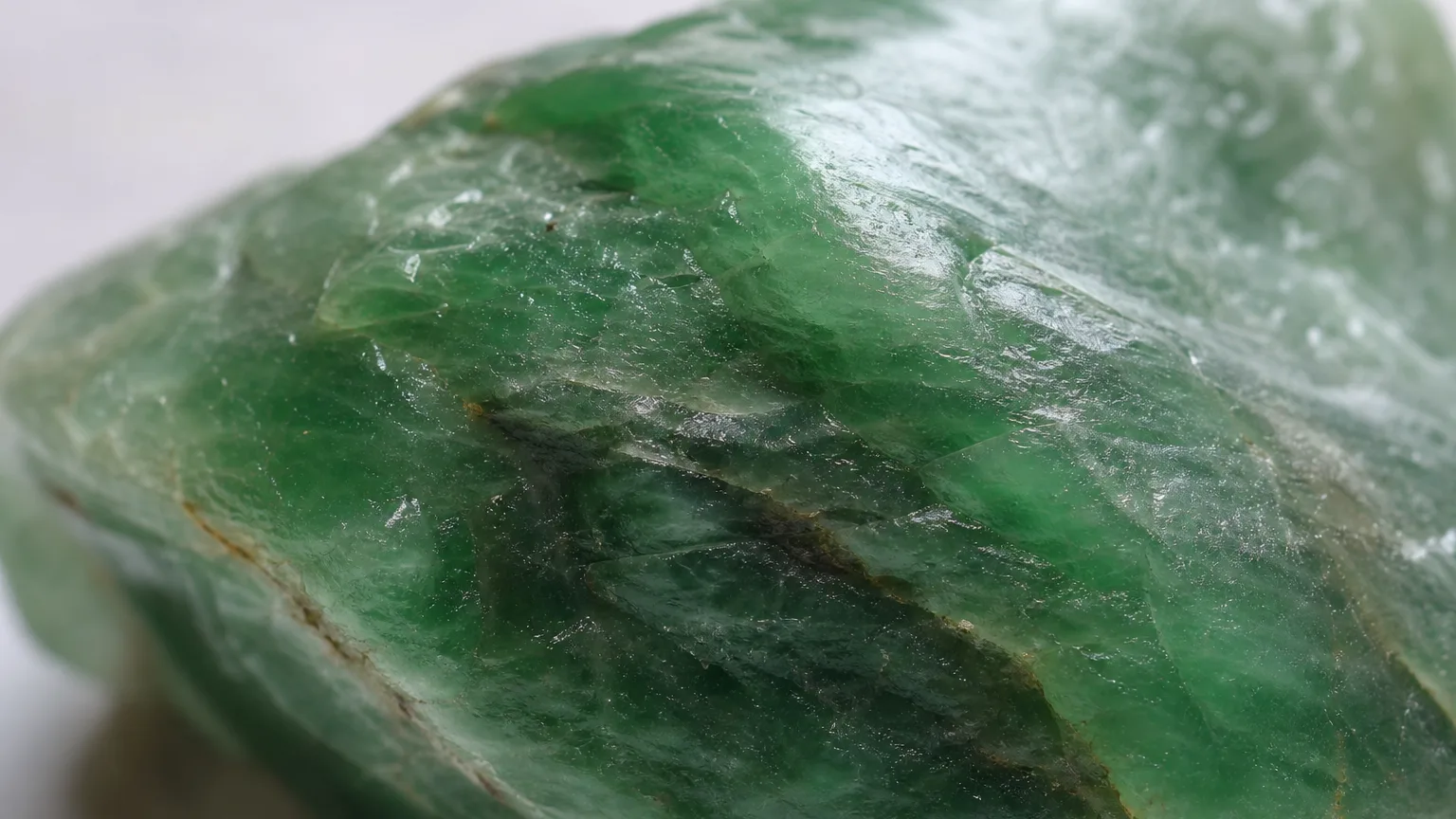
Jadeite is a pyroxene mineral — sodium aluminum silicate, NaAlSi₂O₆ — with a Mohs hardness of about 6.5 to 7, noticeably harder and denser than nephrite jade. It’s typically translucent to opaque with a smooth, greasy polish, and it comes in a wide range of colors: the famous vivid green (colored by chromium or iron), plus lavender, white, yellow, black, and red. The finest “imperial jade” is a translucent emerald green and commands some of the highest prices of any gem. Over 95% of gem-quality jadeite comes from Myanmar (Burma), with smaller sources in Guatemala, Russia, and Japan. None of this is mystical — it’s standard mineralogy, and it’s why jadeite has been carved and traded for millennia.
Traditional Meaning
Tradition ties jadeite to purity, wisdom, harmony, and steady good fortune. It’s most associated with the heart center and is often described as a stone of balance — calming, protective, and linked to long life and prosperity. In Chinese practice it’s reached for as a charm for good luck and a steady, centred state of mind; in Mesoamerican traditions it was a sacred stone of rulers and ritual. Across both, jadeite is seen as a stone that brings harmony rather than intensity. These associations come from spiritual tradition and personal practice rather than clinical study.
Mindfulness & Psychology
From a psychological angle, jadeite works as a cool, smooth, calming anchor — the kind of object you hold or wear when you want to feel more centred and less reactive. Green is linked in color psychology to balance, calm, and renewal, and the act of wearing or holding a treasured stone and pairing it with an intention (“stay balanced”) turns it into a small, repeatable cue. Part of jadeite’s appeal is simply its weight and coolness in the hand — a tactile signal to slow down. These effects come from tradition and personal practice, not clinical research. Crystals complement — but never replace — professional care.
Jadeite Benefits
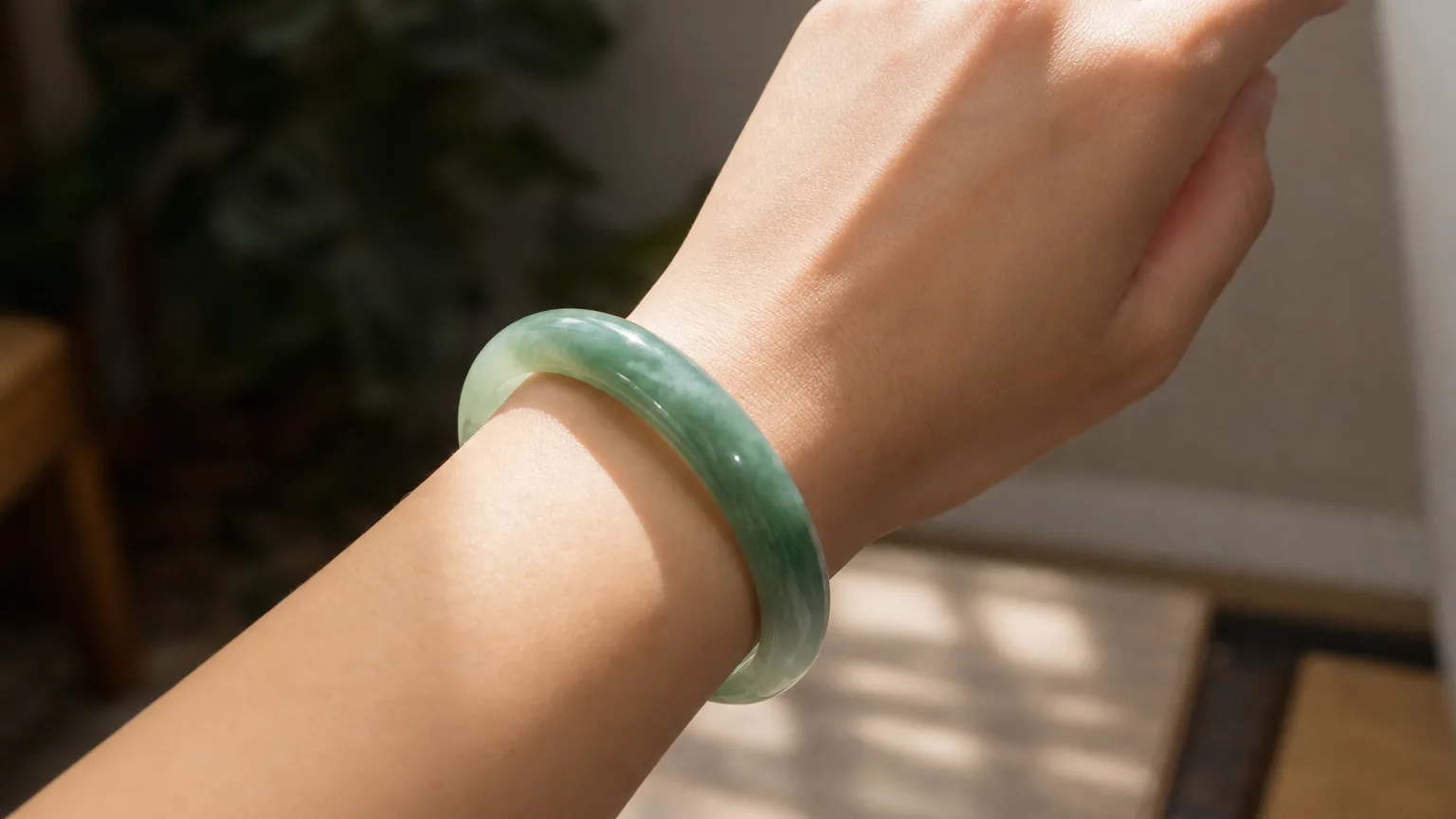
People who wear jadeite usually describe it in terms of balance and steady calm, not dramatic shifts. It tends to show up as a quieter, more centred feeling — useful when life feels scattered or reactive. A few of the benefits people mention most:
A calmer, more centred mood
Worn through the day, jadeite acts as a smooth, cool cue to stay balanced — a small reminder to respond rather than react when things get tense.
A meaningful marker
Many choose a jadeite piece to mark a milestone — a birth, a new beginning, a transition — giving the stone a personal meaning it carries from then on.
A steadying touchstone
Held during a stressful moment or a difficult conversation, its weight and coolness give your hand something to settle on — a quiet way to stay present.
A treasured daily piece
As a bangle, pendant, or bead worn every day, jadeite becomes part of your routine — a familiar, valued object that quietly anchors the day.
The pattern underneath all of these is the same: jadeite isn’t bringing you balance by magic, but it gives your day a steady cue toward harmony and presence. If you’re exploring stones for specific needs, see our guide to crystals for stress.
Jadeite Chakra, Zodiac, and Element Associations
In traditional systems, jadeite is most strongly linked to the heart center — the area tied to harmony, compassion, and balance — with a secondary tie to the sacral center for green and lavender stones. Astrologically, it’s often paired with Libra and Taurus. Its element is usually given as Earth. For related stones, see heart chakra crystals.
These are correspondences built up through tradition, not fixed rules. If your own sense of jadeite points somewhere else — a different chakra, a different element — that’s completely fine. Many people work with stones intuitively, following what feels right rather than a textbook chart, and there’s a long history of practitioners doing exactly that.
How to Use Jadeite
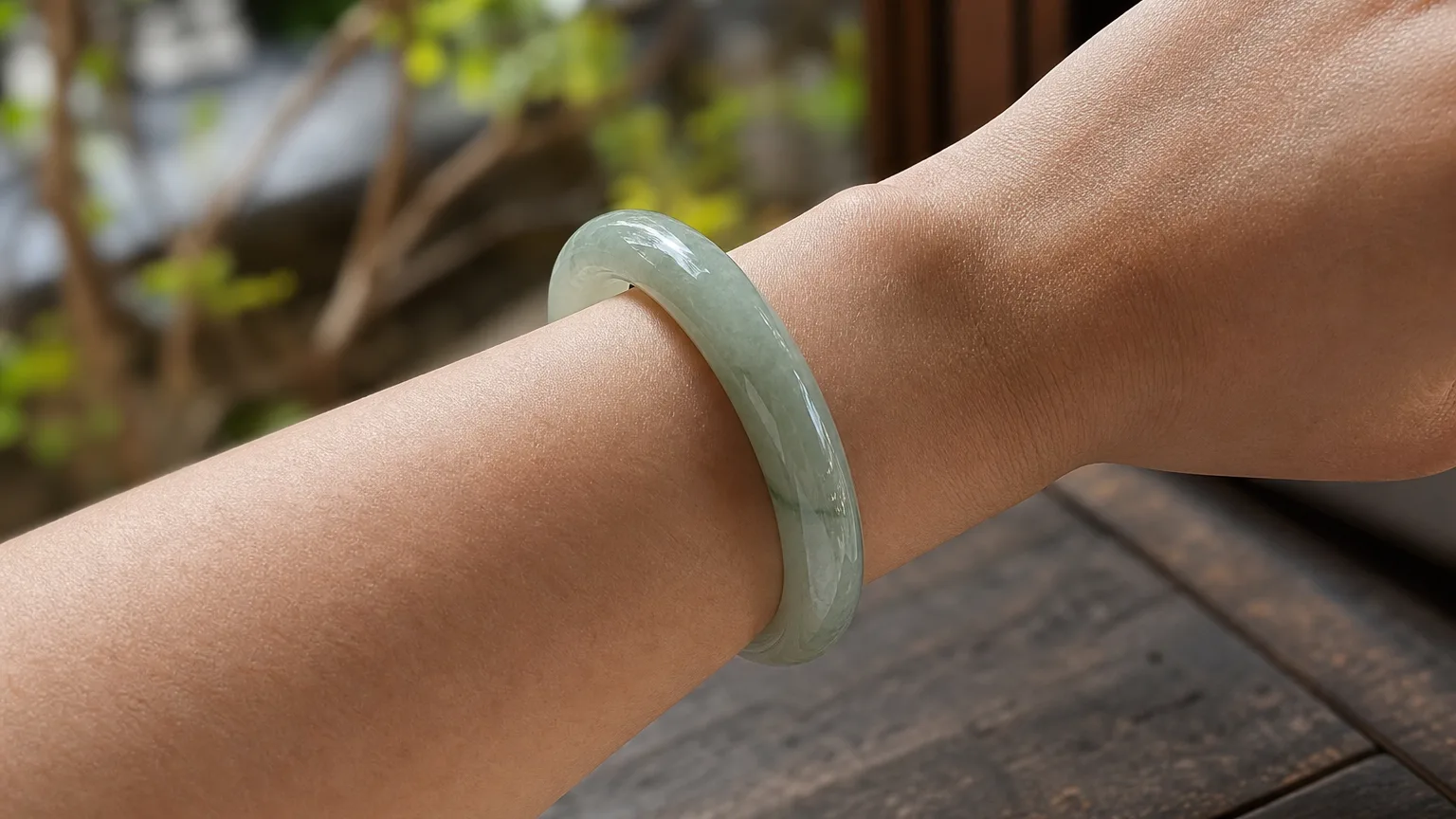
Jadeite is durable and made to be worn and lived with — there’s no single right way, only what fits your routine. The key is consistency: a stone you actually wear and see every day does far more than one stored away.
Wear it. A jadeite bangle, pendant, or bead bracelet keeps the stone against your skin through the day. For a balance practice, pair it with one intention each morning — “stay centred through whatever comes.”
Meditate with it. Hold a piece in your palm or rest it on your chest (heart area) while you sit. Even a few minutes of focused attention counts; the goal is presence, not duration.
Mark a milestone. Many choose jadeite to mark a birth, wedding, or new beginning — giving the stone a meaning that deepens each time you wear it.
Carry it daily. A small tumbled piece in a pocket works as a discreet touchstone — something to hold when you want to settle and re-centre.
Which Jadeite Form Is Right for You?
| Form | Best for | Choose it if |
|---|---|---|
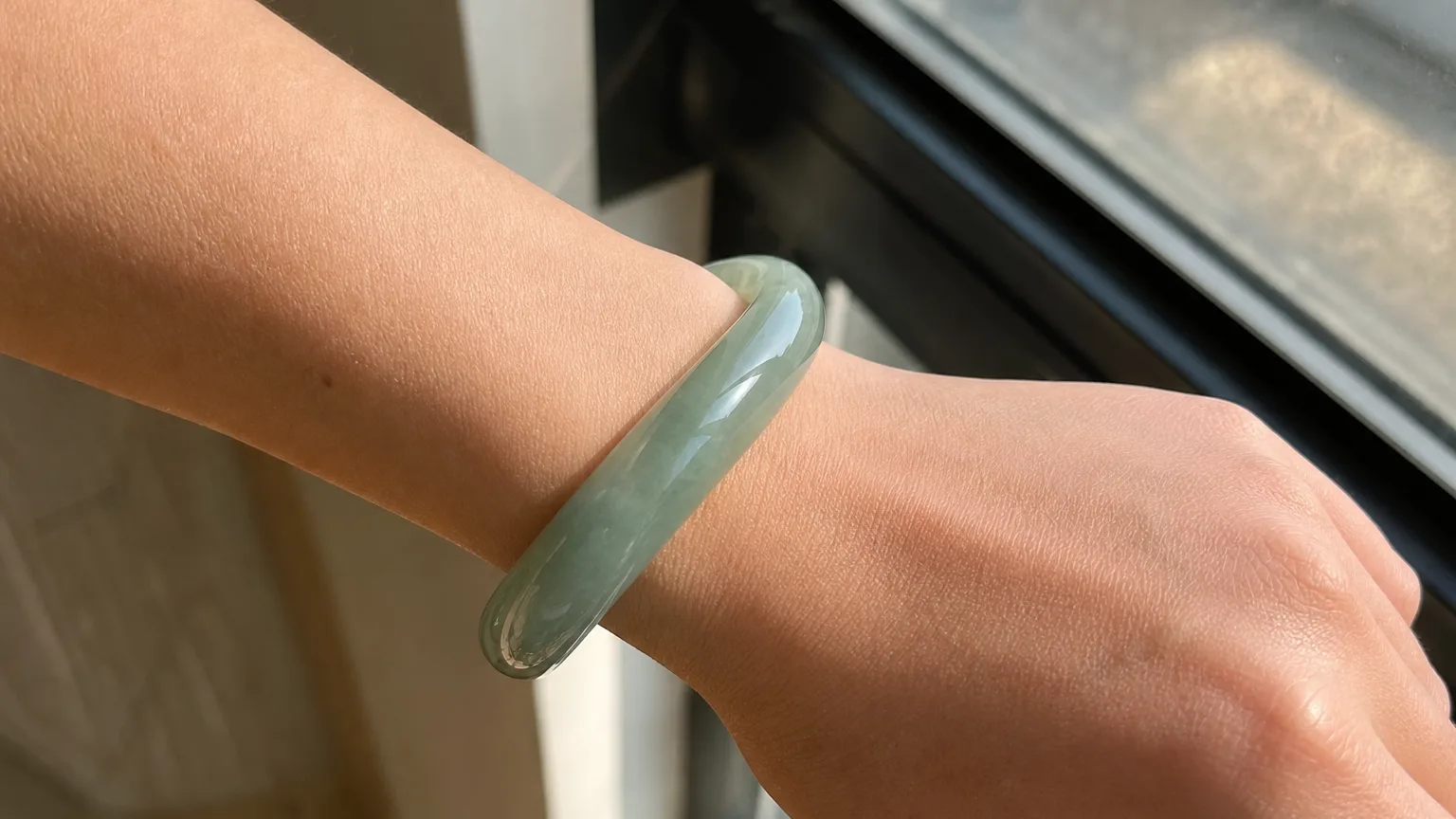
| Bangle | Daily wearing | You want a classic, treasured piece worn at the wrist |
| Pendant | Worn near the chest | You prefer a single stone near the heart center |
| Bead bracelet | Everyday jewelry | You want a lighter, flexible form for daily wear |
| Carved pendant | Personal meaning | You like a symbolic carving (lotus, animal, deity) you connect with |
| Tumbled stone | Pocket or meditation | You want something smooth and easy to hold or carry |
| Cabochon ring | Statement jewelry | You prefer a polished stone set in a ring you see often |
How to Tell Real Jadeite from Fakes
Jadeite is valuable, which means the market is full of lookalikes and treated stones — so this section matters more than for most crystals. The first thing to know: “jade” can mean two minerals (jadeite or nephrite), and a lot sold as “jade” is neither.
- Jadeite vs. nephrite. Both are genuine jade. Jadeite is harder (Mohs 6.5–7) and denser, with a slightly greasy polish; nephrite is softer and a touch oilier. Neither is “fake,” but jadeite — especially fine green — is usually more valuable.
- A, B, and C jade. The trade grades jadeite by treatment. Type A is natural, untreated stone (only polished). Type B has been acid-soaked and impregnated with polymer to improve clarity — the structure is weakened. Type C has been dyed; B+C means both. B and C jade are still real jadeite, but they’re treated, and that should be disclosed and priced accordingly.
- Lookalikes. Dyed quartz, serpentine, aventurine, glass, and dyed marble are all sold as “jade.” If a piece looks too uniform, too cheap, or has color sitting only in cracks, be suspicious.
- The certificate. For anything above a token price, ask for a lab certificate (from a reputable lab such as GIA or NGTC) confirming Type A, untreated jadeite. This is the single most reliable check.
- Price. Fine natural (Type A) jadeite is expensive — especially green. A large, vivid, flawless “jadeite” bangle at a bargain price is almost certainly treated, dyed, or a lookalike.
Bottom line: buy jadeite from a seller who tells you the type and, for valuable pieces, provides a certificate. Treated jade is still real jadeite — it just shouldn’t be sold as natural at a natural-stone price.
How to Cleanse and Charge Jadeite
Jadeite is tough (Mohs 6.5–7) and durable, but a few care rules keep its polish and value intact — especially important for treated (Type B/C) pieces, where the polymer and dye can be affected by chemicals.
- Water. A brief wipe with a damp soft cloth is fine. Avoid long soaks, hot water, and salt water — especially for Type B jade, where prolonged soaking can affect the polymer.
- Sunlight. Jadeite is generally sun-stable; the green color holds well. Indirect light is still the gentler long-term choice.
- Smoke or sound. Passing it through sage or palo santo smoke, or using a singing bowl nearby, is a no-contact option many prefer.
- Moonlight. A night under the moon is the gentlest ritual option and a good fit for a stone so tied to harmony.
Two things to avoid: harsh chemicals (perfume, cosmetics, household cleaners — they can dull the polish and damage Type B/C treatments) and rough handling (jadeite is tough but can chip on hard surfaces). Put jewelry on after cosmetics and take it off before heavy work. For the full routine, see our guide to cleansing crystals.
Best Crystals to Pair With Jadeite
Pairing is about layering intentions — picking stones whose qualities complement rather than compete. A few classic combinations that work well with jadeite’s harmonizing energy:
- Jadeite + Rose Quartz — harmony softened with warmth; a heart-centered pairing many reach for emotional balance.
- Jadeite + Clear Quartz — clear quartz is said to amplify; many use it to lift jadeite’s balancing intention without adding intensity.
- Jadeite + Amethyst — calm meets balance; a gentle pairing for feeling both centred and settled.
- Jadeite + Citrine — harmony paired with abundance; a popular combination for good fortune and steady optimism.
The logic of pairing is about complementary intentions, not strict rules. Pick combinations that match what you’re actually working on, and trust your own sense of what feels balanced.
Who Should Use Jadeite?
Jadeite suits people who want a calming, balancing stone for harmony and steady good fortune — anyone marking a milestone, looking for a treasured everyday piece, or simply drawn to its cool, valued presence. It’s approachable because it’s durable, wearable, and carries thousands of years of meaning as a stone of balance and wisdom.
A few honest expectations: jadeite isn’t a charm that guarantees luck, wealth, or any outcome — if you’re dealing with something persistent, the right support depends on the situation, and the stone can be a comfort alongside it. Its value comes from the meaning and routine you build around it. If you go in expecting a stone to change your fortunes, you’ll be disappointed; if you go in expecting a steady, balancing cue and a treasured object, it tends to fit well.
FAQ About Jadeite Meaning
Is jadeite the same as jade?
“Jade” covers two minerals: jadeite and nephrite. Jadeite is the harder, denser one and usually the more valuable, especially in fine green. Both are genuine jade.
What’s the difference between jadeite and nephrite?
Different minerals — jadeite is a pyroxene (NaAlSi₂O₆, Mohs 6.5–7), nephrite is an amphibole (softer). Jadeite is harder, denser, and takes a glossier polish; nephrite feels slightly oilier.
What are A, B, and C jade?
Type A is natural, untreated jadeite (only polished). Type B has been acid-soaked and polymer-impregnated to improve clarity. Type C is dyed. B and C are still real jadeite, but treated — and should be disclosed and priced lower than Type A.
What is jadeite good for?
Traditionally, harmony, wisdom, balance, and steady good fortune. People wear it to feel more centred, to mark milestones, or simply as a treasured, meaningful piece.
What chakra is jadeite linked to?
Mostly the heart center (harmony, compassion, balance), with a secondary tie to the sacral for green and lavender stones.
Is dyed jadeite real?
Type C jade is real jadeite, but its color has been dyed — so the color isn’t natural. It should always be disclosed and priced as treated, not sold as natural.
How can I tell real jadeite?
Hardness and density help, but the reliable check is a lab certificate (e.g., GIA or NGTC) confirming Type A untreated jadeite — essential for anything above a token price.
Final Thoughts on Jadeite
Jadeite earns its long reputation as a stone of harmony and good fortune — carried across thousands of years and very different cultures. If you’re curious, the simplest start is one piece you’ll actually wear, paired with a small daily moment to notice it. Let the routine do the work, and let the stone be the cool, steady anchor that reminds you to stay balanced when life pushes off-centre.
From there, jadeite tends to open a calmer space — a steadier mood, a meaningful marker, or simply a treasured object that grows with you. For more, explore the Crystal Guide or browse jadeite pieces.