
Jasper Meaning: Healing Properties & Uses
Jasper is an opaque, earthy variety of chalcedony — a stone long tied to grounding, stability, and steady support. If you’re drawn to it for a steadier foundation, clearer focus, or a small daily anchor, this guide walks through what jasper means, what it’s actually made of, and how people work with it day to day. Crystal meanings reflect tradition and personal practice, not medical advice.
What Is Jasper Meaning?
At its simplest, jasper means grounding, stability, and quiet endurance. Across cultures it’s been called a stone of the earth — solid, nurturing, and unshowy — a steady presence for people who want to feel more rooted in their day.
For many, that’s the whole appeal: one stone that simply feels settled in the hand and nudges you to slow down and stay planted. You don’t need to believe anything mystical to get something from it — the value often comes from choosing, holding, or placing the stone as a cue to return to a calmer, more grounded baseline.
Jasper Meaning and Symbolism
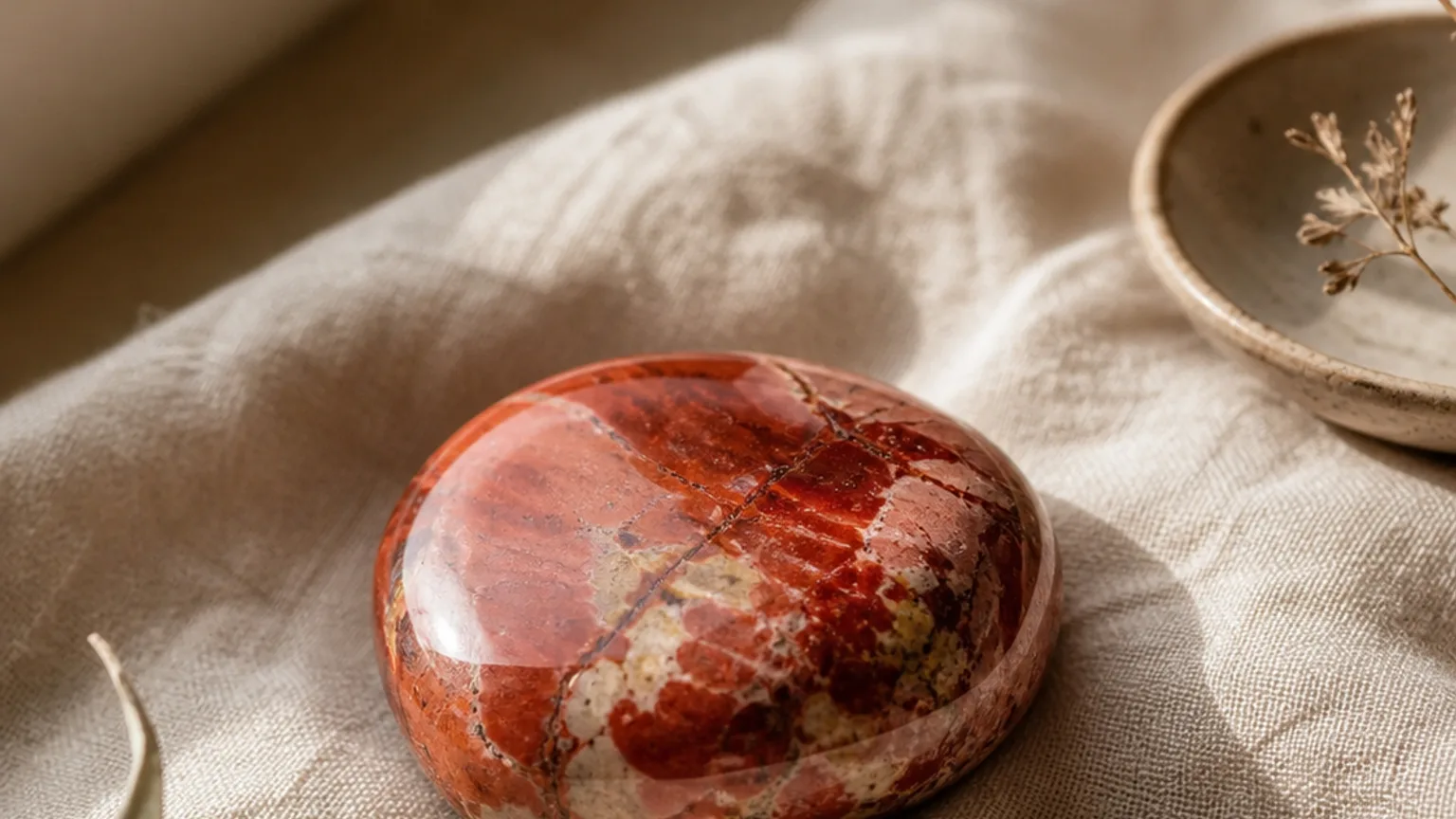
The name jasper traces back through Latin iaspis and Greek iaspis to older roots in the ancient Near East, and it shows up in some of humanity’s earliest decorative traditions. Jasper was carved into seal stones by the Minoans on Crete roughly 3,700 years ago, shaped into scarabs and amulets in ancient Egypt, and listed among the gemstones of the High Priest’s breastplate in Hebrew scripture. Across very different cultures, the common thread was a stone seen as protective, solid, and enduring.
Medieval lapidary texts — the old “gem medicine” books — went further, crediting jasper with everything from stopping bleeding to guarding against snakebite. We don’t read those claims as medicine today, but they show how highly the stone was valued as a talisman. The thread running through all of it is stability: a stone that felt safe to keep close through hard stretches.
Modern crystal guides often describe jasper as a “nurturing” or grounding stone — a steady, earthy presence that supports calm and resilience. How much of that you feel personally is up to you, but the symbolism has held across thousands of years and many different cultures. To explore more stones, browse the full Crystal Guide.
Jasper Properties
The Science
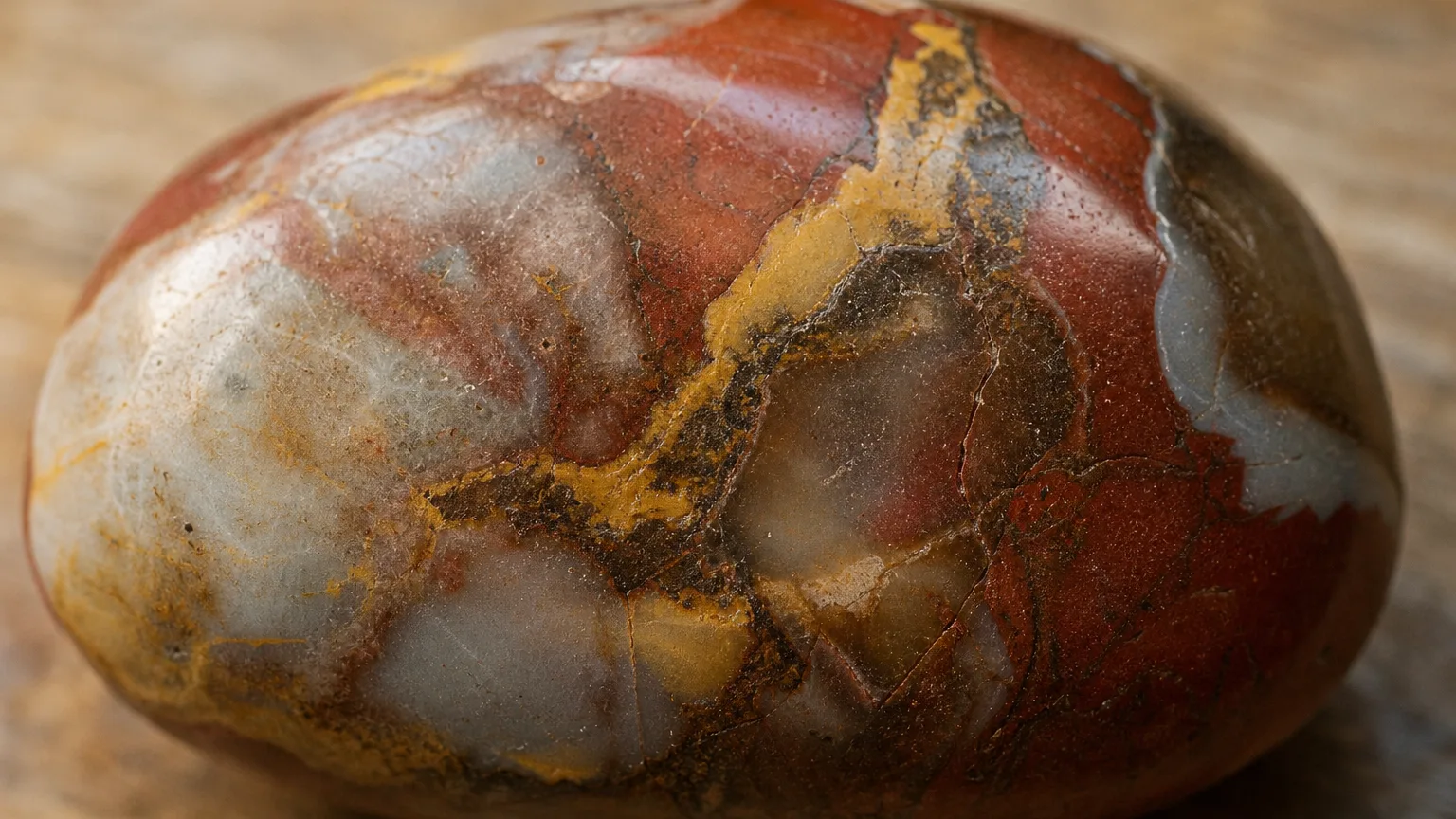
Jasper is opaque chalcedony — microcrystalline quartz (SiO₂) packed with up to a fifth of its volume in mineral impurities, mainly iron oxides and clays. Those impurities are exactly what make it opaque and give it the earthy reds, browns, yellows, and greens: hematite for red, goethite for yellow-brown, chlorite and other silicates for green. It’s a hard stone, 6.5–7 on the Mohs scale, with a dense structure that takes a smooth polish — which is why it’s been carved and worn for millennia. It forms in massive beds and nodules rather than clean crystals, and it’s found on nearly every continent. None of this is mystical — it’s standard mineral behavior, and it’s why a few simple care rules matter.
Traditional Meaning
Tradition ties jasper to the earth and to steady, grounding energy. It’s linked to the root center and is often described as a stone that helps you feel settled, safe, and present — many believe it supports endurance, courage, and a sense of being supported from below. Because it comes in so many colors and patterns, different varieties have picked up their own associations over time, but the shared theme is unshowy strength: the feeling of standing on solid ground. Across history it’s been carried as a protective talisman and kept close during difficult periods. These associations come from spiritual tradition and personal practice rather than clinical study.
Mindfulness & Psychology
From a psychological angle, jasper works as a tactile anchor — something dense and cool to hold when your thoughts are scattered, which is part of why worry stones are so often carved from it. The act of choosing and carrying a stone can support intention-setting: you decide the stone stands for “stay grounded” or “one step at a time,” and feeling it pulls you back. Earthy, muted colors tend to read as calm and stable in color psychology, and the simple ritual of noticing the stone creates a small pause in an otherwise busy day. These effects come from tradition and personal practice, not clinical research. Crystals complement — but never replace — professional care.
Jasper Benefits
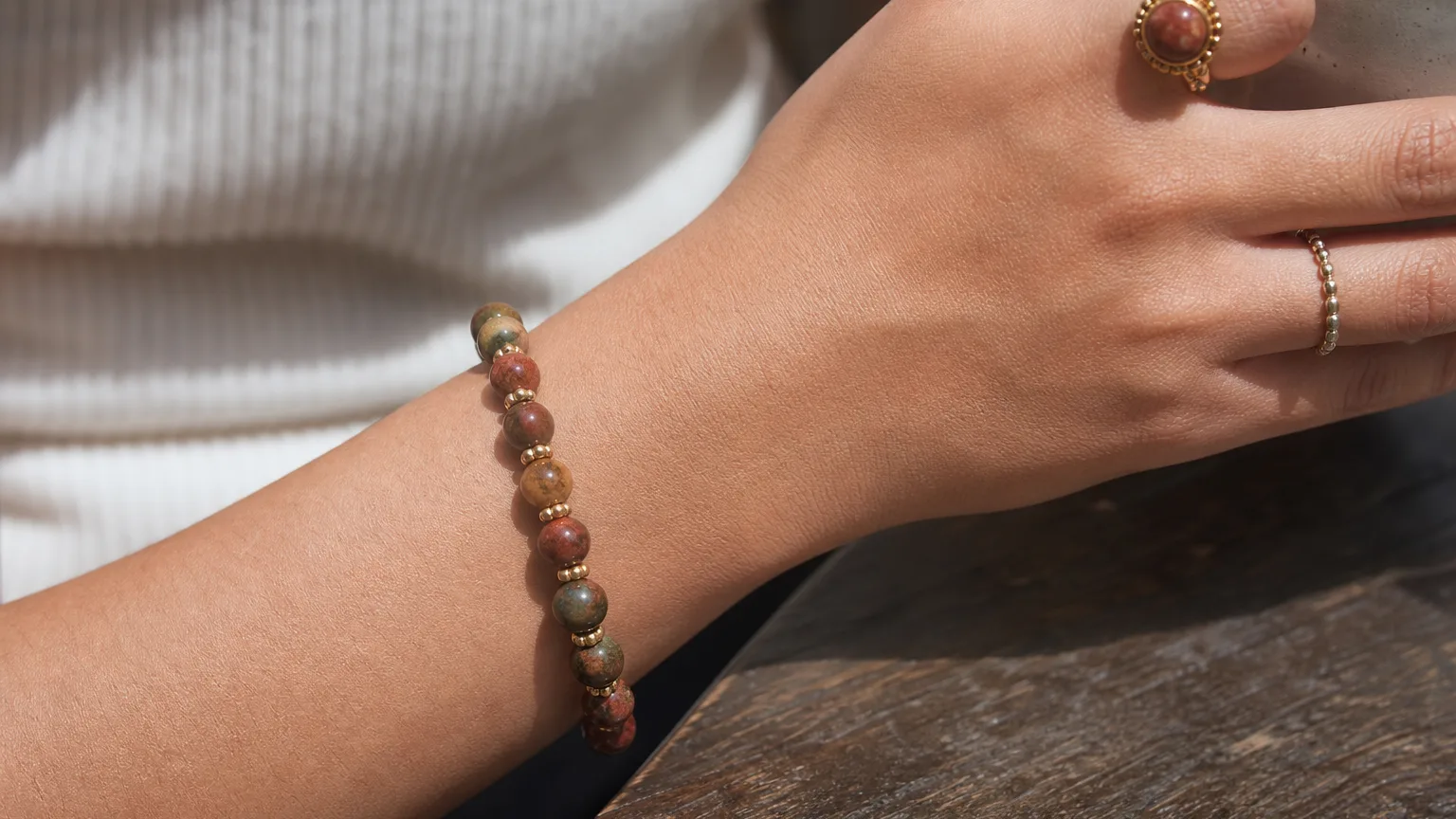
People who work with jasper usually describe it in terms of feeling more settled, not dramatic changes. The stone tends to show up in ordinary moments — a few deep breaths before a meeting, the weight of it in a pocket during a long day, the glance at a wrist when pressure builds. A few benefits people mention most:
A steadier baseline
Holding jasper gives scattered attention somewhere solid to land, which makes it easier to feel planted instead of pulled in every direction — useful on days when your thoughts keep racing ahead.
A calmer desk
Many keep a tumbled piece or sphere at their workspace as a low-effort cue to pause and reset their pace instead of lurching from one task to the next the moment stress builds.
A focus point for meditation
Its weight and texture make it easy to hold during a sit. Giving your hand something to notice can quiet a restless mind and help you settle in faster.
A small daily ritual
Carried through the day, jasper works as a gentle check — a touch brings you back to your intention, whether that’s patience, presence, or simply finishing one thing at a time.
The pattern underneath is the same: the stone isn’t doing the work for you, but it gives your day a small structure that makes calm and focus more likely. If you’re exploring stones for specific needs, see our guides to crystals for anxiety and crystals for grounding.
Jasper Chakra, Zodiac, and Element Associations
In traditional systems, jasper is most often linked to the root center — the foundation tied to safety, stability, and feeling grounded in the body. Earthy red and brown jasper are commonly paired with Leo, and the stone’s element is almost always given as Earth. For related stones, see root chakra crystals.
These are correspondences built up through spiritual tradition, not fixed rules. Because jasper spans so many colors and varieties, different stones point to slightly different centers — and if your own sense of a piece leads somewhere else, that’s completely fine. Many people work with stones intuitively, following what feels right rather than a textbook chart.
How to Use Jasper
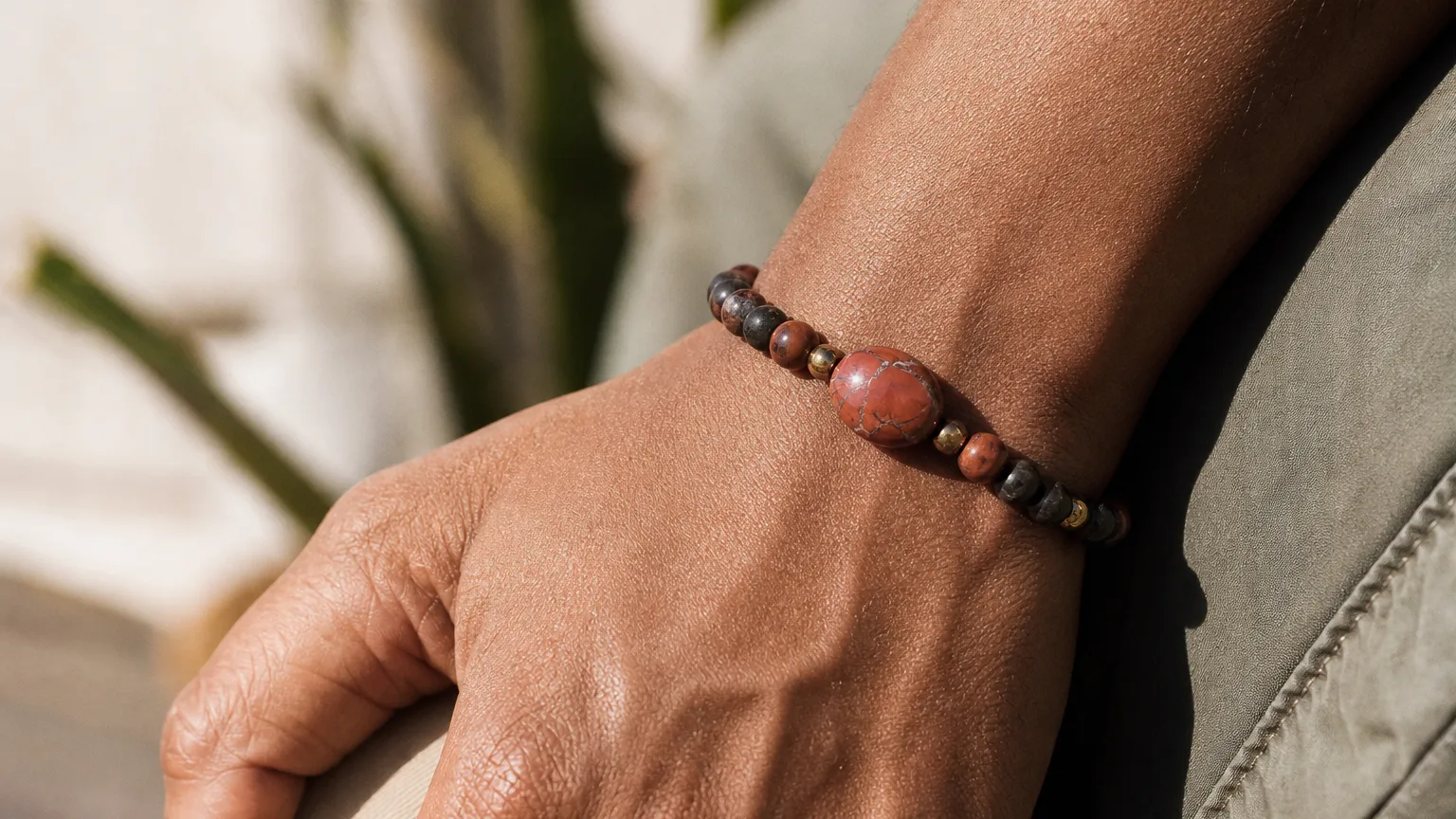
Jasper is forgiving — there’s no single right way, only what fits your routine. The key is consistency: a stone you actually see and hold each day does far more than one that sits in a drawer.
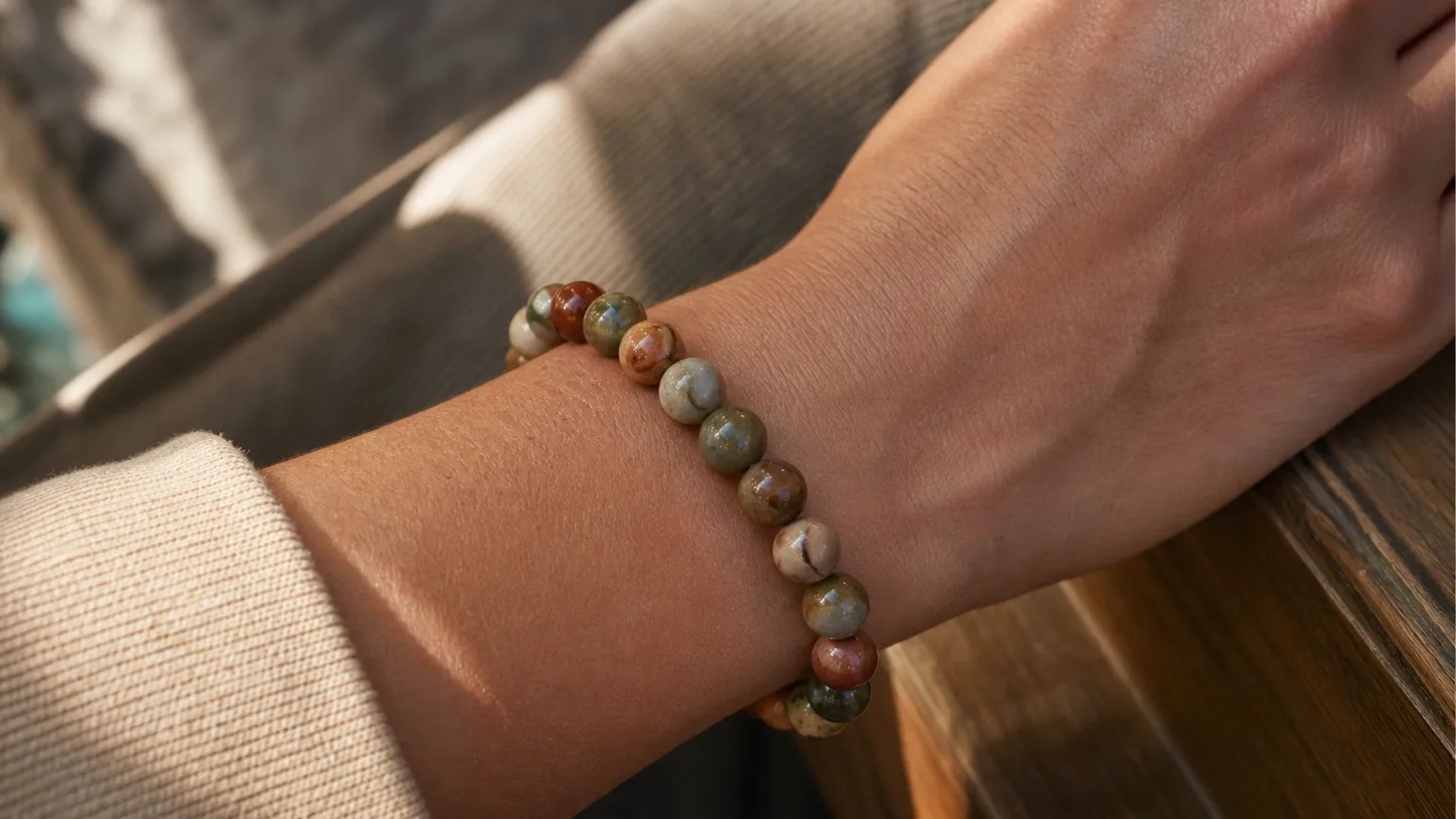
Wear it. A beaded bracelet or pendant keeps the stone with you through the day. Pick one piece and pair it with a specific intention each morning — “stay grounded,” “one step at a time.”
Meditate with it. Hold a tumbled stone or palm stone in your hand while you sit. The weight gives your attention somewhere to rest; even a few focused minutes count.
Place it at home. A sphere, free-form, or carved figure on a desk or shelf works as décor and a visual cue. Larger pieces bring a quiet, earthy presence to a room.
Carry a worry stone. Jasper’s smooth polish and weight make it a natural worry stone — something to rub or hold when you need to reset during a tense moment.
Which Jasper Form Is Right for You?
| Form | Best for | Choose it if |
|---|---|---|
| Bracelet | Daily wearing | You want a visible, wearable reminder through the day |
| Tumbled stone | Pocket or meditation | You want something small, smooth, and easy to hold |
| Palm stone / worry stone | Stressful moments | You like a rounded shape to hold and rub when tension builds |
| Sphere | Desk or shelf display | You want a calm, balanced shape as a room anchor |
| Pendant / Earrings | Personal meaning | You prefer a smaller stone worn near the neckline or face |
| Carved figure | Altar or intention space | You like a symbolic shape that adds meaning to a display |
How to Tell Real Jasper from Fakes
Jasper is widely available, but the market has fakes — usually dyed stones, resin composites, or low-grade chalcedony sold under flashier names. A few checks help before you buy:
- Color and pattern. Real jasper has natural, often uneven patterning — banding, speckles, swirls, or orbital orbs. Perfectly uniform “picture-perfect” scenes or suspiciously vivid single-color stones can be dyed or resin-stabilized.
- Opacity. Jasper is opaque. If light passes cleanly through it like glass, it’s probably another chalcedony or dyed agate sold as jasper.
- Hardness. At Mohs 6.5–7, real jasper scratches glass and resists a steel knife. Softer resin or howlite imitations won’t.
- Temperature and weight. Real stone feels cool and dense in the hand and takes a moment to warm. Resin and plastic feel light and go warm fast.
- Price and seller. Deeply patterned “rare” jasper at very low prices is usually too good to be true. Buy from sellers who name the variety and origin.
A note on variety names. Jasper has dozens of trade names — picture, ocean, brecciated, mookaite, leopardskin, and more — and they describe genuinely different stones with their own looks and meanings. Some, like ocean jasper, come from a single known deposit. Knowing the variety helps you buy what you actually want instead of a generic label.
How to Cleanse and Charge Jasper
In crystal practice, “cleansing” clears accumulated energy and “charging” refreshes the stone. Whether you read that literally or symbolically, caring for your stone keeps the relationship intentional. A few reliable methods:
- Water. Jasper is a hard quartz-group stone, so a brief rinse under cool running water is a simple, effective cleanse.
- Moonlight. Leave it out overnight under a full moon — the gentlest method and a favorite for many.
- Smoke. Pass it through sage or palo santo smoke and let it drift over every side.
- Sound. A singing bowl or bell near the stone. At minimum, it’s a mindful pause.
- Other crystals. Resting it on a selenite plate or clear quartz cluster is popular for an overnight reset.
Two things to ease up on: salt water (salt can dull the polish and corrode any metal findings on jewelry) and prolonged direct sun is generally fine for jasper’s stable color, though intense heat isn’t great for anything glued or set in metal. For the full routine, see our guide to cleansing crystals.
Best Crystals to Pair With Jasper
Pairing is about layering intentions — picking stones whose qualities complement rather than compete. A few combinations that work well with jasper’s steady, grounding energy:
- Jasper + Clear Quartz — grounding meets clarity. Many use clear quartz to hold an intention while jasper keeps them rooted as they work on it.
- Jasper + Smoky Quartz — two grounding stones layered for a deeper sense of being settled, a popular combo during stressful stretches.
- Jasper + Amethyst — steady earth meets quiet calm. A balanced pairing for people who want to feel both planted and clear-headed.
The logic of pairing is about complementary intentions, not strict rules. Pick combinations that match what you’re actually working on, and trust your own sense of what feels balanced.
Who Should Use Jasper?
Jasper suits people who want a steady, grounding presence — anyone who feels scattered, anxious, or untethered and wants a physical reminder to slow down and feel more rooted. It’s one of the more approachable stones: affordable, durable, and available in enough varieties that almost anyone can find a piece they like the look of.
A few honest expectations: jasper isn’t a treatment for anxiety, trauma, or any condition — if you’re dealing with something persistent, a healthcare professional is the right call, and the stone can be a comfort alongside that. It won’t “do” anything on its own; its value comes from the intention and routine you build around it. If you go in expecting a stone to fix things for you, you’ll be let down. If you go in expecting a steady support for your own practice, it tends to fit well.
FAQ About Jasper Meaning
Can jasper go in water?
Yes — it’s a hard quartz-group stone (Mohs 6.5–7), so a brief rinse under cool water is safe. Avoid long soaks, hot water, and salt water, which can dull the polish over time.
What chakra is jasper linked to?
Mostly the root center, tied to safety, stability, and feeling grounded. Earthy red and brown varieties point most strongly to the root.
How can I tell if my jasper is real?
Look for natural, uneven patterning and full opacity, check that it scratches glass (Mohs 6.5–7), and watch for resin that feels too light or warm. Perfectly uniform, vivid color can be a red flag.
Does jasper fade in sunlight?
Generally no — its iron-oxide colors are stable. Prolonged sun won’t hurt the stone much, though intense heat isn’t ideal for pieces that are glued or set in metal.
How do I cleanse jasper?
A brief water rinse, moonlight, smoke (sage/palo santo), or sound. Avoid salt water and long soaks.
What’s the difference between jasper and agate?
Both are chalcedony. Jasper is opaque with mineral impurities; agate is translucent to transparent with banding. They can look similar but have different structures and meanings.
Is jasper good for beginners?
Very. It’s affordable, durable, widely available, and easy to work with — a solid first stone for anyone building a grounding practice.
What is Owyhee jasper?
Owyhee jasper is a scenic, picture-like jasper from Oregon/Owyhee USA. It is jasper (microcrystalline quartz) with distinctive landscape patterns.
Final Thoughts on Jasper
Jasper has earned its long reputation as a steady, grounding stone — and it earns it again for each person who picks up a piece and gives it a job to do. If you’re curious, the simplest start is one piece, one intention, and a small daily moment to notice it. You don’t need the rarest variety; you need a stone you’ll actually see and hold. Let the routine do the work, and let the stone be the steady reminder that brings you back.
From there, jasper tends to open a door — to a steadier morning, a calmer afternoon, or simply a habit of pausing. For more, explore the Crystal Guide or browse jasper jewelry and crystals.