
Meteorite Meaning: Healing Properties & Uses
A meteorite is a piece of rock or metal that formed in space — often as old as the solar system itself, around 4.6 billion years — and fell to Earth. Long seen as a cosmic, deeply ancient object, it’s tied to universal connection, perspective, and transformation. This guide covers what meteorites are, what they mean, and how people work with them. Crystal meanings reflect tradition and personal practice, not medical advice.
What Is Meteorite Meaning?
At its simplest, a meteorite means cosmic connection, deep perspective, and transformation. As a genuine piece of space, it’s often described as a stone that puts everyday worries in perspective and opens a sense of connection to something vast — a presence for people who want a wider view and a reminder of change.
For many, that’s the whole draw: a dense, cool, unmistakably alien piece that feels unlike anything earthly and nudges you toward the big picture. You don’t need to hold any specific belief to get something from it — the value often comes from holding something genuinely ancient and letting it cue you back to a calmer, wider perspective.
Meteorite Meaning and Symbolism
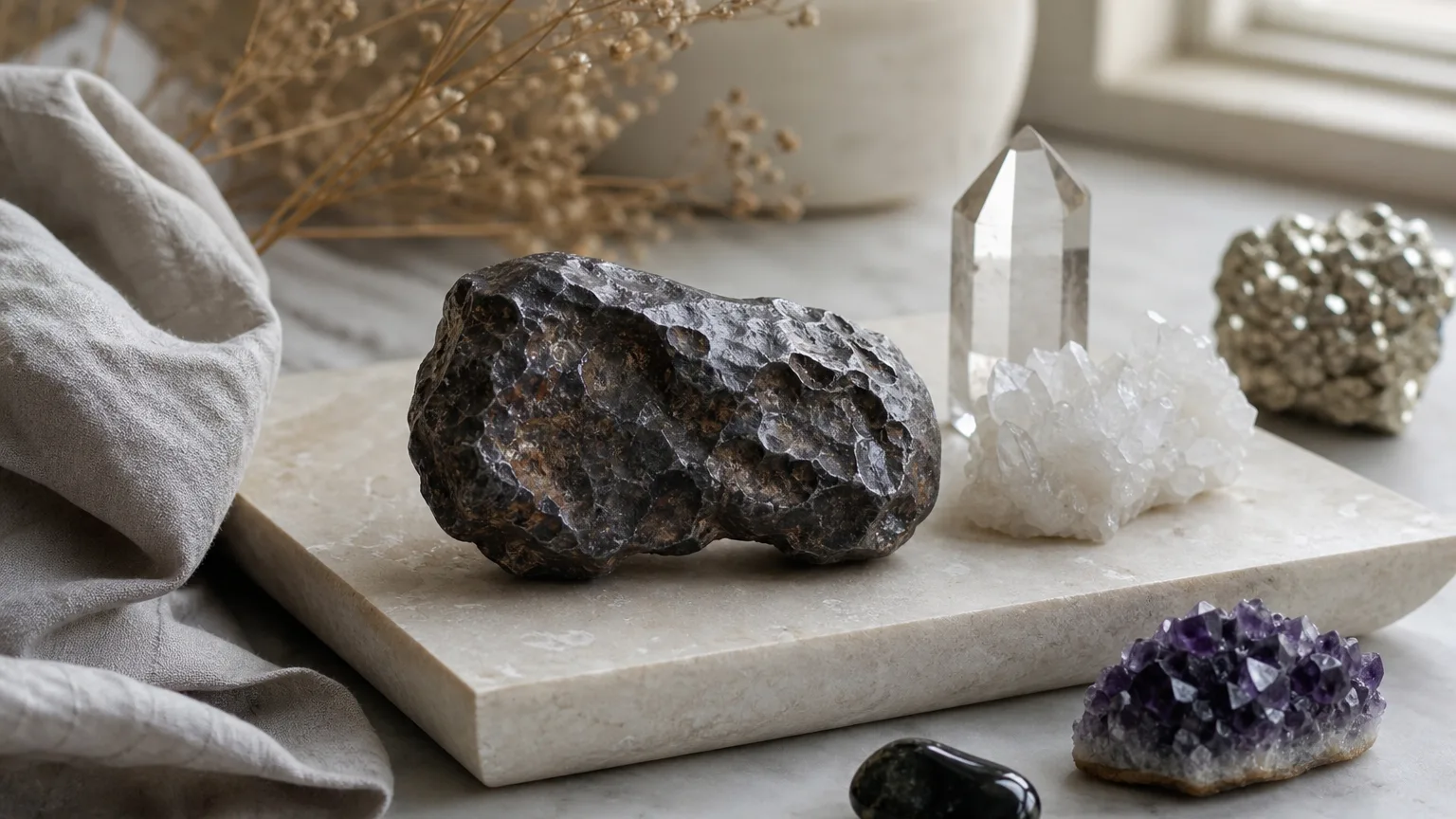
Few objects have captured human awe like a “stone that fell from the sky.” Across cultures, meteorites were treated as sacred, royal, or magical — gifts from the heavens. Ancient Egyptian craftsmen worked iron meteorite into a dagger found in Tutankhamun’s tomb; Mesopotamian and other civilizations recorded falls and treasured the metal. So meteorite carries a real, ancient reverence, even if its modern crystal meaning is more recent.
In modern crystal practice, meteorite is most often tied to cosmic connection, transformation, deep perspective, and protection — especially iron meteorites. Holding something 4.6 billion years old tends to put a bad day in perspective, and some describe meteorite as a stone of big change. Those “cosmic energy” claims are best read as symbolic rather than something measurable. How much perspective you feel is up to you. To explore more stones, browse the full Crystal Guide.
Meteorite Properties
The Science
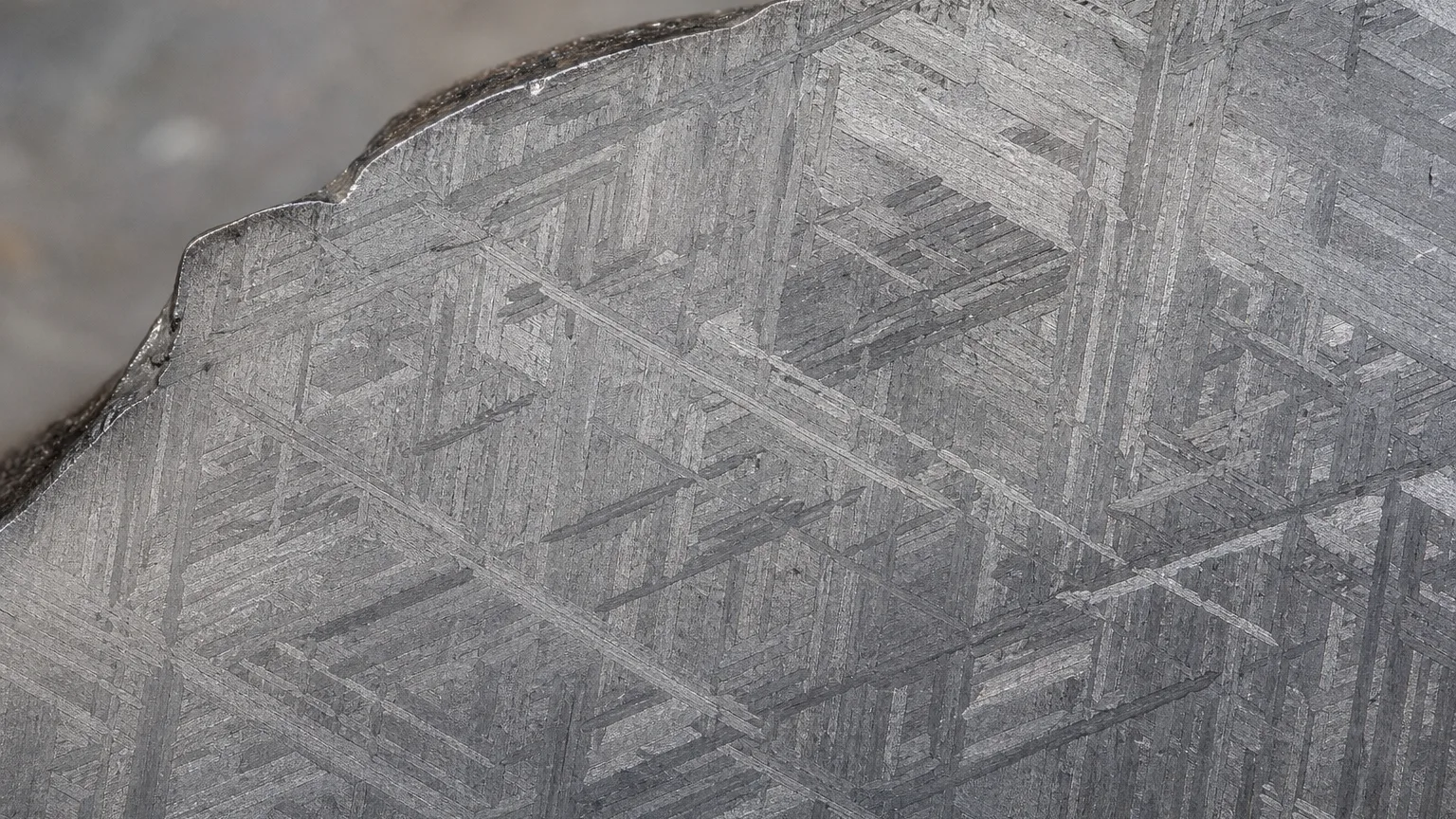
A meteorite is a natural object from space — a piece of asteroid, the Moon, or Mars that survived falling through the atmosphere. They fall into three main types: stony (the most common, rocky chondrites), iron (dense iron-nickel metal alloys), and stony-iron (like pallasite, with crystals of olivine in a metal matrix). Iron meteorites show the famous Widmanstätten pattern — interlocking crystals that formed over millions of years of extremely slow cooling inside an asteroid. Most meteorites are about 4.6 billion years old, dating to the birth of the solar system. They’re heavier than Earth rocks (iron meteorites have a specific gravity around 7.8) and often magnetic. None of this is mystical — it’s planetary science, and the deep age is genuinely extraordinary.
Traditional Meaning
Meteorite carries a real, ancient reverence across cultures — these “sky stones” were treated as sacred, royal, and magical, and worked into prized objects from Egyptian daggers to temple relics. In modern crystal practice it’s tied to the third eye, crown, and root centers and described as a stone of cosmic connection, transformation, and deep perspective — many believe it helps you see the big picture, embrace change, and feel part of something vast. The dense, alien feel of the metal lends itself to grounding as well. These associations draw on genuine ancient reverence and modern practice.
Mindfulness & Psychology
From a psychological angle, a meteorite works as a powerful perspective anchor — a dense, cool, unmistakably ancient object to hold when your problems feel too big or too small. Holding something 4.6 billion years old has a way of putting a stressful day in proportion, and the act of choosing and carrying it can support intention-setting: you decide it stands for “see the big picture” or “embrace change,” and the feel of it draws you back. These effects come from tradition and personal practice, not clinical research. Crystals complement — but never replace — professional care.
Meteorite Benefits
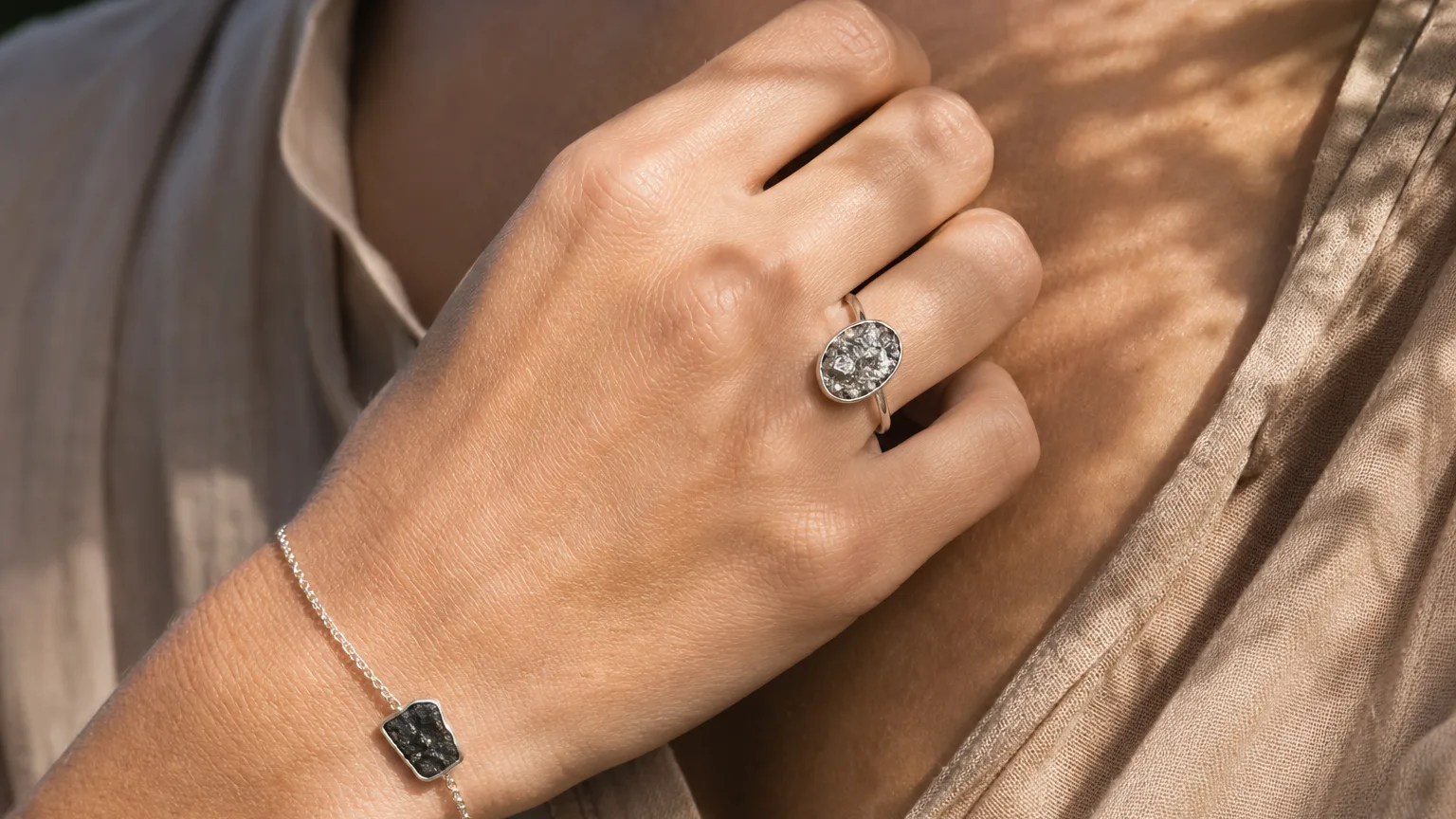
People who work with meteorite usually describe it in terms of gaining perspective and a sense of connection, not dramatic changes. The piece tends to show up when the big picture matters — a moment with the dense stone when worries crowd in, the feel of it during a period of change, the weight of it when you need grounding. A few benefits people mention most:
A wider perspective
Holding something billions of years old puts everyday stress in proportion, which makes it easier to step back from worry and see the bigger picture.
A sense of connection
Many carry meteorite to feel part of something vast — a small, grounding reminder that we’re embedded in a much larger universe.
Support through change
Carried during transitions, it works as a reminder that transformation is natural — that change, on a cosmic scale, is how everything gets made.
A grounding weight
Especially iron meteorites, the dense, cool feel gives your hand something solid to notice, which can settle a scattered mind.
The pattern underneath is the same: the piece isn’t doing the work for you, but it gives your day a small structure that makes perspective and steadiness more likely. If you’re exploring stones for specific needs, see our guides to crystals for anxiety and crown chakra crystals.
Meteorite Chakra, Zodiac, and Element Associations
In traditional systems, meteorite is most often linked to the third eye, crown, and root centers — the higher centers for cosmic connection, the root for grounding its dense weight. It’s commonly paired with Aquarius, and its element is usually given as Éther or the cosmos (sometimes all elements). For related stones, see crown chakra crystals.
These are correspondences built up through modern crystal practice, not fixed rules. If your own sense of a piece points somewhere else, that’s completely fine. Many people work with stones intuitively, following what feels right rather than a chart.
How to Use Meteorite
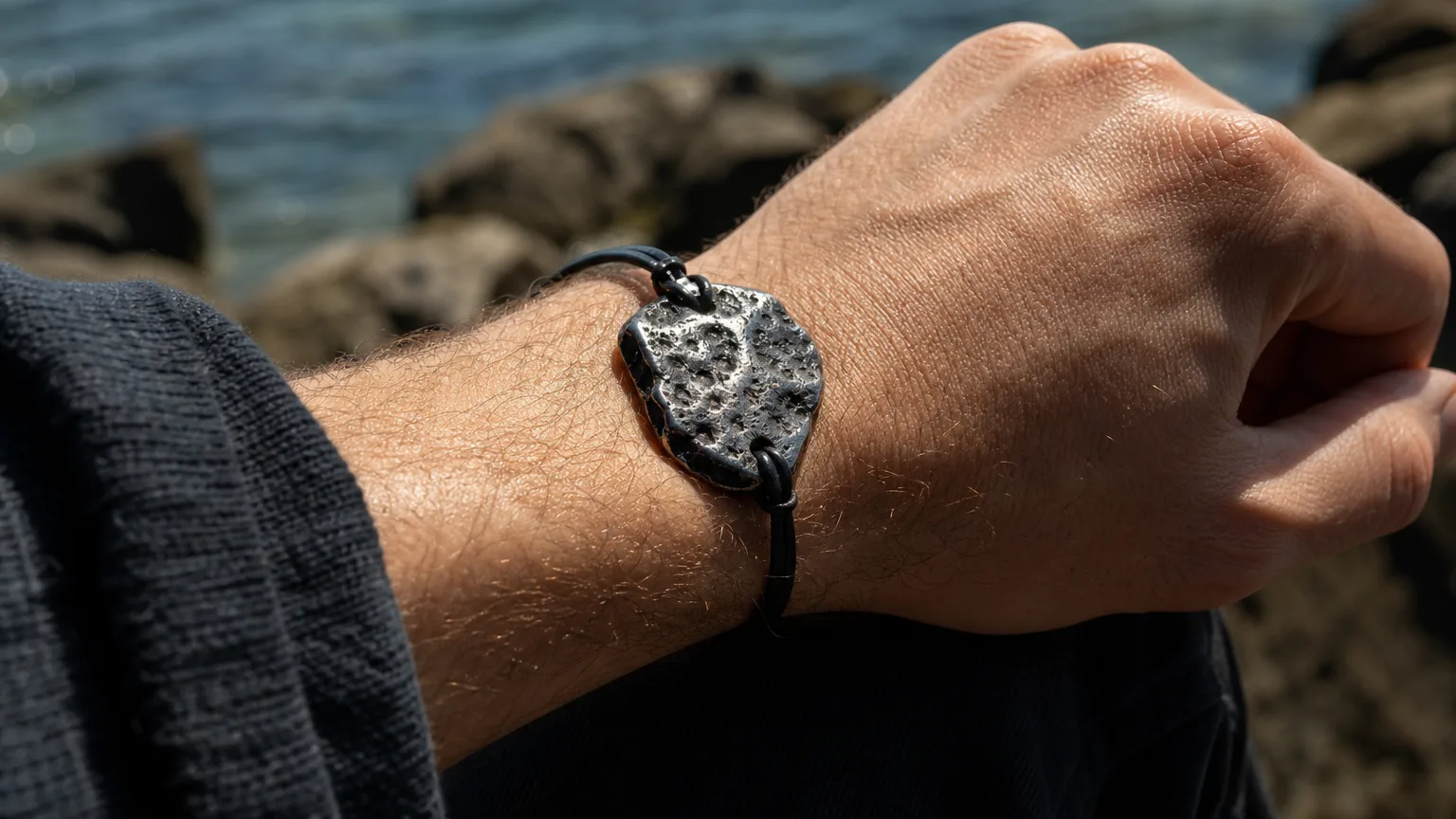
Meteorite is flexible — there’s no single right way, only what fits your routine. The key is consistency: a piece you actually see and hold each day does far more than one that sits in a drawer.
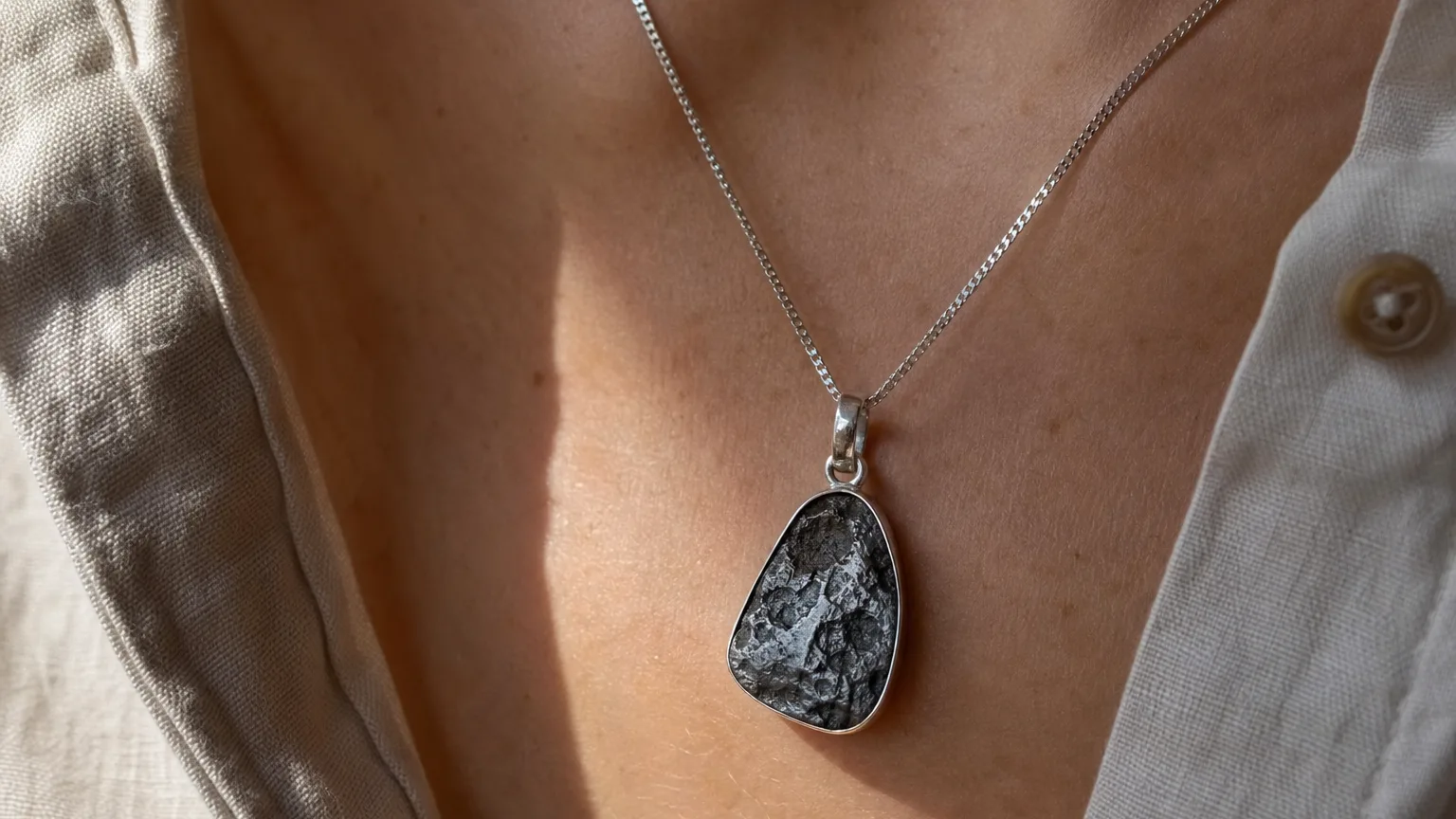
Wear it. A meteorite pendant or beaded bracelet keeps the piece with you through the day. Pair it with a specific intention each morning — “see the big picture,” “embrace change.”
Meditate with it. Hold a slice or specimen in your hand while you sit. Its dense, cool, alien feel gives your attention somewhere striking to rest; a few focused minutes count.
Place it at home. An etched slice or specimen on a desk or shelf works as décor and a perspective cue. The alien look makes a striking conversation piece.
Carry a small piece. A tumbled or slice piece is a discreet pocket object — something to hold when worry narrows your view and you need the big picture.
Which Meteorite Form Is Right for You?
| Form | Best for | Choose it if |
|---|---|---|
| Etched slice | Display, meditation | You want to see the Widmanstätten pattern in an iron meteorite |
| Raw specimen | Collection or display | You want a natural, untouched piece of space |
| Pendant | Daily wearing | You want a wearable piece kept close |
| Bead bracelet | Daily wearing | You want a visible, wearable reminder through the day |
| Cabochon (stony) | Pocket or jewelry | You want a smooth, polished stone to hold or wear |
| Display piece | Room or altar | You want a larger, striking focal object |
How to Tell Real Meteorite from Fakes
Because genuine meteorite is rare and valuable, the market has imitations — slag, industrial iron, ordinary rocks, and “meteorite-pattern” etched steel. A few checks help, though for a valuable piece, expert authentication is the real answer:
- Density and magnetism. Iron meteorites are unusually heavy and attract a magnet strongly. A light, non-magnetic “meteorite” isn’t one.
- The Widmanstätten pattern. On an etched iron-meteorite slice, this interlocking crystal pattern can’t be faked well in ordinary steel. If a slice shows a too-perfect, mechanical pattern, be suspicious.
- Fusion crust. Many freshly fallen meteorites have a thin dark crust from melting during atmospheric entry. Ordinary Earth rocks don’t.
- Chondrules (stony). Stony chondrites often contain small round “chondrules” visible on a cut face — a sign of a real meteorite.
- Certification. For a valuable meteorite, ask for a classification or certificate from a reputable dealer or meteoritics lab.
- Moonlight. Leave it out overnight under a full moon — gentle, safe for all meteorite types, and thematically fitting.
- Smoke. Pass it through sage or palo santo smoke and let it drift over every side.
- Sound. A singing bowl or bell nearby. At minimum, it’s a mindful pause.
- Other crystals. Resting it on a selenite plate or clear quartz cluster is popular for an overnight reset.
- Meteorite + Clear Quartz — many use clear quartz to hold and amplify meteorite’s intention for cosmic connection and a wider perspective.
- Meteorite + Labradorite — two magical, otherworldly stones layered for transformation, intuition, and deep inward focus.
- Meteorite + Obsidian — cosmic perspective meets deep grounding; a pairing for protection and seeing clearly.
A note on value. Most meteorites are affordable in small pieces, but rare types and large specimens can be very valuable. Buy from dealers who can identify the meteorite type and, ideally, its fall or find location.
How to Cleanse and Charge Meteorite
In crystal practice, “cleansing” clears accumulated energy and “charging” refreshes the piece. Meteorite care depends on type — iron meteorites need protection from rust. A few safe methods:
Things to avoid: water, moisture, and salt water — iron meteorites can rust, so keep them dry and lightly oiled if needed (a tiny amount of mineral oil protects the surface). Avoid harsh chemicals. Stony meteorites are more water-tolerant but still best kept dry. For the full routine, see our guide to cleansing crystals.
Best Crystals to Pair With Meteorite
Pairing is about layering intentions — picking stones whose qualities complement rather than compete. A few combinations that work well with meteorite’s cosmic energy:
The logic of pairing is about complementary intentions, not strict rules. Pick combinations that match what you’re actually working on, and trust your own sense of what feels balanced.
Who Should Use Meteorite?
Meteorite suits people who want a perspective-shifting, cosmically grounding presence — anyone going through big change, feeling stuck in the small stuff, or simply drawn to holding something genuinely ancient and alien, who wants a reminder of the big picture and of transformation.
A few honest expectations: meteorite isn’t a treatment for anxiety, depression, or any condition — and “cosmic energy” claims are best read symbolically, not as measurable effects. If you’re dealing with something persistent, a healthcare professional is the right call, and the piece can be a comfort alongside that. It won’t “do” anything on its own; its value comes from the intention and routine you build around it. If you go in expecting a piece to fix things for you, you’ll be let down. If you go in expecting a steady anchor for your own practice, it tends to fit well.
FAQ About Meteorite Meaning
Are meteorites really from space?
Yes. A meteorite is a natural object from space — a piece of asteroid, the Moon, or Mars — that survived falling through Earth’s atmosphere. Most are around 4.6 billion years old.
What are the types of meteorite?
Three main types: stony (rocky, the most common), iron (dense iron-nickel metal), and stony-iron (like pallasite, olivine crystals in metal). Each looks and feels different.
What is the Widmanstätten pattern?
The interlocking crystal pattern visible on an etched iron-meteorite slice, formed over millions of years of extremely slow cooling inside an asteroid. It’s hard to fake.
Can meteorite go in water?
Best avoided. Iron meteorites can rust, so keep them dry and lightly oiled. Stony meteorites are more tolerant but still best kept dry.
What chakra is meteorite linked to?
Mostly the third eye, crown, and root centers — the higher centers for cosmic connection, the root for grounding its weight.
How can I tell if my meteorite is real?
Check for unusual heaviness and strong magnetism (iron meteorites), the Widmanstätten pattern on etched slices, a fusion crust, or chondrules. For valuable pieces, seek expert authentication.
Is meteorite good for beginners?
It can be — small, affordable pieces exist — but it needs dry care (especially iron types) and is more of a specialty piece than a typical first stone.
Final Thoughts on Meteorite
Meteorite has earned its place as an object of cosmic perspective — and it earns it again for each person who picks up a piece and gives it a job to do. If you’re curious, the simplest start is one piece, one intention, and a small daily moment to notice it. You don’t need the rarest type; you need a piece you’ll actually see and hold. Let the routine do the work, and let the meteorite be the reminder that brings you back to the big picture.
From there, meteorite tends to open a door — to a wider view, a steadier sense of change, or simply the comfort of holding something genuinely ancient. For more, explore the Crystal Guide or browse meteorite jewelry and crystals.