Moss Agate Meaning: Healing Properties & Uses
Moss Agate is a semi-translucent chalcedony patterned with green mineral inclusions that look like moss or ferns — though there’s no actual moss in it. Long tied to nature, growth, and new beginnings, it’s a stone people reach for fresh starts and a calmer, more grounded outlook. This guide covers what moss agate is (and how the “moss” forms), what it has meant, and how people work with it. Crystal meanings reflect tradition and personal practice, not medical advice.
What Is Moss Agate Meaning?
At its simplest, moss agate means growth and fresh beginnings — the calm, earthy feeling of a garden in a single stone. As a translucent, green-patterned chalcedony, it reads as natural and grounding: linked to nature, new starts, and steady, low-key growth.
For many people that’s exactly the appeal — a clear stone with green “moss” inside that you carry or wear as a cue to grow steadily and stay grounded. You don’t need to believe anything about energy to use it that way; the value often comes from choosing the piece, giving it a job (“help me grow steadily”), and letting its garden-like pattern pull you toward patience and renewal. In that sense moss agate is a cue to grounded growth.
Moss Agate Meaning and Symbolism
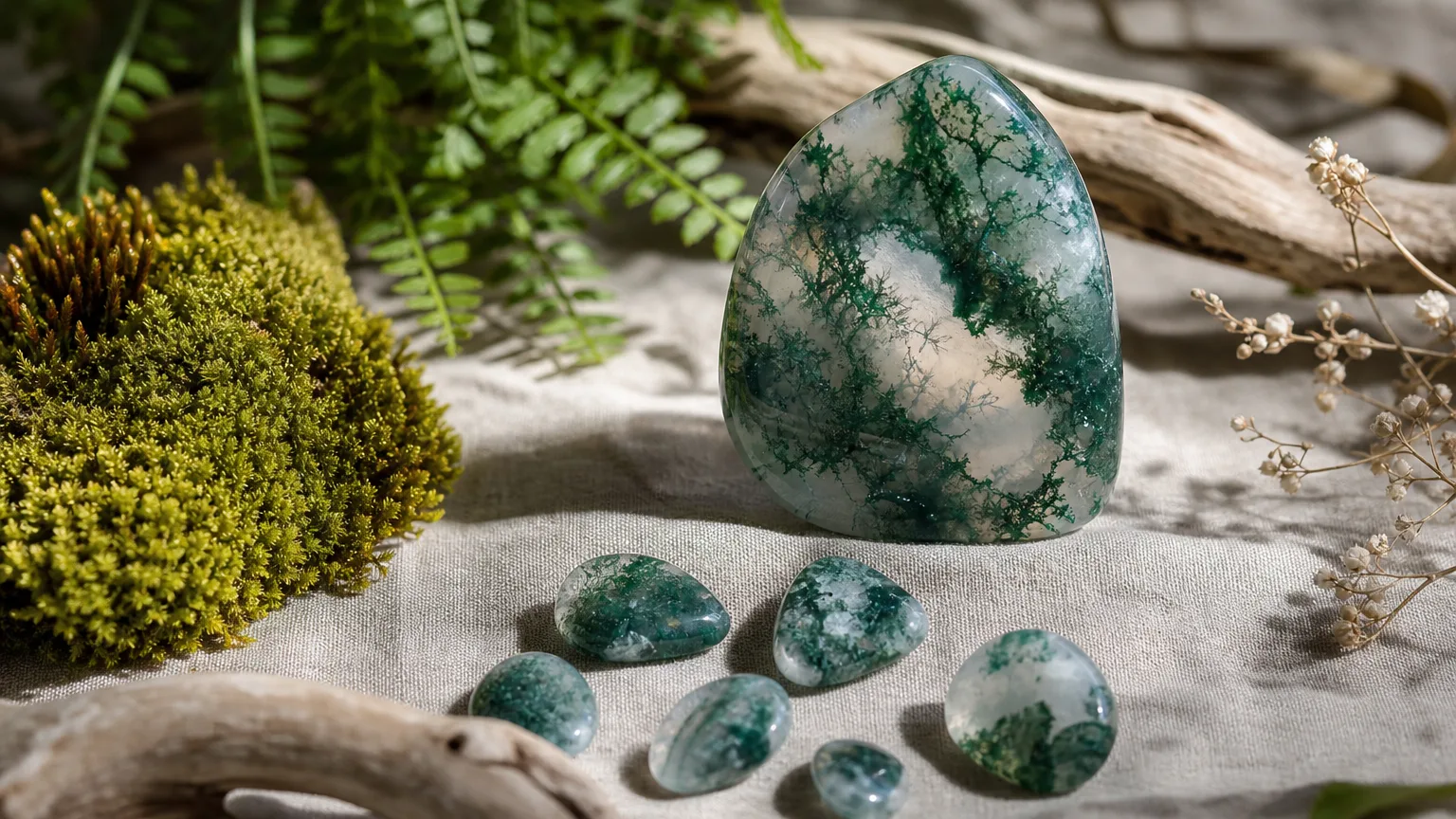
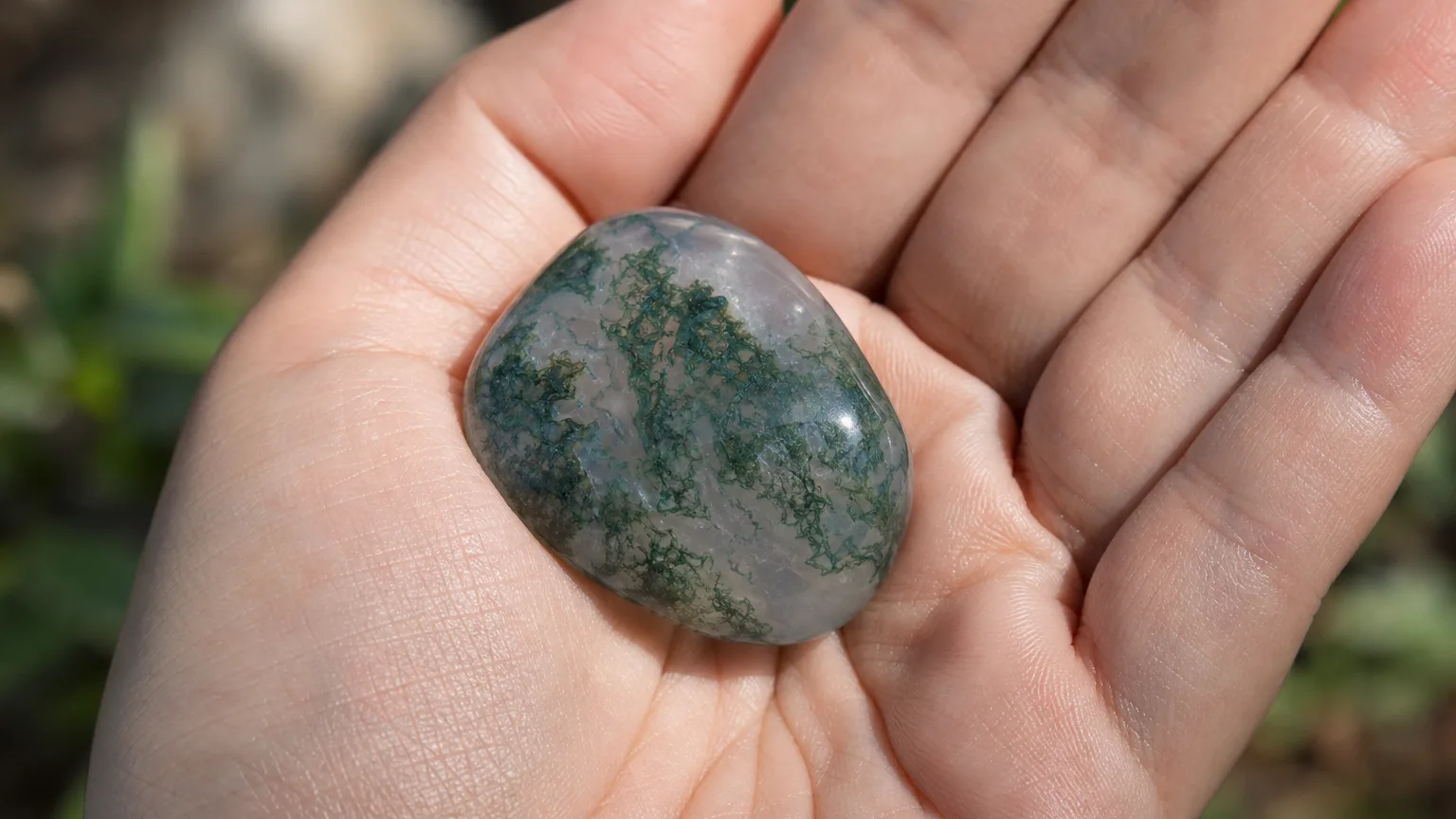
The name is descriptive: moss agate looks like moss frozen in stone. But the “moss” isn’t plant material — it’s green mineral inclusions (often manganese or iron oxides, hornblende, or chlorite) embedded in translucent chalcedony. Despite the name, moss agate often has no banding at all, which technically separates it from most other agates — it’s the inclusions, not the bands, that define it.
Moss agate has been carved and worn for centuries, with a long association with nature, farming, and gardening — historically it was sometimes carried as a “gardener’s stone” for good harvests. In modern crystal practice, that nature-and-growth character became its meaning: growth, new beginnings, and grounded calm — the idea of a stone connected to the steady pace of the natural world. It’s reached for fresh starts, patience with slow progress, and a calmer, more rooted outlook.
The thread through all of it is the same: nature, growth, and new beginnings. Today moss agate is usually described as a calm, grounding stone tied to the natural world — reached for during fresh starts, to support steady growth, or to feel more connected and rooted. How much of that lands for you personally is, honestly, up to you — but the stone has held that growth-and-nature reputation across a long time. To explore more stones, browse the full Crystal Guide.
Moss Agate Properties
The Science
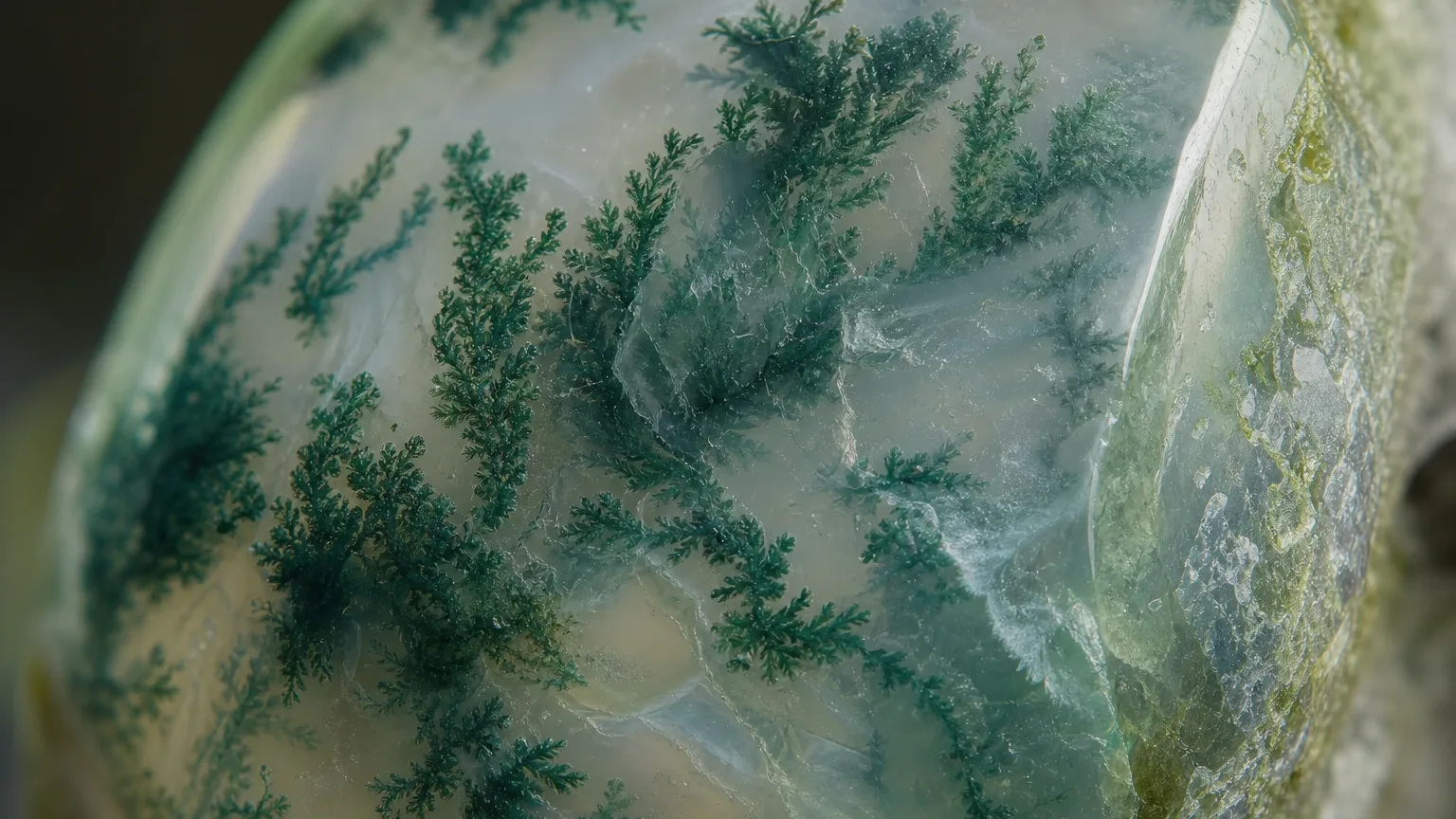
Moss agate is a variety of chalcedony — microcrystalline quartz, SiO₂ — with a Mohs hardness of about 6.5 to 7. What makes it “moss agate” isn’t banding (it usually has none) but its green, dendritic or mossy inclusions: minerals like manganese or iron oxides, hornblende, or chlorite that grew into branching, plant-like shapes inside the translucent stone. So the “moss” is mineral, not plant. It’s found worldwide, with classic sources in India, Brazil, the United States, and Madagascar. None of this is mystical — it’s mineralogy.
Traditional Meaning
Tradition ties moss agate to nature, growth, and new beginnings. It’s linked to the heart and root centers and is often described as a calm, grounding stone connected to the natural world — supporting steady growth, fresh starts, and a more rooted state of mind. Historically it was carried as a “gardener’s stone” for good harvests, reflecting its long tie to farming and the land. Across modern crystal practice it’s reached for during new beginnings or to support patient, sustainable progress. These associations come from spiritual tradition and personal practice rather than clinical study.
Mindfulness & Psychology
From a psychological angle, moss agate works as a calm, nature-themed visual cue — the kind of object you keep nearby when you want patience and steady growth. Its garden-like, green-in-clear pattern reads as natural and grounding, and the act of carrying a piece and pairing it with an intention (“grow at my own pace”) turns it into a small cue for patient renewal. Part of its appeal is simply its restful, plant-like look — a visual signal to slow down to nature’s pace. These effects come from tradition and personal practice, not clinical research. Crystals complement — but never replace — professional care.
Moss Agate Benefits
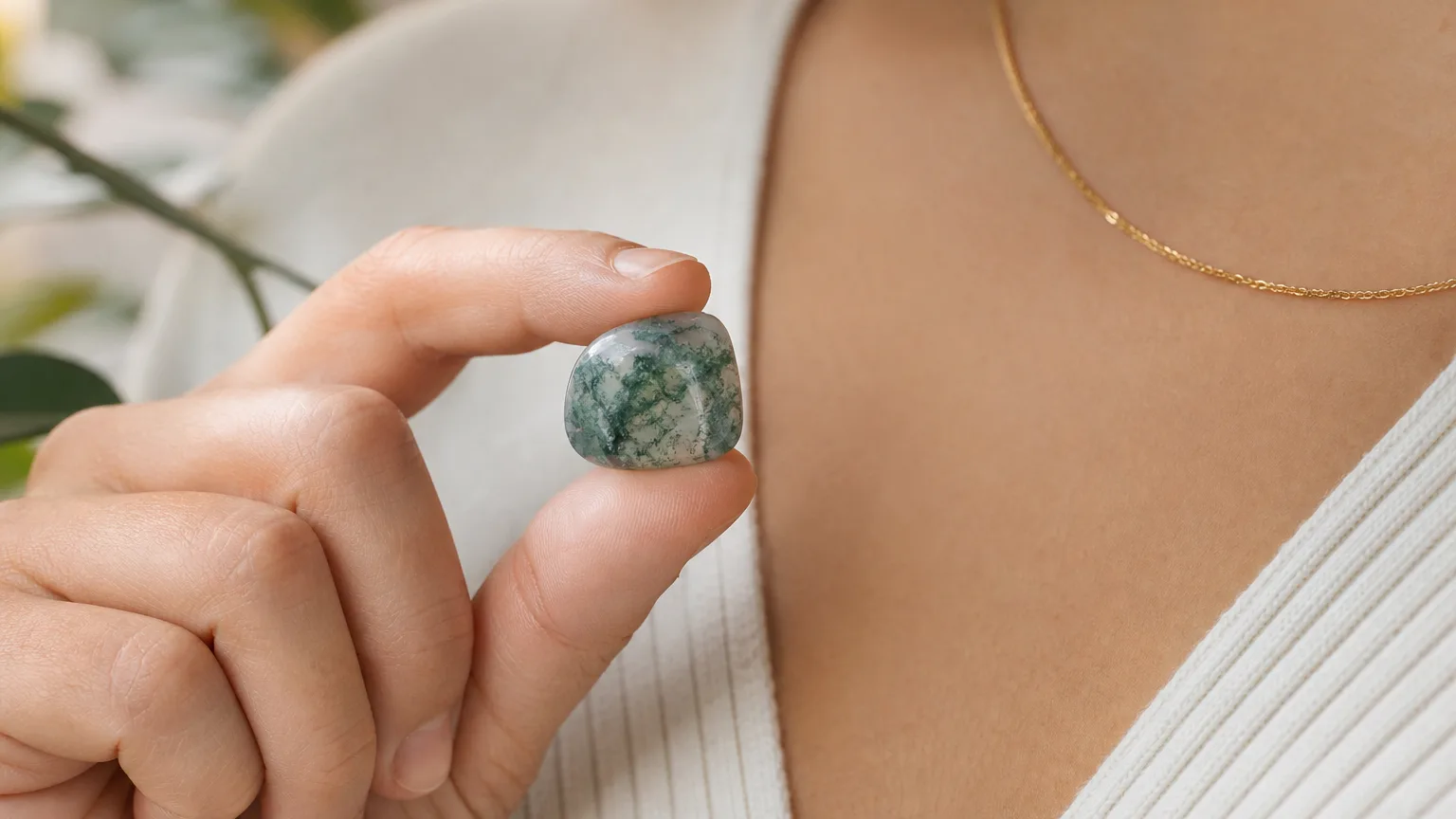
People who work with moss agate usually describe it in terms of patient growth and grounded calm, not dramatic shifts. It tends to show up as a calmer, more rooted feeling — useful at the start of something, during slow progress, or when you feel disconnected. A few of the benefits people mention most:
Patient, steady growth
Keeping moss agate nearby is a cue to grow at a sustainable pace — a reminder that slow, steady progress counts more than a frantic push.
A fresh-start cue
Its garden-like look is a natural fit for new beginnings — a cue to treat a start as a seed to tend, not a result to force.
Grounded calm
Its earthy, green-in-clear pattern reads as grounded — a low-key cue to come back to a steadier, more rooted baseline.
A nature connection
Many keep it as a small piece of the natural world indoors — a restful presence that helps you feel more connected and less rushed.
The pattern underneath all of these is the same: moss agate isn’t growing anything for you by magic, but it gives your day a cue toward patient, grounded progress. If you’re exploring stones for specific needs, see our guide to crystals for stress.
Moss Agate Chakra, Zodiac, and Element Associations
In traditional systems, moss agate is linked to two centers — the heart (the green, growth quality) and the root (grounding) — which is why it’s described as both calming and grounding. Astrologically, it’s often paired with Virgo and Taurus. Its element is Earth, fittingly, given its nature-and-growth theme. For related stones, see heart chakra crystals.
These are correspondences built up through tradition, not fixed rules. If your own sense of moss agate points somewhere else — a different chakra, a different element — that’s completely fine. Many people work with stones intuitively, following what feels right rather than a textbook chart, and there’s a long history of practitioners doing exactly that.
How to Use Moss Agate
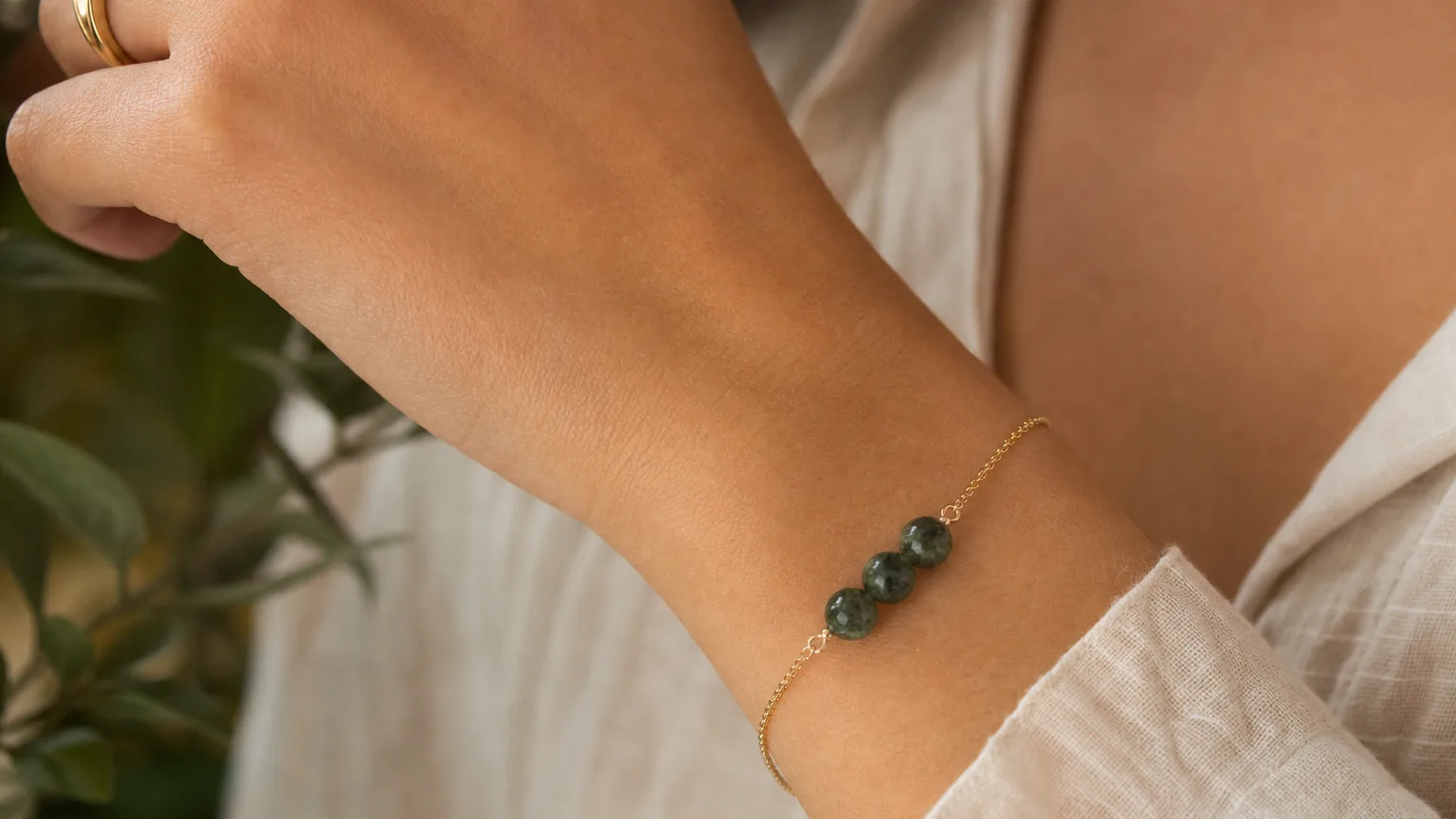
Moss agate is durable (Mohs 6.5–7) and made to be carried and lived with — there’s no single right way, only what fits your routine. The key is consistency: a piece you actually see and touch does far more than one stored away.
Carry a tumbled piece. A smooth stone in a pocket is a discreet touchstone — something to hold when you want patience or grounding.
Wear it. A moss agate pendant or bracelet keeps the stone against your skin through the day. Pair it with one intention each morning — “grow at my own pace.”
Meditate with it. Hold a piece in your palm or rest it on your chest (heart area) while you sit. Even a few minutes of focused attention counts; the goal is presence, not duration.
Keep it near plants or on a desk. Its nature theme makes it a natural fit near houseplants or where you work — a restful, grounding presence.
Which Moss Agate Form Is Right for You?
| Form | Best for | Choose it if |
|---|---|---|
| Tumbled stone | Pocket or meditation | You want something smooth and easy to hold or carry |
| Pendant | Worn near the chest | You prefer a single garden-like stone near the heart center |
| Bracelet / beads | Daily wearing | You want a visible, nature-themed reminder at your wrist |
| Palm stone | Hand-holding under stress | You want a larger, smooth piece to grip when you need grounding |
| Polished slab | Desk or shelf display | You want to show off the moss-like inclusions as décor |
| Carved leaf / plant shape | Personal meaning | You like a nature-themed carving you connect with |
How to Tell Real Moss Agate from Fakes
Moss agate is common and affordable, so outright fakes are rare — but dyed or resin pieces, and other stones sold as moss agate, do show up. A few checks help:
- The inclusions. Genuine moss agate has three-dimensional, branching green inclusions inside the translucent stone — they sit at different depths as you turn it. Painted-on or surface “moss” suggests glass, resin, or a coating.
- No two alike. Real moss agate patterns are unique to each piece. Identical, repeated “moss” across many pieces points to a manufactured material.
- Color. Natural green inclusions are muted and earthy (moss green, olive, dark green). Vivid neon green is more likely dyed.
- Hardness. At Mohs 6.5–7, real moss agate scratches glass. A soft, easily scratched piece is likely dyed howlite, marble, or plastic.
- Confusion with dendritic agate or tree agate. These are close relatives with similar dark, branching inclusions, sometimes on a whiter base. All are genuine stones — the label just reflects the look and source.
How to Cleanse and Charge Moss Agate
Moss agate is a hard, stable chalcedony (Mohs 6.5–7) and one of the easier stones to care for.
- Water. A brief rinse under cool water is fine, and many use running water as part of a cleansing routine. Avoid long soaks in salt water if the piece has metal settings.
- Sunlight. Moss agate is sun-stable; its inclusions and color won’t fade in normal light. Brief sun cleansing is safe.
- Smoke or sound. Passing it through sage or palo santo smoke, or using a singing bowl nearby, is a no-contact option many prefer.
- Earth. Because it’s so tied to nature, some rest it in soil or set it on the earth for a few hours as a symbolic reset — fitting for a “gardener’s stone.”
Two things to keep in mind: store moss agate away from harder stones so it doesn’t pick up scratches, and avoid harsh chemical cleaners, which can dull the polish. For the full routine, see our guide to cleansing crystals.
Best Crystals to Pair With Moss Agate
Pairing is about layering intentions — picking stones whose qualities complement rather than compete. A few combinations that work well with moss agate’s growth-and-nature energy:
- Moss Agate + Rose Quartz — growth softened with warmth; a heart-centered pairing for gentle self-care.
- Moss Agate + Aventurine — two growth-and-opportunity stones; a combo many reach for during new beginnings.
- Moss Agate + Clear Quartz — clear quartz is said to amplify; many use it to lift moss agate’s growth intentions.
- Moss Agate + Smoky Quartz — growth meets grounding and release; a steady combo for moving forward while staying rooted.
The logic of pairing is about complementary intentions, not strict rules. Pick combinations that match what you’re actually working on, and trust your own sense of what feels balanced.
Who Should Use Moss Agate?
Moss agate suits people who want a calm, grounding stone for patient growth and fresh starts — anyone beginning something new, working on slow progress, or wanting to feel more connected to nature and less rushed. It’s one of the most approachable stones because it’s affordable, durable, and asks little: carry it, wear it, and let it mark a steadier, more rooted corner of your day.
A few honest expectations: moss agate isn’t a treatment for anxiety, depression, or any condition — if you’re dealing with something persistent, a healthcare professional is the right call, and the stone can be a comfort alongside that. Its value comes from the intention and routine you build around it. If you go in expecting a stone to grow something for you, you’ll be disappointed; if you go in expecting a calm, grounding cue you can return to, it tends to fit well.
FAQ About Moss Agate Meaning
What is moss agate good for?
Traditionally, nature, growth, and new beginnings. People reach for it during fresh starts, to support patient progress, or to feel more grounded and connected.
Is the moss in moss agate real?
No — it’s a mineral inclusion, not plant material. Green minerals (like manganese or iron oxides, hornblende, or chlorite) grew into branching, moss-like shapes inside the translucent chalcedony.
Does moss agate have bands like other agates?
Usually not. Unlike most agates, moss agate is defined by its inclusions, not banding — it often has no bands at all.
What chakra is moss agate linked to?
Mostly the heart (the green, growth quality) and the root (grounding) — which is why it’s described as both calming and grounding.
Why is moss agate called a “gardener’s stone”?
Historically it was carried for good harvests, reflecting a long association with farming and the land. It’s a symbolic tie to nature and growth, not a promise about plants.
Can moss agate go in water?
Yes. At Mohs 6.5–7 it’s a hard, water-safe stone. A brief rinse is fine; avoid long salt-water soaks with metal settings.
How can I tell real moss agate?
Look for three-dimensional, branching green inclusions at different depths inside the stone (not painted on top), in muted, earthy greens. Identical patterns across pieces suggest a manufactured material.
Final Thoughts on Moss Agate
Moss agate earns its place as a stone of nature and patient growth — the garden-in-a-stone people reach for when they want to begin something and tend it slowly. If you’re curious, the simplest start is one piece you’ll actually carry or wear, paired with a small daily moment to notice it. Let the routine do the work, and let the stone be the calm anchor that reminds you to grow at your own pace.
From there, moss agate tends to open a steadier space — a calmer pace, a fresher start, or simply a habit of staying rooted while you grow. For more, explore the Crystal Guide or browse moss agate pieces.