
Nacre Meaning: Healing Properties & Uses
Nacre — also called mother-of-pearl — is the iridescent inner layer of certain shells, the same material that builds pearls. Long tied to calm, intuition, and soft feminine energy, it’s a stone people reach for when they want a gentler, more reflective mood. This guide covers what nacre is (a layered calcium carbonate), what it has meant, and how people work with it. Crystal meanings reflect tradition and personal practice, not medical advice.
What Is Nacre Meaning?
At its simplest, nacre means calm and gentle reflection — the soft, moonlit shimmer of a shell’s inner layer. Where some stones read as bold or energizing, nacre sits on the quiet side: linked to intuition, emotional softness, and a soothing, lunar quality.
For many people that’s exactly the appeal — a smooth, iridescent piece you wear or keep close as a cue to stay gentle and reflective. You don’t need to believe anything about energy to use it that way; the value often comes from choosing the piece, giving it a job (“stay soft”), and letting its calm shimmer pull you toward something quieter. In that sense nacre is a gentle cue to reflection.
Nacre Meaning and Symbolism
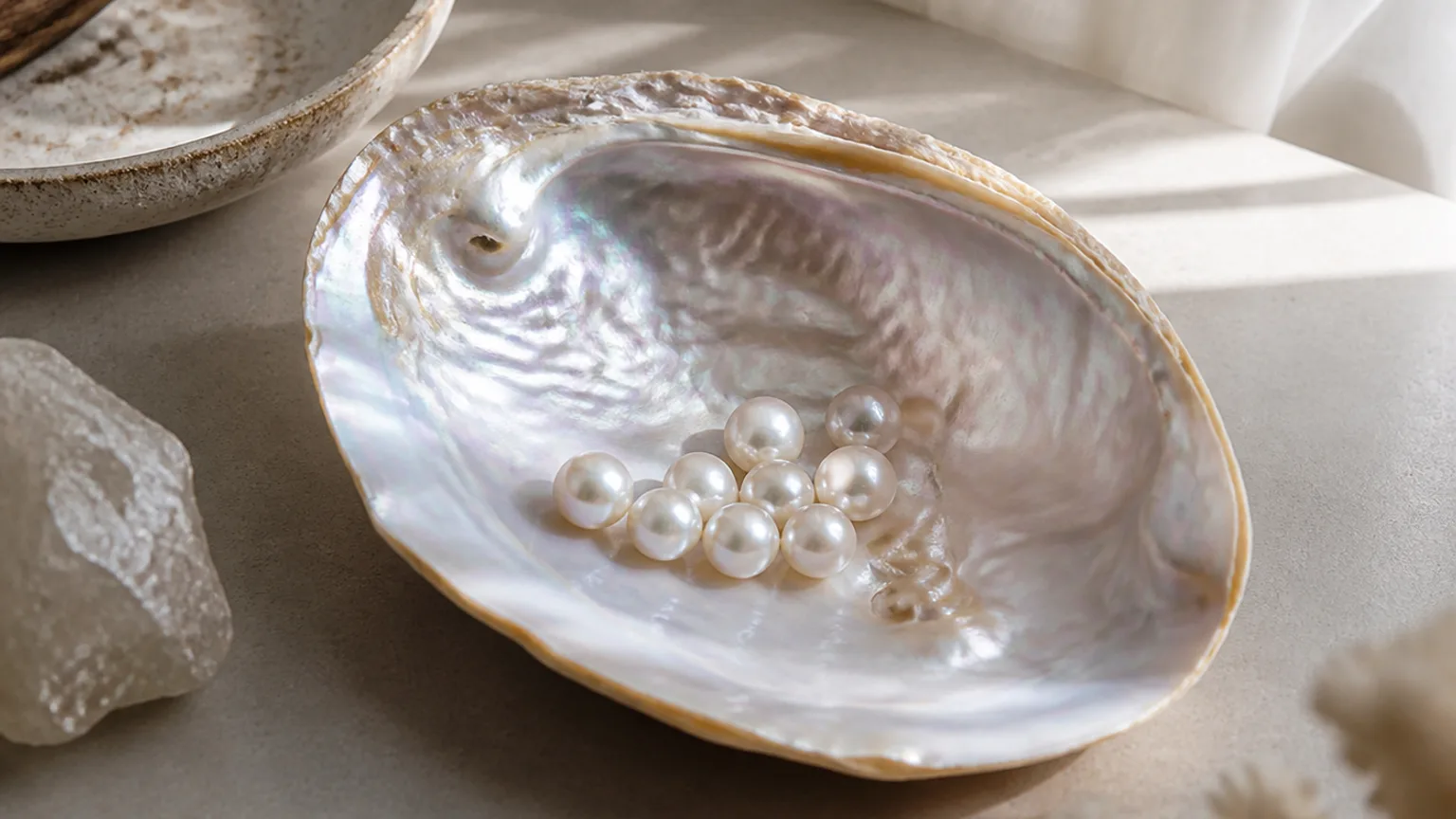
The name is literal. Nacre comes from the Arabic and Old French words for a shell, and mother-of-pearl is exactly what it is: the iridescent material that lines the inside of certain shells, and the same material that, wrapped layer by layer around an irritant, builds a pearl. So a pearl is nacre, and the lining of the shell it grew in is nacre too.
Mother-of-pearl has been carved and inlaid for thousands of years — into buttons, jewelry, inlay work, and decorative objects across cultures, from Chinese lacquerware to Middle Eastern inlay to European cutlery handles. Its soft, shifting shimmer made it a natural stand-in for the moon, and across many traditions it picked up associations with calm, intuition, feminine energy, and emotional softness. Those associations are largely cultural and modern rather than tied to a single ancient myth, but they’ve been remarkably consistent.
The thread through all of it is the same: calm, intuition, and gentle reflection. Today nacre is usually described as a soothing, lunar stone — reached for to soften a harsh mood, to support intuition, or simply for its quiet, shifting beauty. How much of that lands for you personally is, honestly, up to you — but the material has carried that soft, valued reputation for a long time. To explore more stones, browse the full Crystal Guide.
Nacre Properties
The Science
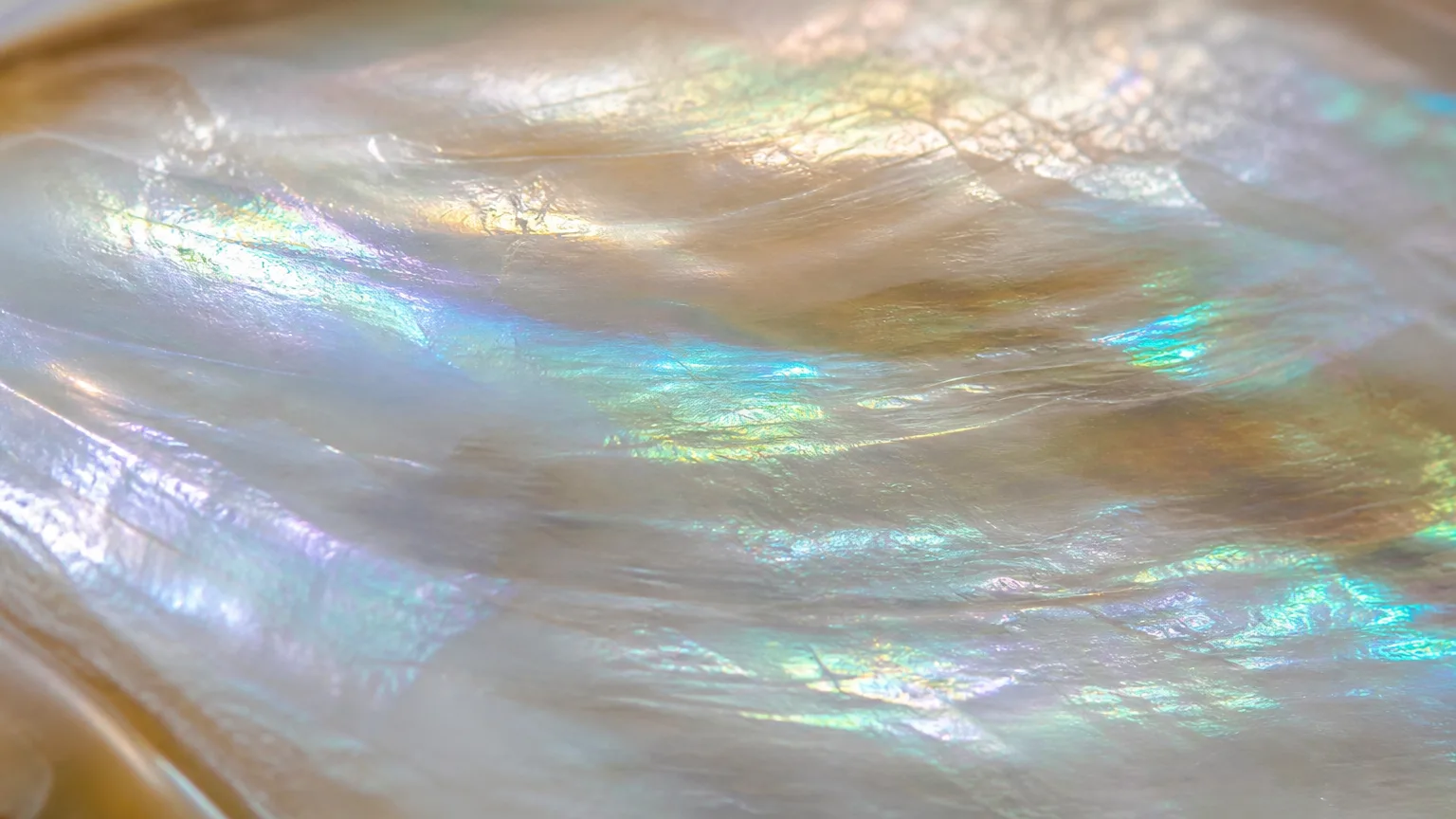
Nacre is a layered biological material — not a single mineral. It’s made mostly of aragonite (a form of calcium carbonate, CaCO₃) stacked in microscopic hexagonal tablets, held together by a thin protein called conchiolin. That layered structure is the whole story: light bouncing between the layers interferes with itself, producing nacre’s signature iridescent shimmer (the same effect you see in a pearl or a soap bubble). It’s relatively soft — about 2.5 to 4.5 on the Mohs scale — and, like all calcium carbonate, it’s sensitive to acid. Nacre forms inside the shells of pearl oysters, abalone, and some other mollusks. None of this is mystical — it’s materials science, and it explains both the shimmer and why nacre needs gentle care.
Traditional Meaning
Tradition ties nacre to calm, intuition, and soft feminine or lunar energy. It’s most often linked to the upper centers and is often described as a soothing stone that “softens” a harsh mood, supports intuition, and brings a gentle, reflective quality. Across modern crystal practice it’s reached for during emotional strain, to calm an overstimulated mind, or simply for its quiet beauty. These associations come from spiritual tradition and personal practice rather than clinical study.
Mindfulness & Psychology
From a psychological angle, nacre works as a soft, soothing visual cue — the kind of object you hold or wear when you want to dial down harshness and dial up reflection. Pale, iridescent tones read in color psychology as calm and gentle, and the act of wearing or holding a piece and pairing it with an intention (“stay soft”) turns it into a small, repeatable cue. Part of nacre’s appeal is simply its smooth, cool touch and shifting shimmer — a tactile and visual signal to slow down. These effects come from tradition and personal practice, not clinical research. Crystals complement — but never replace — professional care.
Nacre Benefits
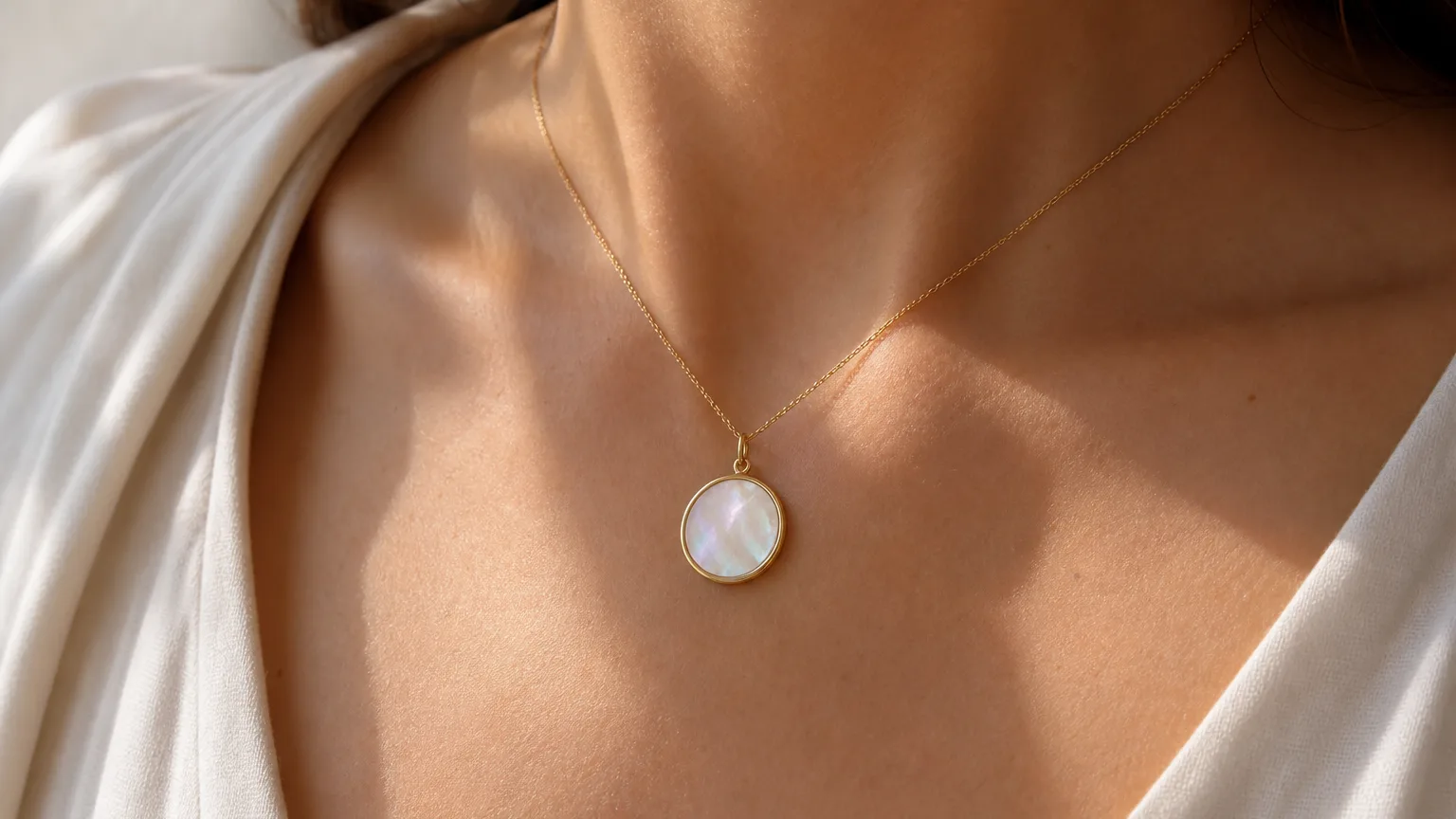
People who work with nacre usually describe it in terms of calm and gentle reflection, not dramatic shifts. It tends to show up as a softer, quieter mood — useful when you feel harsh, overstimulated, or emotionally raw. A few of the benefits people mention most:
A softer mood
Worn or held, nacre’s smooth, cool surface acts as a gentle cue to dial down harshness — a small reminder to respond softly rather than snap.
A quieter mind
Kept nearby when thoughts race, its calm shimmer gives your eyes somewhere soft to rest — a low-effort cue to slow the pace.
A touchstone for intuition
Many hold a piece when journaling or reflecting, as a physical cue to listen inward rather than react outward.
A gentle bedtime piece
Placed on a nightstand, its lunar, soothing quality becomes part of a wind-down — a soft signal that the day is over.
The pattern underneath all of these is the same: nacre isn’t soothing you by magic, but it gives your day a gentle cue toward calm and reflection. If you’re exploring stones for specific needs, see our guide to crystals for stress.
Nacre Chakra, Zodiac, and Element Associations
In traditional systems, nacre is most strongly linked to the crown and third eye centers — the areas tied to intuition, calm, and a sense of connection beyond the everyday — with a secondary tie to the heart. Astrologically, it’s often paired with Cancer and Pisces. Its element is usually given as Water, fitting for a material born from the sea. For related stones, see crown chakra crystals.
These are correspondences built up through tradition, not fixed rules. If your own sense of nacre points somewhere else — a different chakra, a different element — that’s completely fine. Many people work with stones intuitively, following what feels right rather than a textbook chart, and there’s a long history of practitioners doing exactly that.
How to Use Nacre
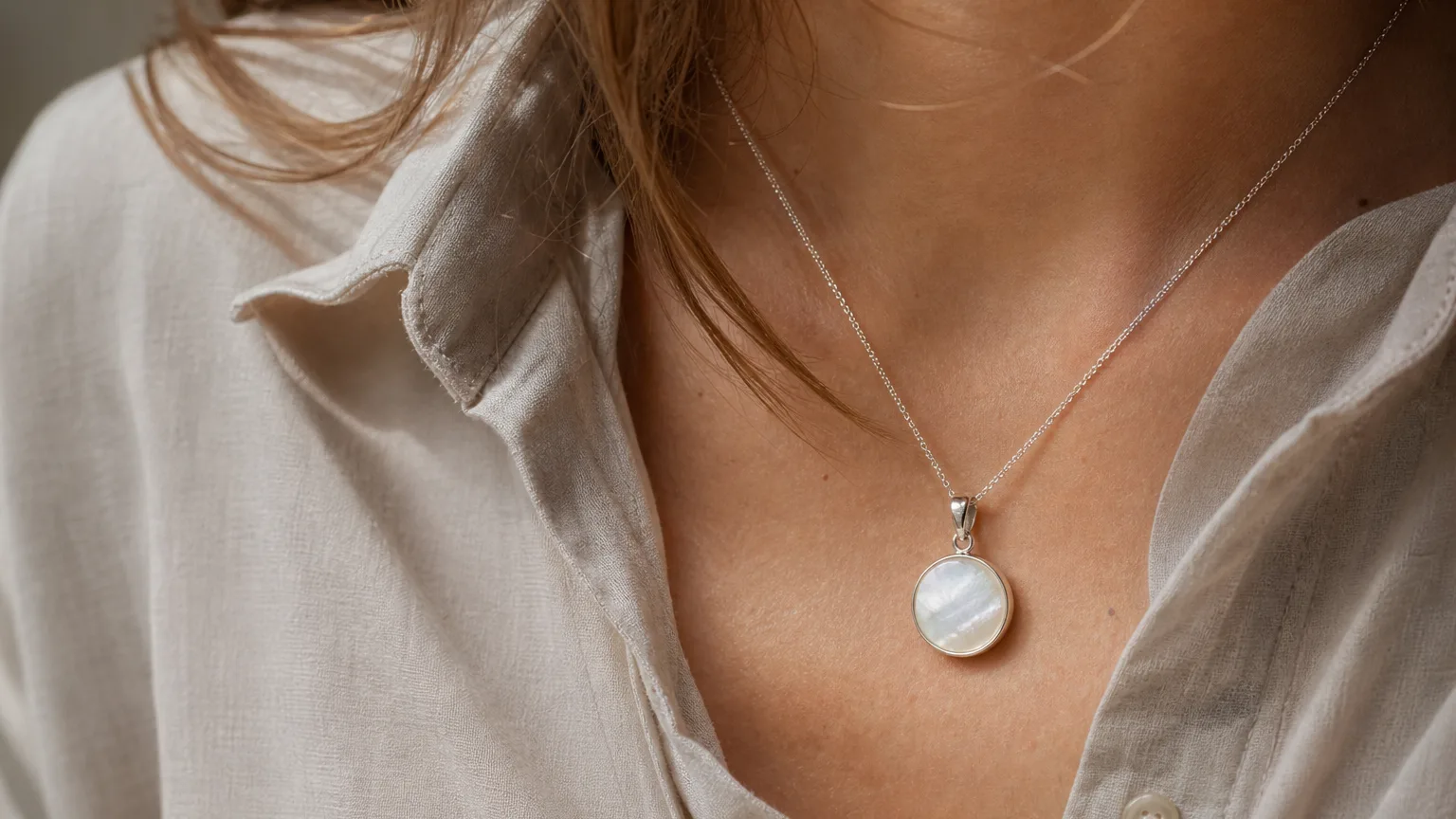
Nacre is soft and a little delicate, so it’s best in pieces that won’t take heavy knocks — pendants, earrings, and smooth tumbled stones rather than rings worn on the active hand. The key is consistency: a piece you actually wear and see does far more than one stored away.
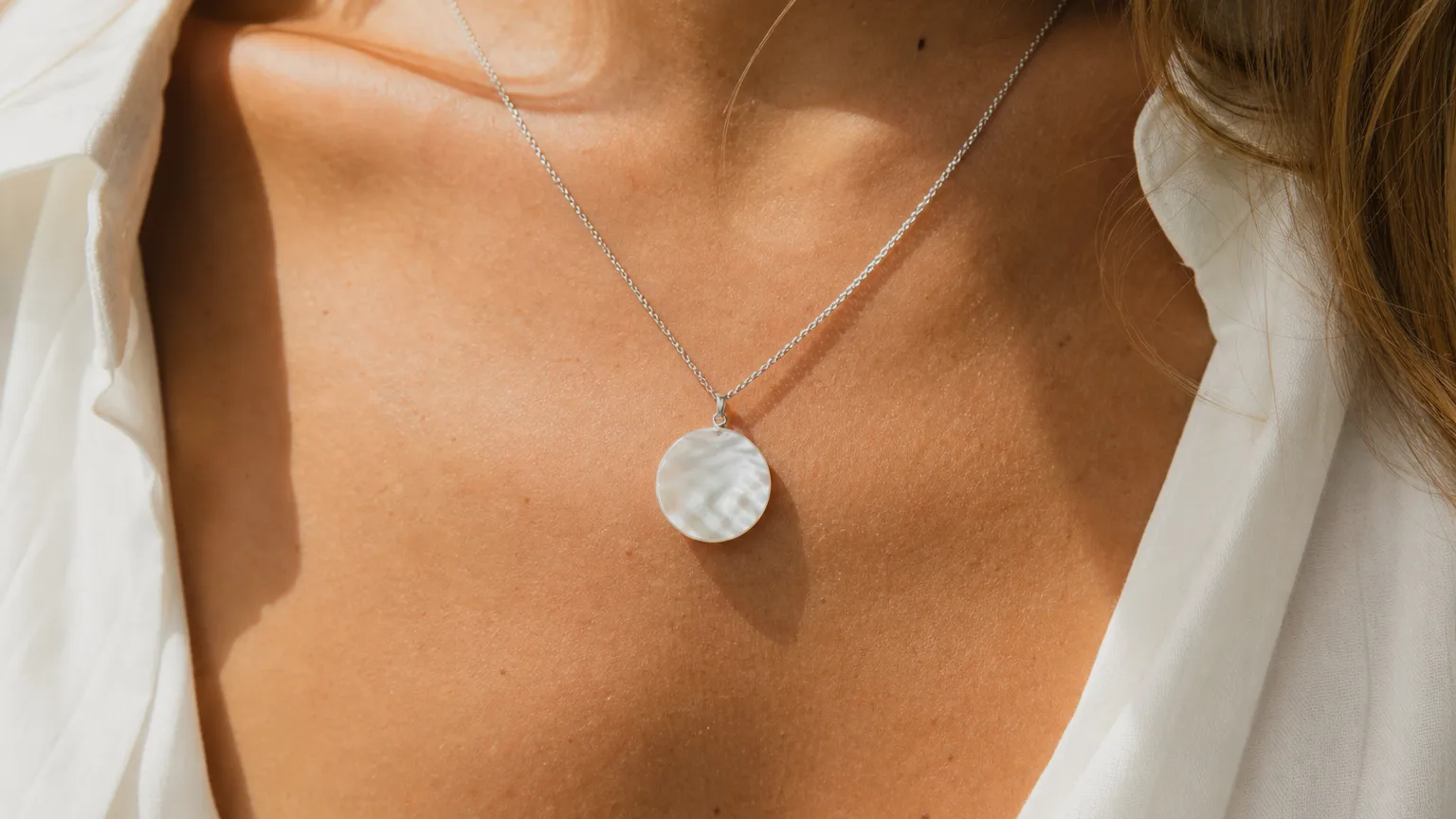
Wear it. A nacre pendant, earrings, or bracelet keeps the stone against your skin through the day. For a calm practice, pair it with one intention each morning — “stay soft through whatever comes.”
Meditate with it. Hold a smooth piece in your palm or rest it on your forehead (third eye area) while you sit. Even a few minutes of focused attention counts; the goal is presence, not duration.
Use it as a journaling cue. Hold the stone while you write or reflect — a physical signal to turn inward and listen rather than react.
Keep it by the bed. A piece on the nightstand becomes part of a wind-down — its soft, lunar quality is a natural fit for slowing down at night.
Which Nacre Form Is Right for You?
| Form | Best for | Choose it if |
|---|---|---|
| Pendant | Daily wearing | You want a soft, iridescent stone worn near the heart or throat |
| Earrings | Everyday jewelry | You prefer a lighter, framing form near the face |
| Bracelet | Wearing at the wrist | You want a visible, smooth piece you can touch through the day |
| Tumbled stone | Pocket or meditation | You want something smooth and easy to hold |
| Inlay piece | Decorative display | You like the look of inlaid mother-of-pearl on a box or object |
| Carved charm | Personal meaning | You prefer a small carved shape you connect with |
How to Tell Real Nacre from Fakes
Nacre is affordable and widely used, so outright fakes are less common than for pricier gems — but plastic and resin imitations of the iridescent shimmer do show up. A few checks help:
- The iridescence test. Real nacre’s shimmer (called “orient”) shifts and moves as you tilt the piece — it’s structural color from the layers, not a surface coating. Plastic or resin imitations look flat and don’t shift the same way.
- Temperature and weight. Genuine nacre feels cool and has some heft for its size. Plastic feels light and warms quickly in the hand.
- Hardness. At Mohs 2.5–4.5, real nacre is soft — a fingernail or copper coin can mark it with pressure. A hard, unscratchable “nacre” is likely glass or plastic.
- Pearl vs. mother-of-pearl. Both are nacre. A pearl is nacre built up as a sphere around an irritant; mother-of-pearl is the flat nacre lining the inside of the shell. Neither is “more real” — they’re the same material in different shapes.
- Dyed nacre. Some nacre is dyed to deepen its color. If the color looks uniform and sits in cracks, it may be dyed — a reputable seller will say so.
How to Cleanse and Charge Nacre
Nacre is soft and acid-sensitive (it’s calcium carbonate), so the usual care rules lean gentle. The main thing to avoid is acid and harsh chemicals.
- Water. A brief wipe with a damp soft cloth is fine. Avoid long soaks, and never use acidic cleaners (vinegar, lemon, or jewelry dips) — acid will dull and etch the surface.
- Sunlight. Brief light is fine, but avoid prolonged direct sun. The organic protein in nacre can yellow over time with excess heat and light.
- Smoke or sound. Passing it through sage or palo santo smoke, or using a singing bowl nearby, is a no-contact option many prefer.
- Moonlight. A night under the moon is the most-recommended method — gentle, dry, and on-theme for a lunar stone.
Two things to keep in mind: keep nacre away from cosmetics, perfume, and household chemicals (put jewelry on after cosmetics and take it off first at night), and store it away from harder stones so its soft surface doesn’t get scratched. For the full routine, see our guide to cleansing crystals — and treat nacre as the gentle, acid-shy one in that guide.
Best Crystals to Pair With Nacre
Pairing is about layering intentions — picking stones whose qualities complement rather than compete. A few classic combinations that work well with nacre’s soft, calming energy:
- Nacre + Moonstone — two lunar, soothing stones; a gentle pairing many reach for at night to wind all the way down.
- Nacre + Rose Quartz — soft calm warmed with heart; a tender pairing for emotional self-care.
- Nacre + Amethyst — calm meets intuition; a quiet pairing for reflection and a clearer head.
- Nacre + Aquamarine — two water-linked stones; a soothing combination for emotional calm.
The logic of pairing is about complementary intentions, not strict rules. Pick combinations that match what you’re actually working on, and trust your own sense of what feels balanced.
Who Should Use Nacre?
Nacre suits people who want a soft, calming stone for gentle reflection and intuition — anyone feeling harsh or overstimulated, looking for a quieter mood, or simply drawn to its shifting, lunar shimmer. It’s approachable because it asks little: wear it, let it sit, and let it mark a softer, more reflective corner of your day.
A few honest expectations: nacre isn’t a treatment for anxiety, low mood, or any condition — if you’re dealing with something persistent, a healthcare professional is the right call, and the stone can be a comfort alongside that. Its value comes from the intention and routine you build around it. If you go in expecting a stone to fix things for you, you’ll be disappointed; if you go in expecting a gentle, soothing cue you can return to, it tends to fit well.
FAQ About Nacre Meaning
Is nacre the same as mother-of-pearl?
Yes. Nacre is the material; “mother-of-pearl” is its common name — the iridescent layer that lines certain shells and also builds pearls.
Is a pearl made of nacre?
Yes. A pearl is layers of nacre built up around an irritant inside a shell. The shell’s inner lining is the same material in flat form.
What is nacre good for?
Traditionally, calm, intuition, and gentle reflection. People wear it to soften a harsh mood, to support intuition, or simply for its quiet, lunar beauty.
What chakra is nacre linked to?
Mostly the crown and third eye centers (intuition, calm), with a secondary tie to the heart.
Can nacre go in water?
A brief wipe with a damp cloth is fine. Avoid long soaks and never use acidic cleaners — acid etches the calcium carbonate surface.
How hard is nacre?
About 2.5 to 4.5 on the Mohs scale — quite soft. That’s why it scratches easily and is best in pendants or earrings rather than hard-worn rings.
How can I tell real nacre?
Tilt the piece: real nacre’s iridescence shifts and moves (it’s structural). Plastic imitations look flat. Real nacre is also cool, slightly heavy, and soft enough to mark with pressure.
Final Thoughts on Nacre
Nacre earns its long reputation as a stone of calm and gentle reflection — the same soft, shifting material that builds pearls, worn for thousands of years for its quiet beauty. If you’re curious, the simplest start is one piece you’ll actually wear, paired with a small daily moment to notice it. Let the routine do the work, and let the stone be the soft, lunar anchor that reminds you to slow down and reflect.
From there, nacre tends to open a gentler space — a softer mood, a quieter evening, or simply a habit of pausing before you react. For more, explore the Crystal Guide or browse nacre pieces.