
Pink Tourmaline Meaning: Healing Properties & Uses
Pink Tourmaline is the pink-to-red variety of tourmaline — a complex borosilicate mineral colored by manganese. Long tied to love, compassion, and gentle emotional care, it’s often reached for as a softer “heart stone.” This guide covers what pink tourmaline is (and how it differs from rose quartz), what it has meant, and how people work with it. Crystal meanings reflect tradition and personal practice, not medical advice.
What Is Pink Tourmaline Meaning?
At its simplest, pink tourmaline means love and gentle compassion — the feeling of a softer, more open heart, both toward others and yourself. As a pink stone in the tourmaline family, it reads as warm and tender: linked to love, emotional care, and a calmer, more compassionate way of relating.
For many people that’s exactly the appeal — a pink piece you wear or keep nearby as a cue to be gentle and loving. You don’t need to believe anything about energy to use it that way; the value often comes from choosing the piece, giving it a job (“help me be gentle”), and letting its soft pink tone pull you toward compassion. In that sense pink tourmaline is a cue to loving kindness.
Pink Tourmaline Meaning and Symbolism
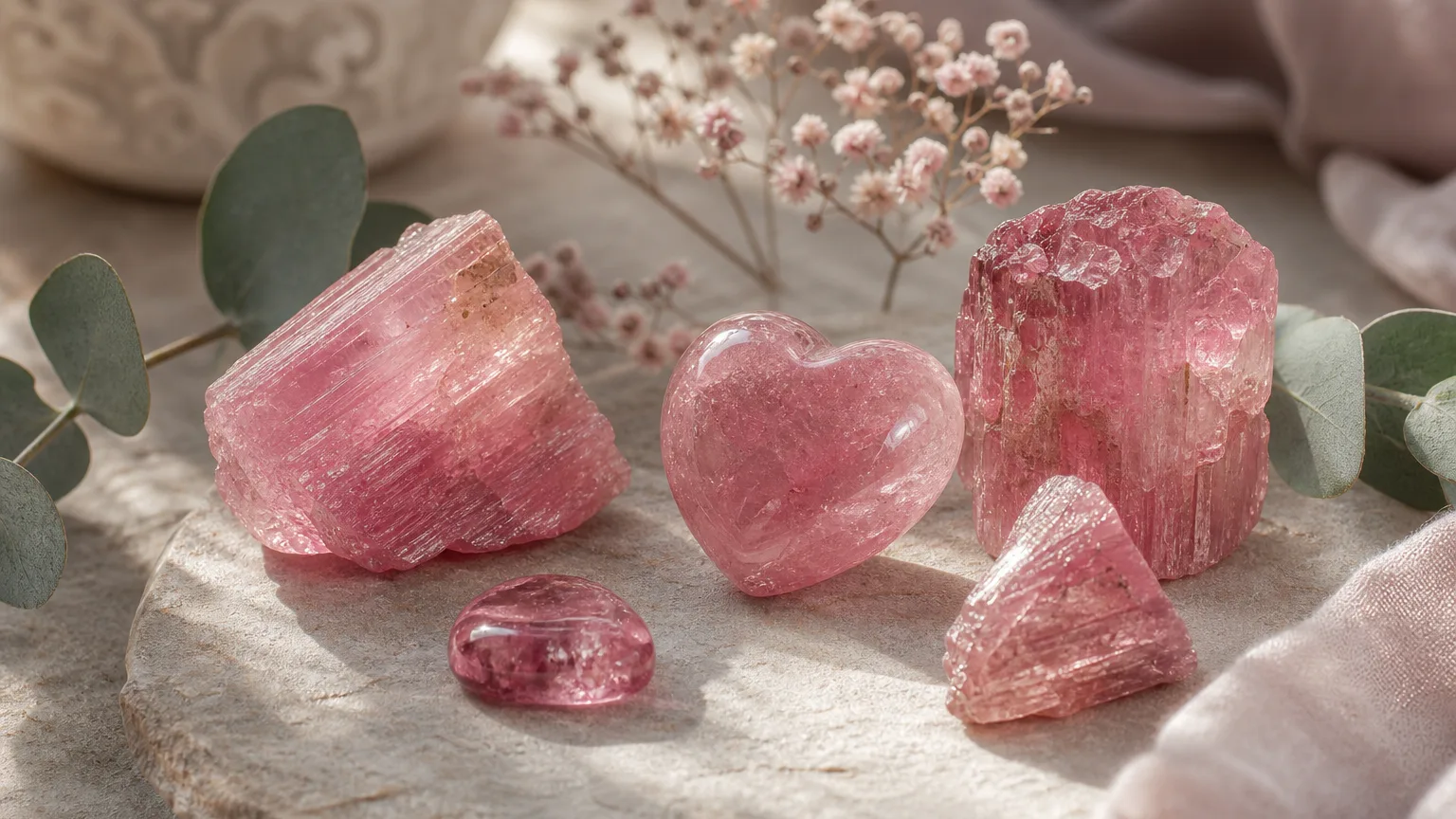
The name tourmaline comes from the Sinhalese word toramalli, meaning “mixed gems” — early traders in Sri Lanka used it for a grab-bag of colorful stones. Pink tourmaline is the pink-to-red variety, its color coming from manganese within the crystal. It’s part of a huge color family (tourmaline comes in more colors than almost any gem), which is why you’ll also see green, blue, watermelon (a pink core with a green rind), and black tourmaline.
Tourmaline was sometimes confused with other gems for centuries — a famous case was a large “ruby” in a royal collection that turned out to be red tourmaline. Pink tourmaline’s meaning in modern crystal practice centers on love and compassion: it’s reached for as a softer heart stone, supporting self-love, gentle emotional care, and a kinder way of relating to yourself and others. That love-and-compassion symbolism is consistent across modern practice.
The thread through all of it is the same: love, compassion, and gentle emotional care. Today pink tourmaline is usually described as a soft heart stone — reached for during emotional strain, to soften toward yourself, or to invite more warmth into relationships. How much of that lands for you personally is, honestly, up to you — but the stone has held that loving reputation across modern practice. To explore more stones, browse the full Crystal Guide.
Pink Tourmaline Properties
The Science
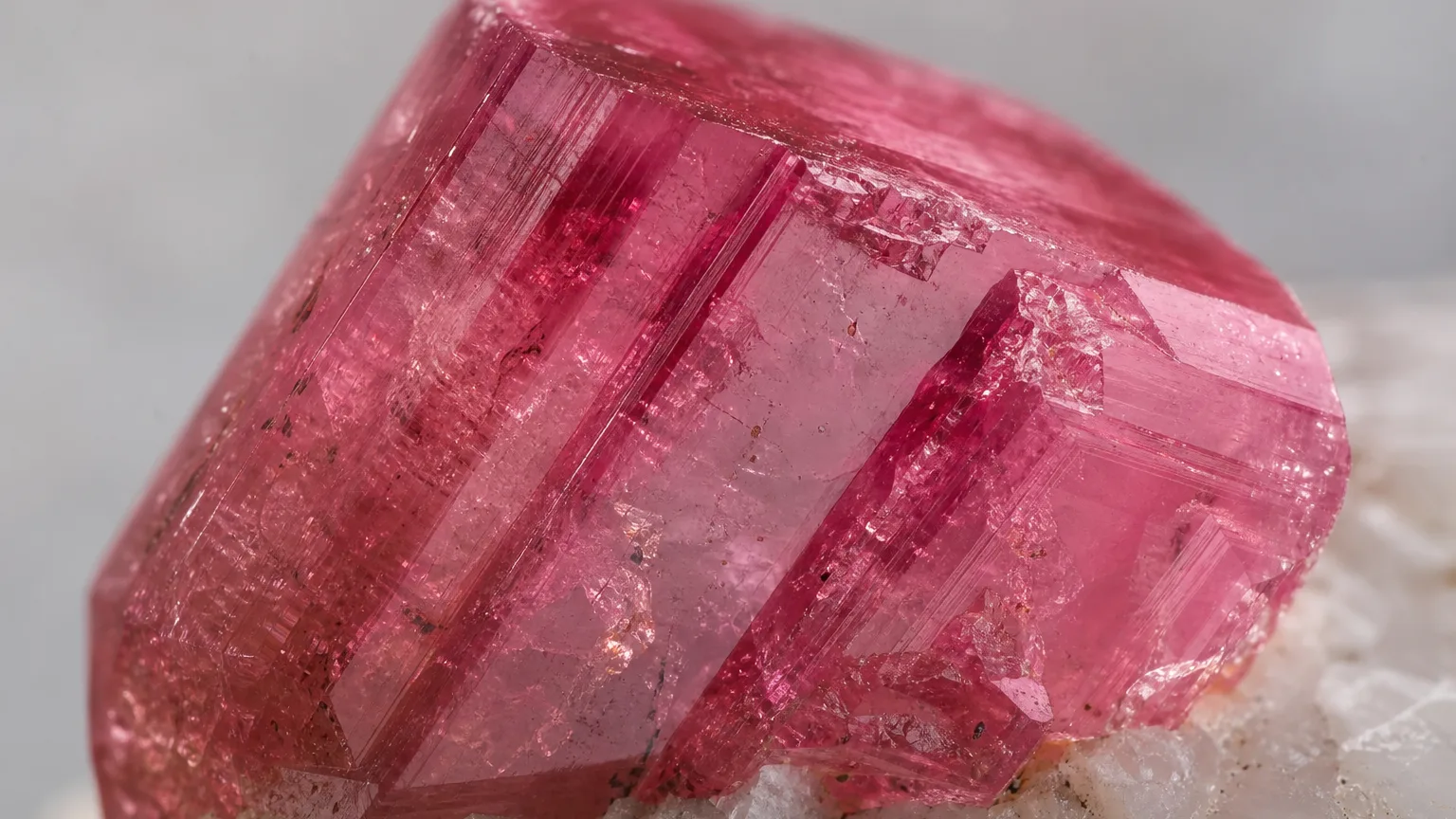
Pink tourmaline is a complex borosilicate mineral — tourmaline’s chemistry is famously complicated, but its pink color comes from manganese. It has a Mohs hardness of about 7 to 7.5, durable enough for everyday jewelry, and forms in trigonal (three-sided) crystals. Tourmaline is also mildly pyroelectric and piezoelectric — it can build a small static charge when heated or pressed, which is why old tourmaline specimens sometimes attract dust. It comes in more colors than almost any gem; major sources include Brazil, Afghanistan, Mozambique, Nigeria, and the United States (California and Maine). None of this is mystical — it’s mineralogy.
Traditional Meaning
Tradition ties pink tourmaline to love, compassion, and gentle emotional care. It’s most strongly linked to the heart center and is often described as a softer heart stone — supporting self-love, kindness toward yourself, and a more compassionate way of relating. Across modern crystal practice it’s reached for during emotional strain, to soften harshness, or to invite more warmth into relationships. In many traditions, pink stones are tied to the heart and to nurturing, motherly love. These associations come from spiritual tradition and personal practice rather than clinical study.
Mindfulness & Psychology
From a psychological angle, pink tourmaline works as a soft, warm visual cue — the kind of object you hold or wear when you want to be gentler. Pink reads in color psychology as warmth and reduced tension, and the act of keeping a piece nearby and pairing it with an intention (“be gentle with yourself”) turns it into a small cue for compassion. Part of its appeal is simply its soft, tender presence — a visual and tactile signal to soften. These effects come from tradition and personal practice, not clinical research. Crystals complement — but never replace — professional care.
Pink Tourmaline Benefits
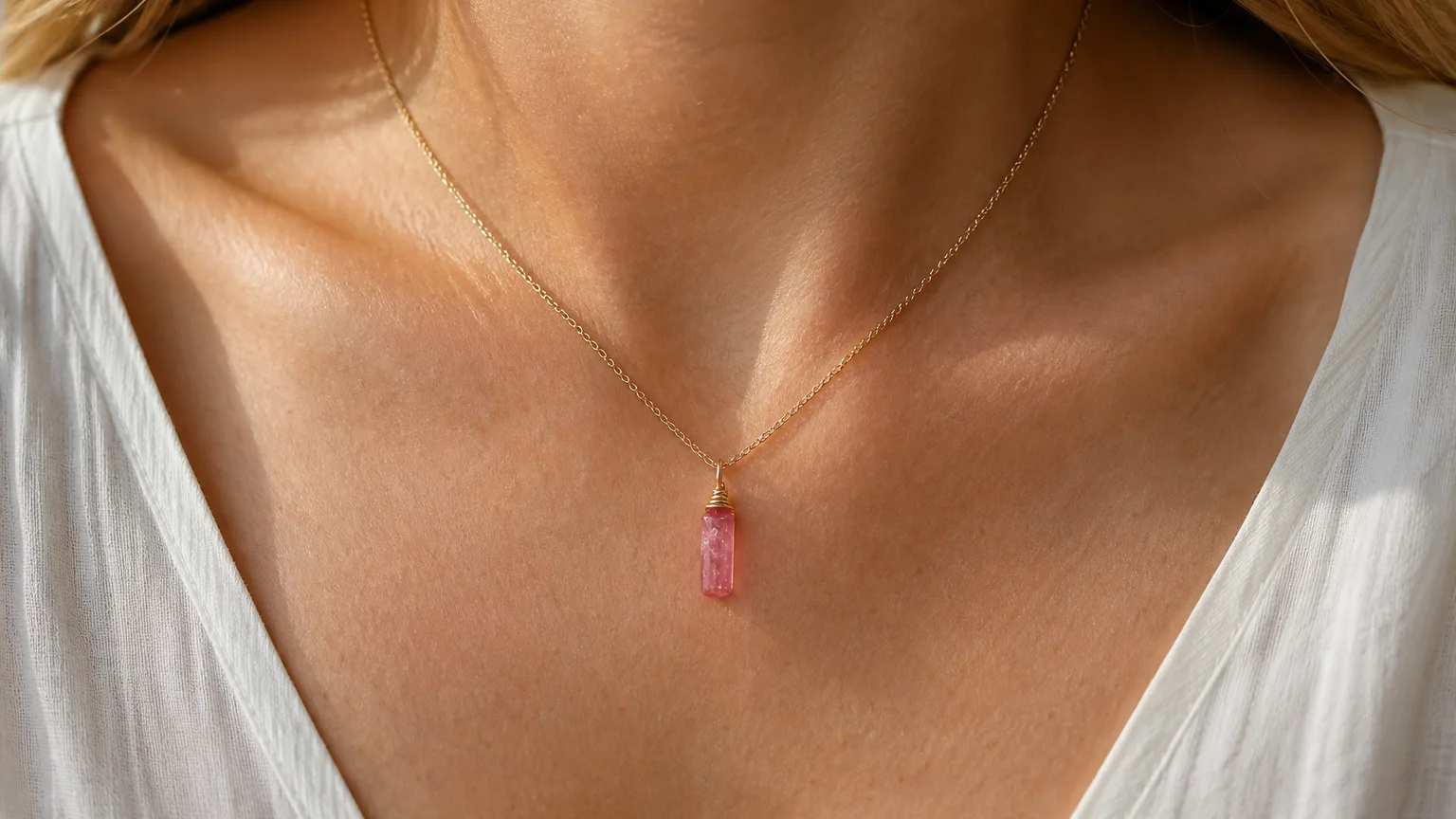
People who work with pink tourmaline usually describe it in terms of softness and warmth, not dramatic shifts. It tends to show up as a gentler, more open feeling — useful when you’re hard on yourself, holding a grudge, or want more warmth in relationships. A few of the benefits people mention most:
A softer heart
Holding or wearing pink tourmaline when you feel guarded gives you a gentle cue to soften — a reminder that warmth is an option, not a weakness.
Self-compassion
Many keep a piece where they’ll see it during a hard day — a low-effort cue to treat yourself with the kindness you’d offer a friend.
Warmer relationships
Its tender quality is a cue to bring more warmth into how you relate — to soften before reacting with people you care about.
A gentle emotional anchor
Held during emotional strain, its smooth, warm feel gives your hand something to settle on — a quiet way to stay present.
The pattern underneath all of these is the same: pink tourmaline isn’t softening your heart by magic, but it gives your day a gentle cue toward love and compassion. If you’re exploring stones for specific needs, see our guide to crystals for anxiety.
Pink Tourmaline Chakra, Zodiac, and Element Associations
In traditional systems, pink tourmaline is most strongly linked to the heart center — the area tied to love, compassion, and emotional balance. Astrologically, it’s often paired with Taurus and Libra. Its element is usually given as Water, fitting for its emotional, tender quality. For related stones, see heart chakra crystals.
These are correspondences built up through tradition, not fixed rules. If your own sense of pink tourmaline points somewhere else — a different chakra, a different element — that’s completely fine. Many people work with stones intuitively, following what feels right rather than a textbook chart, and there’s a long history of practitioners doing exactly that.
How to Use Pink Tourmaline
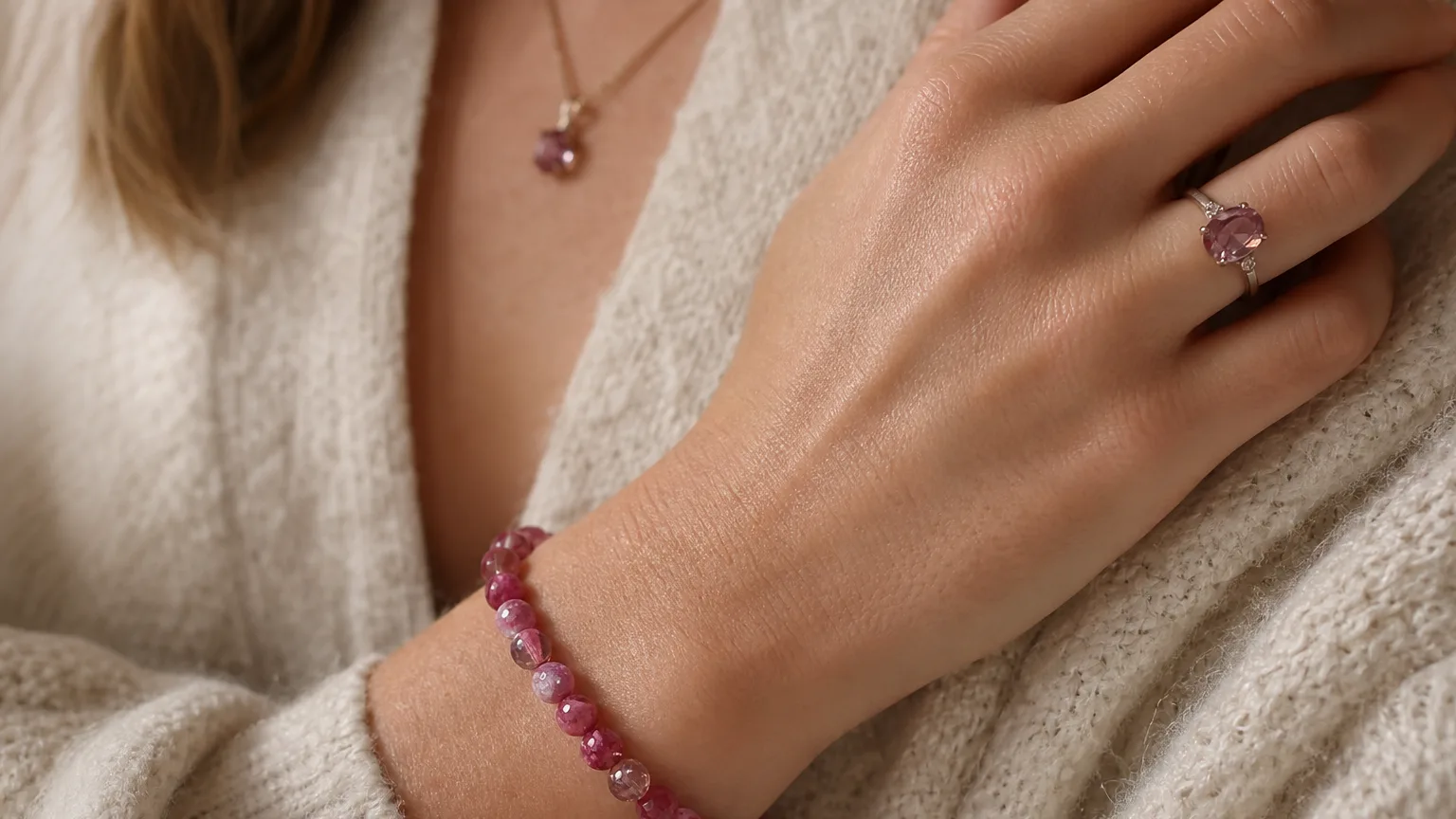
Pink tourmaline is durable (Mohs 7–7.5) and made to be worn and lived with — there’s no single right way, only what fits your routine. The key is consistency: a piece you actually see and wear does far more than one stored away.
Wear it. A pink tourmaline pendant, ring, or bracelet keeps the stone against your skin through the day. Pair it with one intention each morning — “be gentle with myself today.”
Meditate with it. Hold a tumbled piece in your palm or rest it on your chest (heart area) while you sit. Even a few minutes of focused attention counts; the goal is presence, not duration.
Hold it during emotional strain. A smooth piece in your hand gives you something warm to settle on when feelings build — a cue to soften instead of react.
Keep it by the bed. A piece on the nightstand becomes part of a wind-down — a soft, loving cue to end the day gently.
Which Pink Tourmaline Form Is Right for You?
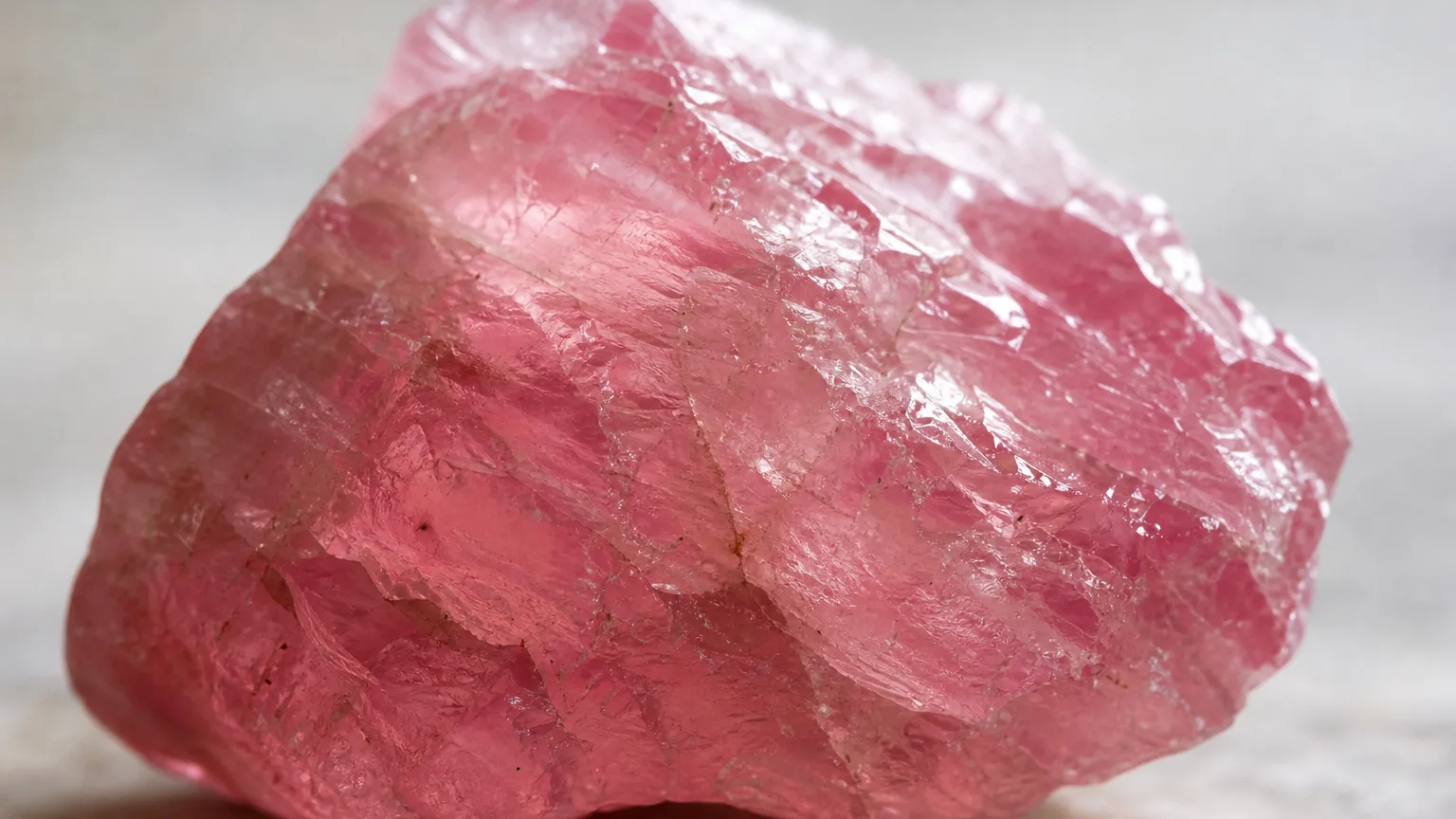
| Form | Best for | Choose it if |
|---|---|---|
| Raw crystal | Display, altar, meditation | You like the natural trigonal crystal shape and pink color |
| Pendant | Daily wearing | You want a soft pink stone worn near the heart |
| Ring | Close-to-hand | You prefer a single faceted stone you can see and touch |
| Tumbled stone | Pocket or meditation | You want something smooth and easy to hold or carry |
| Bracelet / beads | Everyday jewelry | You want a visible pink reminder at your wrist |
| Palm stone | Hand-holding under stress | You want a larger, smooth piece to grip when emotions build |
How to Tell Real Pink Tourmaline from Fakes
Pink tourmaline is moderately priced, so lookalikes and imitations do show up — usually glass, dyed quartz, or pink spinel sold as tourmaline. A few checks help:
- Color and pleochroism. Tourmaline often shows slightly different shades when viewed from different angles (a property called pleochroism). Glass and resin have a flat, single color no matter how you turn them.
- Hardness. At Mohs 7–7.5, real pink tourmaline scratches glass and resists a steel knife. A softer stone may be glass or dyed quartz.
- Inclusions. Natural tourmaline often has fine thread-like inclusions. Perfectly flawless, bubble-free “tourmaline” at a low price is more likely glass.
- Confusion with pink spinel or rose quartz. Pink spinel is a different (single-refraction) gem; rose quartz is a milky quartz. A reputable seller will label them correctly — all are genuine, just different stones.
- Price. Fine, vivid pink tourmaline is valuable. A large, flawless, intensely pink piece at a bargain price is usually glass, spinel, or dyed quartz.
How to Cleanse and Charge Pink Tourmaline
Pink tourmaline is a hard stone (Mohs 7–7.5) and fairly easy to care for, though very intense pinks can sometimes lighten with long sun exposure.
- Water. A brief rinse under cool water is fine. Avoid long soaks in salt water if the piece has metal settings.
- Sunlight. Tourmaline is generally stable, but to protect deep pinks, prefer indirect light over prolonged direct sun.
- Smoke or sound. Passing it through sage or palo santo smoke, or using a singing bowl nearby, is a no-contact option many prefer.
- Moonlight. A night under the moon is a popular gentle method that fits pink tourmaline’s soft, tender character.
Two things to keep in mind: store pink tourmaline away from harder stones so it doesn’t pick up scratches, and avoid harsh chemical cleaners, which can dull the polish. For the full routine, see our guide to cleansing crystals.
Best Crystals to Pair With Pink Tourmaline
Pairing is about layering intentions — picking stones whose qualities complement rather than compete. A few combinations that work well with pink tourmaline’s soft, loving energy:
- Pink Tourmaline + Rose Quartz — two heart-and-love stones; the classic pairing for self-love and gentle emotional care.
- Pink Tourmaline + Amethyst — love meets calm; a gentle pairing for a softer, more settled heart and mind.
- Pink Tourmaline + Rhodochrosite — two tender heart stones; a pairing many reach for emotional recovery.
- Pink Tourmaline + Clear Quartz — clear quartz is said to amplify; many use it to lift pink tourmaline’s loving intentions.
The logic of pairing is about complementary intentions, not strict rules. Pick combinations that match what you’re actually working on, and trust your own sense of what feels balanced.
Who Should Use Pink Tourmaline?
Pink tourmaline suits people who want a soft heart stone for love and gentle emotional care — anyone being hard on themselves, working through emotional strain, or wanting more warmth in their relationships. It’s approachable because it’s durable, wearable, and carries a clear, loving meaning without being overly sweet.
A few honest expectations: pink tourmaline isn’t a treatment for depression, grief, or any condition — if you’re dealing with something persistent, a healthcare professional is the right call, and the stone can be a comfort alongside that. Its value comes from the intention and routine you build around it. If you go in expecting a stone to fix your emotional life for you, you’ll be disappointed; if you go in expecting a gentle, loving cue you can return to, it tends to fit well.
FAQ About Pink Tourmaline Meaning
What is pink tourmaline good for?
Traditionally, love, compassion, and gentle emotional care. People reach for it to soften toward themselves, to invite warmth into relationships, or during emotional strain.
How is pink tourmaline different from rose quartz?
They share a heart-and-love meaning, but they’re different minerals: pink tourmaline is a harder borosilicate (Mohs 7–7.5), while rose quartz is a softer pink quartz (Mohs 7). Tourmaline is often clearer and more faceted; rose quartz is usually milky and cloudy.
What gives pink tourmaline its color?
Manganese. The same tourmaline family comes in many colors depending on its trace elements — green (iron), pink (manganese), blue, and more.
Is it true a famous “ruby” was actually tourmaline?
Yes — several historic “rubies” in old royal collections turned out to be red tourmaline (rubellite). The two were confused for centuries before modern gemology could tell them apart.
What chakra is pink tourmaline linked to?
Mostly the heart center (love, compassion, emotional balance).
Can pink tourmaline go in water?
Yes. At Mohs 7–7.5 it’s a hard, water-safe stone. A brief rinse is fine; avoid long salt-water soaks with metal settings.
How can I tell real pink tourmaline?
Look for slight color shifts as you turn it (pleochroism), test hardness (scratches glass), and check for natural thread-like inclusions. Perfectly flawless, bubble-free vivid pink at a low price is usually glass or spinel.
Final Thoughts on Pink Tourmaline
Pink tourmaline earns its place as a stone of love and gentle compassion — the soft pink piece people reach for when they want a kinder heart and a gentler relationship with themselves. If you’re curious, the simplest start is one piece you’ll actually wear, paired with a small daily moment to notice it. Let the routine do the work, and let the stone be the tender anchor that reminds you to be gentle.
From there, pink tourmaline tends to open a softer space — a kinder inner voice, warmer relationships, or simply a habit of pausing before you’re harsh. For more, explore the Crystal Guide or browse pink tourmaline pieces.