
Spodumene Meaning: Healing Properties & Uses
Spodumene is a lithium aluminum pyroxene, LiAlSi₂O₆, hard at Mohs 6½–7, best known as the parent mineral of three gem varieties — pink kunzite, green hiddenite, and yellow triphane. It has perfect cleavage, which makes cutting careful work. Found in Afghanistan, Madagascar, and Brazil, it’s tied in modern practice to calm, heart-centered feeling, with each color variety carrying its own focus. The named varieties were only recognized in modern times. This guide covers what it is. Crystal meanings reflect tradition and personal practice, not medical advice.
What Is Spodumene Meaning?
At its simplest, Spodumene means calm and heart-centered feeling, with the focus shifting by color — pink for love, green for growth, yellow for optimism. As the parent of three named gems, it’s a quiet, lithium-bearing stone family.
For many, that’s the whole draw: a hard, lithium-bearing gem that comes in soft pink, green, and yellow. You don’t need to hold any specific belief — the value often comes from wearing the color that fits your intention.
Spodumene Meaning and Symbolism
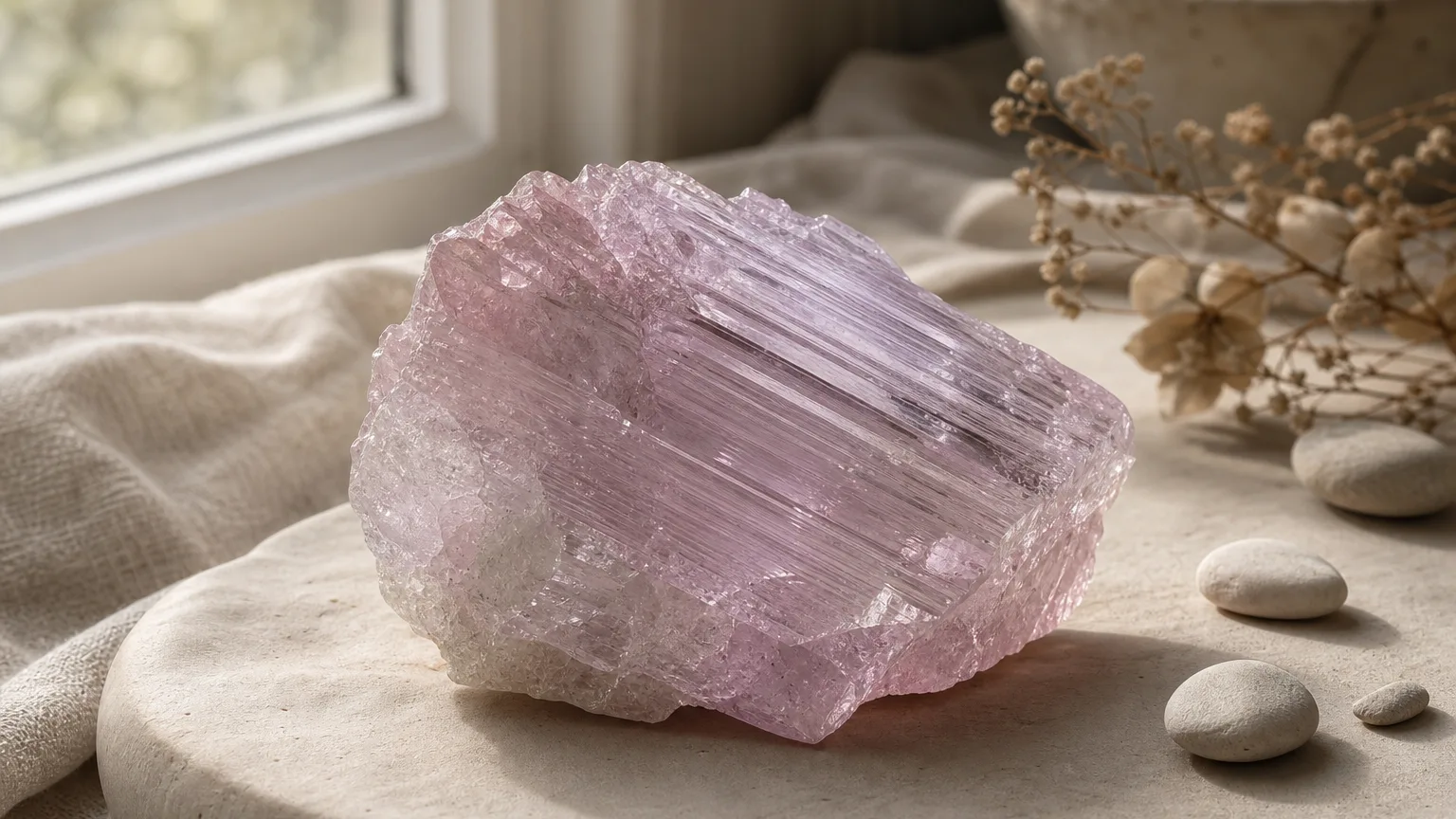
Spodumene is best understood through its three named gem varieties, all recognized in modern times. Kunzite, the pink to lilac stone colored by manganese, was named in 1903 for gemologist George Kunz. Hiddenite, the green variety colored by chromium, was named for W. E. Hidden. Triphane is the rarer yellow form. Each carries its own modern meaning, but they share the parent mineral and a lithium-bearing, calming character.
As a mineral family identified in modern science, Spodumene has no ancient mythology of its own. Its meaning is honestly a recent one, built around its soft colors and calming presence.
In modern practice, Spodumene is tied to calm and heart-centered feeling, often linked to the heart center (pink and green) and higher centers (lilac). A useful frame: the meaning comes from its soft colors, rather than invented lore. To explore more stones, browse the full Crystal Guide.
Spodumene Properties
The Science
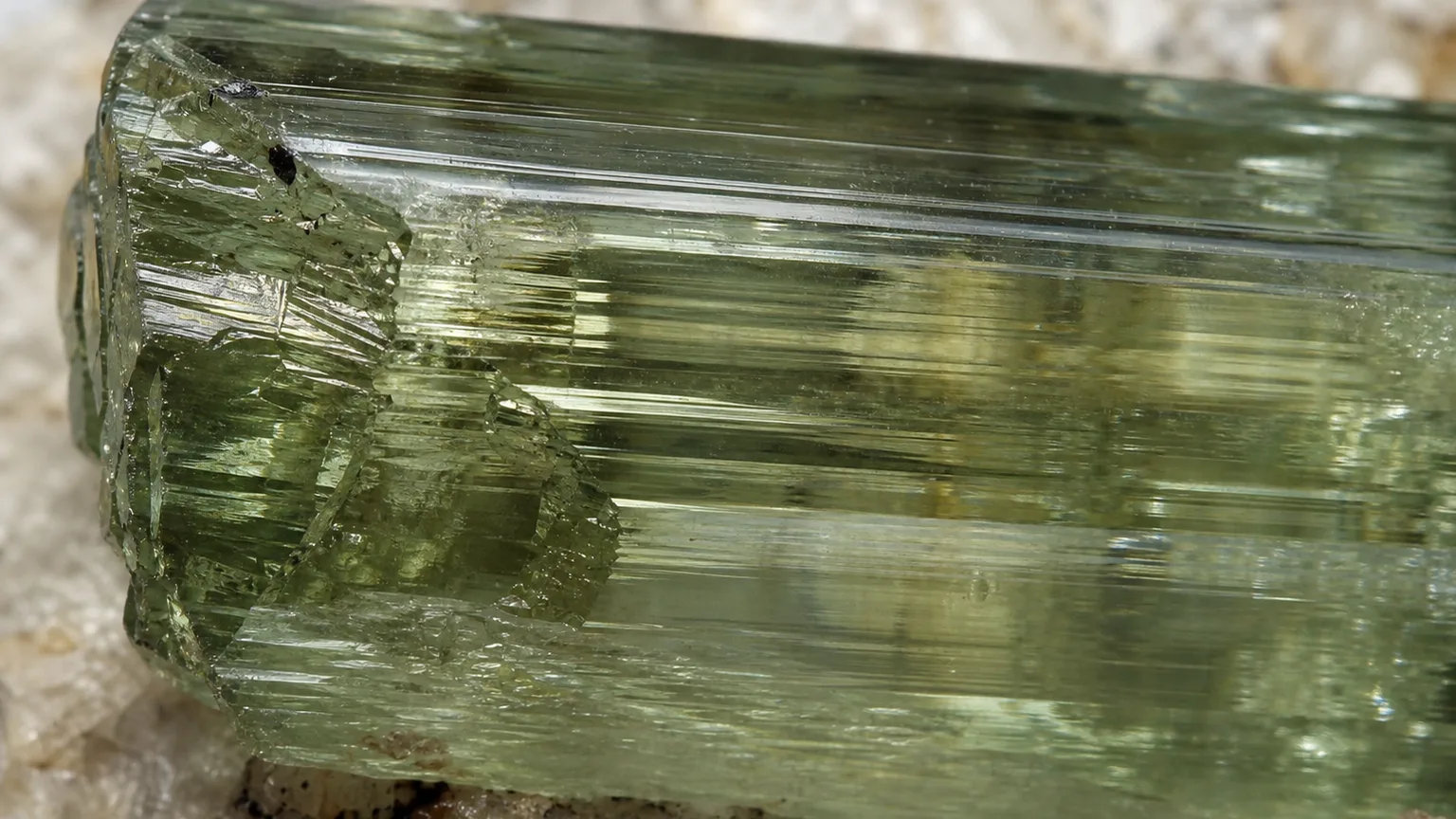
Spodumene is a lithium aluminum pyroxene — LiAlSi₂O₆. It forms in the monoclinic crystal system as prismatic, often very elongated and flattened crystals, and it rates 6½–7 on the Mohs scale. Its signature trait is perfect cleavage in two directions, which makes faceting careful work and split gems a known risk. Its colors come from different trace elements: manganese gives kunzite its pink to lilac, chromium gives hiddenite its green, and iron gives triphane its yellow. It’s transparent with a vitreous luster and a specific gravity around 3.1–3.2. As a lithium mineral, it’s also an important ore of lithium. Notable sources include Afghanistan, Madagascar, Brazil, Myanmar, and the USA (North Carolina, for hiddenite). None of this is mystical — it’s mineralogy, and the colors are real trace-element chemistry.
Traditional Meaning
Spodumene has no ancient tradition of its own. Its three named varieties were all recognized in modern times — kunzite in 1903, hiddenite in the late 1800s — so the family’s meaning is honestly a recent one. In that modern reading, the pink kunzite is valued for love and calm, the green hiddenite for growth and the heart, and the yellow triphane for optimism. Spodumene as a whole is valued for calm, heart-centered feeling. The clearest honest statement is that its meaning comes from its soft colors and from the intentions people bring to it, not from any old legend.
Mindfulness & Psychology
From a psychological angle, Spodumene works as a “calm the heart” anchor — a soft-colored gem for moments when you want gentle feeling. The act of wearing it can support intention-setting: you decide it stands for “stay calm, keep the heart open,” and its soft color draws you back. In color psychology, soft pink reads as gentle and loving, soft green as renewing, and soft yellow as optimistic, and the small ritual of pausing on the stone is a brief reset. For people who want a calmer, more heart-centered mood, that little structure is most of the value. These effects come from tradition and personal practice, not clinical research. Crystals complement — but never replace — professional care.
Spodumene Benefits
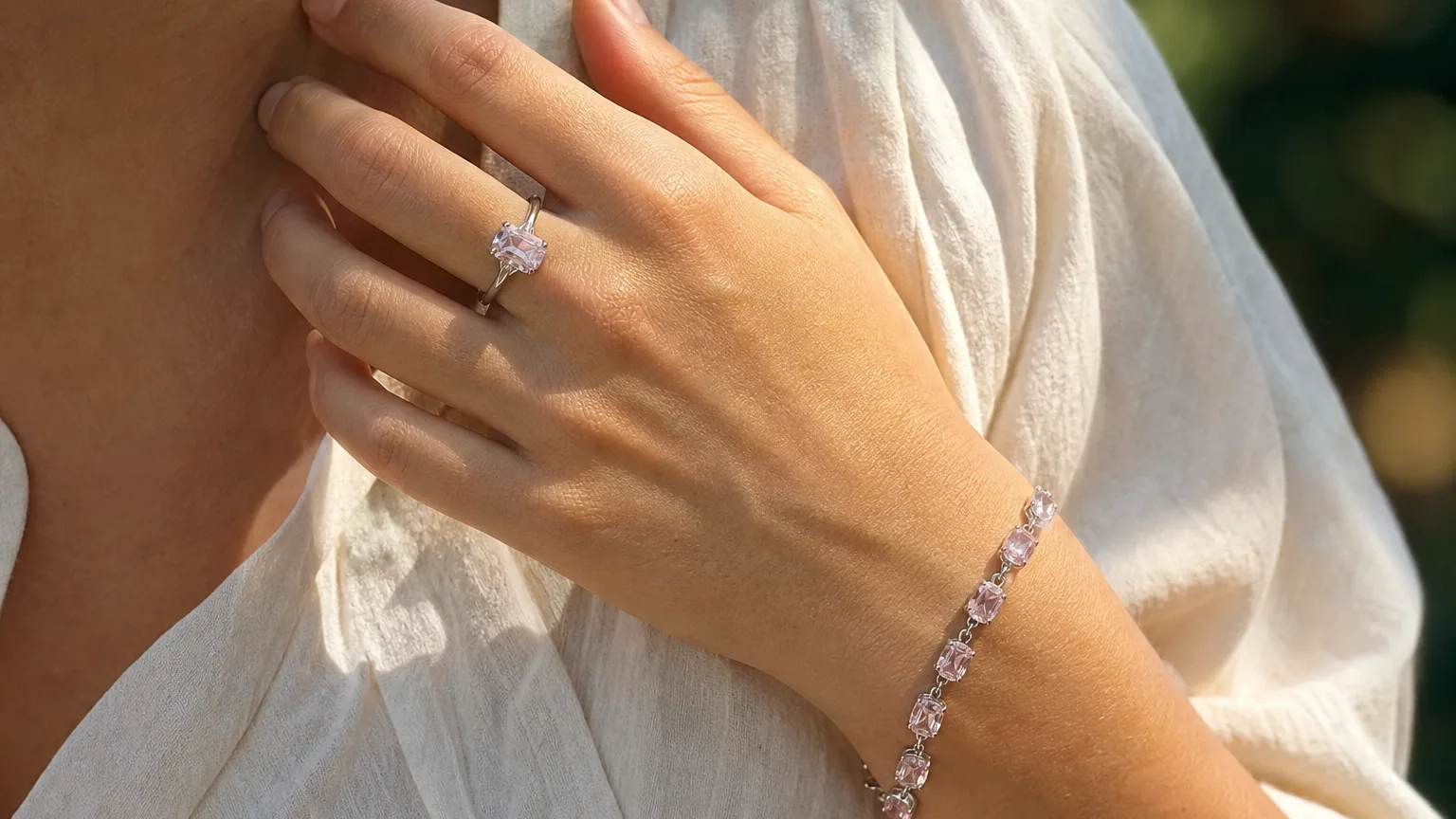
People who wear Spodumene usually describe it in terms of feeling calmer, more heart-centered, and more gently optimistic, not dramatic shifts. The stone tends to come up when calm matters — a glance of soft pink during a tense day, the look of green for growth. A few benefits people mention most:
Calm
Its soft colors read as settling; many wear spodumene (especially kunzite) for a calmer mood.
Heart-centered feeling
Pink and green varieties are popular for love, growth, and a more open heart.
Gentle optimism
The yellow triphane form is a cue for a brighter, more hopeful outlook.
A family of three gems
Pink kunzite, green hiddenite, yellow triphane — one mineral, three soft colors.
The pattern underneath is the same: the stone isn’t doing the work for you, but it gives your day a small structure that makes calm and heart-centered feeling more likely. If you’re exploring stones for specific needs, see our guide to heart chakra crystals.
Spodumene Chakra, Zodiac, and Element Associations
In modern systems, Spodumene is most often linked to the heart center (pink and green) and the higher centers (lilac). It’s sometimes paired with Taurus and Scorpio, and its element is usually given as Water and Air (Water for feeling, Air for calm). For related stones, see our guide to heart chakra crystals.
These are correspondences built up through modern crystal practice, not fixed rules. If your own sense of a piece points somewhere else, that’s completely fine. Many people work with stones intuitively, following what feels right rather than a chart.
How to Use Spodumene
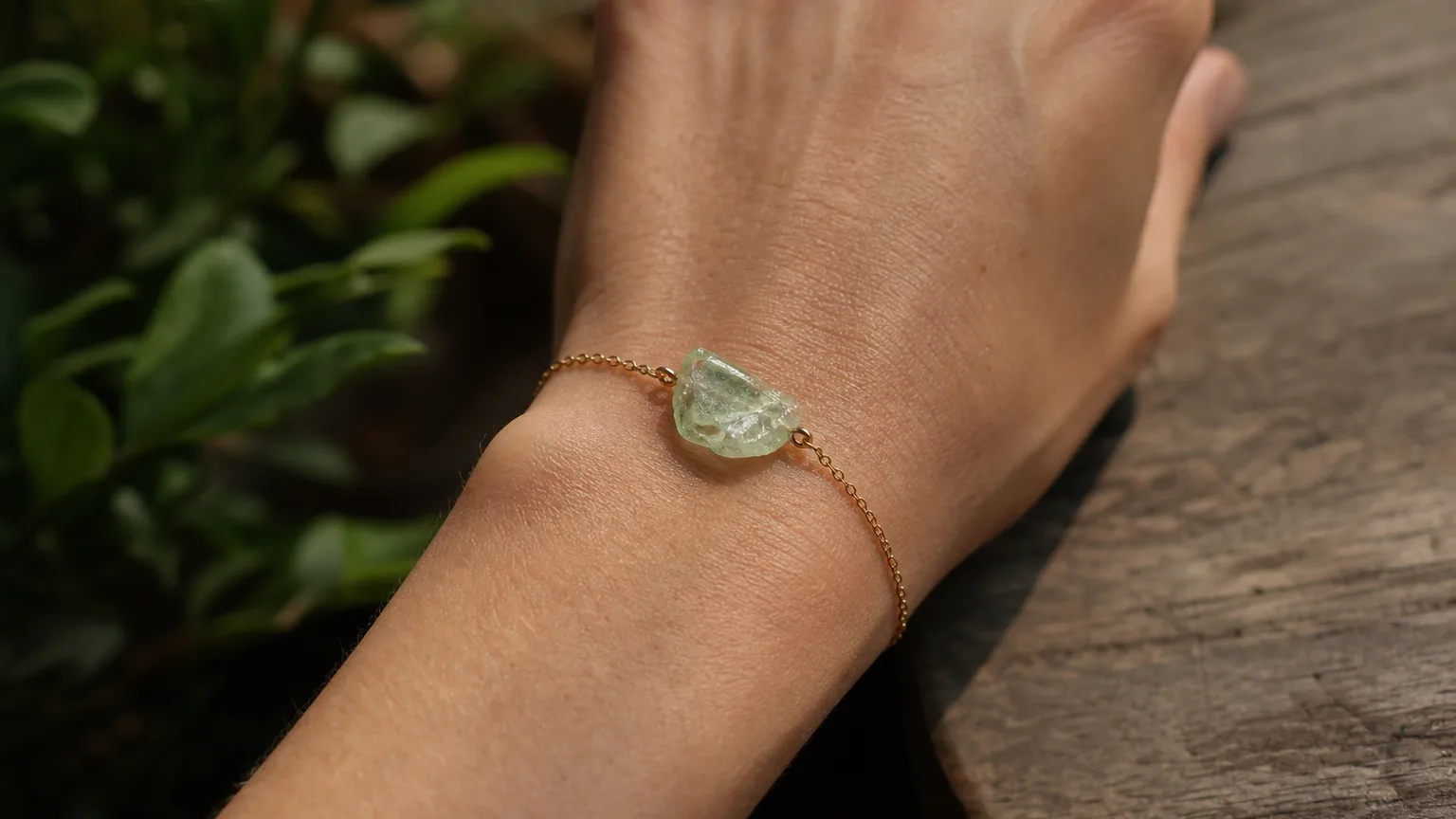
Spodumene is a hard gem (Mohs 6½–7), but its perfect cleavage means it can split along a plane if struck — so it asks for protective settings and gentle wear. A piece you actually wear and notice does more than one stored away.
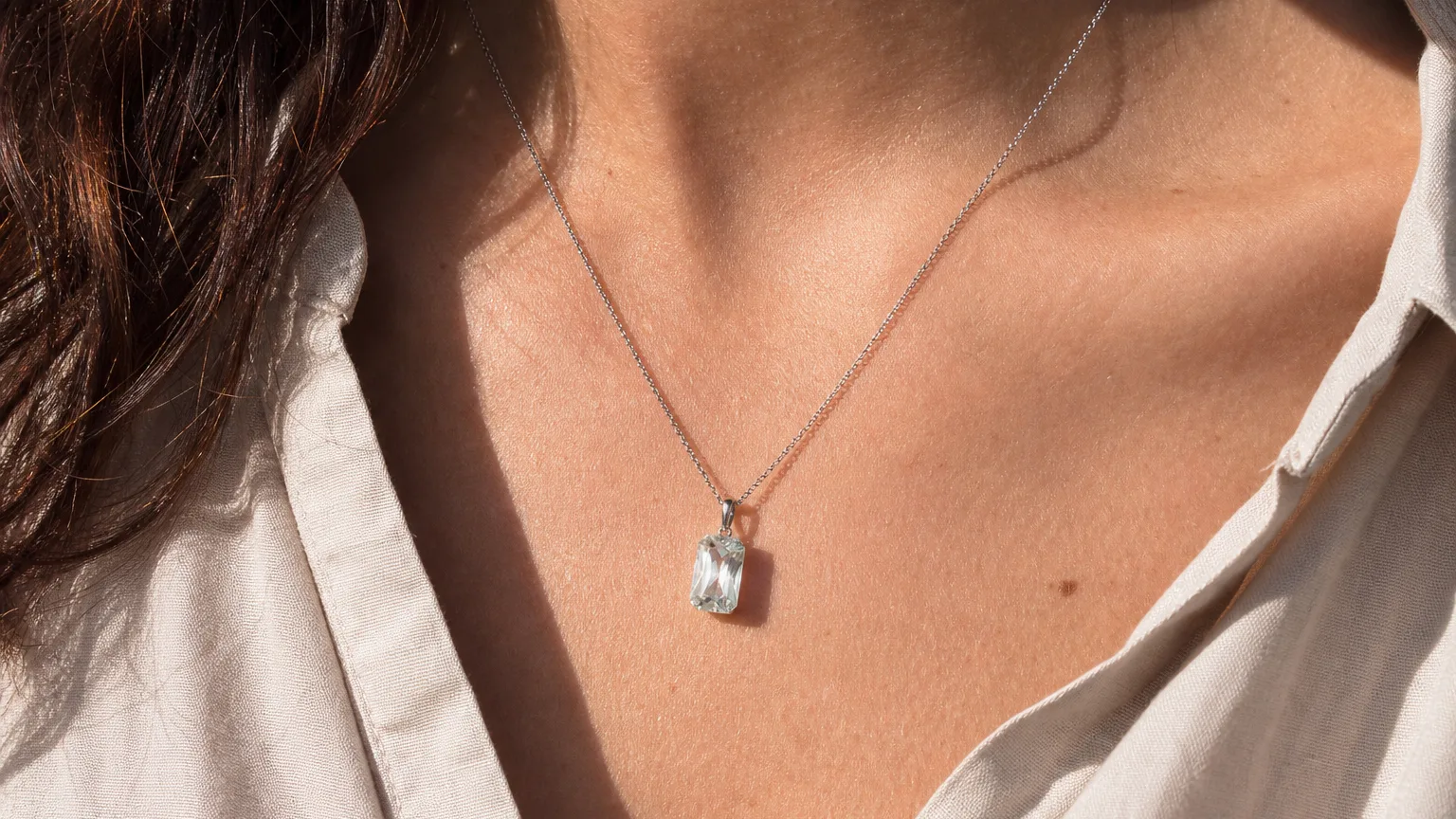
Wear it carefully. A faceted pendant, bezel-set ring, or earrings keep the soft color with you. Pair it with a specific intention — “stay calm, keep the heart open.”
Meditate with it. Hold a piece in your palm or rest it over your heart while you sit. Even a few minutes of calm focus counts; the goal is presence, not duration.
Keep it on display. A crystal or faceted stone on a desk works as décor and a daily “stay calm” cue.
Carry a tumbled piece. A smooth stone in a pouch is a discreet touchstone — mind its cleavage and keep it cushioned.
Which Spodumene Form Is Right for You?
| Form | Best for | Choose it if |
|---|---|---|
| Faceted stone (kunzite) | Pendants, rings, earrings | You want soft pink-lilac brilliance, in a setting that guards the cleavage |
| Faceted stone (hiddenite) | Pendants, rings | You want soft green for growth and the heart |
| Prismatic crystal | Display, collection | You want the natural elongated, flattened spodumene crystal |
| Tumbled stone | Pocket or meditation | You want an affordable piece to hold or carry (cushion it) |
How to Tell Real Spodumene from Fakes
Spodumene isn’t often faked, but pink glass or morganite can be sold as kunzite, and green glass as hiddenite. A few checks help:
- Perfect cleavage. Real Spodumene has two perfect cleavage directions, so cut gems are usually oriented with care and may show flat reflective planes. Glass won’t.
- Hardness. At Mohs 6½–7, it scratches glass. Glass imitations are softer.
- Pleochroism. Kunzite shows different colors from different angles (pink to colorless to violet) — a clue glass lacks.
- Color. Kunzite’s pink is soft and often slightly lilac; hiddenite’s green is soft and yellowish. Vivid, flat color may be glass or another stone.
- Reputable seller. Buy from dealers who name the variety (kunzite, hiddenite, triphane) and state the source (Afghanistan, Madagascar, Brazil).
For everyday Spodumene, a reputable seller and a soft, natural color are usually a sound start.
How to Cleanse and Charge Spodumene
Spodumene is a hard, stable gem (Mohs 6½–7), but its perfect cleavage means you should avoid hard knocks, and kunzite’s pink can fade in long sun. A few safe methods:
- Water. A brief rinse under cool running water is fine at Mohs 6½–7.
- Avoid prolonged sun. Kunzite’s pink can fade with long sun exposure, so keep it out of strong direct sun.
- Moonlight. A night under the moon is gentle and effective.
- Sound or smoke. A singing bowl nearby, or a light pass through sage smoke, is a safe cleanse.
Things to ease up on: salt water, hard knocks (cleavage can let it split), and prolonged sun. For the full routine, see our guide to cleansing crystals.
Best Crystals to Pair With Spodumene
Pairing is about layering intentions — picking stones whose qualities complement rather than compete. A few combinations that work well with Spodumene’s calm, heart-centered character:
- Spodumene + Rose Quartz — soft pink meets pink; a pairing for love, calm, and a kinder heart.
- Spodumene + Hiddenite — its own green variety; pink and green for love and growth together.
- Spodumene + Morganite — two soft pink gems for gentle, heart-centered feeling.
- Spodumene + Amethyst — lilac meets lilac; a calm pairing for rest and a settled mind.
The logic of pairing is about complementary intentions, not strict rules. Pick combinations that match what you’re actually working on, and trust your own sense of what feels balanced.
Who Should Use Spodumene?
Spodumene suits people who want a calm, heart-centered, gently optimistic presence — anyone drawn to soft pink, green, or yellow gems, anyone wanting a calmer mood, or anyone interested in the lithium-bearing mineral family.
A few honest expectations: Spodumene isn’t a treatment for anxiety, low mood, or any condition — if you’re dealing with something persistent, a healthcare professional is the right call, and the stone can be a comfort alongside that. Its meaning is modern and personal. It won’t “do” anything on its own; its value comes from the intention and routine you build around it. It has perfect cleavage (so protect it from knocks), and kunzite’s pink can fade in sun. Go in expecting a hard, soft-colored, calming gem family, and it tends to fit well.
FAQ About Spodumene Meaning
What is Spodumene?
A lithium aluminum pyroxene, LiAlSi₂O₆, Mohs 6½–7. It’s the parent mineral of three gem varieties — pink kunzite, green hiddenite, and yellow triphane. It has perfect cleavage and is also an ore of lithium.
What are kunzite, hiddenite, and triphane?
Three named color varieties of spodumene. Kunzite is pink to lilac (manganese), hiddenite is green (chromium), and triphane is yellow (iron). They’re the same mineral, just different trace elements.
How hard is Spodumene?
Hard — 6½–7 on the Mohs scale. But its perfect cleavage means it can split along flat planes if struck on the right angle, so it needs protective settings.
Can Spodumene go in water?
Yes — at Mohs 6½–7 a brief rinse is fine. Avoid salt water and hard knocks.
Does Spodumene fade in sunlight?
Kunzite’s pink can fade with long sun exposure, so keep it out of strong direct sun. Green hiddenite and yellow triphane are more stable.
What chakra is it linked to?
In modern practice, mostly the heart center (pink and green) and the higher centers (lilac kunzite).
Where does Spodumene come from?
Notable sources include Afghanistan, Madagascar, Brazil, Myanmar, and the USA (North Carolina, famous for hiddenite).
What is triphane?
Triphane is the yellow variety of spodumene, the same mineral family as pink kunzite and green hiddenite. It is spodumene colored yellow by iron.
Final Thoughts on Spodumene
Spodumene earns its place as a calming, heart-centered family — and it earns it again for each person who wears one and gives it a meaning. If you’re curious, the simplest start is one soft-colored piece — pink, green, or yellow — one intention, and a small daily moment to notice it. You don’t need the largest Afghan crystal; you need a soft gem whose calm you can feel. Let the routine do the work, and let Spodumene be the gentle reminder that brings you back to calm, heart-centered feeling.
From there, it tends to open a calmer, more heart-centered space — a softer mood, a kinder heart, or simply the pleasure of wearing a soft, lithium-bearing gem. For more, explore the Crystal Guide or browse spodumene pieces.