
White Opal Meaning: Healing Properties & Uses
White opal is a pale, milky form of opal — a hydrated silica mineraloid — that flashes with rainbow “play-of-color” as you turn it. Tied to hope, inspiration, and creativity, it’s one of the most loved — and most delicate — of the opals. This guide covers what white opal is, what it means, and how people work with it. Crystal meanings reflect tradition and personal practice, not medical advice.
What Is White Opal Meaning?
At its simplest, white opal means hope, inspiration, and creativity. With its milky body and shifting rainbow flashes, it’s often described as a stone of imagination and fresh possibility — a presence for people who want to feel more hopeful and creatively alive.
For many, that’s the whole draw: a milky stone that catches the light and throws color, nudging you toward hope and new ideas. You don’t need to hold any specific belief to get something from it — the value often comes from choosing, wearing, or noticing it as a cue to return to a more inspired baseline.
White Opal Meaning and Symbolism
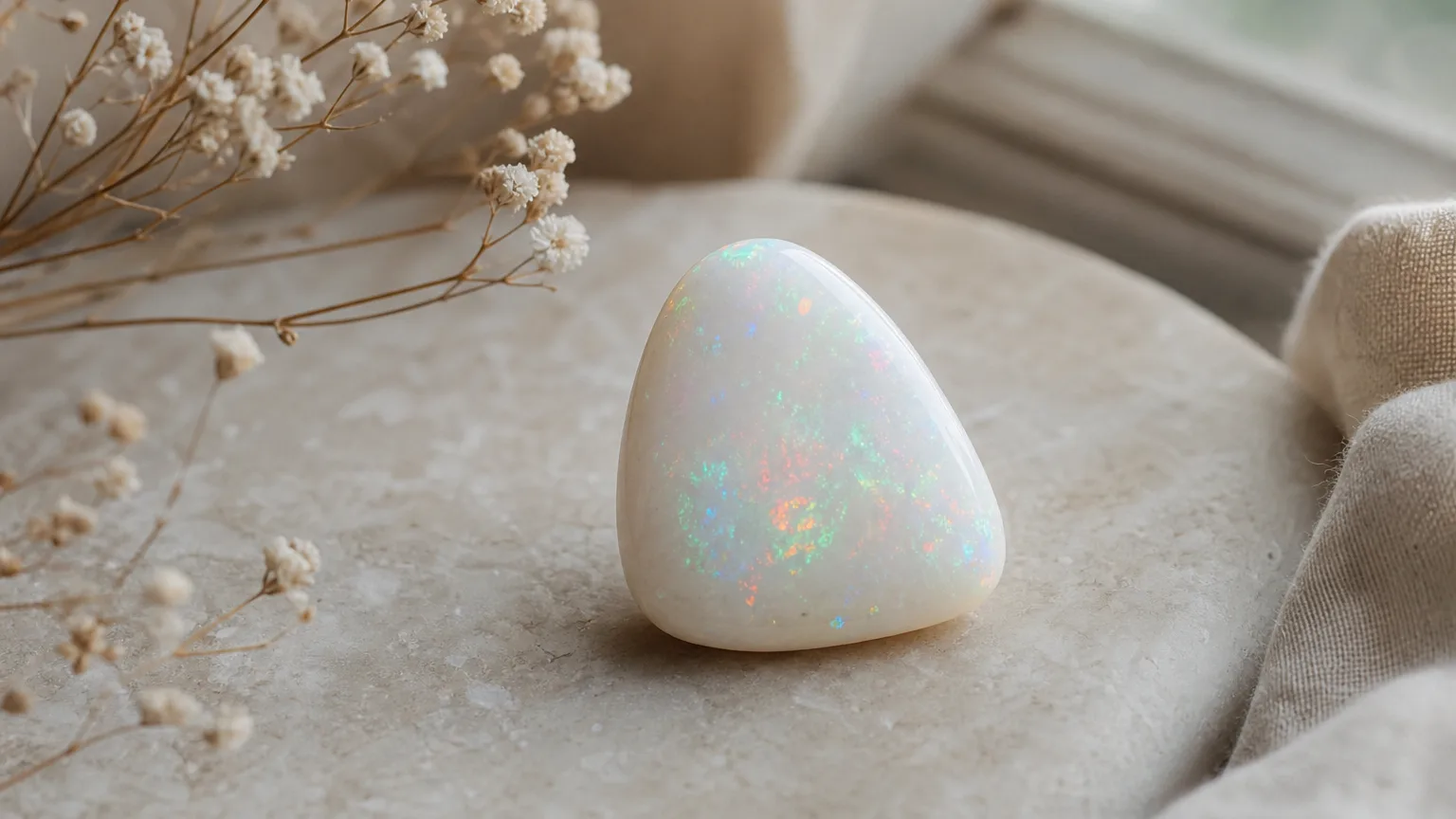
The name opal is ancient, possibly from the Sanskrit upala, “precious stone.” Opal has been treasured for thousands of years — the Romans prized it highly, and across many cultures it’s been a stone of hope and inspiration. Australia, the source of most white opal, also holds the stone deep in Aboriginal tradition and Dreamtime stories, which we can appreciate with respect rather than treat as our own.
In modern practice, white opal is most often tied to hope, inspiration, creativity, and emotional lightness. Its rainbow play-of-color reads as many possibilities in one stone. Some older European folklore called opal “unlucky,” a superstition most now reject. How much hope you feel is up to you. To explore more stones, browse the full Crystal Guide.
White Opal Properties
The Science
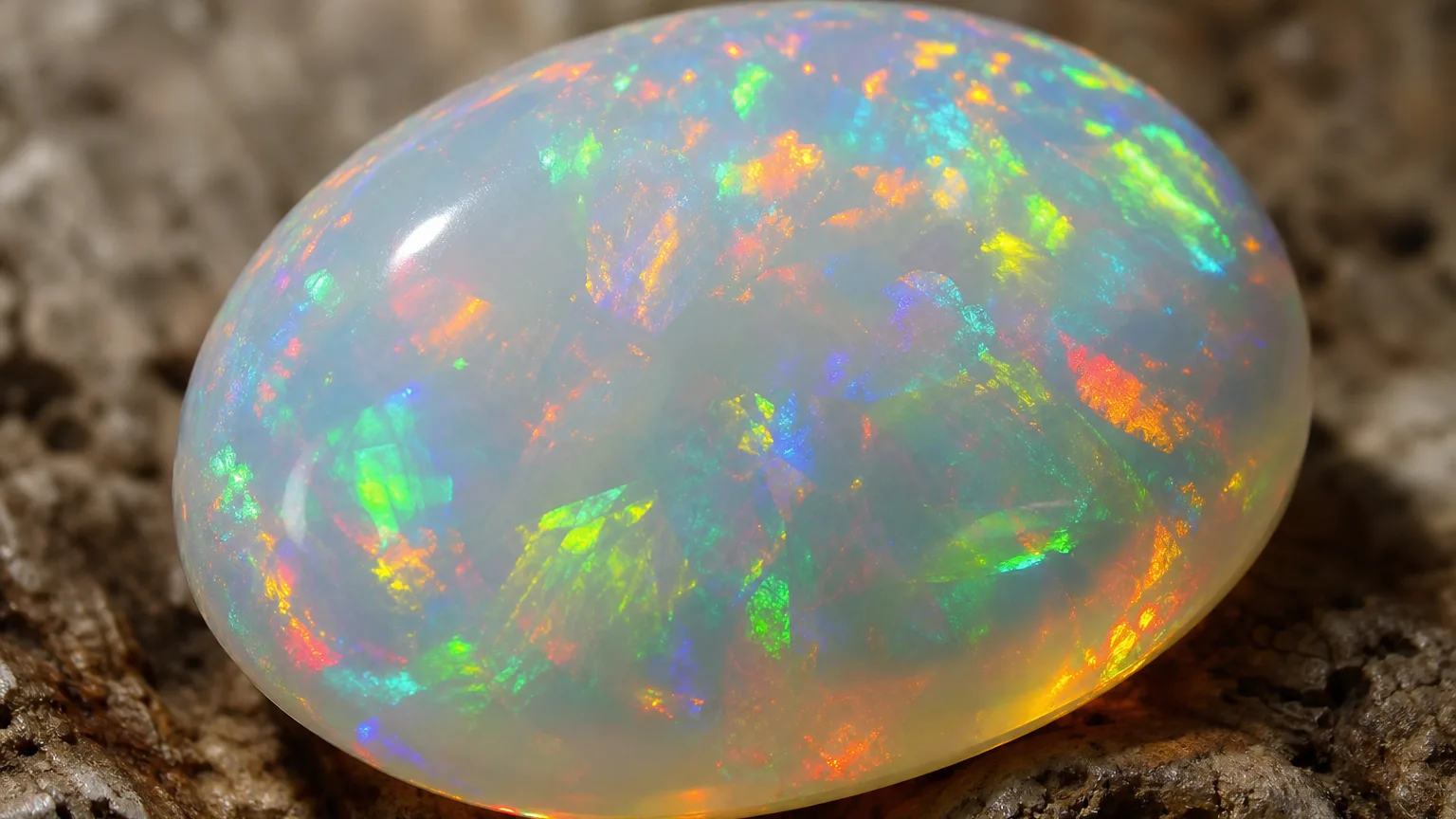
Opal isn’t a true crystal — it’s a mineraloid, hydrated silica (SiO₂·nH₂O) with no regular crystal structure, and it contains 3–21% water. White opal has a pale, milky body color with flashes of rainbow “play-of-color,” which comes from millions of tiny silica spheres packed in orderly layers that diffract light into spectral colors — a real optical effect, not pigment. It’s fairly soft at about 5.5–6.5 on the Mohs scale, light (specific gravity around 2.1), and translucent to opaque with a glassy-to-waxy shine. Most white opal comes from Australia (especially Coober Pedy), with Ethiopia also now important. Because it contains water, opal can crack or “craze” if it dries out or is shocked by heat — which is why care matters. None of this is mystical — it’s mineralogy and optics.
Traditional Meaning
Opal carries a long tradition as a stone of hope, inspiration, and imagination — prized in ancient Rome and across many cultures, and held sacred in Australian Aboriginal Dreamtime. In modern crystal practice, white opal is tied to the crown and higher centers and described as a stone of hope, creativity, emotional lightness, and inspiration — many believe it stirs imagination and lifts the spirit. A lingering “unlucky opal” superstition from 19th-century Europe is mostly rejected today. These associations draw on opal’s long history and modern practice.
Mindfulness & Psychology
From a psychological angle, white opal works as an inspiring anchor — a milky stone that throws rainbow flashes, to notice when you want hope or a creative spark. The act of choosing and wearing it can support intention-setting: you decide it stands for “find hope” or “spark an idea,” and the shifting colors draw you back. Multicolor light reads as possibility, play, and inspiration in color psychology, and the simple ritual of noticing the stone creates a brief pause to reset. These effects come from tradition and personal practice, not clinical research. Crystals complement — but never replace — professional care.
White Opal Benefits
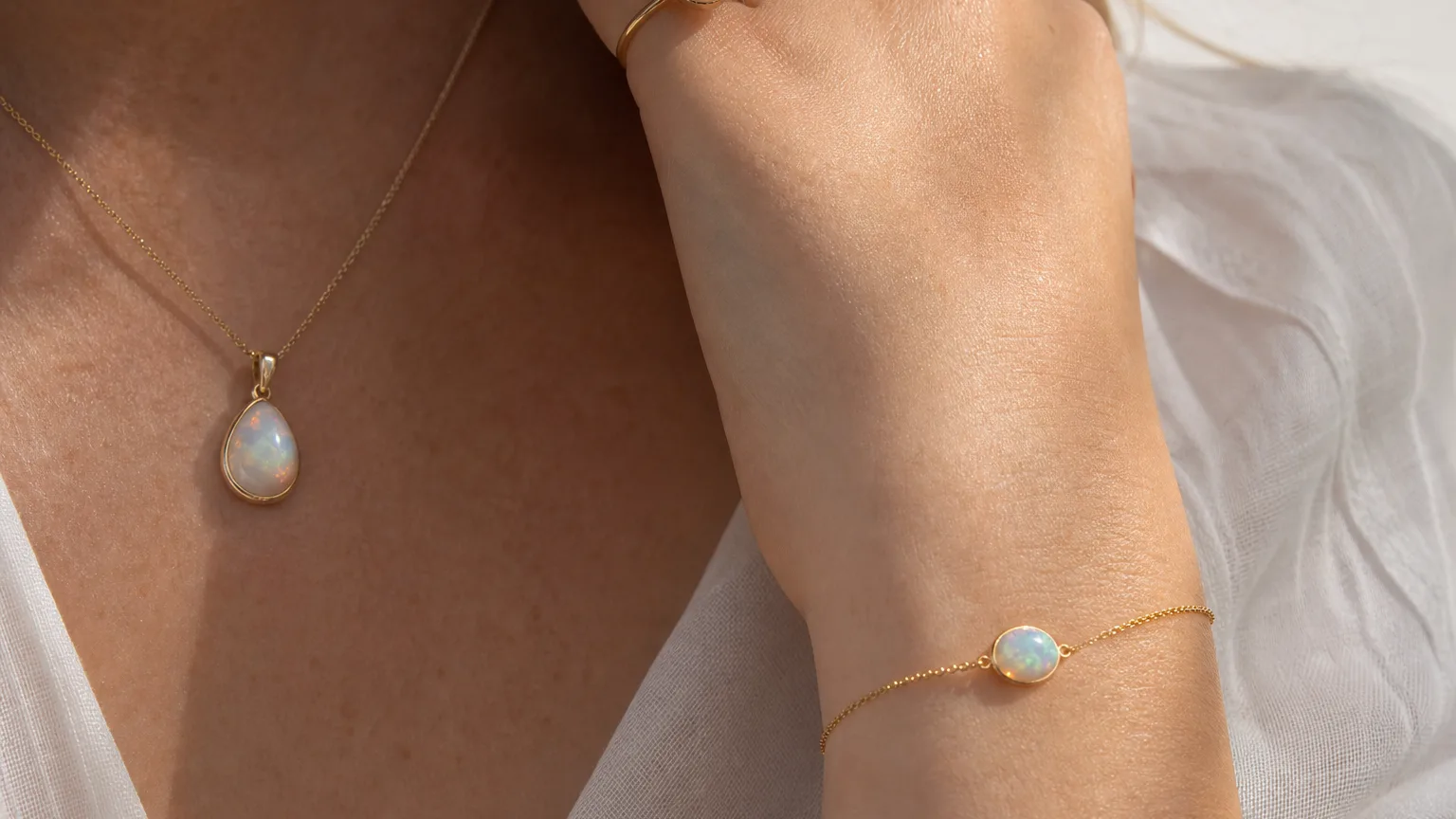
People who work with white opal usually describe it in terms of feeling more hopeful and creatively sparked, not dramatic changes. The stone tends to show up when hope or creativity matters — a glance at its rainbow flash when you feel stuck, the feel of it before a creative task, the look of it when you need a lift. A few benefits people mention most:
A spark of hope
Wearing white opal gives a flat, discouraged mood a bright focus point, which makes it easier to find hope and possibility.
Creative inspiration
Many use it for creative work as a cue to spark new ideas and look at things from a fresh angle.
Emotional lightness
The playful rainbow lends itself to lightness — a reminder not to take everything so seriously.
A sense of possibility
Many colors in one stone read as many possibilities; carried as a cue, it can nudge you toward staying open to options.
The pattern underneath is the same: the stone isn’t doing the work for you, but it gives your day a small structure that makes hope and inspiration more likely. If you’re exploring stones for specific needs, see our guides to crystals for creativity and crown chakra crystals.
White Opal Chakra, Zodiac, and Element Associations
In traditional systems, white opal is most often linked to the crown and higher centers — and, through its rainbow, to all the centers. It’s commonly paired with Libra and Pisces, and its element is usually given as Water (sometimes Air). For related stones, see crown chakra crystals.
These are correspondences built up across opal’s long tradition and modern practice, not fixed rules. If your own sense of a piece points somewhere else, that’s completely fine. Many people work with stones intuitively, following what feels right rather than a chart.
How to Use White Opal
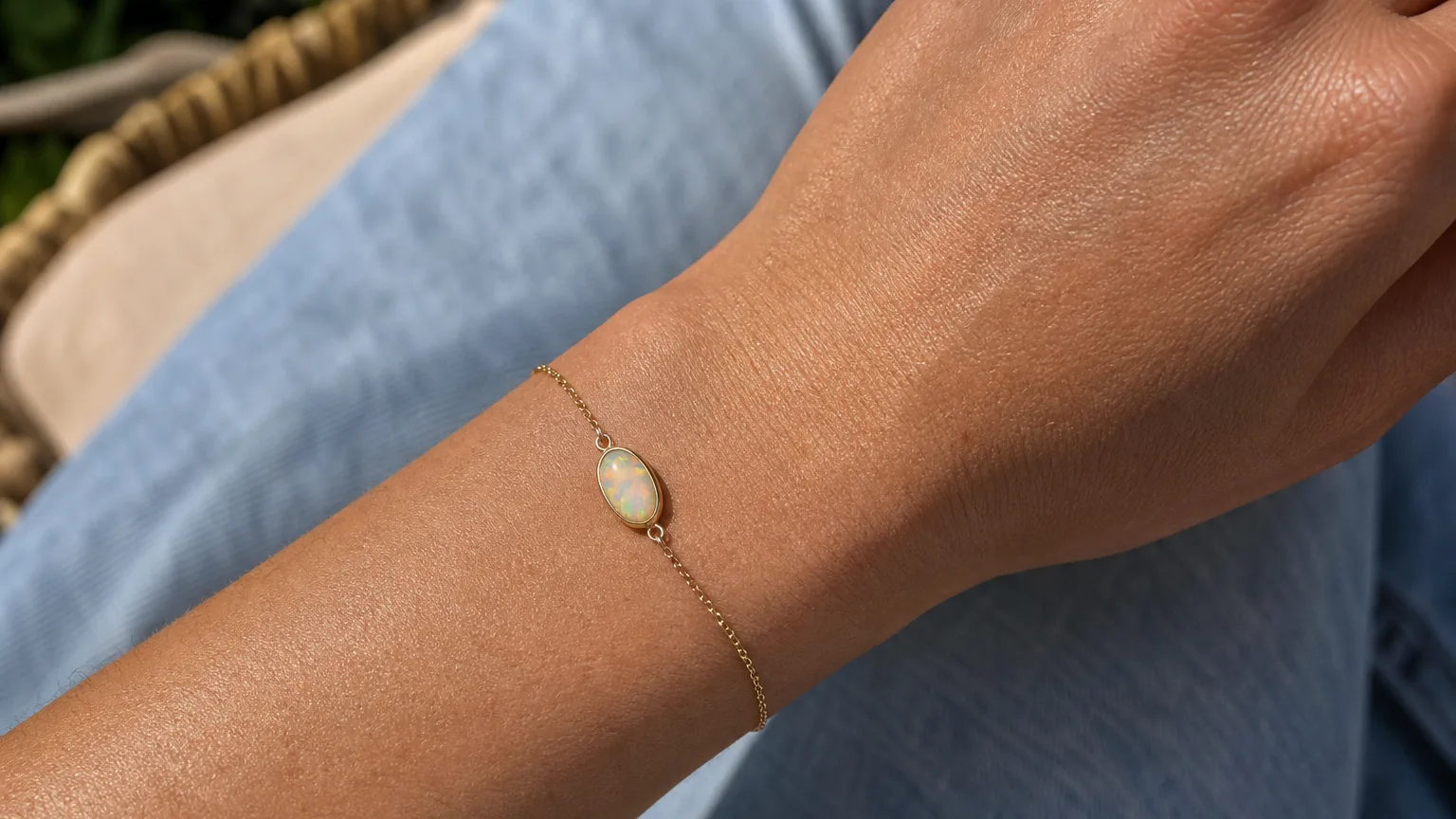
White opal is a delicate gem, so it’s worn and cared for rather than carried loose. The key is consistency and gentle handling.
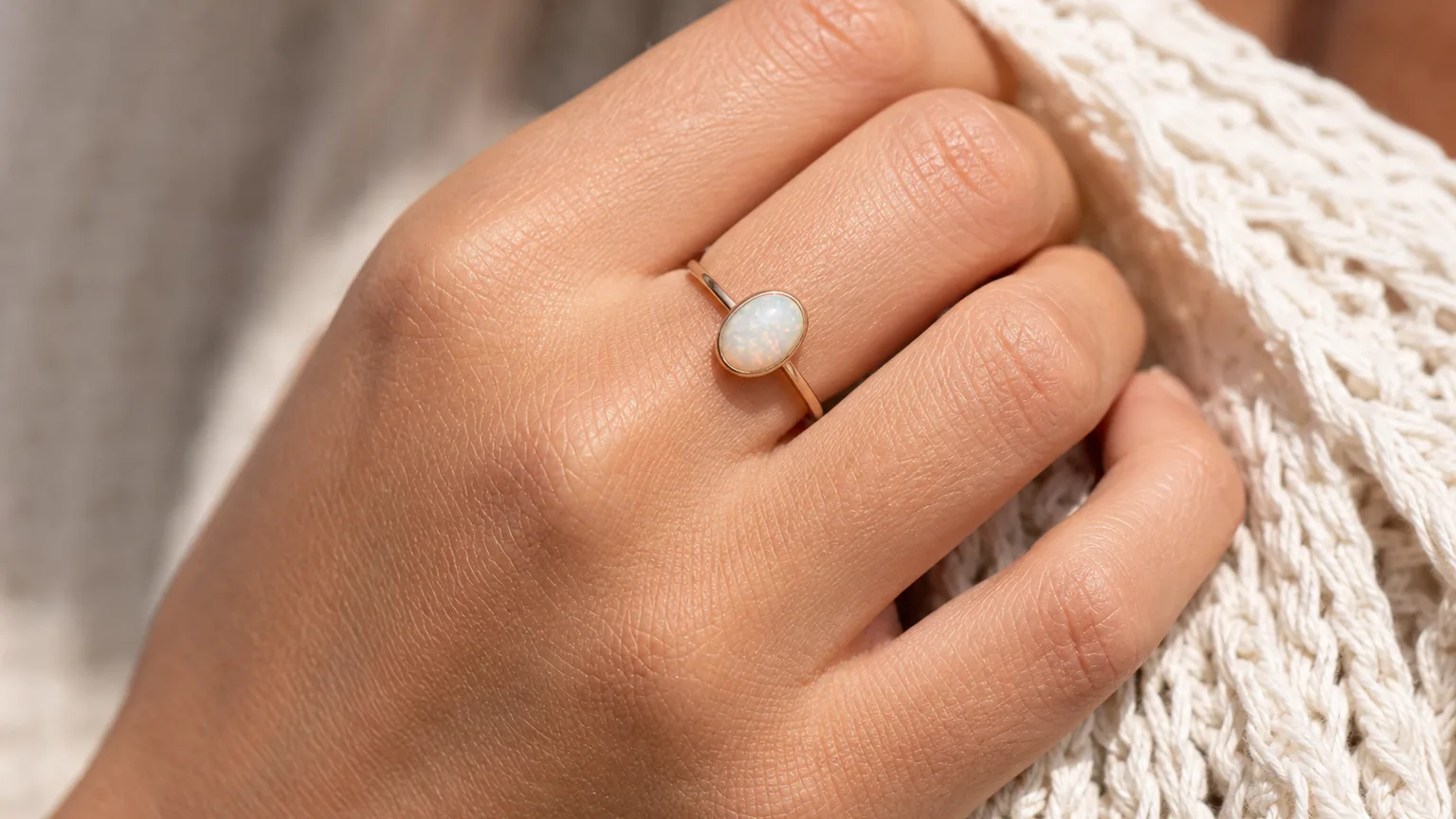
Wear it. A cabochon ring or pendant keeps the stone with you and shows off the play-of-color. Pair it with an intention each morning like “find hope,” “spark an idea.”
Meditate with it. Hold a cabochon in your palm while you sit, or simply turn it in the light and watch the colors shift — a gentle focus exercise.
Place it on display. A cabochon or doublet piece in good light shows off its colors and serves as an inspiring visual cue.
Keep it gently humid. Because opal contains water, a few people store it with a damp cloth or in a mildly humid spot to avoid drying — especially in very dry climates.
Which White Opal Form Is Right for You?
| Form | Best for | Choose it if |
|---|---|---|
| Cabochon ring / pendant | Daily wearing, showing color | You want the play-of-color shown on the hand or chest |
| Doublet / triplet | Affordable, protected opal | You want opal color at a lower price, with a protective backing |
| Bead bracelet | Daily wearing | You want a visible, wearable reminder (note: opal beads are delicate) |
| Earrings | Everyday elegance | You want the rainbow flash worn near the face |
| Tumbled / loose piece | Collection or meditation | You want a smooth piece to hold (handle gently) |
| Loose cabochon | Collection or custom setting | You want a single stone to set or display |
How to Tell Real White Opal from Fakes
Because opal’s play-of-color is appealing, the market has imitations — opalite (glass), plastic, and synthetic or assembled stones. A few checks help before you buy:
- The play-of-color. Real white opal shows natural, irregular rainbow flashes that shift as the stone moves — never perfectly uniform or “snake-like” repeat patterns. Opalite (glass) has a milky blue sheen but no true rainbow play-of-color.
- Hardness and feel. At about Mohs 5.5–6.5, opal is fairly soft and light. Glass and plastic feel different; opalite is common and is glass, not opal.
- Natural pattern. Genuine opal has irregular patches and “pinfire” patterns. Too-perfect, repeating, or painted-looking color is likely synthetic or fake.
- Doublets and triplets. Assembled opals (a thin slice of real opal on a backing, or sandwiched with a cap) are genuine opal but should be disclosed and priced lower than solid opal.
- Price and seller. Buy from sellers who disclose solid vs doublet vs synthetic. Opalite sold as “white opal” is a common mislabel — it’s glass.
A note on opalite. Opalite is a man-made glass that looks milky blue — pretty, but it’s not opal and has no natural play-of-color. If you want genuine white opal, check for real rainbow flashes and a reputable seller.
How to Cleanse and Charge White Opal
White opal is delicate because it contains water, so “cleansing” and care overlap and need gentle handling:
- Brief water. A quick rinse under cool water is fine — opal is a hydrated stone and tolerates brief water. Avoid long soaks, hot water, and sudden temperature changes.
- Moonlight. Leave it out overnight under a full moon — gentle and safe for opal.
- Smoke. Pass it through sage or palo santo smoke — no contact stress, fully safe.
- Soft cloth. Wipe with a soft, slightly damp cloth, then dry gently.
Things to avoid: heat and rapid temperature changes (opal can craze or crack as its water shifts), harsh chemicals, ultrasonic and steam cleaners, prolonged very dry conditions, and hard knocks. Don’t leave opal in a hot car or near a heater. For the full routine, see our guide to cleansing crystals.
Best Crystals to Pair With White Opal
Pairing is about layering intentions — and with opal, about choosing stones that won’t scratch or stress its soft surface. A few combinations that work well with white opal’s inspiring energy:
- White Opal + Moonstone — two light-shifting stones tied to intuition, inspiration, and a gentle, hopeful mood.
- White Opal + Amethyst — inspiration meets calm; a pairing for creativity, hope, and a clearer mind.
- White Opal + Clear Quartz — many use clear quartz to hold and amplify opal’s intention for hope and creativity.
The logic of pairing is about complementary intentions, not strict rules — and store opal apart from harder gems that could scratch it. Pick combinations that match what you’re drawn to.
Who Should Use White Opal?
White opal suits people who want a hopeful, inspiring, creatively stirring presence — anyone in a flat or stuck stretch, doing creative work, or drawn to its rainbow beauty, who wants a gentle reminder to find hope and spark new ideas.
A few honest expectations: white opal isn’t a treatment for depression, low mood, or any condition — if you’re dealing with something persistent, a healthcare professional is the right call, and the stone can be a comfort alongside that. It won’t “do” anything on its own; its value comes from the intention and routine you build around it. If you go in expecting a stone to fix things for you, you’ll be let down. If you go in expecting an inspiring support for your own practice, it tends to fit well.
FAQ About White Opal Meaning
What causes opal’s play-of-color?
Millions of tiny silica spheres packed in orderly layers diffract light into rainbow colors. It’s a real optical effect — the colors shift as the stone moves — not pigment.
Is opal a crystal?
It’s a mineraloid, not a true crystal — hydrated silica with no regular crystal structure, containing water. That’s why it’s softer and more delicate than most gems.
Can white opal go in water?
A brief rinse under cool water is fine — opal is a hydrated stone. Avoid hot water, long soaks, sudden temperature changes, and salt water.
Can opal crack or craze?
Yes — because it contains water, opal can crack or “craze” if it dries out or is shocked by heat or rapid temperature change. Keep it away from heat and extreme dryness.
Is white opal unlucky?
No — that’s an old 19th-century superstition, mostly rejected today. Historically opal was a stone of hope and good fortune.
How can I tell if my white opal is real?
Look for natural, shifting rainbow play-of-color (not uniform or repeating), Mohs 5.5–6.5 softness, and a reputable seller. Opalite (glass) has a milky blue sheen but no true rainbow flashes.
Is white opal good for beginners?
Yes, with care — it’s beautiful and meaningful, but soft and heat-sensitive. A lovely inspiring stone if you’ll handle it gently.
Final Thoughts on White Opal
White opal has earned its place as a stone of hope and inspiration — and it earns it again for each person who wears one and gives it a meaning. If you’re curious, the simplest start is one piece, one intention, and a small daily moment to notice it. You don’t need the most colorful piece; you need a stone you’ll actually see and wear. Let the routine do the work, and let the white opal be the bright reminder that brings you back to hope and new ideas.
From there, white opal tends to open a door — to a creative spark, a moment of hope, or simply the pleasure of catching rainbow color in a milky stone. For more, explore the Crystal Guide or browse white opal jewelry.