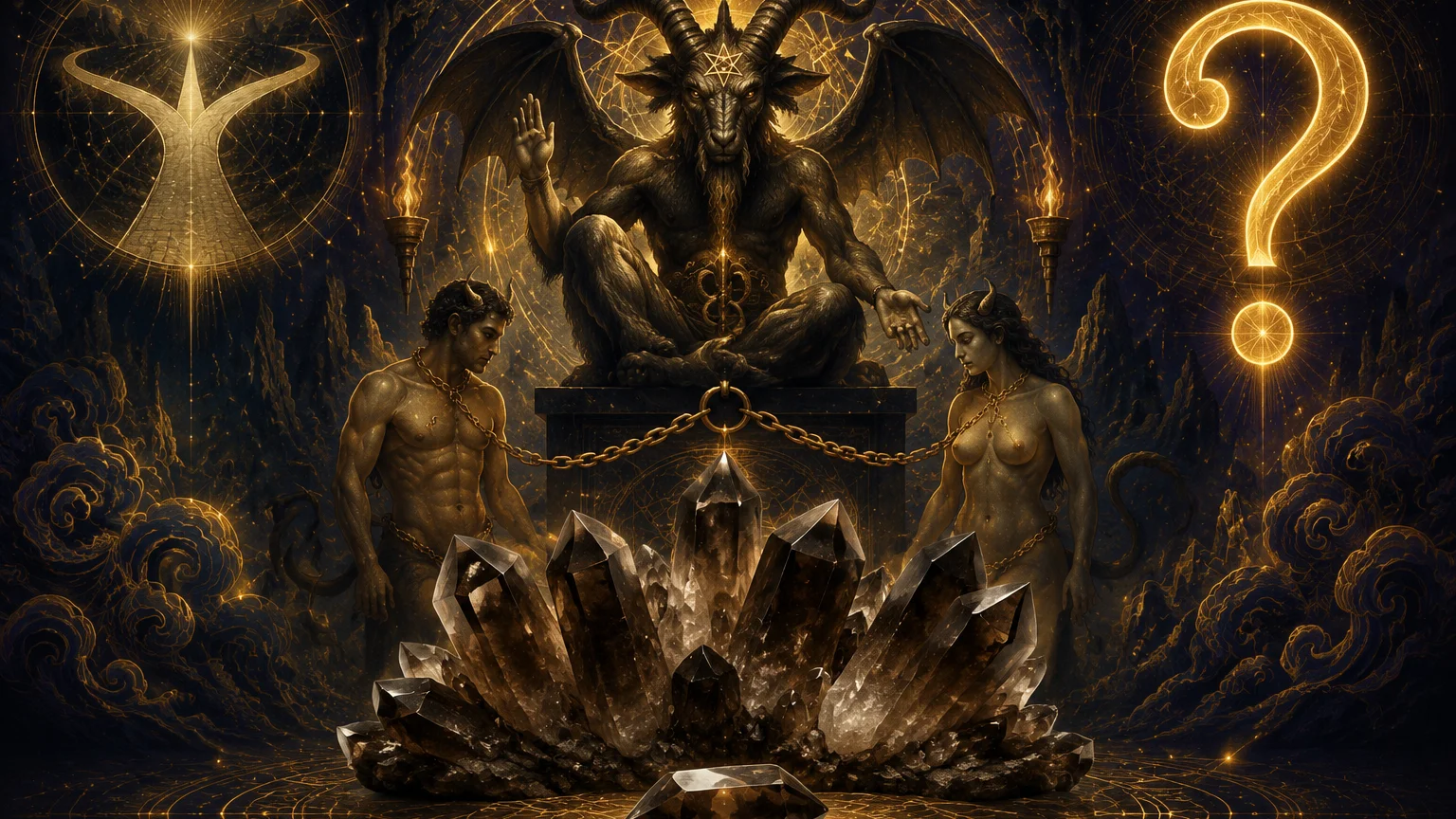
Is The Devil a Yes or No Card for Love?
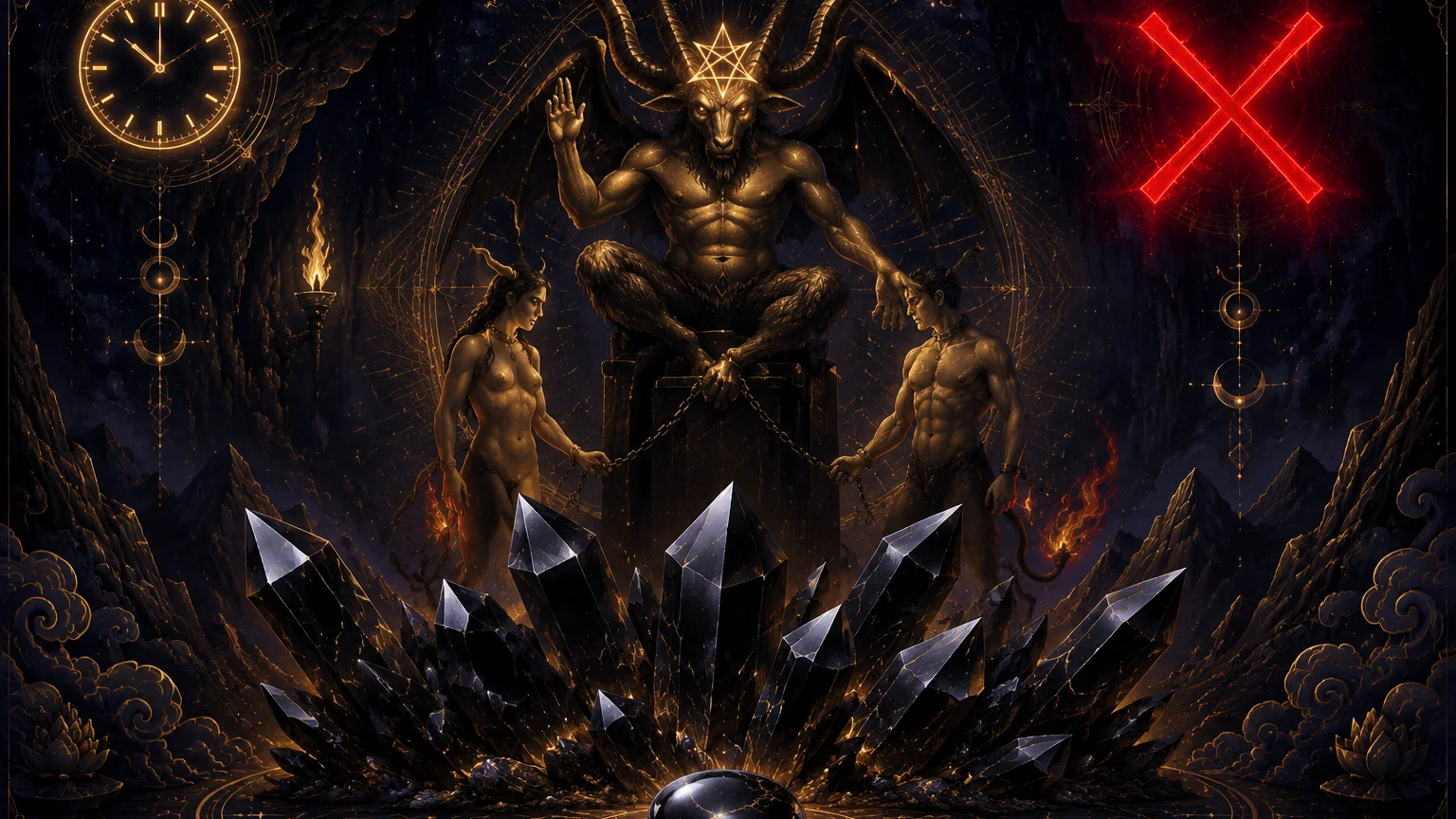
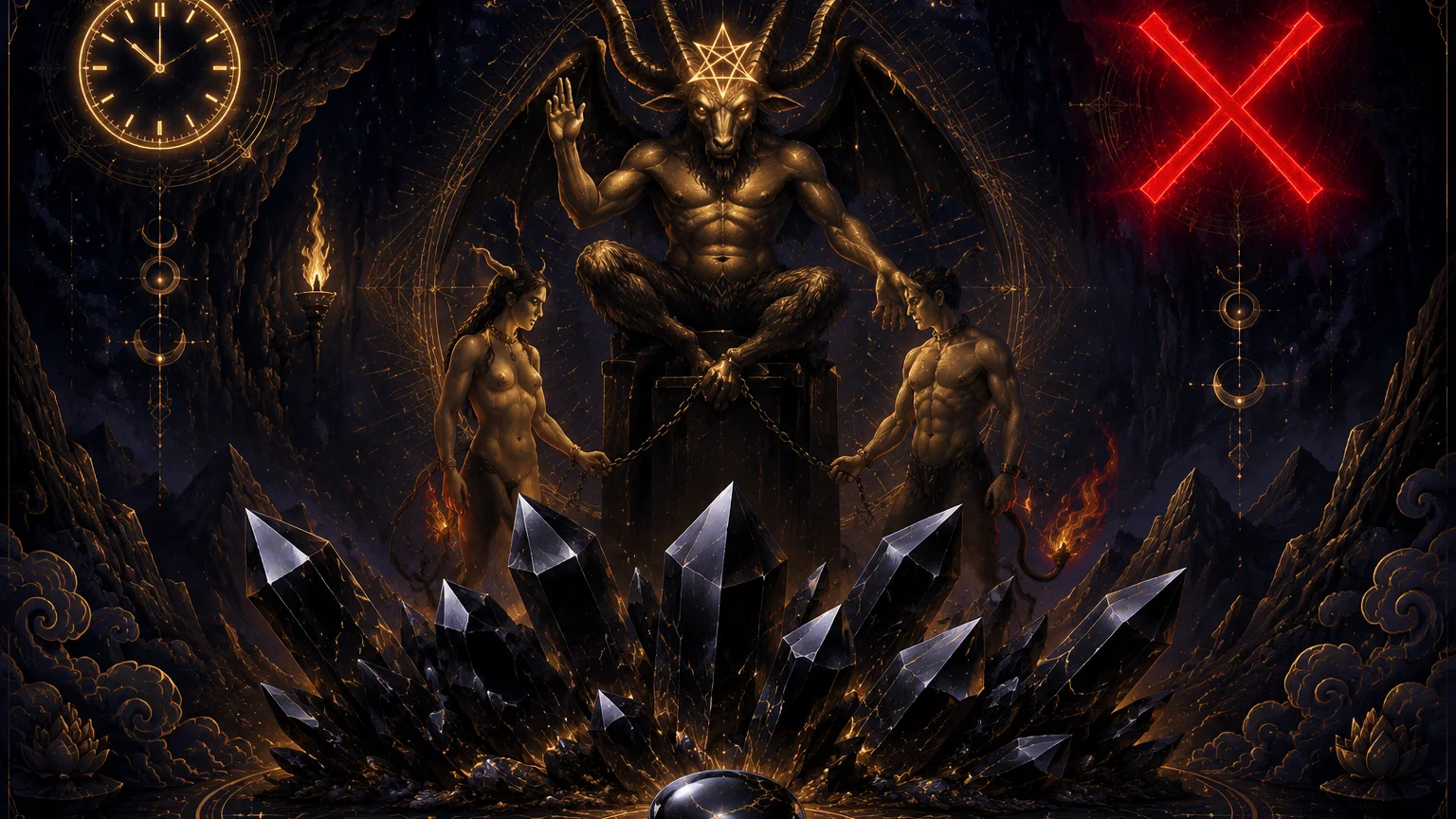
Is The Devil a Yes or No Card for Love?
The Devil is the card that makes people uncomfortable in love readings — and that discomfort is the reading. Chains, the horned figure, the two figures loosely bound at the altar: the imagery speaks directly to the bonds we choose to call love but that may be something else. So is The Devil a yes or no card for love? The honest answer is: a conditional card whose verdict hinges entirely on awareness — and the condition is unlike any other card’s.
Quick Answer
The Devil is a conditional card for love — and the condition is whether you can see the attachment clearly. It leans no for entering a relationship from attachment, compulsion, or fear of being alone — those are the very chains The Devil names. But it turns yes for leaving once you recognize the bond is compulsion rather than love, because the upright gift of this card is seeing that the chain around your neck is loose enough to lift off. The verdict follows awareness: blind, it leans no; seen, it can become the yes that frees you. It is not a curse — it is a mirror for what binds.
Is The Devil Generally a Yes or No Card?
Across all questions, The Devil is a conditional card that leans no where compulsion is driving the choice, and yes where the compulsion is finally being seen — and that distinction is the whole work of the card. Its archetype is the shadow-knower: the figure who does not create the chains but names them, who points to the attachments, cravings, and self-limiting stories that keep us bound long after the cell door has opened.
The card’s central truth is one that traditional readings often miss: the chains in The Devil’s image are loose. Look closely at the card — the two figures are bound, but the chains around their necks are long enough to lift off. They could walk away. They do not, because they believe they cannot, or because the bond has become so familiar that freedom feels more frightening than captivity. This is The Devil’s actual territory: not evil, not doom, but the psychological pattern of staying in what we have already outgrown because the staying has become part of who we are.
So when readers ask whether The Devil is generally a yes or no, the answer follows the shape of the question with unusual precision:
- For choices driven by attachment, craving, or a self-limiting story — should I keep doing this because I cannot imagine stopping — The Devil leans no, sometimes strongly. Not as punishment, but because the very reasoning behind the choice is the chain the card exists to name.
- For choices that break the chain — should I leave the situation that has been running me, should I release the pattern I have finally seen clearly — The Devil can lean yes, because its upright gift is the recognition that the chain was never locked.
The reversed or shadow form is not “evil unleashed,” despite what older decks sometimes implied. Reversed, The Devil often points to the chain being examined — the painful, necessary work of looking at the attachment rather than acting from inside it. Reversed can also point to the moment before the recognition lands, when the bond still feels like love rather than compulsion. It is not a curse; it is the card at its most honest, asking you to look longer.
This is why The Devil sits as conditional rather than strong-no in the matrix. It is a card that refuses to bless what binds, but it absolutely blesses the seeing that frees. The same card that says no, do not pursue this from craving also says yes, you are finally ready to see the chain and lift it off — and the only thing that distinguishes those two readings is whether awareness has arrived.
The Devil for Love: Yes or No?
In love specifically, The Devil’s conditional quality becomes almost surgical — because love is where attachment hides most easily, where compulsion disguises itself as devotion, and where the chain around the neck is most often mistaken for the tie that binds two hearts.
The Devil leans no for entering a relationship from the places The Devil knows best:
- The pull that feels like desire but is really the fear of being alone.
- The attraction that is really the repetition of a familiar wound — the partner who triggers the same pattern as the last one, and the one before that, because the pattern has not yet been seen.
- The bond that is tightening into control rather than deepening into trust — jealousy framed as care, monitoring framed as love, the slow narrowing of each person’s life around the other.
- The connection sustained by intensity rather than care — the highs and lows that feel like passion but function as addiction, where the suffering has become part of the pull.
For entering any of these, The Devil leans no — not because the relationship is forbidden, but because the energy driving the entry is the chain, not the love. Pursuing a bond from compulsion tends to deepen the compulsion, and The Devil names that plainly.
But The Devil can turn yes for leaving — and this is the reading that surprises people who fear the card. When The Devil appears for someone already inside a bond built on attachment, it can be the most liberating card in the deck, because its message is: the chain you are wearing is loose. You have always been able to lift it off. The reason you have not is the work — and the work is now. In that reading, The Devil is a yes-to-leaving, a yes-to-freedom, a yes to the painful honesty of naming what the bond actually was.
The card does not predict the end of the relationship, and it does not declare the love false. What it does is ask the question that cuts through every excuse: is this love, or is this attachment calling itself love? The two can look identical from inside the bond, and The Devil’s gift is the clarity that tells them apart. Love expands the people inside it; attachment contracts them. Love makes both people more themselves; attachment slowly replaces the self with the pattern. The Devil asks which one is actually happening.
There is a harder case worth naming. Sometimes The Devil appears in readings for relationships that are genuinely consensual, honest, and chosen — including those that explore intensity, kink, or power dynamics in ethical,communicative ways. The card is not a verdict on those relationships. What The Devil asks even there is whether the structure is chosen consciously — eyes open, communication clear, both people free to leave at any time — or whether the structure has become an unconscious repetition of an older wound. The Devil does not condemn intensity; it asks whether the intensity is conscious or compulsive. That distinction is the card’s entire work in love.
What Would Shift It to Yes or No?
Because The Devil’s verdict follows awareness, the shift is not in the card — it is in the seeing.
The conditional no-for-entering turns yes — differently — when the awareness arrives first. If you can name the pattern the attraction is repeating, if you can see that the pull is the familiar wound rather than a real connection, if you can distinguish desire from the fear of being alone, then the energy driving the entry changes, and with it the verdict. The same person who would have been a chain becomes a choice, and choice is the ground The Devil can bless.
The conditional turns yes-for-leaving the moment the attachment is seen for what it is. Not the moment you blame the other person, and not the moment you condemn yourself — those are still the chain, just wearing a different mask. The yes-for-leaving arrives when you see the bond clearly enough that staying stops feeling necessary. The Devil’s gift is that this seeing is enough; the chain loosens the moment it is recognized.
There is a no-for-now in the early stage of seeing. When the recognition is still arriving — when you half-know but have not fully admitted it — The Devil leans no on acting decisively from the half-knowing. The card asks you to sit with the recognition long enough for it to clarify, rather than reacting from the shame or fear that often accompanies the first clear look at an attachment. Acting from shame is still the chain; acting from clarity is the lifting of it.
Rose Quartz as a reflection support. Some readers hold or wear rose quartz when working with The Devil in a love reading — not to break the chain, but to bring compassion into the seeing of it. Rose quartz is traditionally associated with the heart, and used as a focusing object it can help you ask the question that The Devil makes unavoidable: can I look at this bond — and at my own part in it — with care rather than self-condemnation, with honesty rather than blame? The crystal does not break attachments. It does not turn a no into a yes. What it can support is the quality of attention that lets the chain be seen clearly enough to lift — and clear seeing, for The Devil, is everything.
The shift is never in the card. The Devil is perfectly willing to wait. The shift is in whether you look — and the looking is the entire freedom this card has to offer.
Free Will, FAQ, and a Note on Outcomes
Cards reflect current energy and patterns, not fixed outcomes — you always have free will to shape what happens next. For The Devil, the card may point to an attachment that has been running a relationship, but whether you see it, whether you name it, whether you stay in the bond or leave it — that is your choice, and the chain loosens the moment the choice becomes conscious. No card decides your freedom; it clarifies whether you are using it.
FAQ
Is The Devil a yes or no card when reversed?
Reversed, The Devil often points to the attachment being examined rather than acted on — the painful work of looking at the chain before lifting it. It can also signal that the recognition has not yet fully landed, that the bond still feels like love from inside. Reversed is not a curse and does not mean the relationship is evil; it usually means the seeing is in progress and the choice should not yet be made from inside the compulsion.
Does The Devil mean this relationship is toxic?
Not necessarily — and any reading that declares a relationship definitively toxic from one card is overreaching. The Devil asks whether the bond is love or attachment, whether it expands the people inside it or contracts them, whether it is chosen consciously or repeated compulsively. Those questions can point toward toxicity, but the card clarifies the question rather than answering it for you.
Can The Devil be a yes for staying in the relationship?
Rarely, and only in a specific sense: if both people are doing the honest work of seeing the pattern together — naming the attachment, communicating consciously, choosing each other rather than defaulting to the bond — then The Devil can bless the staying, because the chain has become visible to both and the choice has become conscious. Staying without that work is the chain, not the love.
Common Mistakes Reading The Devil for Love
A few classic misreadings tend to distort this card in love readings:
- Reading The Devil as evidence of a cursed or evil relationship. The card names attachment and compulsion; it does not declare anyone evil or doomed. Treating it as a curse skips the actual work of seeing what the bond actually is.
- Confusing intensity for love. The Devil can correspond to bonds that feel overwhelmingly strong — and readers sometimes mistake the intensity for proof of depth. Intensity can be compulsion wearing love’s costume; the card asks which one is operating.
- Treating reversed Devil as “the evil is unleashed.” Reversed more often points to the chain being seen, or to the moment before recognition lands, than to amplified darkness. The shadow of The Devil is the refusal to look, not the dramatic arrival of evil.
- Reading the chains as locked. The whole gift of the card is that the chains are loose enough to lift. Reading them as inescapable skips the freedom the card exists to point to.
- Treating rose quartz (or any crystal) as protection from The Devil. Crystals support reflection and compassion; they do not break attachments or change the verdict. If the bond is compulsion, no crystal flips it to love — and that is not what crystals are for.
Read honestly, The Devil for love is one of the most liberating cards in the deck — not because it predicts freedom, but because it refuses to let attachment pass as love. It asks whether the chain around your neck is the tie between two hearts or the bond you have always been free to lift, and it leaves the answer — and the lifting — to you.
Shop Crystals for This Guide
Explore crystal jewelry and stones from our current collection.


Om Mani Padme Hum Copper Ring


Om Namah Shivay Mantra Copper Bangle


Fair Trade Astamangala Copper Bangle
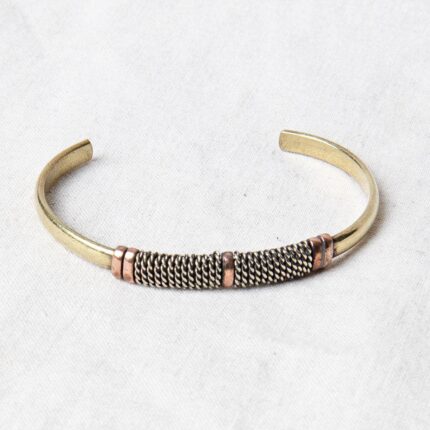

Tibetan Handcrafted Copper Bracelet
Shop Crystals for This Guide
Explore crystal jewelry and stones from our current collection.
Om Mani Padme Hum Copper Ring
Om Namah Shivay Mantra Copper Bangle
Fair Trade Astamangala Copper Bangle