
Is Death a Yes or No Card for Career?


Is Death a Yes or No Card for Career?
Death in a career reading often alarms people, but the card’s actual work in career questions is precise: it asks whether the path or role you are in (or considering) has completed its cycle, and whether you are willing to acknowledge that. So is Death a yes or no card for career? The honest answer is: a conditional yes, and one that splits cleanly along completion vs prolonging — yes for closing the chapter that is genuinely over; no for forcing a dead form to continue.
Quick Answer
Death is a conditional yes for career. It leans yes for ending a career path or role that has genuinely completed — the necessary close that makes the next chapter possible. But it leans no for forcing a dead form to continue — keeping the finished project on life support, prolonging the role whose season has passed, clinging to the path that has already ended. The card blesses the ending when the form is over; it refuses to bless the prolonging of what has already died.
Is Death Generally a Yes or No Card?
Across all questions, Death leans conditional — and the condition is unusually clear. Its archetype is the transformer: the close of one form so that another can take its place. The card does not erase what was; it acknowledges that a cycle has reached its natural end and that holding the old shape past its time is the actual suffering, not the ending itself. Upright, this energy is genuinely favorable for releasing — for letting go of what has completed, for clearing the ground, for the honest close that frees what comes next.
But Death is never a blank-check yes, and that is the whole point of the card. Its wisdom lives in the distinction between necessary ending e premature severing. The upright Death does not cut what is alive; it names what has already completed, often before the person is willing to admit it. Reversed, or in its shadow, the same energy resists the close — clinging to a form that has already changed, postponing the acknowledgment, trying to keep something alive by refusing to name that its season has passed.
So when readers ask whether Death is generally a yes or no, the truthful answer is: yes, where the question is about releasing what is genuinely complete; no, where the question is about preserving or forcing a form that has already transformed. The card itself is neutral about which one you mean — it points to the truth of the cycle, and the verdict follows the shape of what you are actually asking.
This is why Death leans conditional across questions in a distinctive way. For career, the verdict follows whether the path or role has completed — yes for the honest close, no for the prolonging. The card’s truth is that transformation, not preservation, is what makes the next chapter possible. Death’s verdict is always about form — what has died, what is being born — and it refuses to confirm the choice that keeps a dead thing standing.
Death for Career: Yes or No?
In career specifically, Death leans conditional — and the condition is unusually structural. The card’s transformer archetype asks whether the career path, role, or project you are in has reached its natural completion. If you are asking whether to end something — a job whose cycle has closed, a path that has run its course, a role you have outgrown — Death may be telling you that the question is not whether to end it, but whether you are willing to acknowledge that the form has already completed.
But career is also where Death’s energy has its clearest limit, because ending and prolonging wear different faces here. The same transformation that blesses the honest close of a completed chapter also refuses to bless the choice that keeps a dead form alive — the project kept on life support past its time, the role maintained after it no longer fits, the path continued because the alternative is admitting it is over. Death’s gift is the honest close; its shadow in career is the preservation that prolongs what has already ended.
So the verdict splits along a clear line:
- Death leans yes for ending a career path or role that has completed. If the choice is to close the chapter whose time has genuinely passed — leave the finished project, release the role you have outgrown, complete the path whose cycle is over — Death blesses that work. The yes is for the honest close that clears the ground for what comes next.
- Death leans no for forcing a dead form to continue. If the choice is to keep something alive that has already completed — to prolong the finished project, to maintain the role that no longer fits, to cling to the path because the alternative is admitting it is over — Death refuses to bless it. The no is not a punishment; it is the card pointing out that the form has already ended, and the preservation is only postponing the acknowledgment.
There is a subtler reading. Death sometimes appears for a career question when the work is not really about whether to leave — when the ending the card names is the death of an old professional identity, an old story about who you are in your work. In that case the yes is for the inner close that prepares the ground for any outer move.
The card does not promise that the close will be painless, or that ending guarantees a particular outcome. What it points to is whether the career choice serves transformation or preservation of the dead — whether you are closing honestly or prolonging what is over. Career readings want a clear directive; Death offers something more honest: a question about whether your work choice meets the truth of the cycle.
What Would Shift It to Yes or No?
Because Death is conditional, the question is not whether it will become a yes or a no — it is which one it already is, depending on whether the path or role has genuinely completed.
The conditional yes becomes clearer when the choice is to close a chapter that has genuinely run its course. This is not the same as being tired of the work, or of wanting a change — it is the quieter recognition that the form has completed, often long before the outer ending. If you have looked honestly and the path, role, or project has truly reached its natural end, Death’s yes leans toward the honest close with full weight.
The conditional yes turns no when the choice is to force a dead form to continue. If you find yourself making choices to keep something alive that has already completed — to prolong the project, to maintain the role past its fit, to cling to the path because the alternative is admitting it is over — Death in its shadow form is exactly that kind of preservation, and it does not bless what it warns against. The no is the card refusing to confirm the choice that prolongs what is over.
Obsidian as a reflection support. Some readers like to hold or wear obsidian when working with Death in a career reading — not to change the verdict, but to support the honest courage the card asks for. Obsidian is traditionally associated with truth-telling and with the strength to face what is genuinely over, and used as a focusing object it can help you sit with the question has this career form genuinely completed, or am I prolonging something that has already died? The crystal does not turn a no into a yes. It supports the honest inner reading that lets you tell which kind of choice you are actually making.
The shift, in other words, is not in the card. It is in whether you are willing to meet the truth of the cycle honestly — which is exactly what Death has been asking of you all along.
Free Will, FAQ, and a Note on Outcomes
Cards reflect current energy and patterns, not fixed outcomes — you always have free will to shape what happens next. For Death, the card may point to a conditional yes for closing what is complete, but whether you meet that truth — and how honestly you choose between transformation and preservation — is your choice. No card decides for you; it clarifies the moment you are standing in.
FAQ
Is Death a yes or no card when reversed?
Reversed, Death tends toward resistance to the close rather than a flat no. The reversal often points to a career cycle that has completed but is being clung to — the ending postponed, the dead form propped up, the transformation refused. Reversed does not mean cursed or doomed; it means the acknowledgment the upright card asks for has not yet been made, and the card is inviting you to look.
Does Death mean I will lose my job / fail at work?
No — and any reading that promises catastrophe is overreaching. Death points to whether a form has completed, not to random destruction. What it names was already over; the card is the acknowledgment, not the cause.
Can Death be a yes for staying in a role?
Rarely — because Death’s archetype is transformation, not preservation. If the question is whether to maintain a form that has completed, the card leans no. The yes for staying only applies where the role is transforming into a new shape, not where it is being preserved past its time.
Common Mistakes Reading Death for Career
A few classic misreadings tend to flatten this card in career readings:
- Reading Death as a flat ending. The card is conditional, and the condition (completion vs prolonging) is the whole point. Treating it as pure catastrophe skips the transformation work the card exists to demand.
- Confusing transformation with destruction. Death ends a form; the career itself may transform rather than die. A yes on closing a chapter does not always mean the work itself was worthless.
- Reading the card as a curse. When Death points to a needed ending, it is not a bad omen — it is an acknowledgment. The card’s gift is the honest close that makes the next chapter possible.
- Treating obsidian (or any crystal) as a fix. Crystals support reflection; they do not change verdicts. If the card leans no because the choice prolongs the dead, no crystal flips it to a release.
Read honestly, Death for career is one of the clearest transformational mirrors in the deck: it asks whether your work choice serves the honest close or the prolonging of what is over, and it leaves the meeting of that truth — and the close — to you.
Shop Crystals for This Guide
Explore crystal jewelry and stones from our current collection.


Om Mani Padme Hum Copper Ring


Om Namah Shivay Mantra Copper Bangle


Fair Trade Astamangala Copper Bangle
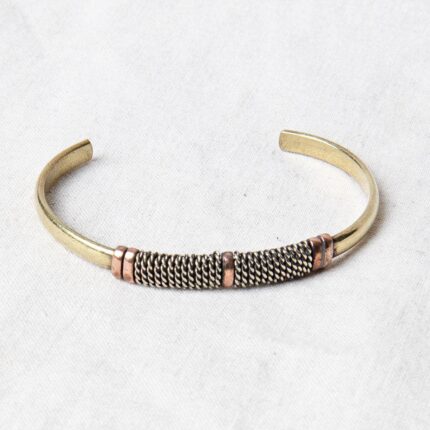

Tibetan Handcrafted Copper Bracelet
Shop Crystals for This Guide
Explore crystal jewelry and stones from our current collection.
Om Mani Padme Hum Copper Ring
Om Namah Shivay Mantra Copper Bangle
Fair Trade Astamangala Copper Bangle