
Black Pearl Meaning: Healing Properties & Uses
A black pearl is a dark-toned pearl — most famously the Tahitian black pearl, grown inside the black-lipped oyster in the warm waters of French Polynesia. Like all pearls, it’s an organic gem, not a mineral, made of layer upon layer of nacre. Long tied to wisdom, mystery, and quiet inner strength, black pearls are some of the most prized pearls in the world. This guide covers what black pearls are, what they mean, and how to care for them. Crystal meanings reflect tradition and personal practice, not medical advice.
What Is Black Pearl Meaning?
At its simplest, a black pearl means wisdom, mystery, and quiet inner strength. With its dark, iridescent glow, it’s often described as a stone of hidden depths and quiet power — a presence for people who want to feel quietly strong, wise, and self-possessed.
For many, that’s the whole draw: a dark, luminous pearl that feels both elegant and mysterious and nudges you toward quiet confidence. You don’t need to hold any specific belief to get something from it — the value often comes from wearing or holding it as a cue to return to a calmer, more self-possessed baseline.
Black Pearl Meaning and Symbolism
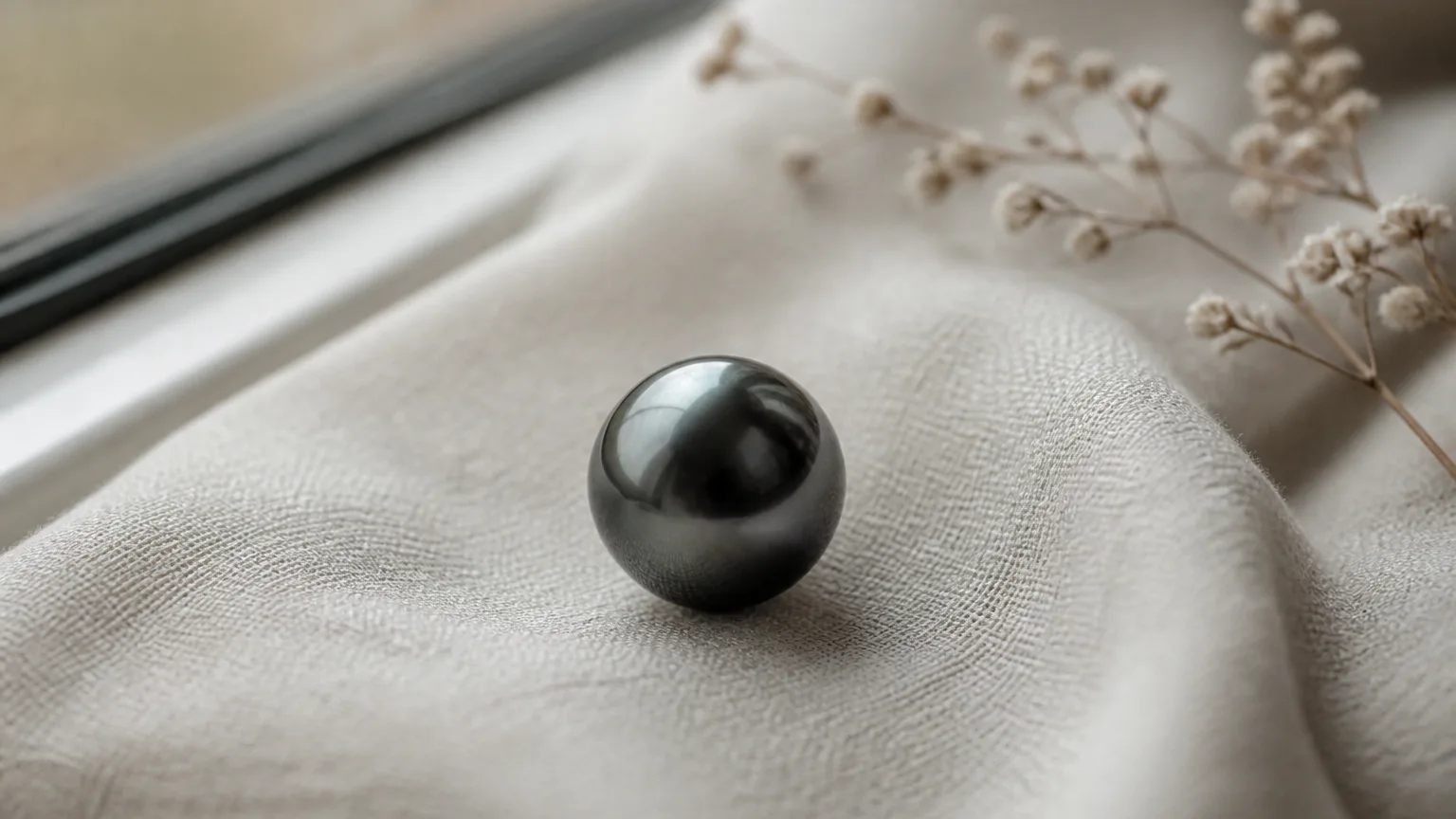
Pearls carry one of the oldest and richest traditions of any gem — symbols of purity, wisdom, and the moon across ancient China, India, Rome, and the Middle East. The dark “black” pearl, though, is largely a modern story: the Tahitian pearl industry grew up in the second half of the 20th century, farming the black-lipped oyster around French Polynesia.
In modern practice, the black pearl is most often tied to wisdom, mystery, protection, and quiet inner strength. Where white pearls lean toward purity and innocence, black pearls read as depth, sophistication, and hidden power. Some sellers tie them to wealth or good fortune, but those ties are best read as a symbolic mindset cue rather than a promise. How much of that quiet strength you feel is up to you. To explore more stones, browse the full Crystal Guide.
Black Pearl Properties
The Science
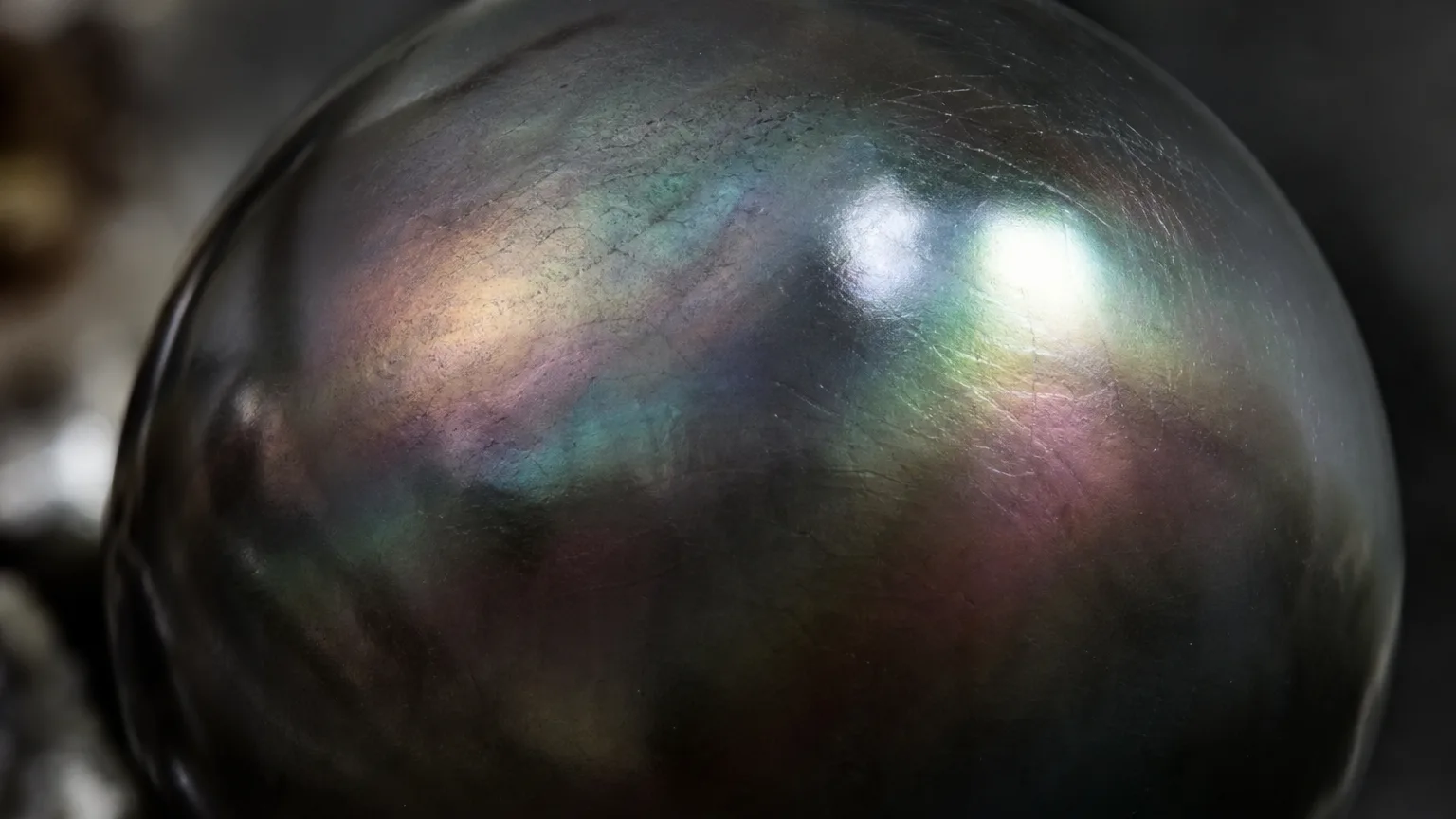
A black pearl isn’t a mineral — it’s an organic gem formed inside a living oyster. The black-lipped oyster (Pinctada margaritifera) secretes layer upon layer of nacre — alternating plates of aragonite (a form of calcium carbonate, CaCO₃) and a protein called conchiolin — around an irritant, and over years that builds the pearl. The dark grey, silver, green, blue, and purple “black” tones are natural pigment, not dye. Pearls are soft — about 2.5–4.5 on the Mohs scale — with a specific gravity around 2.6–2.7 and that signature pearly, iridescent shine (the “orient”) that comes from light bouncing through the nacre layers. Genuine Tahitian black pearls come from French Polynesia. None of this is mystical — it’s biology and optics, and the softness is exactly why pearls need careful care.
Traditional Meaning
Pearls carry a vast, ancient tradition as symbols of purity, wisdom, wealth, and the moon — treasured across ancient China, India, Rome, and the Islamic world. The black pearl is a modern chapter, carrying that lineage into a darker key. In modern crystal practice it’s tied to the throat, third eye, and crown centers and described as a stone of wisdom, mystery, protection, and quiet inner strength — many believe it helps you feel calm, self-possessed, and quietly powerful. The dark, iridescent look naturally reads as sophistication and depth. These associations draw on pearl’s millennia of reverence and modern practice.
Mindfulness & Psychology
From a psychological angle, a black pearl works as a small, luminous anchor — a cool, smooth gem to touch or notice when you want to feel calm and quietly confident. The act of choosing and wearing it can support intention-setting: you decide it stands for “stay calm” or “quiet strength,” and the sight of it draws you back. Dark iridescence reads as sophisticated, calm, and inward in color psychology, and the simple ritual of noticing the pearl creates a brief pause to reset. These effects come from tradition and personal practice, not clinical research. Crystals complement — but never replace — professional care.
Black Pearl Benefits
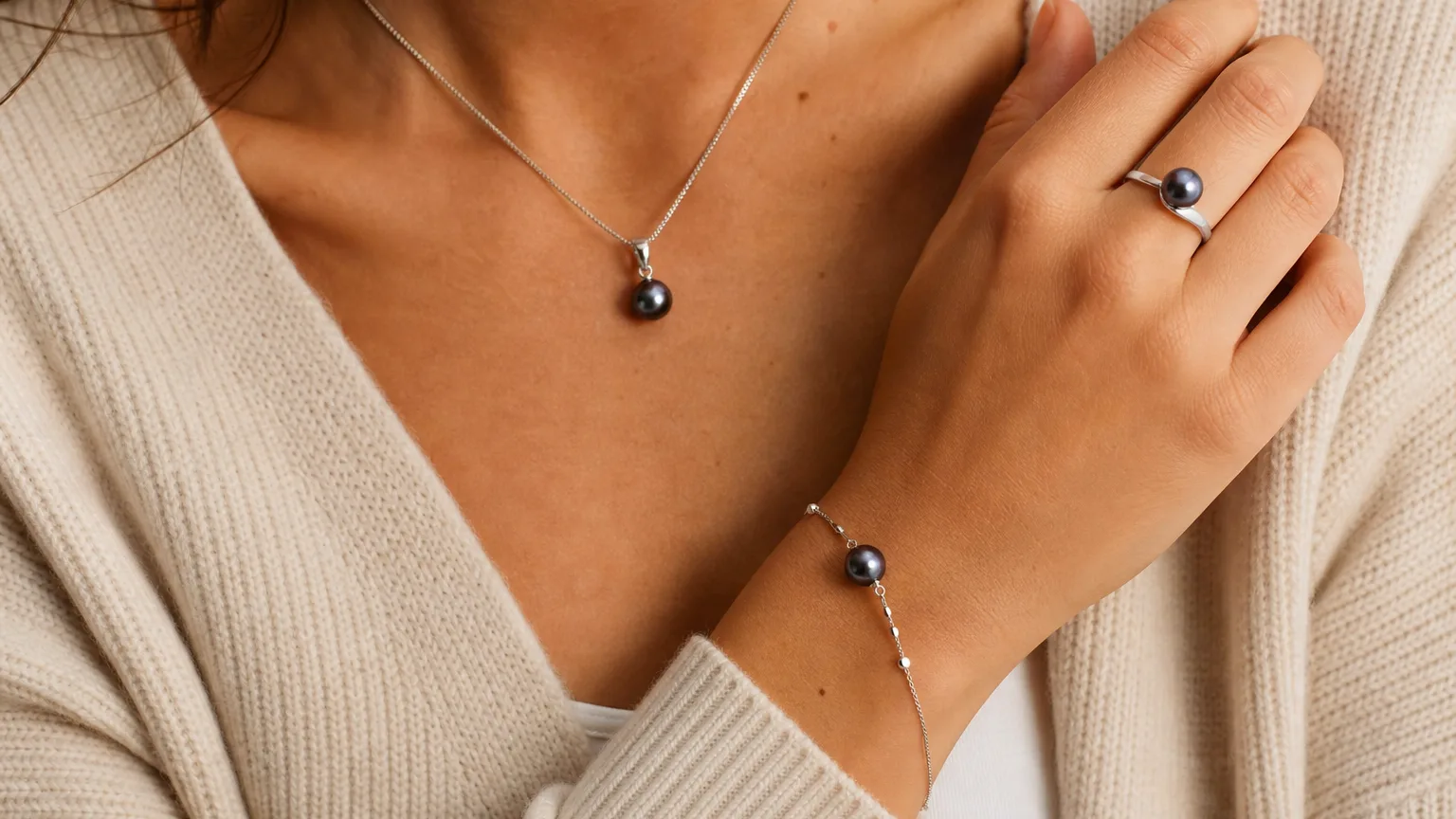
People who work with black pearls usually describe them in terms of feeling calmer, wiser, and more self-possessed, not dramatic changes. The pearl tends to show up when quiet strength matters — a touch of it before a tense moment, the glance at it when you want composure, the feel of it when emotions run high. A few benefits people mention most:
Quiet confidence
Wearing a black pearl gives a self-conscious, rattled mind a small, elegant focus point, which makes it easier to feel composed and quietly sure of yourself.
Calm under pressure
Many wear it for events or hard conversations as a cue to stay calm and steady instead of being thrown off by nerves.
A sense of wisdom
Carried as a reminder of pearl’s long association with wisdom, it works as a cue to pause, think, and respond from a calmer, more considered place.
Quiet elegance
Beyond meaning, the simple act of wearing something beautiful and cared-for can lift your mood and sense of self-respect.
The pattern underneath is the same: the pearl isn’t doing the work for you, but it gives your day a small structure that makes calm and composure more likely. If you’re exploring stones for specific needs, see our guides to 不安に効くクリスタル and crystals for confidence.
Black Pearl Chakra, Zodiac, and Element Associations
In traditional systems, black pearl is most often linked to the throat, third eye, and crown centers — areas tied to calm expression, insight, and quiet wisdom. It’s commonly paired with Cancer and Pisces (both water signs), and its element is almost always given as Water. For related stones, see throat chakra crystals.
These are correspondences built up across pearl’s long tradition and modern practice, not fixed rules. If your own sense of a piece points somewhere else, that’s completely fine. Many people work with stones intuitively, following what feels right rather than a chart.
How to Use Black Pearl
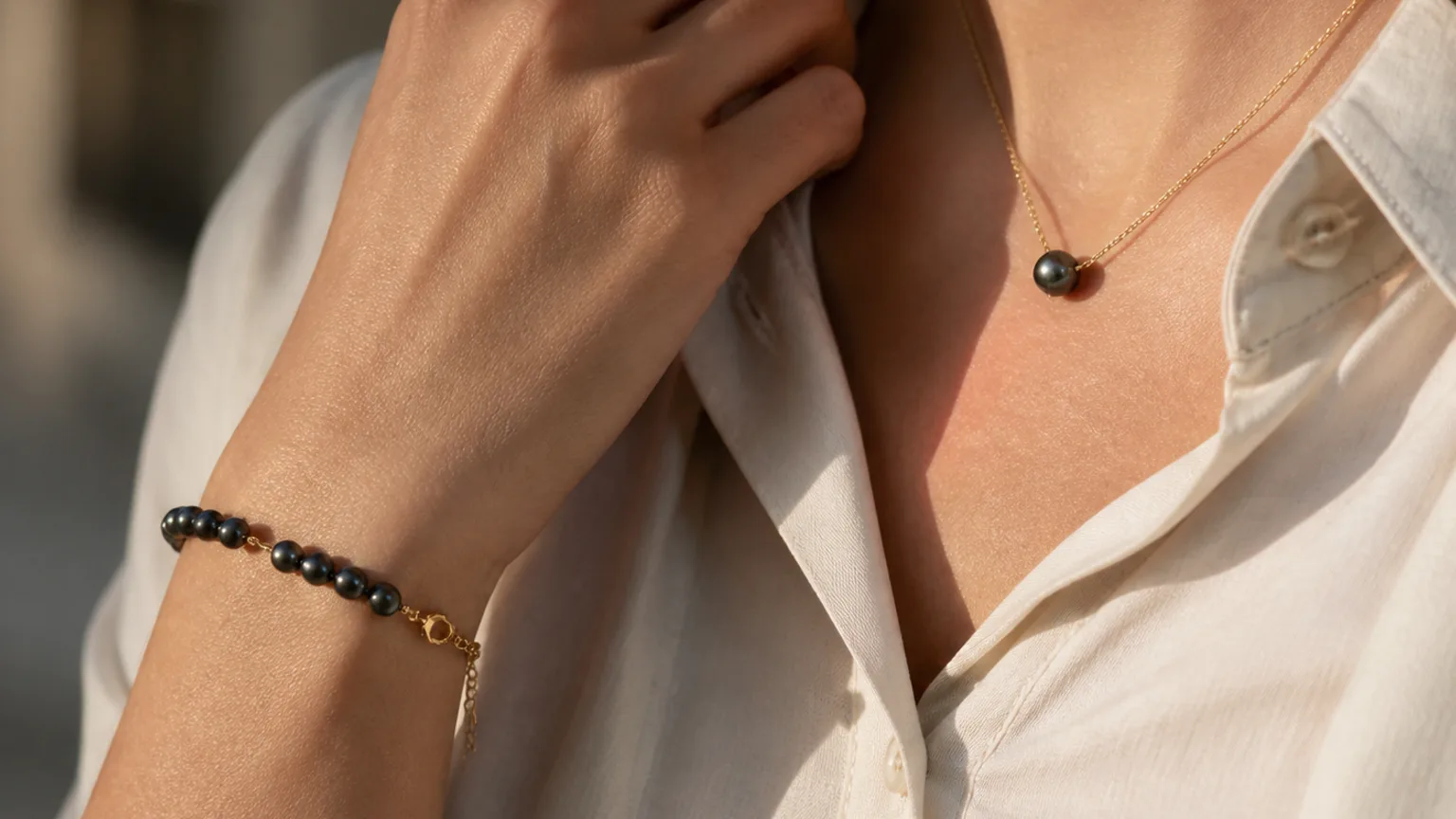
Black pearl is worn more than “worked” — and the key is consistency and care. A piece you actually wear and notice each day does far more than one that sits in a drawer.
Wear it. A strand, pendant, earrings, or bracelet keeps the pearl with you. Pair it with a simple intention each morning — “stay calm,” “quiet strength.”
Touch it mindfully. A small touch of a smooth pearl can be a focus point during a tense moment — a cue to breathe and steady yourself.
Meditate with it. Hold a single pearl in your palm while you sit. Its cool, smooth feel gives your attention somewhere to rest; a few focused minutes count.
Last on, first off. Because pearls are delicate, put them on after makeup and perfume and take them off first at night — a routine that itself becomes a small ritual of care.
Which Black Pearl Form Is Right for You?
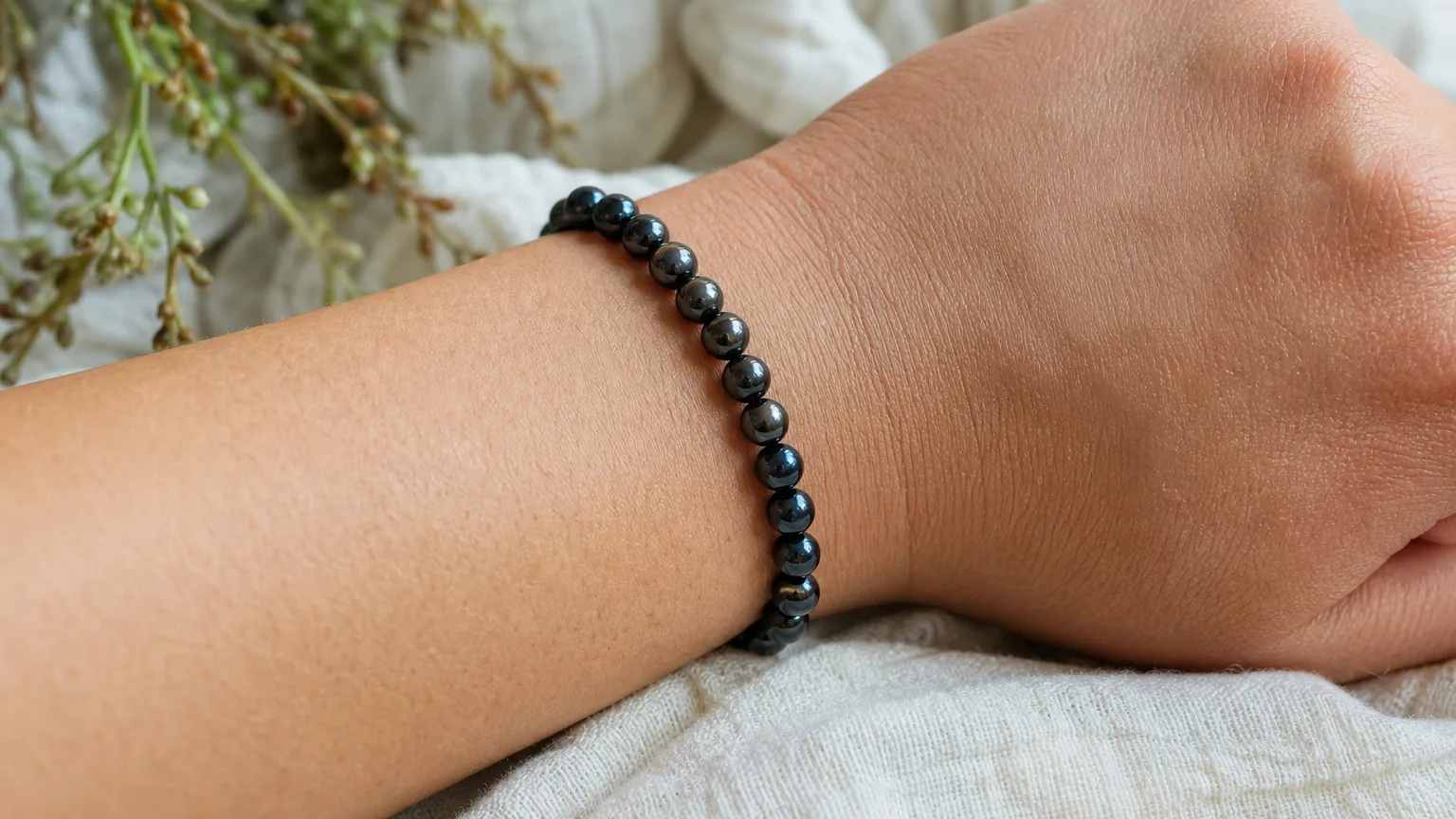
| Form | Best for | Choose it if |
|---|---|---|
| Pendant / single pearl | Daily wearing, meditation | You want one focal pearl worn near the chest or held |
| Earrings | Everyday elegance | You want a subtle, wearable reminder near the face |
| Bracelet | Daily wearing | You want a pearl you can touch through the day |
| Strand necklace | Statement or occasion | You want the full elegance of multiple pearls |
| Ring | Personal meaning | You want a single pearl worn on the hand |
| Loose pearl | Pocket or meditation | You want a smooth pearl to hold during a sit |
How to Tell Real Black Pearl from Fakes
Because black pearls are valuable, the market has imitations — dyed pearls, plastic, glass, and “Tahitian-style” freshwater pearls sold as genuine Tahitian. A few checks help, though for a valuable pearl a certificate is the real answer:
- The tooth test. A classic field test: gently rub a pearl against the edge of your tooth. Real nacre feels slightly gritty; glass and plastic feel perfectly smooth.
- Color and overtone. Genuine Tahitian black pearls aren’t pure black — they range from grey and silver to green, blue, and purple overtones, often with natural variation. Flat, dead, uniform “black” can be dyed.
- Weight and temperature. Real pearls feel cool to the touch and have some weight; plastic feels light and warms fast.
- Surface and shape. Natural pearls often have minor surface blemishes and aren’t perfectly round. Flawless, perfectly spherical “pearls” at low prices are suspect.
- Certification. For a valuable black pearl, ask for a certificate of origin (French Polynesia strictly regulates and certifies Tahitian pearls).
A note on “Tahitian.” By regulation, only pearls from French Polynesia’s black-lipped oyster are “Tahitian.” Dyed freshwater or akoya pearls sold as “black Tahitian” are common look-alikes — check the seller and, for valuable pieces, the certificate.
How to Cleanse and Charge Black Pearl
Pearls are delicate — among the softest and most care-sensitive gems — so “cleansing” and care overlap. Gentle, dry methods are the rule:
- Soft cloth. The main care is wiping your pearl with a soft, dry cloth after each wear to remove oils and residues. A slightly damp cloth is OK now and then, then dry.
- Moonlight. Leaving a pearl out under a full moon is a gentle, safe “cleansing” method that fits pearl’s lunar tradition.
- Sound. A singing bowl or bell nearby. At minimum, it’s a mindful pause.
- Resting in soft cloth. Store pearls separately in a soft pouch or cloth, away from harder gems that can scratch them.
Things to avoid: water, soaking, salt water, acids, perfume, hairspray, makeup, sweat, heat, and prolonged sunlight — pearls are calcium carbonate and protein, so acids, chemicals, and moisture can dull, discolor, or dissolve the surface over time. That’s why the rule is “last on, first off.” Never use ultrasonic or steam cleaners on pearls. For the full routine, see our guide to cleansing crystals.
Best Crystals to Pair With Black Pearl
Pairing is about layering intentions — and with pearls, about choosing stones that won’t scratch their soft surface. A few combinations that work well with black pearl’s calm, mysterious energy:
- Black Pearl + アメジスト — calm meets calm. A soothing pairing for composure, wisdom, and a steadier mind.
- Black Pearl + Labradorite — two dark, iridescent stones layered for mystery, intuition, and quiet depth.
- Black Pearl + ローズクォーツ — quiet strength softened with warmth; a gentle, feminine pairing.
The logic of pairing is about complementary intentions, not strict rules — and keep harder stones from scratching the soft pearl in storage. Pick combinations that match what you’re actually working on.
Who Should Use Black Pearl?
Black pearl suits people who want a quiet, composed, quietly powerful presence — anyone who wants to feel calmer, wiser, and more self-possessed, and who appreciates a dark, elegant gem that carries centuries of meaning (and needs gentle care).
A few honest expectations: black pearl isn’t a treatment for anxiety, low self-esteem, or any condition — if you’re dealing with something persistent, a healthcare professional is the right call, and the pearl can be a comfort alongside that. It won’t “do” anything on its own; its value comes from the intention and routine you build around it. If you go in expecting a gem to fix things for you, you’ll be let down. If you go in expecting a quiet support for your own practice, it tends to fit well.
FAQ About Black Pearl Meaning
Are black pearls really black?
Rarely pure black. Genuine Tahitian black pearls range from grey and silver to dark green, blue, and purple overtones — natural pigment, not dye. Pure flat black is often dyed.
Where do black pearls come from?
Genuine Tahitian black pearls come from the black-lipped oyster farmed in French Polynesia. By regulation, only those are “Tahitian.”
Are black pearls a mineral?
No — pearls are organic gems, formed by a living oyster from layers of nacre (aragonite calcium carbonate + a protein). That’s why they’re soft and need gentle care.
Can black pearls go in water?
Best avoided for soaking. A brief wipe with a damp cloth is fine, but water, salt water, acids, perfume, and sweat can dull or damage the soft surface over time.
How can I tell if my black pearl is real?
Try the tooth test (real nacre feels slightly gritty, glass/plastic smooth), check for natural color variation and overtone, and for valuable pieces ask for a Tahitian certificate of origin.
How do I care for black pearls?
Wipe with a soft cloth after each wear, store separately in soft cloth, and follow “last on, first off” — put them on after makeup and perfume, take them off first. Avoid water, chemicals, heat, and ultrasonic cleaners.
What chakra is black pearl linked to?
Mostly the throat, third eye, and crown centers — areas tied to calm expression, insight, and quiet wisdom.
Final Thoughts on Black Pearl
Black pearl has earned its long place as a symbol of wisdom and quiet strength — and it earns it again for each person who wears one and gives it a meaning. If you’re curious, the simplest start is one pearl, one intention, and a small daily moment to notice it. You don’t need the largest or rarest; you need a pearl you’ll actually wear and care for. Let the routine do the work, and let the black pearl be the quiet reminder that brings you back to calm and composure.
From there, a black pearl tends to open a door — to a calmer presence, a wiser response, or simply the quiet pleasure of carrying something beautiful and meaningful. For more, explore the Crystal Guide or browse black pearl jewelry.