
Is The Hierophant a Yes or No Card for Love?


Is The Hierophant a Yes or No Card for Love?
The Hierophant arrives in a love reading with the energy of the conventional — the robes, the institution, the sense of a relationship moving along established tracks. It can read as formal next to the warmer love cards, even restrictive. But The Hierophant in tarot is the archetype of committed tradition, the structured steps that have carried couples into formal bonds for generations. So is The Hierophant a yes or no card for love? The honest answer is: a conditional, and one that splits cleanly along whether the convention fits — yes for formalizing a bond where the traditional step genuinely matches the couple, no if you are following a script that does not reflect your real values.
Quick Answer
The Hierophant is a conditional for love. It leans yes for formalizing a bond through conventional steps — commitment, marriage, meeting family, the structured path that gives a relationship recognized form. The card’s archetype is the teacher of received tradition, and its counsel in love is the same: the conventional steps have carried couples into lasting bonds for a reason. But the yes is conditional, because his shadow is dogma — the convention followed empty, the script obeyed because it is the script. The same card blesses the traditional step that genuinely fits and withholds its weight from the one followed because it is expected.
Is The Hierophant Generally a Yes or No Card?
Across all questions, The Hierophant leans conditional — and the condition is almost always the same: the convention applies where it genuinely fits, and not where it is followed empty. Its archetype is the teacher: the keeper of received wisdom, the guide of structured paths, the figure who carries the lineage of how things have been done well. Upright, this energy is genuinely favorable for commitment within a proven structure, learning from those before, honoring the form that has held. Where the question is whether to follow a tested path, The Hierophant tends to lean yes.
But The Hierophant is never an unqualified yes, and that is the whole point of the card. Its wisdom lives in the distinction between convention that fits 그리고 dogma followed empty. The upright Hierophant honors the traditional step that genuinely serves — the structure that has held for good reason, the path that matches the people walking it. His shadow is dogma — the convention followed because it is the convention, the script obeyed without checking whether it reflects the couple, the form kept empty of meaning. Same face of tradition, entirely different relationship to what it carries underneath.
So when readers ask whether The Hierophant is generally a yes or no, the truthful answer is: yes, where the convention genuinely fits; no, where it is followed as an empty script. The card itself does not manufacture tradition — it points to the structures that have held and asks whether they hold for the people in front of it. The Hierophant blesses the traditional step that matches and withholds his full weight from the script obeyed because it is expected.
This is why the card leans so specifically conditional across questions. For love, the verdict follows whether the conventional step fits the couple. For career, the same archetype blesses the proven path that still serves. For decisions, his counsel is to consult received wisdom where it genuinely applies. The Hierophant’s verdict is always about convention that fits — and it declines to bless the dogma worn as tradition.
The Hierophant for Love: Yes or No?
In love specifically, The Hierophant leans conditional, and the condition follows whether the convention fits the couple. The card’s archetype is the keeper of conventional relationship steps, and its whole concern in a love reading is whether the structured path being walked genuinely matches the two people on it. If you are asking about formalizing a bond — commitment, marriage, meeting family, the recognized steps that give a relationship public form — The Hierophant may be telling you that the verdict follows whether the tradition reflects your real values.
But love is also where The Hierophant’s energy is most easily followed empty, because convention and dogma wear similar surfaces here. The same structured path that has carried couples into lasting bonds can also become the script obeyed without checking — the marriage pursued because it is the next step, the commitment made because it is expected, the form kept while the meaning has drained out of it. The Hierophant’s gift is the convention that fits; his shadow in love is the dogma followed empty, the script that no longer reflects the couple walking it.
So the verdict splits along a clear line:
- The Hierophant leans yes for formalizing a bond where the traditional step genuinely fits. If the conventional path — commitment, marriage, meeting family, the recognized form — matches what you and your partner actually want, The Hierophant blesses taking it. The yes is for the tradition that serves the couple, not for the tradition followed because it is the tradition.
- The Hierophant leans no if you are following a script that does not reflect your real values. If the conventional step is being pursued because it is expected — if the marriage is the next step on a script neither of you has checked, if the form is being kept while the meaning has drained — The Hierophant refuses to bless it. The no is not a rejection of tradition; it is the card pointing out that the convention has become dogma, and the step followed empty will not hold.
There is a subtler reading. The Hierophant sometimes appears for a love question when the real work is not about the conventional step itself but about whether it has been chosen — when the card is asking whether the tradition reflects the couple’s real values or is being obeyed as a script, whether the form is being honored or just performed. In that case the yes is for the honest reckoning with the convention, which prepares the ground for the step to be taken meaningfully rather than empty.
The card does not promise that the conventional step will guarantee a lasting bond, or that tradition ensures a particular outcome. What it points to is whether the convention fits or is followed empty — whether the script reflects the couple, or whether the form has become dogma. Love readings want a clear yes or no; The Hierophant offers something more honest: a yes for the tradition that fits, with a quiet question about whether the convention actually reflects your real values.
What Would Shift It to Yes or No?
Because The Hierophant is conditional, the question is not whether it will become a yes or a no — it is which one it already is, depending on whether the convention fits the couple.
The yes applies when the traditional step genuinely matches what you and your partner want. This is not the same as obeying every convention — real couples often adapt tradition to fit them, and The Hierophant does not demand rigid conformity before he blesses a step that fits. But there is a difference between a convention chosen because it reflects the couple (which the upright Hierophant blesses) and a script followed because it is expected (which his shadow serves). If the tradition fits, the yes strengthens.
The no applies when you are following a script that does not reflect your real values. If the conventional step is being pursued because it is the next step on a path neither of you has checked — if the form is being kept while the meaning has drained, if “this is what you do” has replaced “this is what we want” — The Hierophant’s no leans toward you with full weight. The card is not refusing you tradition; it is pointing out that the convention has become dogma, and the step followed empty will not hold.
Rose quartz as a reflection support. Some readers like to hold or wear rose quartz when working with The Hierophant in a love reading — not to change the verdict, but to support the heart-honest reading the card asks for. Rose quartz is traditionally associated with warmth and with the open heart that can tell the difference between a tradition that fits and a script that does not, and used as a focusing object it can help you sit with the question does this conventional step reflect what we actually want, or are we following it because it is expected? The crystal does not turn a no into a yes. It supports the honest inner reading that lets you tell whether the convention fits or is followed empty.
The shift, in other words, is not in the card. It is in whether the tradition reflects the couple — which is exactly what The Hierophant has been asking of you all along.
Free Will, FAQ, and a Note on Outcomes
Cards reflect current energy and patterns, not fixed outcomes — you always have free will to shape what happens next. For The Hierophant, the card may point to a conditional verdict that follows whether the convention fits, but whether you choose the traditional step because it reflects your real values or follow it because it is expected — and how honestly you make that choice — is your choice. No card decides for you; it clarifies the moment you are standing in.
자주 묻는 질문
Is The Hierophant a yes or no card when reversed?
Reversed, The Hierophant tends toward convention followed as dogma rather than a flat no. The reversal often points to a script obeyed without checking — the form kept empty of meaning, the tradition followed because it is the tradition. Reversed does not mean cursed or doomed; it means the fitting convention the upright card blesses has tipped into empty dogma, and the card is inviting you to look at whether the step reflects the couple or just the expectation.
Does The Hierophant mean someone wants marriage?
It leans toward yes — the card suggests conventional commitment and structured form are present in the current energy. But it cannot read another person’s inner state with certainty; it describes the relational weather, not a mind. If you are asking whether someone wants to formalize the bond, The Hierophant is encouraging, but the confirmation lives in whether the convention actually reflects both partners’ real values, not in any single card.
Can The Hierophant be a yes for a non-traditional relationship?
Yes, when the structure being chosen is one that genuinely fits the couple, even if it is not the conventional form — because the tradition the card blesses is the one that reflects real values, not dogma. The Hierophant does not oppose adaptation; he opposes the script followed empty. If the chosen form fits honestly, the yes applies even outside the conventional track.
이 가이드에 소개된 크리스탈 쇼핑하기
현재 컬렉션에 포함된 크리스탈 주얼리와 보석을 둘러보세요.


옴 마니 파드메 훔 구리 반지


옴 나마 시바이 만트라 구리 팔찌
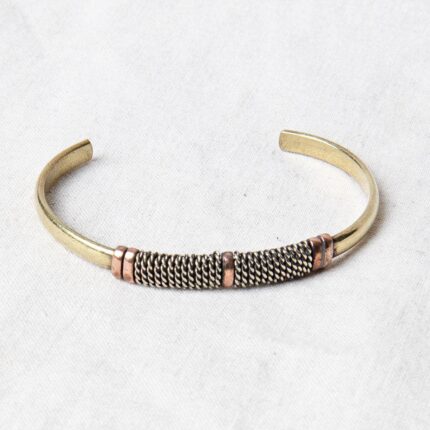

티베트 수제 구리 팔찌
이 가이드에 소개된 크리스탈 쇼핑하기
현재 컬렉션에 포함된 크리스탈 주얼리와 보석을 둘러보세요.
옴 마니 파드메 훔 구리 반지
옴 나마 시바이 만트라 구리 팔찌

