
Azurite Meaning: Healing Properties & Uses
Azurite is a deep blue copper carbonate mineral — for centuries a prized blue pigment — tied in modern practice to intuition, insight, and inner vision. Hold it, set it where you reflect; the pages ahead cover what azurite means, what it’s made of, and how people work with it. Crystal meanings reflect tradition and personal practice, not medical advice.
What Is Azurite Meaning?
At its simplest, azurite means intuition and inner vision. It’s a vividly deep blue copper mineral whose color reads as the shade of clear seeing, and which modern practice ties to insight, deep intuition, and a steadier sense of inner knowing.
For many people that’s the appeal: a stone of such deep blue it seems to pull the eye inward. You don’t need any belief about energy to use it — the value often comes from choosing the piece, giving it a job (“help me see clearly and trust my insight”), and letting its deep color pull you toward a quieter, more perceptive footing. In that sense azurite is a cue for inner vision more than anything else.
Azurite Meaning and Symbolism

The name azurite comes from azure, the deep blue of a clear sky, which itself traces back to the Persian lazhward — the same root that gives us lapis lazuli. Long before it was a crystal-shop stone, azurite was a pigment: ground into the deep blues of medieval and Renaissance paintings, often for the robes of the Virgin Mary.
What’s honest to say is that azurite’s reputation as a spiritual stone is mostly modern. People reach for it as a stone of intuition, insight, and inner vision — a “third eye” stone used to support clear perception and a quieter, deeper sense of knowing. That “psychic” framing is best read as inner insight and intuition, not a guarantee of supernatural ability. How much meaning it holds for you is honestly up to you. To explore more stones, browse the full Kristalgids.
Azurite Properties
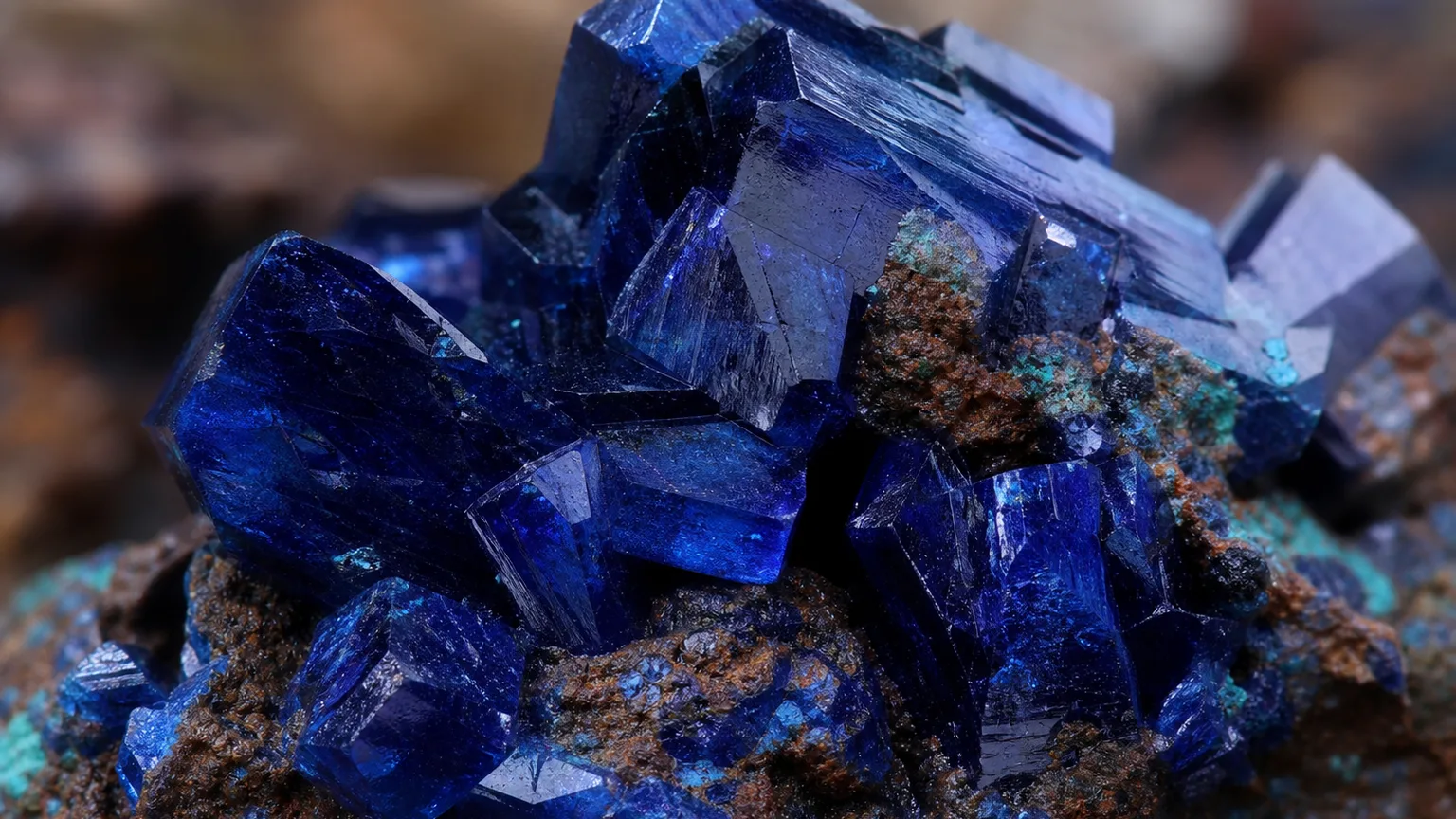
De wetenschap
Azurite is a copper carbonate hydroxide, Cu₃(CO₃)₂(OH)₂. It forms in the monoclinic system, often as deep blue prismatic crystals or earthy crusts, and it’s soft at about Mohs 3.5–4, so a copper coin can mark it. The vivid blue comes straight from the copper in the structure. Two things make azurite distinctive. First, it’s dense — a specific gravity near 3.8, heavier than it looks, because of that copper. Second, it’s chemically close to malachite (the green copper carbonate), and over time, in light and moisture, azurite can slowly convert into malachite — blue turning green — which collectors sometimes call “azurite disease.” That’s exactly why azurite asks to be kept dry and out of strong light. It’s translucent to opaque, with a vitreous luster, and reacts to acid (a drop fizzes). Fine specimens come from France, the United States (Bisbee, Arizona), Namibia, Morocco, Australia, and China.
Traditionele betekenis
Modern practice ties azurite to intuition, insight, and inner vision. It’s linked to the third eye and crown centers, and many believe it supports clear perception, deeper intuition, and a quieter inner knowing. Because the stone’s spiritual reputation is largely modern, this is contemporary crystal tradition rather than ancient lore. These associations come from spiritual tradition and personal practice rather than clinical study.
Mindfulness & psychologie
From a psychological angle, azurite’s gift is its deep blue as a perception cue. Deep blue reads in color psychology as calm, depth, and clear seeing, and choosing the stone for an insight intention (“help me see this clearly”) turns it into a quiet reminder to look inward and trust your perception. The vivid color also gives the eye one deep, settled thing to rest on during reflection. These effects come from tradition and personal practice, not clinical research. Crystals complement — but never replace — professional care.
Azurite Benefits
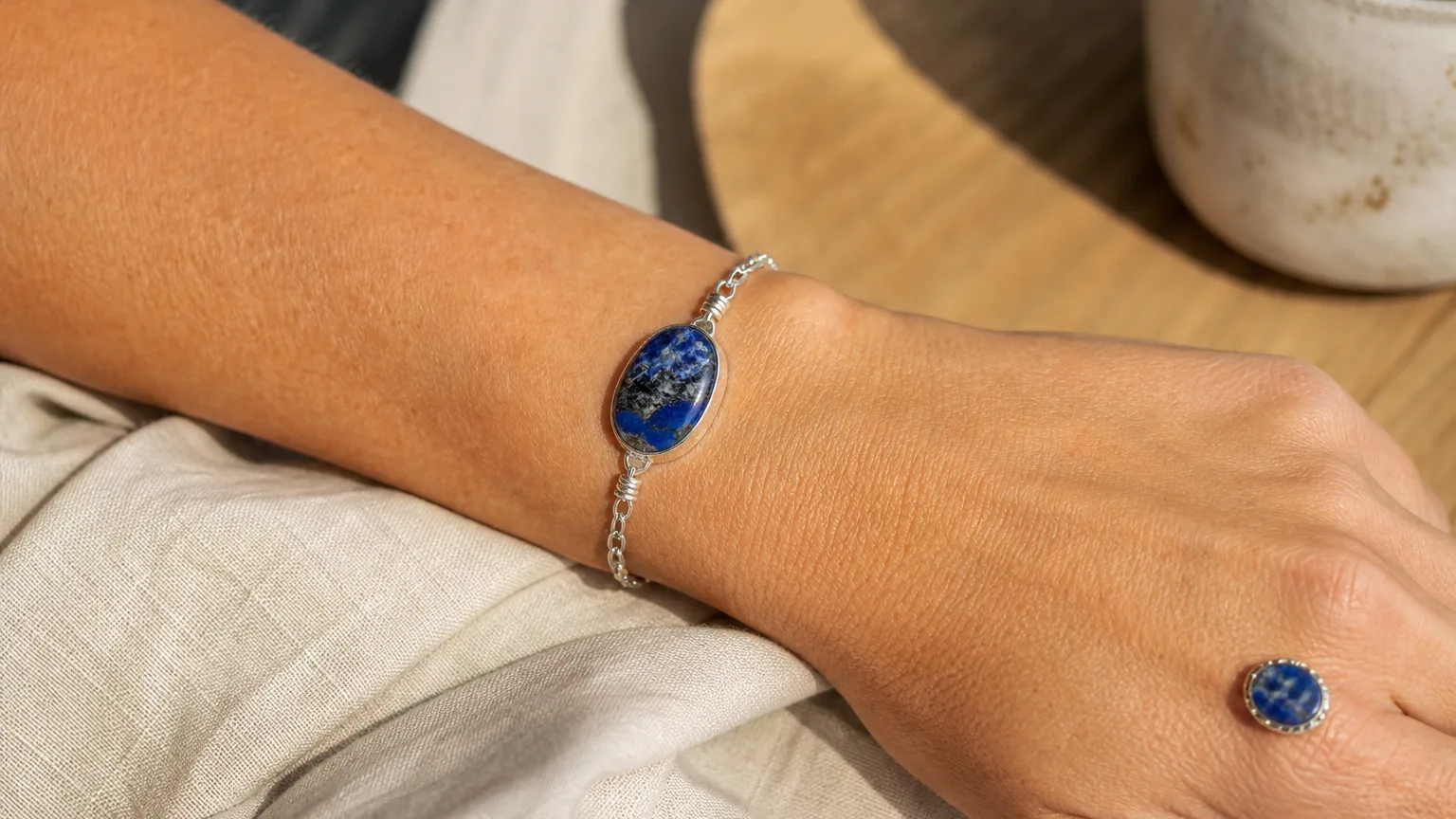
People who work with azurite usually describe it in terms of clearer perception and a quieter inner knowing, not dramatic shifts. It shows up as a steadier sense of insight, a deeper look inward, a clearer read on a situation. A few of the benefits people mention most:
Deeper intuition
Holding azurite when you want to see clearly is a cue toward inner perception — its deep blue is a reminder to look inward and trust insight.
Clearer insight
Chosen for a hard question, its vivid blue becomes a cue to weigh things with clear perception rather than surface reaction.
A quieter inner vision
Used in meditation, its deep, steady color gives the mind one calm thing to rest on — a cue for quieter, deeper reflection.
Focus and perception
Kept on a desk, its vivid blue is a low-key cue to stay perceptive and clear-headed through demanding work.
The pattern underneath all of it is the same: azurite isn’t sharpening your perception by magic — it gives your day a cue toward intuition and insight. If you’re exploring stones for specific needs, see our guide to crystals for anxiety.
Azurite Chakra, Zodiac, and Element Associations
In traditional systems, azurite is most often linked to the third eye en crown centers — insight, inner vision, and a sense of connection. Astrologers sometimes pair it with Sagittarius en Aquarius. Het element ervan wordt meestal weergegeven als Water (for its deep blue) or Air. Zie voor verwante stenen more crystals in the guide.
These are correspondences built up through spiritual tradition, not rules carved in stone. If your own sense of azurite points to a different center or element, that’s completely fine — many people work with stones by feel rather than by a textbook chart, and there’s a long history of practitioners doing exactly that.
How to Use Azurite
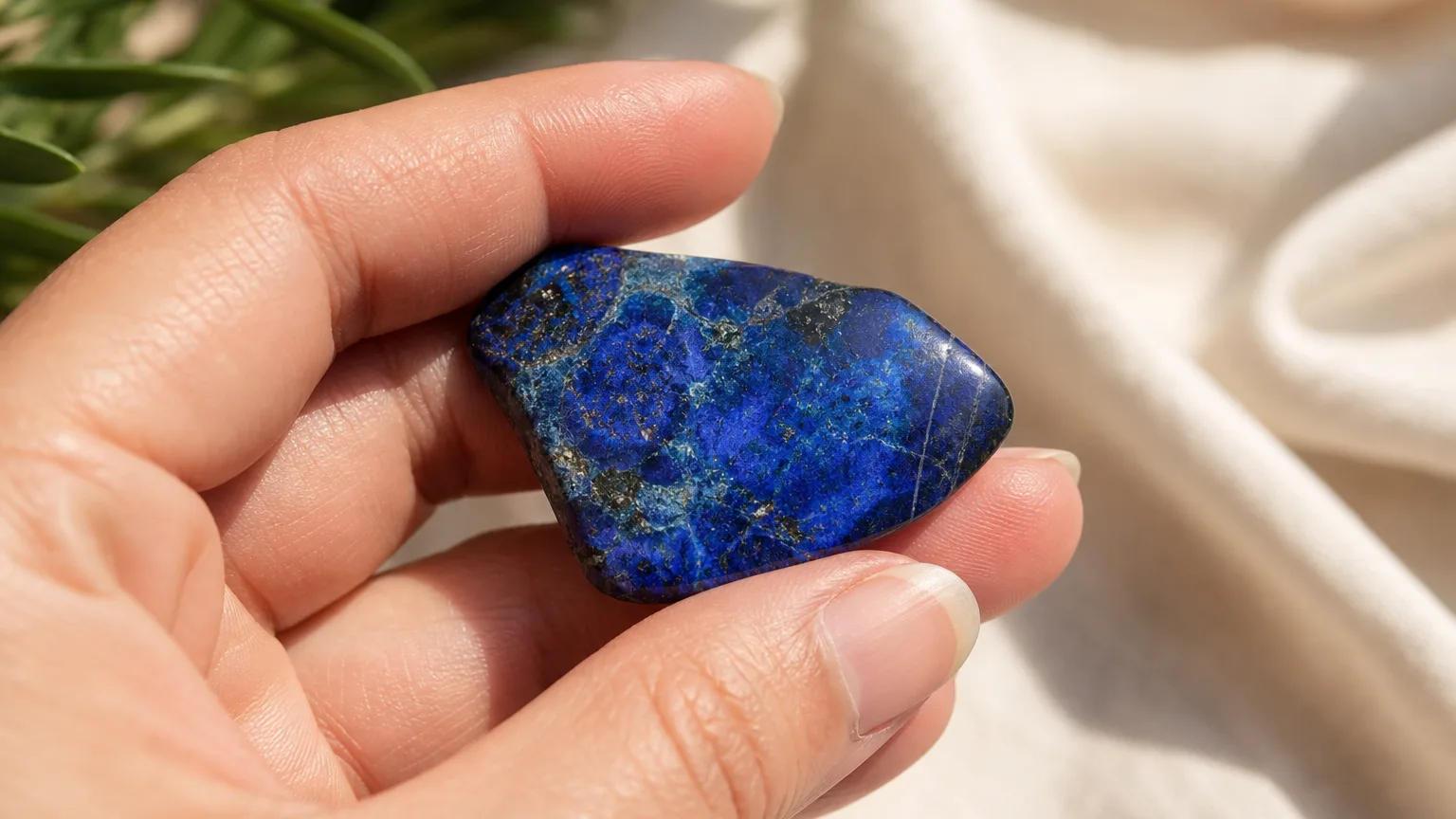
Azurite is soft (Mohs 3.5–4), a carbonate, and light-sensitive, so it asks for careful handling — keep it dry, out of strong light, and away from acids and harsh chemicals. As always, the key is consistency.
Hold it for reflection. A tumbled piece or crystal in the hand is a deep-blue cue for quiet, perceptive reflection during a pause.
Mediteer ermee. Rest a piece near your brow while you sit, and let its deep color give your mind one settled thing to rest on.
Place it out of bright light. On a shelf away from a sunny window, its vivid blue is both décor and a cue for insight — just not in direct sun.
Carry a small piece. A tumbled stone in a soft pouch is a discreet perception cue — keep it dry and away from keys or coins that could scratch it.
Which Azurite Form Is Right for You?

| Formulier | Het meest geschikt voor | Kies deze optie als |
|---|---|---|
| Crystal on matrix | Display, intention work | You want the classic deep blue prismatic crystals on host rock |
| Getrommelde steen | Pocket, meditation | You want a smooth, deep blue piece to hold or carry |
| Palm stone | Reflection, holding | You want a larger, rounded piece to close your hand around |
| Azurite-malachite cabochon | Opvallende sieraden | You love the blue-and-green pairing of the two copper minerals |
| Sphere | Desk, room display | You want a deep blue centerpiece for a calm, shaded space |
| Raw specimen | Altar, display | You like the natural, earthy blue crusts and crystal clusters |
How to Tell Real Azurite from Fakes
Azurite is prized for its color, and a few checks help you know what you have:
- Weight. Real azurite is dense — specific gravity near 3.8 — because of its copper. It feels heavier than a similar-sized quartz or glass piece.
- Softness. At Mohs 3.5–4, a copper coin marks it. Glass and plastic imitations differ in feel and hardness.
- Azurite vs. lapis. Both are deep blue, but different minerals. Lapis lazuli is harder (Mohs 5–5.5) and often shows gold flecks of pyrite; azurite is softer, denser, and a more vivid, pure blue.
- The malachite pairing. Much natural azurite is found with green malachite, since the two copper minerals form together and azurite converts to malachite over time. Blue-and-green pieces are often genuine.
- Beware dyed material. Vivid blue howlite or dyed quartz can pass for azurite. Look for natural variation, weight, and (carefully) the softness that real azurite shows.
How to Cleanse and Charge Azurite
In crystal practice, “cleansing” clears accumulated energy and “charging” refreshes the stone. Azurite is soft, a carbonate, and light-sensitive, so gentle, no-contact, dark-ish methods suit it best.
- Maanlicht. A night under the moon is the gentlest method — no handling and no bright sun, ideal for light-sensitive azurite.
- Rook of geluid. Passing it through sage or palo santo smoke, or using a singing bowl nearby, is a no-contact reset many prefer.
- Brief water only. A quick rinse under cool water is fine, then dry it. Avoid long soaks, and keep it away from acids, salt, and harsh chemicals (they fizz on and dissolve the carbonate).
- Other crystals. Resting it on a selenite plate overnight is a popular gentle method.
Avoid: prolonged bright light and sun (azurite can slowly turn green as it converts to malachite), damp storage, acids and harsh chemicals, and rough handling. Store azurite on its own in a soft pouch, dry and shaded. For the full routine, see our handleiding voor het reinigen van kristallen.
Best Crystals to Pair With Azurite
Pairing is about layering intentions — stones whose qualities complement rather than compete. A few combinations that work well with azurite’s deep, insightful energy:
- Azurite + Amethist — two third-eye stones; a deep pairing for insight and calm clarity.
- Azurite + Labradoriet — insight meets intuition; a pairing many reach for inner work and reflection.
- Azurite + Seleniet — insight meets clarity; a light pairing for clear perception.
- Azurite + Lapis Lazuli — two deep blue stones; a rich pairing for wisdom and inner vision.
The logic here is about complementary intentions, not strict rules. Pick what matches what you’re working on, and trust your own sense of balance.
Who Should Use Azurite?
Azurite suits people who want a stone for intuition, insight, and inner vision — anyone doing reflective or inner work, people who want to trust their perception more, or those drawn to its vivid deep blue. It’s a quiet, perceptive stone that reads as deep rather than bright.
A few honest expectations. Azurite isn’t a treatment for anxiety, confusion, or any condition — for anything persistent, a healthcare professional is the right call, and the stone can be a small comfort alongside that. Its “psychic” framing is about inner insight and intuition, not a guarantee of supernatural ability. And it’s soft, dense, light-sensitive, and acid-sensitive, so it isn’t the best choice for rough daily wear or sunny display; keep it dry and shaded. Its value comes from the intention and routine you build around it.
FAQ About Azurite Meaning
What is azurite?
A deep blue copper carbonate mineral, Cu₃(CO₃)₂(OH)₂, about Mohs 3.5–4. It’s dense (heavy, from copper) and was used for centuries as a prized blue pigment in painting.
Was azurite used as a pigment?
Yes — ground azurite was a valued blue pigment in medieval and Renaissance painting, often used for the robes of the Virgin Mary. (Artists later switched to more stable synthetic blues.)
Can azurite go in water?
Briefly, yes — a quick rinse is fine, then dry it. As a carbonate it reacts to acid, and it’s light- and moisture-sensitive, so keep it dry and away from acids, salt, and harsh chemicals.
Why does azurite need to avoid light?
In light and moisture, azurite can slowly convert to malachite — the green copper carbonate — so blue pieces can turn green over time. Keep it dry and out of strong, direct light.
What chakra is azurite?
Traditionally the third eye and crown centers — insight, inner vision, and a sense of connection (its spiritual tradition is mostly modern).
How is azurite different from lapis lazuli?
Both are deep blue, but different minerals. Lapis is harder (Mohs 5–5.5) and often shows gold pyrite flecks; azurite is softer, denser (heavier), and a more vivid pure blue.
Is azurite psychic or supernatural?
Its modern reputation ties it to “third eye” insight, but that’s best read as inner perception and intuition — a cue to look inward — not a guarantee of supernatural ability.
Final Thoughts on Azurite
Azurite earns its place as a stone of intuition, insight, and inner vision — and it earns it again each time its deep blue steadies a moment of reflection. The simplest start is one piece you’ll actually hold, paired with a small daily moment to notice it. You don’t need the largest crystal or the rarest cluster; you need a deep blue stone you’ll actually see and use.
From there, azurite tends to offer a clearer inner view — quieter perception, deeper intuition, a habit of looking inward. For more, explore the Kristalgids of blader door azurite pieces.