Tarot Card Meanings: Complete Guide to All 78 Cards
Tarot Card Meanings: Complete Guide to All 78 Cards
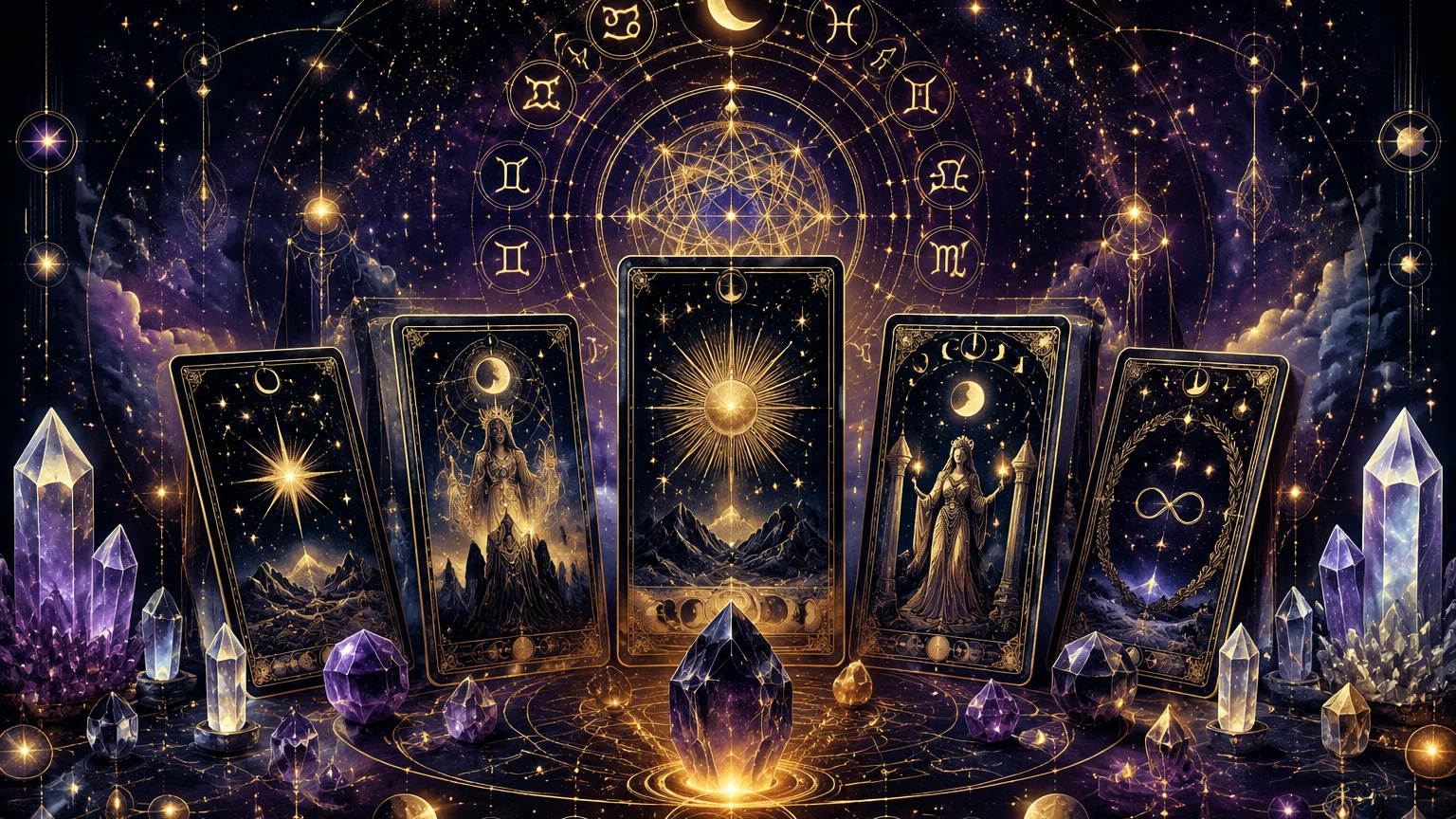
Tarot is a symbolic system of 78 cards: 22 Major Arcana (life’s big themes) and 56 Minor Arcana (daily life). Each card carries upright and reversed meanings.
- Crystals: Amethyst, Clear Quartz
What Is Meditation?
Tarot is a symbolic system of 78 cards: 22 Major Arcana (life’s big themes) and 56 Minor Arcana (daily life). Each card carries upright and reversed meanings.
Tarot Card Meanings Explained
Understanding tarot card meanings requires approaching the deck as a reflective instrument rather than a fixed oracle. The standard seventy-eight cards split into twenty-two Major Arcana, which outline broad psychological and spiritual themes, and fifty-six Minor Arcana, which track routine experiences across four elemental suits. Each card carries an upright orientation that typically highlights accessible strengths, alongside a reversed position that suggests areas needing pause or reevaluation. Rather than dictating outcomes, this system provides a structured vocabulary for observing recurring patterns in your decisions, relationships, and inner dialogue.
How to Practice
- Step 1: Major Arcana (22): Fool through World — life themes and spiritual journey
- Step 2: Minor Arcana (56): 4 suits (Wands/Cups/Swords/Pentacles) × 14 cards
- Step 3: Each card has upright (positive) and reversed (shadow) meanings
Meaning & Benefits
The tarot card meanings operate through layered archetypes that bridge personal introspection with wider cyclic rhythms. The Major Arcana traces stages of initiation, trial, and synthesis, while the Minor Arcana distributes daily concerns among Wands (initiative), Cups (attachment), Swords (analysis), and Pentacles (stewardship). Many readers pair this framework with the Eastern tracking of 七曜—the Seven Luminaries mapping solar and planetary motions—as a parallel observational lens rather than a direct equivalent. Upright cards often encourage forward momentum and open expression, whereas reversed positions highlight friction, delayed timing, or perspectives awaiting integration. This balanced structure supports mindful awareness without enforcing predetermined paths.
Note: Readings reflect present energetic currents, inviting conscious choice rather than guaranteeing specific results.
Key Facts
| Aspect | Detail |
|---|---|
| Practice | overview |
| Reveals | Tarot is a symbolic system of 78 cards: 22 Major Arcana (life’s big themes) and 56 Minor Arcana (daily life). |
| Supporting Crystals | Amethyst, Clear Quartz |
Crystals to Deepen Your Practice
Mineral specimens commonly accompany tarot practice to establish a grounded environment for reflection. Working with carefully selected stones helps practitioners slow their mental pace, stabilize focus, and engage with tarot card meanings from a steadier vantage point. The two specimens highlighted here—Amethyst and Klarer Quarz—offer distinct geological profiles, historical contemplative uses, and modern celestial associations that complement introspective work. Their physical properties, traditional lore, and practical application together create a cohesive setup for mindful study.
- Amethyst —
Amethyst forms as a violet variety of quartz, its color derived from trace iron compounds and slow exposure to natural radiation over millennia. Historically valued for calming the nervous system, it is now often aligned with Saturnian discipline and Venusian harmony in contemporary practice to support measured self-inquiry. When placed near a reading surface, many find that its steady frequency encourages patience with complex cards, while its deeper tones remind practitioners that unresolved emotions deserve careful unpacking rather than quick fixes. This duality mirrors the tarot itself: gentle guidance paired with honest confrontation.
Use: Keep close during card selection or wear as jewelry to maintain emotional equilibrium throughout your session.
} - Klarer Quarz —
Klarer Quarz consists of pure crystalline silica, growing in hexagonal structures as magma cools slowly beneath the earth. Its transparent lattice has earned a longstanding reputation for mental amplification, which modern practitioners often connect to both solar clarity and lunar receptivity. When exploring tarot card meanings, clear quartz is positioned to reduce cognitive noise and sharpen attention to subtle card interactions. The stone’s uncolored nature emphasizes the value of seeing situations without distortion, while its structural resilience underscores that genuine insight usually develops through repeated, deliberate observation.
Use: Arrange along the outer edges of your spread or carry in a pocket to sustain focused attention during reflection.
}
Explore Best Crystals for Meditation, focus, sleep, grounding guides.
Eastern Traditions
Tarot is Western esoteric tradition; Eastern-inspired brand frames as symbolic reflection tool
Häufig gestellte Fragen
What do tarot cards mean?
Do tarot card meanings determine what will happen next? No. The cards function as a symbolic map of current influences, offering space to examine habits, weigh alternatives, and notice blind spots. Reversed orientations do not signal failure; they simply indicate where attention may be required before proceeding. Approaching the deck with curiosity and self-compassion yields the most useful reflections, allowing you to navigate transitions with greater awareness rather than leaning on fixed predictions.
How many tarot cards are there?
Do tarot card meanings determine what will happen next? No. The cards function as a symbolic map of current influences, offering space to examine habits, weigh alternatives, and notice blind spots. Reversed orientations do not signal failure; they simply indicate where attention may be required before proceeding. Approaching the deck with curiosity and self-compassion yields the most useful reflections, allowing you to navigate transitions with greater awareness rather than leaning on fixed predictions.
How do I learn tarot meanings?
Do tarot card meanings determine what will happen next? No. The cards function as a symbolic map of current influences, offering space to examine habits, weigh alternatives, and notice blind spots. Reversed orientations do not signal failure; they simply indicate where attention may be required before proceeding. Approaching the deck with curiosity and self-compassion yields the most useful reflections, allowing you to navigate transitions with greater awareness rather than leaning on fixed predictions.
Related Meditation Guides
- Zodiac Signs
- Sternzeichen-Kompatibilität
- Zodiac Elements
- Zodiac Modalities
- Zodiac Signs Dates
- Major Arcana Meanings
- Best Crystals for Meditation
Meditation and crystal practices are tools for wellbeing and self-reflection, not substitutes for medical or mental health treatment.