
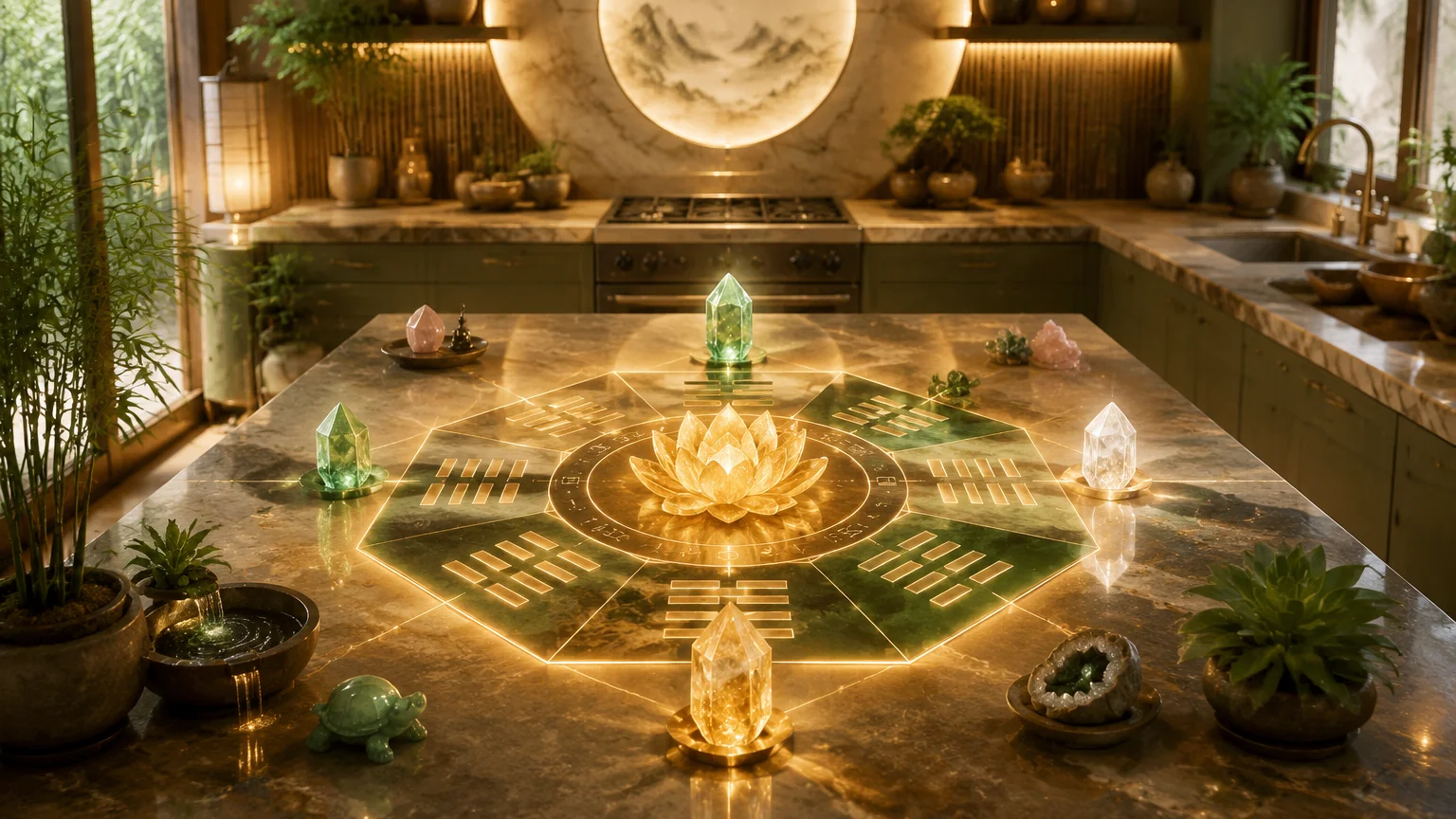
Feng Shui Kitchen: Crystals for Nourishment & Abundance
Feng Shui Kitchen: Crystals for Nourishment & Abundance
The kitchen in feng shui governs nourishment, health, and the wealth that comes from having enough to eat. Based on traditional placement, the stove (the fire mouth) should sit in a commanding position, the refrigerator and sink (Water) should not directly face or clash with the stove (Fire), and the space should stay clean and well-stocked. Stones chosen for the kitchen invite warmth and vitality: Carnelian for appetite and motivation, Citrine for abundance, and Jade for health. Many people find this arrangement supports a mindful relationship with food, not a certain outcome.
- Placement: Balance the Fire (stove) and Water (sink) elements in the kitchen and place warm-toned stones to invite nourishment and abundance.
- Crystals: Carnelian, Citrine, Green Jade
What Is Feng Shui Kitchen?
The kitchen in feng shui governs nourishment, health, and the wealth that comes from having enough to eat. Based on traditional placement, the stove (the fire mouth) should sit in a commanding position, the refrigerator and sink (Water) should not directly face or clash with the stove (Fire), and the space should stay clean and well-stocked.
Feng Shui Kitchen Explained
The feng shui kitchen functions as the heart of daily nourishment, shaping how a household approaches health, resource management, and shared meals. In the BTB tradition, the stove operates as a fire mouth that anchors domestic prosperity, while classical compass schools map its position against the occupant’s Kua number to balance the five elements. Many people find that arranging the space with intention supports a grounded, reflective relationship with food rather than prescribing a specific outcome. This guide outlines practical steps to harmonize your cooking environment and introduces stones that align with traditional principles of vitality and provision.
How to Place & Activate
- Step 1: Check that the stove and sink are not directly facing each other (a Fire-Water clash); add a Wood element such as a plant between them if they are.
- Step 2: Keep the stove clean and use all burners regularly to invite vitality.
- Step 3: Place Carnelian near the stove to invite warmth and appetite.
- Step 4: Set Citrine on a windowsill or shelf to invite abundance.
- Step 5: Add Jade to invite health and harmony in the Family area (middle-left) of the kitchen.
Tip: Place Carnelian beside the stove, Citrine on a sunny windowsill, and Jade on a shelf in the middle-left part of the kitchen.
Meaning & Application
Traditional frameworks view the kitchen as a node for nourishment and stability, where the balance between fire and water dictates the flow of daily energy. In classical Eight Mansions feng shui, the room’s orientation is measured against cardinal directions to determine which placements support your personal element, while the five elements describe how materials and colors interact within the space. Note that in the BTB lineage, the wealth corner uses purple rather than green to align with its specific teachings. To maintain harmony, follow these specific steps: 1. Check that the stove and sink are not directly facing each other (a Fire-Water clash); add a Wood element such as a plant between them if they are. 2. Keep the stove clean and use all burners regularly to invite vitality. 3. Place Carnelian near the stove to invite warmth and appetite. 4. Set Citrine on a windowsill or shelf to invite abundance. 5. Add Jade to invite health and harmony in the Family area (middle-left) of the kitchen. Core placement focuses on balancing the Fire (stove) and Water (sink) elements in the kitchen and placing warm-toned stones to invite nourishment and abundance. For example, place Carnelian beside the stove, Citrine on a sunny windowsill, and Jade on a shelf in the middle-left part of the kitchen.
Key Facts
| Aspect | Detail |
|---|---|
| Practice | placement |
| Principle | The kitchen in feng shui governs nourishment, health, and the wealth that comes from having enough to eat. |
| Supporting Crystals | Carnelian, Citrine, Green Jade |
Crystals to Enhance Your Space
Stones selected for this space draw upon long-standing cultural practices that associate certain minerals with warmth, clarity, and steady growth. Rather than functioning as decorative afterthoughts, these pieces anchor the room’s elemental balance and encourage mindful routines around meal preparation. Based on traditional placement, each stone occupies a precise location to support a reflective approach to provisions and household rhythm.
- Carnelian —
Carnelian is a variety of chalcedony composed primarily of silicon dioxide, with iron oxide impurities creating its characteristic warm orange-red banding. In the BTB tradition, this stone aligns with the Fire element and is positioned near the stove to support a grounded sense of motivation and appetite during daily cooking rituals. Many people find that keeping the stone within sight while preparing meals encourages a steadier, more present approach to nourishment.
- Citrine —
Citrine forms as a quartz variety where trace iron substitutions yield natural yellow to golden crystalline structures that refract light clearly. The five elements describe its earthy warmth as a bridge between fire and metal, making a sunny windowsill or open shelf an ideal spot to invite abundance without overwhelming the room. Setting aside moments to notice the stone while stocking pantry items often helps cultivate a quiet appreciation for consistent provisions.
- Green Jade —
Jade comprises tightly interlocking fibrous minerals, typically nephrite or jadeite, built from calcium magnesium aluminum silicates that lend the stone a resilient, polished surface. In classical Compass school practice, the stone resonates with the Wood element and is placed on a shelf in the middle-left portion of the room to support health and harmony. Cooking with this presence nearby tends to encourage slower, more deliberate meal planning that many people associate with long-term household wellness.
Explore Crystals in Feng Shui, Bagua Map, Wealth Corner guides.
Eastern Traditions
BTB teaching views the stove as a fire mouth and considers it central to the home’s prosperity; the Compass school considers the kitchen’s direction relative to the occupant’s Kua group and the five elements. Based on tradition, these placements support a reflective, mindful relationship with nourishment and abundance, not an assured result.
Frequently Asked Questions
Which crystals belong in a feng shui kitchen?
Carnelian, Citrine, and Jade are the primary stones recommended for this space, each positioned according to traditional bagua mapping and elemental theory. Carnelian rests near the stove to support warmth and appetite, Citrine sits on a bright windowsill to invite abundance, and Jade occupies a shelf in the middle-left Family area to encourage health and harmony.
Why shouldn’t the stove face the sink?
A direct line between the stove and sink creates a Fire-Water clash that traditional frameworks consider disruptive to the room’s elemental balance. Adding a small potted plant or wooden cutting board between the two appliances introduces a Wood element that mediates the interaction, helping many people maintain a calmer, more focused cooking environment.
Where should the stove sit in feng shui?
The stove should occupy a commanding position where you can see the entrance without being directly in line with the doorway. In the BTB tradition, this placement anchors the fire mouth as a focal point for domestic stability, while classical Eight Mansions feng shui adjusts the exact location based on the occupant’s Kua group and cardinal orientation to align with the five elements.
How do I invite abundance through the kitchen?
Inviting abundance centers on maintaining a well-stocked pantry, keeping all burners functional and clean, and positioning Citrine where morning light reaches it regularly. These steps, combined with the mindful practice of reviewing provisions before cooking, help establish a steady rhythm that many people associate with long-term household security.
Related Feng Shui Guides
- Feng Shui
- Feng Shui Bagua Map
- Feng Shui Bracelet
- Feng Shui Wealth Corner
- Five Elements in Feng Shui
- Kua Number
- Feng Shui for Protection
- Crystals for Wealth
- Crystals in Feng Shui
- Kua Number Calculator
- Bagua Map Tool
Feng Shui and crystal placement are traditional practices for creating supportive, intentional spaces — tools for reflection and wellbeing, not substitutes for professional advice or guarantees of specific outcomes.