
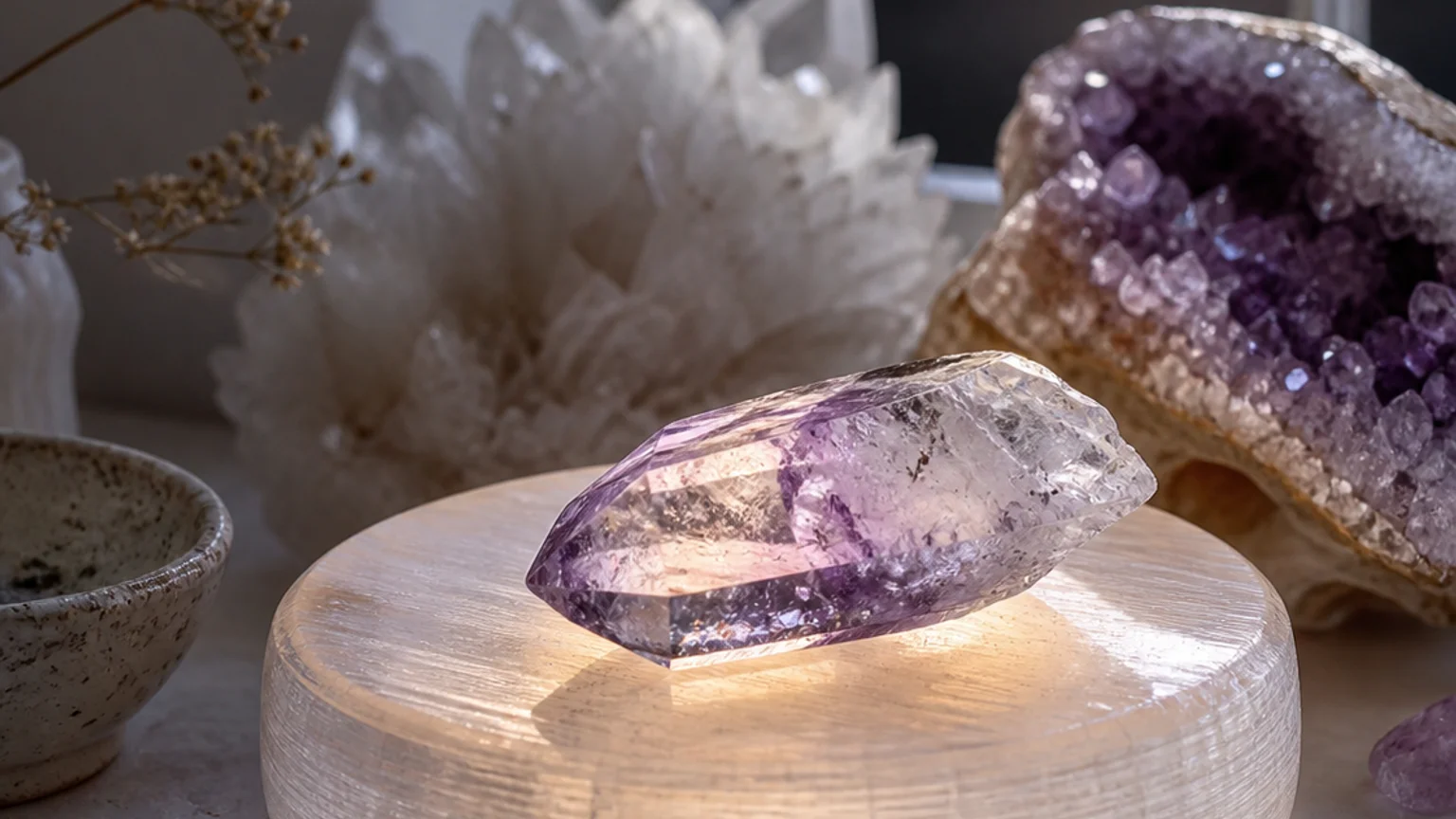
How to Activate Crystals: Meaning, Steps & Intentions
Bringing a new crystal home comes with a quiet question: what do I do with it first? Across many traditions, the answer is a small sequence — cleanse it, then “activate” it. Activating a crystal is the ritual of letting a new stone “start working,” of marking it as yours and switching it on for the first time. It’s a simple practice, but it comes with a safety step that matters more than the activation itself: knowing your stone before you handle it.
The very first thing to do with a new stone isn’t activating — it’s checking what the stone can tolerate. A soft selenite (Mohs 2), a porous copper-bearing malachite, or a color-sensitive amethyst each need different care, and some should barely be handled at all. Once you know the stone, you cleanse it (a new piece has passed through many hands), and only then do you activate it with one of the safe methods below — moonlight, a selenite plate, sound, or a quiet hold-and-focus meditation.
What you’ll find below: a clear first-use ritual for any new stone, four safe activation methods, the difference between activating and programming (a distinction most guides blur), jewelry tips for a new bracelet’s first activation, and answers to the questions beginners ask most. The goal is a mindful, low-risk way to start working with a new piece — ceremony and mineral care, together.
Quick Answer: How to Activate Crystals
The safest way to activate a new crystal is with one of four methods that involve no water, no salt, and no harsh chemistry: moonlight (especially the first full moon), a selenite plate (a 24-hour rest), sound (a singing bowl “wake”), or a quiet hold-and-focus meditation. These work for virtually every stone, including soft and porous ones that need no-contact methods.
- Safest universal methods: moonlight (first full moon), a selenite plate (24-hour rest), sound (singing bowl), or hold-and-focus meditation — these work for virtually every stone.
- Before activating a new stone: identify it and check its tolerance. Soft, porous, or copper-bearing stones (selenite, malachite, calcite) need no-contact activation; color-sensitive stones (amethyst, rose quartz) must avoid direct sun. If you’re unsure, default to moonlight or a selenite plate.
- How long: from 5–10 minutes (sound or hold-and-focus) to overnight (moonlight) or a full day (selenite plate) — see the method-by-method guide below.
One more thing before you start: cleanse first, activate second. A new stone has passed through many hands — miners, shippers, shopkeepers — and cleansing clears that residue before activation. If you’re unsure what your stone can tolerate, check its safety in the Cleansing Timer and pick a no-contact activation method that won’t risk the stone.
What Does “Activating” a Crystal Mean?
When a new stone arrives, the first thing to do isn’t activating — it’s a small first-use ritual that keeps the stone safe. Identify the stone first: a soft selenite, a porous malachite, or a color-sensitive amethyst each need different handling, and some should barely be touched at all. Check its tolerance next — can it go in water, in sunlight, or should it stay dry and no-contact? Then cleanse it to clear the handling of many hands (see How to Cleanse Crystals). Only after those three steps is the stone ready to activate.
So what does activating actually do? Across many traditions, activating is the ritual of “switching on” a dormant stone — letting a new piece start working with you for the first time. It’s the difference between a stone sitting on a shelf as a decorative object and a stone that has been deliberately marked as yours, ready to serve as a focus, a reminder, or a personal keepsake. Some people tie activation to the first full moon after the stone arrives; others do it the evening they bring it home. The act itself is simple and quiet — a placement, a hold, a moment of attention — and it turns an anonymous object into something personal.
One distinction worth making clear, because most guides blur it: activating is not the same as programming. Activating is switching the stone on for the first time; programming is setting a specific intention or task later. You can activate a stone without ever programming it — many people do exactly that. Below is the focused comparison, with a fresh way to keep them straight.
Activate vs Program
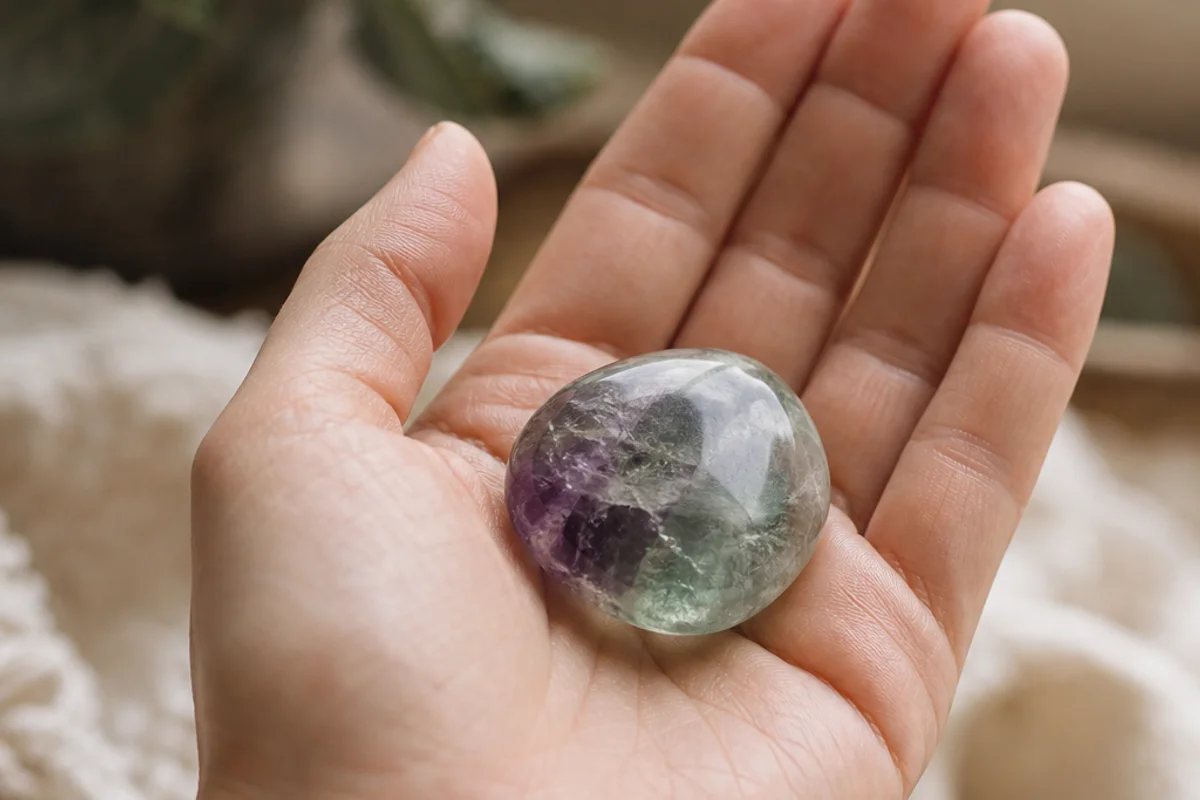
The clearest way to tell activating and programming apart is the new-phone metaphor. Activating is like turning on a new phone for the first time — the device is on, ready, and yours, but it doesn’t yet have any apps installed. Programming is what comes later, when you install a specific app (set a specific intention) for the phone to run. A phone can be switched on without any apps — and a crystal can be activated without being programmed. They’re two separate steps, and the first one is simply “power on.”
- Activate = power on; program = install an app. Activating switches a stone on for first use; programming gives it a specific intention later. Different steps, often done in sequence but not always.
- You can activate without programming. Many people activate a stone and simply use it as a personal focus or keepsake, never setting a formal intention. Activation is the prerequisite, not the same act.
- Frequency differs. Activate a stone once (when new) or after long disuse; program it each time you set a new intention. A stone might be activated once and reprogrammed many times over its life.
For the full four-concept comparison (Cleanse, Charge, Activate, Program), see How to Cleanse Crystals, see How to Cleanse Crystals (full four-concept comparison).
New Crystal First-Use Ritual
Every new stone deserves a small first-use ritual — not because the stone “needs” it, but because the ritual turns an anonymous object into something personal, and because it builds in the safety step that protects the stone. Follow the four steps below before any activation method.
- Identify the stone. Know what you have — a soft selenite (Mohs 2), a porous malachite, a color-sensitive amethyst, or a durable clear quartz each call for different handling. Identification determines everything that follows.
- Check its tolerance. Can it go in water, in sunlight, or should it stay dry and no-contact? If you’re unsure, the Cleansing Timer checks a stone’s water/sun/salt safety in seconds. When in doubt, default to no-contact methods.
- Cleanse first — How to Cleanse Crystals (cleanse before activate)
- Then activate with one of the safe methods below
Marking a new piece as your own — a small ceremony that turns an object into a personal keepsake.
How to Activate Crystals: 4 Methods (Ranked by Safety)
Below are four safe ways to activate a new crystal, grouped by how hands-on they are. The first three are no-contact methods (moonlight, selenite, sound) that work for every stone, including soft and porous ones. The fourth — hold-and-focus — is a personal meditation practice for those who want a more hands-on ritual. All four are safe; choose the one that fits the stone and your own style.
🟢 Tier 1 — Safest & Recommended for All Stones
最安全通用,新石首次激活首选
🌙 Moonlight (First Full Moon)
What it does (tradition): Placing a new stone under its first full moon is considered a meaningful way to ‘switch it on’ — a monthly activation tied to the lunar cycle.
How it works (practical): Moonlight is reflected sunlight at roughly 1/400,000 the intensity — gentle enough for every mineral, including color-sensitive stones.
Best for: every new stone — especially color-sensitive quartz (amethyst, rose quartz) and a first activation where you want zero risk. The full moon is the classic activation moment.
Method-specific safety notes: Extremely low UV intensity vs direct sun (roughly 1/400,000); generally one of the safest light methods for all minerals.
Steps:
- Place the new crystal on a windowsill at sunset
- Leave overnight (8+ hours); the full moon is ideal for a first activation
- Bring in before sunrise to avoid dew or direct sun
How long: Overnight (8+ hours)
✨ Selenite Plate (24-Hour Rest)
What it does (tradition): Resting a new stone on a selenite plate for a full day is said to clear and ready it — a passive activation while you go about your day.
How it works (practical): No chemical interaction — completely harmless. Handle gently, as selenite itself is soft (Mohs 2).
Best for: jewelry and soft stones above all — a no-contact activation that also works while you sleep or work. Ideal for a new bracelet you don’t want to handle roughly.
Method-specific safety notes: No chemical interaction — completely harmless to other stones. The selenite itself is soft (Mohs 2); avoid dragging hard stones across its surface to prevent scratching.
Jewelry tip: 首饰专长:新手链放selenite plate上24h激活,零接触零风险
Steps:
- Place the new crystal on a selenite plate, bowl, or bar
- Leave for a full 24 hours
- Avoid dragging hard stones across the selenite surface
How long: 24 hours
🔔 Sound (Singing Bowl Wake)
What it does (tradition): Sustained sound vibrations are believed to ‘wake’ a dormant stone — a fast activation for a new piece.
How it works (practical): Sound waves are far too low-energy to affect any mineral’s structure — harmless to every stone.
Best for: when you have several new stones to activate at once, or want a fast ritual. A Tibetan singing bowl gives a grounding, ceremonial feel.
Method-specific safety notes: Sound waves are far too low-energy to affect any mineral’s structure — harmless to every stone.
Jewelry tip: Works for an entire jewelry collection at once — no need to handle each piece.
Steps:
- Play a singing bowl, bell, or tuning fork near the new crystal
- Continue for 5–10 minutes
- Works for several new stones at once
How long: 5–10 minutes
🟡 Tier 2 — Personal Practice
个人实践,需专注
🤲 Hold & Focus (Meditation)
What it does (tradition): Holding a new stone in stillness while breathing deeply is considered a personal way to ‘start working’ with it — the stone becomes a focus for your attention.
How it works (practical): No physical effect on the stone — this is a mindfulness practice that turns the object into a personal cue.
Best for: those who want a personal, hands-on activation ritual — holding a new stone in meditation marks it as yours and begins the relationship. Pairs naturally with setting an intention later (programming).
Steps:
- Find a quiet space and sit comfortably
- Hold the new crystal in your receiving (non-dominant) hand
- Breathe slowly for 10–15 minutes, simply noticing the stone
- End when it feels ready — there is no fixed duration
How long: 10–15 minutes
💡 Activating a new stone? Check its safety first.
Crystal Cleansing Timer → confirm its water/sun tolerance, then pick a safe activation method.
Stones That Are Easy to Activate (and a Few That Need Care)
Some stones are more forgiving than others for a first activation — and a few ask for extra gentleness. Below are six stones that each illustrate something useful about activating, with a note on which method suits them. Every entry follows the same safety-first principle: identify the stone, then choose a method that respects its tolerance.
Clear Quartz — The Beginner’s First Stone
Clear quartz is the classic first stone to activate — durable at Mohs 7, forgiving, and a neutral staple that pairs with any method. It activates beautifully under moonlight, on a selenite plate, with sound, or in a hold-and-focus meditation. There’s no special caution beyond the usual “avoid prolonged direct sun,” which makes clear quartz an ideal stone for learning the activation ritual without worry. If you’re starting a collection, this is the stone to begin with.
Clear Quartz — A versatile piece collectors often describe as a neutral staple that pairs with any setting. Durable (Mohs 7), forgiving, and a neutral staple — the classic first crystal to activate and learn the ritual on. Safety note: Durable stone (Mohs 7) tolerates short indirect sunlight; avoid prolonged direct sun even for durable stones to prevent heat stress. Brief water rinse safe; avoid prolonged soaking.
Read full Clear Quartz meaning · Shop Clear Quartz
Selenite — The Passive Activator Stone
Selenite plays a special role in activation — not just as a stone to activate, but as a stone that helps activate others. In tradition it’s considered self-cleansing, and resting a new stone on a selenite plate for 24 hours is itself a gentle activation. For a selenite piece of your own, the rule is simple: handle it gently (it’s a soft gypsum, Mohs 2) and keep it dry. Activate it with moonlight or sound — never water.
Selenite — A self-cleansing stone many use as a display plate to rest other pieces on — a practical care choice. Traditionally self-cleansing and used as a plate to ready other stones — a stone that activates others by proximity. Safety note: A soft form of gypsum (Mohs 2); can be damaged, scratched, or degraded by prolonged water exposure — keep dry. Self-cleansing in tradition; commonly used as a plate to rest other stones on.
Read full Selenite meaning · Shop Selenite
Amethyst — The Nightstand Favorite
Amethyst is the nightstand favorite — a common first stone kept by the bed as part of a wind-down ritual. For activation, moonlight or a selenite plate is ideal; avoid direct sunlight, which can fade its purple over time. A piece activated on the nightstand and left there becomes part of an evening ritual, doubling as both a personal focus and a calming presence in the room.
Amethyst — A stone many keep on their nightstand as part of a wind-down ritual before bed. A common first stone kept by the bed — activate with moonlight (not sun, color fades) as part of a wind-down ritual. Safety note: Color may fade with prolonged direct sunlight; indirect light or moonlight is the safer choice for color-sensitive stones. Durable (Mohs 7) but a color-sensitive quartz.
Read full Amethyst meaning · Shop Amethyst
Moonstone — The Lunar Activation Favorite
Moonstone is the lunar activation favorite — its soft iridescent sheen has a natural link to moon-phase traditions, making a first-full-moon activation especially meaningful. Care-wise, moonstone sits at Mohs 6–6.5 with two perfect cleavages, so handle it gently and keep it out of prolonged water and direct sun. A moonlit windowsill or a selenite-plate rest is the kindest way to activate it.
Moonstone — A stone many choose for its soft iridescent sheen and connection to lunar ritual traditions. Soft iridescent sheen with a natural link to moon-phase activation traditions — a meaningful first-full-moon stone. Safety note: Mohs 6–6.5, two perfect cleavages — avoid rough handling and prolonged water/soaking. Indirect light preferred to protect the adularescent sheen.
Read full Moonstone meaning · Shop Moonstone
Calcite — The Soft-Stone Caution
Calcite is the soft-stone caution worth noting — it sits at Mohs 3 and reacts with mild acids, so it asks for extra gentleness during any hands-on activation. For calcite, skip hold-and-focus (which risks pressure on a soft stone) and use a no-contact method: moonlight, a selenite plate, or sound. The headline rule for activating a soft or porous stone: when in doubt, no-contact methods are safest.
Calcite — A soft stone collectors keep for its range of gentle colors — a specimen best cared for with no-contact methods. Mohs 3 and reacts with acids — handle gently during hold-and-focus activation; no water/sun, use no-contact methods. Safety note: Soft (Mohs 3) and reacts with acids (including mild ones). Keep dry; avoid water, salt, and acidic cleaners. Use no-contact methods (moonlight / selenite / sound).
Read full Calcite meaning · Shop Calcite
Rose Quartz — The Bracelet First-Activation
Rose quartz is the bracelet favorite for first activation — a common first piece of jewelry, worn as a daily reminder. Activate it before its first wear with moonlight or a selenite plate (never direct sun, which fades the pink), and you’ve marked it as yours from day one. For a daily-wear bracelet, a no-contact activation also protects the cord and metal from any handling stress.
Rose Quartz — A rose quartz bracelet many people wear as a daily reminder to be gentle with themselves. A common first bracelet — activate with moonlight/selenite (no sun, color fades) before first wear. Safety note: Color may fade with prolonged direct sunlight (titanium/manganese + irradiation color cause); indirect light or moonlight is the safer choice for color-sensitive stones.
Read full Rose Quartz meaning · Shop Rose Quartz
Explore more: Crystals for Anxiety · Shop Calm & Mindfulness
Common Mistakes to Avoid
Activation mistakes are usually small and avoidable — they come from skipping the first-use ritual or handling a stone the wrong way. The five below are the ones we see most often, and each one points back to the same principle: identify the stone first, then choose a method that respects its tolerance.
- Activating before cleansing. A new stone has passed through many hands; activating it without cleansing first is like switching on a device that’s still dusty from the factory. Fix: always cleanse first (moonlight, selenite, sound, or smoke), then activate. The two are a sequence.
- Handling a soft stone roughly during hold-and-focus. Selenite (Mohs 2) and other soft stones can scratch or chip if gripped tightly or rubbed. Fix: for soft stones, use a no-contact method (moonlight, selenite plate, sound) instead of hold-and-focus, or hold very gently without pressure.
- Putting an amethyst or rose quartz in sunlight to “activate.” Color-sensitive quartz fades in direct sun — activation by sunlight risks permanently dulling the stone. Fix: use moonlight or a selenite plate; they activate every stone with zero fading risk.
- Confusing activation with programming. Some people try to “activate” a stone by setting a detailed intention — but that’s programming, a separate step. Fix: keep activation simple (switch the stone on) and save intention-setting for a later programming session if you choose to do it.
- Rushing the ritual. Activation is meant to be a quiet, deliberate moment — rushing through it defeats the purpose. Fix: set aside 10–15 uninterrupted minutes, especially for hold-and-focus, and let the ritual feel intentional rather than hurried.
Activateing Crystal Jewelry (Bracelets & Necklaces)
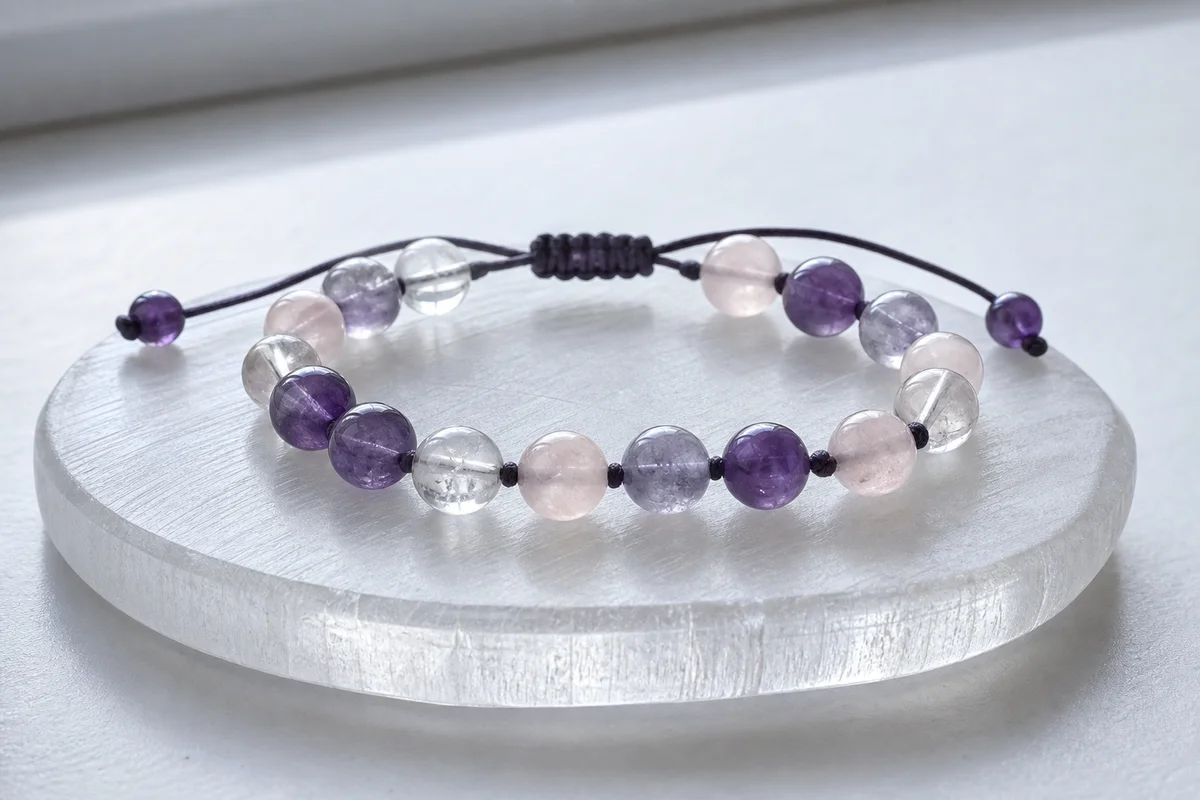
Most activation advice for jewelry is simple: for a new bracelet, necklace, or pair of earrings, use a no-contact method. A selenite plate (24-hour rest) or a moonlit windowsill activates the whole piece — stone, cord, and metal — without any handling stress. Save hold-and-focus for loose stones, and keep soft or color-sensitive pieces away from sunlight and rough handling.
Quick jewelry tips:
- Which hand for hold-and-focus? In many traditions, the receiving (non-dominant) hand is suggested for holding a stone during activation, since it’s seen as the receptive side. Treat this as a personal ritual choice rather than a rule — what matters is that the moment feels deliberate.
- First full moon for a new piece. If you’d like a meaningful timing, activate a new stone on the first full moon after it arrives — lay it on a windowsill overnight (8+ hours). It’s a natural monthly marker and a gentle, no-contact way to begin.
- A new bracelet’s first activation. When a new bracelet arrives, cleanse it first (selenite plate overnight), then activate it on the same plate for a full day before its first wear. The piece starts with you from a clean, “switched-on” state.
Frequently Asked Questions About Activating Crystals
How do I activate my crystals for the first time?
The simplest first-time activation is a no-contact method: place the new stone on a selenite plate for 24 hours, or under the moonlight overnight (8+ hours, the first full moon is ideal). Before either, make sure you’ve identified the stone and cleansed it (a new piece has passed through many hands). For soft or color-sensitive stones, no-contact methods are the safest choice — they activate without any handling or sun exposure.
What is the best way to activate crystals?
The best method for most people is moonlight or a selenite plate — both are universal-safe (they work for every stone, including soft and color-sensitive ones), require no handling, and involve no water or sunlight. If you want a more personal, hands-on ritual, hold-and-focus meditation (holding the stone in your receiving hand for 10–15 minutes of quiet breathing) is a meaningful choice for durable stones.
How long does it take to activate a crystal?
It depends on the method. Sound (singing bowl) takes 5–10 minutes. Hold-and-focus meditation takes 10–15 minutes. Moonlight asks for a full overnight (8+ hours). Selenite plate needs a full 24-hour rest. None of these require constant attention — most are passive (you set the stone down and let the method do the work).
Do I need to activate a new crystal?
It’s not strictly required, but it’s a meaningful first step for many people. Activating marks a new stone as yours and “switches it on” for first use — a small ceremony that turns an anonymous object into a personal keepsake. If you prefer to skip the ritual and simply start using the stone, that’s fine too; the stone doesn’t “need” activation to exist. The practice is for you, not the stone.
Which crystals are easiest to activate for beginners?
The most forgiving stones for beginners are durable, neutral ones — clear quartz (Mohs 7, pairs with any method), rose quartz (also Mohs 7, though it must avoid direct sun), and amethyst (Mohs 7, also sun-sensitive). These stones tolerate handling and every activation method except direct sunlight. Avoid starting with very soft stones (selenite, Mohs 2) or porous copper-bearing stones (malachite), which need extra-gentle, no-contact care.
Do I need to activate a crystal bracelet before wearing it?
It’s a good idea, especially for a piece you’ll wear daily. Activating a new bracelet before its first wear — with a selenite plate (24 hours) or moonlight (overnight) — marks it as yours and starts it from a “switched-on” state. Use a no-contact method so the cord and metal aren’t stressed, and avoid sunlight if the bracelet contains amethyst or rose quartz.
Do I need any tools to activate crystals?
Strictly speaking, no — moonlight and a windowsill are free and work for every stone. That said, a few simple tools make activation easier and more consistent: a selenite plate (for passive 24-hour activation), a singing bowl (for a fast, hands-on “wake” ritual), and a quiet space for hold-and-focus meditation. The Cleansing Timer is a free tool that checks your stone’s tolerance before you begin.
Is there scientific evidence that activating crystals does anything?
The honest answer has two parts. The safety guidance is real mineralogy — which stones tolerate water, sun, or handling is a matter of hardness, porosity, and chemistry, and it’s well documented. The energy side is not scientifically established: there is no scientific evidence that crystals store or release energy, or that a stone is measurably different before and after activation. Many people still find value in activation as a mindfulness ritual — a deliberate moment that turns a new object into something personal. The two can comfortably coexist.
What happens if I don’t activate my crystal?
Nothing dramatic — the stone continues to exist exactly as it did before. Activation is a ritual for you, not a change to the stone: it’s the deliberate act of marking a new piece as yours and deciding to start working with it. If you skip it, the stone is simply an unactivated object until you choose to engage with it. There’s no harm in waiting, and no rule that says you must activate at all.
What is the difference between activating and programming a crystal?
Activating is switching a stone on for first use; programming is setting a specific intention or task later. You can activate a stone without ever programming it — many people do. Think of the new-phone metaphor: activation is turning the phone on for the first time; programming is installing a specific app later. They’re two separate steps. For the full picture across all four care concepts, see How to Cleanse Crystals.
Can I activate a crystal without cleansing it first?
Yes — in fact, it’s recommended. Cleansing clears the residue of many hands; activation then marks the cleansed stone as yours and switches it on. Cleansing without activation is fine (the stone is clean but not yet “started”), but activating without cleansing first means switching on a stone that still carries the handling of miners, shippers, and shopkeepers. Cleanse first, activate second.
Crystal activation practices are based on spiritual traditions, symbolism, and personal mindfulness. There is no scientific evidence that crystals store or release energy, but the safety guidance (which stones tolerate water, sun, or handling) is real mineralogy — and the reason a mindful ritual can coexist with caring for your stones.
💡 Activating a new stone? Check its safety first.
Crystal Cleansing Timer → confirm its water/sun tolerance, then pick a safe activation method.