
Is Justice a Yes or No Card for Love?
Is Justice a Yes or No Card for Love?
Justice arrives in a love reading with the energy of the scales — the balance, the sword, the sense of a relationship being weighed rather than wished. It can read as cold next to the warmer love cards, even as judgmental. But Justice in tarot is the archetype of honest balance, the fairness that lets a real partnership stand. So is Justice a yes or no card for love? The honest answer is: a conditional, and one that splits cleanly along whether the bond is fair — yes if the relationship is honest and balanced, no where unfairness or dishonesty has not been faced.
Quick Answer
Justice is a conditional for love. It leans yes only if the relationship is fair — the scales weigh honesty and accountability, not romance, and a partnership that passes the fairness test has real ground to stand on. The card’s archetype is the truth-seeker who weighs what is actually so, and its counsel in love is the same: a bond built on honesty and balance can be blessed; one built on imbalance or dishonesty cannot. The yes is conditional, because Justice will not bless a partnership that fails the fairness test however much love is present — and the same card turns no where unfairness has not been faced.
Is Justice Generally a Yes or No Card?
Across all questions, Justice leans conditional — and the condition is almost always the same: the yes follows where the situation is fair, and not where imbalance or dishonesty has gone unaddressed. Its archetype is the truth-seeker: the scales that weigh what is actually so, the sword that cuts through the stories told about it, the figure who carries the demand for honesty and accountability. Upright, this energy is genuinely favorable for choices and situations grounded in fairness, honesty, and honest reckoning. Where the question is whether to act on what is true, Justice tends to lean yes.
But Justice is never an unqualified yes, and that is the whole point of the card. Its wisdom lives in the distinction between a situation weighed honestly and a story told over an unfair reality. The upright Justice weighs what is actually so — the honesty or dishonesty present, the balance or imbalance, the accountability or its absence. Her shadow is the story — the narrative told over an unfair situation to avoid facing it, the romance used to cover dishonesty, the “but I love them” worn as a reason not to look at what is actually happening. Same face of weighing, entirely different relationship to what the scales actually show underneath.
So when readers ask whether Justice is generally a yes or no, the truthful answer is: yes, where the situation is fair; no, where unfairness or dishonesty has not been faced. The card itself does not manufacture fairness — it points to what the scales actually show and asks whether it is being looked at honestly. Justice blesses the bond that passes the fairness test and withholds her full weight from the partnership that fails it however much love is present.
This is why the card leans so specifically conditional across questions. For love, the verdict follows whether the relationship is fair. For career, the same archetype blesses the move decided on merit. For decisions, her counsel is to weigh the evidence honestly. Justice’s verdict is always about what is actually fair and true — and it declines to bless the story worn over an unfair reality.
Justice for Love: Yes or No?
In love specifically, Justice leans conditional, and the condition follows whether the bond is fair. The card’s archetype is the scales that weigh honesty and accountability rather than romance, and its whole concern in a love reading is whether the relationship is honest and balanced or built on imbalance and dishonesty. If you are asking about a relationship — whether to enter it, deepen it, stay in it, or leave it — Justice may be telling you that the verdict follows whether the bond passes the fairness test.
But love is also where Justice’s energy is most easily avoided, because romance and honesty wear similar surfaces here. The same scales that can confirm a bond built on real balance can also be talked over by the story — the narrative told to cover dishonesty, the love used as a reason not to look at imbalance, the “but I love them” worn to avoid facing what is actually happening. Justice’s gift is the honestly weighed bond; her shadow in love is the story worn over an unfair reality, the romance used to cover what the scales would show.
So the verdict splits along a clear line:
- Justice leans yes if the relationship is honest and balanced. If the bond is built on fairness — honesty present, accountability shared, the partnership balanced rather than one-directional — Justice blesses it. The yes is for the relationship that passes the fairness test, not for the one that fails it however much love is present.
- Justice leans no where unfairness or dishonesty has not been faced. If the bond is built on imbalance — if dishonesty is present and unaddressed, if the partnership is one-directional rather than mutual, if the story being told covers what the scales would show — Justice refuses to bless it. The no is not a rejection of love; it is the card pointing out that the bond fails the fairness test, and romance cannot cover what honesty has not faced.
There is a subtler reading. Justice sometimes appears for a love question when the real work is not about the relationship itself but about whether the bond has been weighed honestly — when the card is asking whether the partnership is as fair as the story tells or whether imbalance is being covered, whether honesty has been faced or avoided. In that case the yes is for the honest reckoning, which prepares the ground for the bond to be met as it actually is rather than as the story tells.
The card does not promise that fairness guarantees a particular outcome, or that honesty ensures the relationship lasts. What it points to is whether the bond is fair or fails the test — whether honesty has been faced, or whether the story is worn over an unfair reality. Love readings want a clear yes or no; Justice offers something more honest: a yes for the bond that passes the fairness test, with a quiet question about whether the relationship is as balanced as it is told.
What Would Shift It to Yes or No?
Because Justice is conditional, the question is not whether it will become a yes or a no — it is which one it already is, depending on whether the bond is fair.
The yes applies when the relationship is honest and balanced. This is not the same as a relationship without difficulty — real bonds often hold imbalances that are being addressed, and Justice does not demand perfection before she blesses a bond being made fair. But there is a difference between imbalance being faced and addressed (which the upright Justice can bless) and imbalance being covered by a story (which her shadow serves). If honesty has been faced and the bond is being made fair, the yes strengthens.
The no applies when unfairness or dishonesty has not been faced. If the bond fails the fairness test — if dishonesty is present and unaddressed, if the partnership is one-directional and the story covers it, if “but I love them” is being worn to avoid looking at what is actually happening — Justice’s no leans toward you with full weight. The card is not refusing you love; it is pointing out that the bond is not fair, and romance cannot cover what honesty has not faced.
Rose quartz as a reflection support. Some readers like to hold or wear rose quartz when working with Justice in a love reading — not to change the verdict, but to support the warm, honest reckoning the card asks for. Rose quartz is traditionally associated with the heart and with the compassion that can meet unfairness honestly rather than cover it, and used as a focusing object it can help you sit with the question is this relationship honestly balanced, or am I covering imbalance with a story? The crystal does not turn a no into a yes. It supports the honest inner reading that lets you tell whether the bond passes the fairness test.
The shift, in other words, is not in the card. It is in whether the bond is fair — which is exactly what Justice has been asking of you all along.
Free Will, FAQ, and a Note on Outcomes
Cards reflect current energy and patterns, not fixed outcomes — you always have free will to shape what happens next. For Justice, the card may point to a conditional verdict that follows whether the bond is fair, but whether you face the honesty the scales demand or cover it with a story — and how you act on what is actually true — is your choice. No card decides for you; it clarifies the moment you are standing in.
FAQ
Is Justice a yes or no card when reversed?
Reversed, Justice tends toward unfairness that has not been faced rather than a flat no. The reversal often points to imbalance covered by a story — the dishonesty unaddressed, the one-directional partnership, the “but I love them” worn to avoid the scales. Reversed does not mean cursed or doomed; it means the honestly weighed bond the upright card blesses has been replaced by a narrative over an unfair reality, and the card is inviting you to look at what the scales actually show.
Does Justice mean someone loves me?
It cannot confirm love alone — it weighs fairness and honesty, not the presence of feeling, and a bond can hold love and still fail the fairness test. Justice may suggest the relationship has honesty present in the current energy, but the confirmation of a real partnership lives in whether the bond is balanced and accountable over time, not in any single card or any single feeling.
Can Justice be a yes for leaving a relationship?
Yes, when the bond fails the fairness test and dishonesty or imbalance has gone unaddressed — because the honestly weighed scales the card blesses include recognizing when a partnership is not fair. Justice does not demand enduring unfairness; she asks that honesty be faced. When the bond cannot be made fair, the card’s truth can bless leaving as much as staying.
Shop Crystals for This Guide
Explore crystal jewelry and stones from our current collection.


Om Mani Padme Hum Copper Ring


Om Namah Shivay Mantra Copper Bangle


Fair Trade Astamangala Copper Bangle
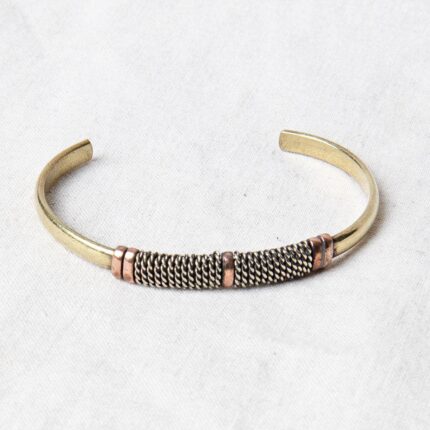

Tibetan Handcrafted Copper Bracelet
Shop Crystals for This Guide
Explore crystal jewelry and stones from our current collection.
Om Mani Padme Hum Copper Ring
Om Namah Shivay Mantra Copper Bangle
Fair Trade Astamangala Copper Bangle