

Red Jasper and Bloodstone Together: Benefits, Meaning + How to Use
Red Jasper and Bloodstone Together: Benefits, Meaning + How to Use
Quick Answer
Yes — Red Jasper and Bloodstone can be worn together (compatibility score: 100/100 — Excellent). They’re close mineral cousins — both hematite-stained chalcedony — and many people pair them for protection and grounding.
About Red Jasper
Red Jasper is an opaque, brick-red to terracotta variety of chalcedony, traditionally associated with grounding, strength, endurance, and courage. In crystal practice it’s often linked with the Root and Sacral chakras, which makes it a popular choice for stamina, focus, and stress relief during demanding days. Common forms include bracelets, pendants, tumbled stones, palm stones, and raw pieces. Many people reach for it as a steady, low-stimulation anchor when life feels scattered.
Mineralogically, Red Jasper is silicon dioxide (SiO₂) with a Mohs hardness of 6.5–7 — durable enough for everyday bracelets, pendants, and rings. Its warm red tone comes from hematite (iron oxide). It tolerates brief contact with water, is sun-safe, and is salt-safe, which puts it among the more low-maintenance stones in daily wear.
Red Jasper Meaning → · Genuine, ethically sourced — not dyed, not glass.
About Bloodstone
Bloodstone (also called heliotrope) is a dark green chalcedony scattered with red spots, traditionally associated with courage, vitality, and strength. In crystal practice it’s often linked with the Root, Sacral, and Heart chakras, which makes it a popular choice for protection, personal power, and a grounded sense of momentum. Common forms include signet rings, bead bracelets, tumbled stones, pendants, and carvings. Many people carry it when they want steady resolve without the edgy buzz of more stimulating stones.
Mineralogically, Bloodstone is also silicon dioxide (SiO₂, chalcedony) — the green body colored by chlorite, the red spots by hematite. Mohs hardness sits at 6.5–7, so it holds up well in everyday bracelets and rings. It tolerates brief contact with water and is sun-safe, though salt water should be avoided to keep the polish in good shape.
Bloodstone Meaning → · Genuine, ethically sourced — not dyed, not glass.
Can You Wear Red Jasper and Bloodstone Together?
Practically: This is one of the easiest pairs you can combine, and the reason is mineralogical. Both stones are dense, opaque chalcedony sitting at 6.5–7 on the Mohs scale, so they’re equally durable — neither will scratch or wear the other down in a bracelet stack. Both get their red from hematite (iron oxide), which is why they read as cousins rather than strangers. Visually, brick red against deep green flecked with red is cohesive without looking matchy. The only real care difference is salt: Red Jasper is salt-safe, Bloodstone is not, so default to a quick rinse or sound cleansing for both.
Energetically: In crystal tradition, both stones carry the earth element and resonate with the Root and Sacral chakras, so they’re seen as a deeply grounding pair rather than a scattered one. Red Jasper is said to provide slow-burn stamina; Bloodstone is believed to add courage, vitality, and protective resolve. The traditional use is to build strength from the ground up — which is exactly why this pairing is popular for protection and grounding work.
Psychologically: Because the two share protection, health, and personal-power intentions, the pairing works as a single ritual anchor — one intention (courage, stamina, or resolve) carried by two reinforcing stones rather than two competing energies. Many people find the combination steadying rather than overstimulating.
These properties are traditionally associated with crystal practice; many people find the pairing supportive, though the effects are not established by modern research.

Benefits of Red Jasper + Bloodstone
Together, Red Jasper and Bloodstone cover six complementary strengths:
1. Grounded, Steady Courage
Both stones are traditionally associated with courage, but they don’t deliver it the same way. Red Jasper brings slow, patient endurance — the kind that holds through a long week. Bloodstone brings sharper, more immediate resolve. Worn together, many people describe the result as courage that doesn’t spike and crash, which is useful for demanding workdays, difficult conversations, or anything that calls for sustained steadiness rather than a quick burst.
2. Stronger Everyday Protection
Protection is a shared intention, and in crystal tradition the two cover it from different angles. Red Jasper is said to stabilize and shield from the inside out; Bloodstone is believed to add a more active, defensive layer with its long history as a talisman for safety. Many people wear the pair as a single bracelet when they want a consistent sense of being both grounded and guarded through the day.
3. Stamina Backed by Vitality
Red Jasper is traditionally used for endurance and focus; Bloodstone is linked to vitality and physical resilience. The combination is a popular choice when energy feels low or motivation needs a steady push — not the jittery lift of a stimulant, but a grounded sense of “keep going.” It’s one of the more common reasons people reach for these two together, especially around long shifts, training blocks, or stretches of travel.
4. Deep Root and Sacral Grounding
Both stones resonate with the Root and Sacral chakras — the centers most associated with safety, stability, and creative drive. In crystal tradition, that shared resonance is what makes the pair feel so settled on the body. Many people use it specifically to come back to themselves when they feel scattered, ungrounded, or pulled in too many directions at once.
5. Personal Power Without the Edgy Buzz
Personal power is shared between them, yet neither is considered a high-velocity stone. Red Jasper builds strength gradually; Bloodstone reinforces resolve without the buzzy edge of more stimulating crystals. For people who want to feel more capable and self-directed in daily life, the pairing is traditionally used as a calmer, more sustainable alternative to harder-driving stones.
6. Two Iron-Stones, One Direction
The deepest thing these two share isn’t a chakra or an intention — it’s their mineral makeup. Both are chalcedony stained red by hematite, which is why they feel like family on the wrist. In crystal tradition, that shared iron-and-earth character is what lets two strong stones work together instead of competing. It’s the foundation that makes the Red Jasper + Bloodstone combination feel unified rather than layered-on or busy.

How to Use Red Jasper and Bloodstone Together
Wear them
A common question is can I wear Red Jasper and Bloodstone on the same hand? Yes — both are earth-element stones, so they’re traditionally considered comfortable together on the same wrist or in the same bracelet stack. A Red Jasper bracelet paired with a Bloodstone bracelet works well for daily wear, since both sit at 6.5–7 Mohs and neither will scratch the other. For a more discreet option, a Bloodstone signet ring with a Red Jasper pendant keeps the pairing close without a stack.
Meditate
Hold Red Jasper in one hand and Bloodstone in the other, or place one at the Root center (base of the spine) and the other just below the navel for the Sacral center. Five to ten minutes is enough for a simple grounding session, especially if you’re new to these two. The aim is a steadier, more settled feeling — not a particular sensation.
Crystal grid
Place Bloodstone at the center as the protective anchor and Red Jasper points or tumbled stones around it to set the grounding intent. It’s a straightforward grid for protection, stamina, or personal power — easy to build on a desk, altar, or small table when you want one intention to hold over several days.
Place in a room
A Bloodstone carving or tower on a work desk brings a sense of resolve and protection; a Red Jasper palm stone nearby keeps the energy steady and grounded. Together they suit a workspace, entryway, or anywhere you want a calm, capable atmosphere. For an evening wind-down, move them to the nightstand rather than wearing them to sleep — both carry a gently stimulating quality.
Caring for Red Jasper + Bloodstone
Each stone has its own care needs:
- Red Jasper: Water: Brief rinse safe · Sun: Sun-safe · Salt: Salt-safe.
- Bloodstone: Water: Brief rinse safe · Sun: Sun-safe · Salt: Avoid salt water.
When in doubt, cleanse both with sound or moonlight — methods that are gentle across all stone types.
How to cleanse your crystals →
Shop Red Jasper + Bloodstone
Every stone below is genuine, ethically sourced, and real — not dyed, not glass.
Bundle any 3 and save 20%.
Shop Crystals for This Guide
Explore crystal jewelry and stones from our current collection.


Red Jasper Anklet


Red Jasper Crystal Point
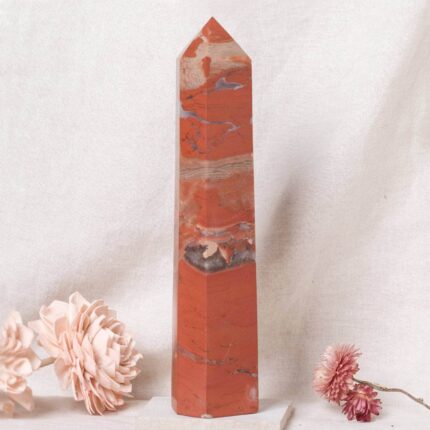
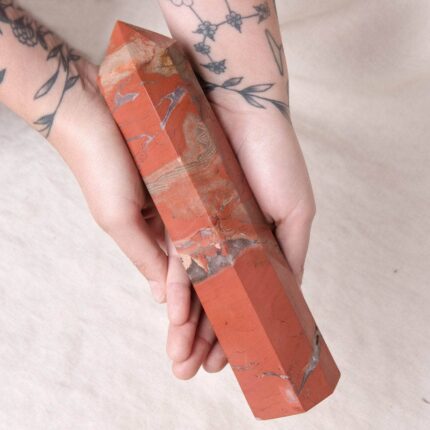
Red Jasper Obelisk

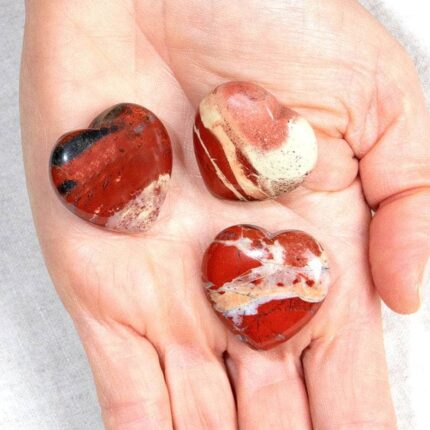
Red Jasper Mini Heart Set
Domande frequenti
Can I wear Red Jasper and Bloodstone together every day?
Many people do. If you’re new to combining stones, start with a few hours and notice how the pairing feels before making it a daily habit.
Can I wear Red Jasper and Bloodstone on the same hand?
Yes — both are earth-element stones, so they’re traditionally considered comfortable together on the same wrist or in the same bracelet stack.
Can I sleep with Red Jasper and Bloodstone?
You can keep them nearby while you sleep. Red Jasper is often placed on the wrist or nightstand, while Bloodstone can rest on the nightstand or nearby.
How do I cleanse Red Jasper and Bloodstone?
Red Jasper: Water: Brief rinse safe · Sun: Sun-safe · Salt: Salt-safe. Bloodstone: Water: Brief rinse safe · Sun: Sun-safe · Salt: Avoid salt water. When in doubt, sound or moonlight cleansing is gentle across all stone types.
Can I add a third stone to Red Jasper and Bloodstone?
Yes — Clear Quartz is a neutral amplifier that bridges most pairings without competing. Add one stone at a time so you can notice each shift.
Related
- Red Jasper Meaning
- Bloodstone Meaning
- How to Cleanse Crystals
- Black Tourmaline and Red Jasper
- Black Tourmaline and Bloodstone
- Carnelian and Red Jasper
- Carnelian and Bloodstone
- Verifica della compatibilità dei cristalli
Crystal meanings are shared for entertainment and spiritual practice. They’re not a substitute for professional medical or mental-health care.