ESFP Tarot Card: Birth Card Meaning & Crystals
ESFP Tarot Card: Birth Card Meaning & Crystals
Intro
You tested ESFP, and somewhere between reading “The Entertainer” and the umpteenth article describing you as the life of the party, the question underneath the question surfaced: what does it actually mean to be wired for radiant presence — and where does radiance turn into performance, until the one person you haven’t fully shown up for is yourself?
Tarot answers that question differently than personality tests do. Where MBTI sorts you into one of sixteen boxes based on self-reported preferences, a birth card asks which archetype your cognitive wiring keeps returning to. For ESFP, that pattern has a name, a sun, and a long association with the kind of warm, present, embodied joy that everyone recognizes and few understand the discipline of.
This article maps ESFP to The Sun as your primary birth card and The Fool as your growth card, walks through what each illuminates about your cognitive stack (Se · Fi · Te · Ni), and suggests three crystals that serve distinct functions — the overall companion, the upright ally, and the growth invitation.
> MBTI is a registered trademark of The Myers-Briggs Company. This article is an independent framework based on Jungian cognitive functions (Ni/Ne/Si/Se/Ti/Te/Fi/Fe), offered for self-reflection and creative exploration — not affiliated with, endorsed by, or sponsored by The Myers-Briggs Company. Mapping decisions are our own editorial interpretation and do not represent official MBTI doctrine.
ESFP at a Glance: The Entertainer
ESFP sits in the Explorers group, alongside ISTP, ISFP, and ESTP. Your four-letter code is Extraverted · Sensing · Feeling · Perceiving, but the letters are the surface. The deeper structure is your cognitive stack:
- Dominant: Se (extraverted sensing) — the function that engages the present moment directly, lives in the body, reads the room in real-time
- Auxiliary: Fi (introverted feeling) — the inner value system that asks “is this true for me?” of every moment
- Tertiary: Te (extraverted thinking) — the function that, when developed, helps you execute on what matters
- Inferior: Ni (introverted intuition) — the long-arc trajectory, your developmental edge — the part of you that either matures into “where is this going” or gets dismissed as overthinking
The nickname “The Entertainer” is shorthand for someone who brings vivid present-moment warmth to whatever room they’re in — the felt sense that life, right now, is worth showing up for. The question a tarot birth card answers is which archetype this cognitive configuration keeps returning to — and for ESFP, that archetype is the sun above, the child on the white horse, the sunflowers turning toward the light.
Your Birth Card: The Sun
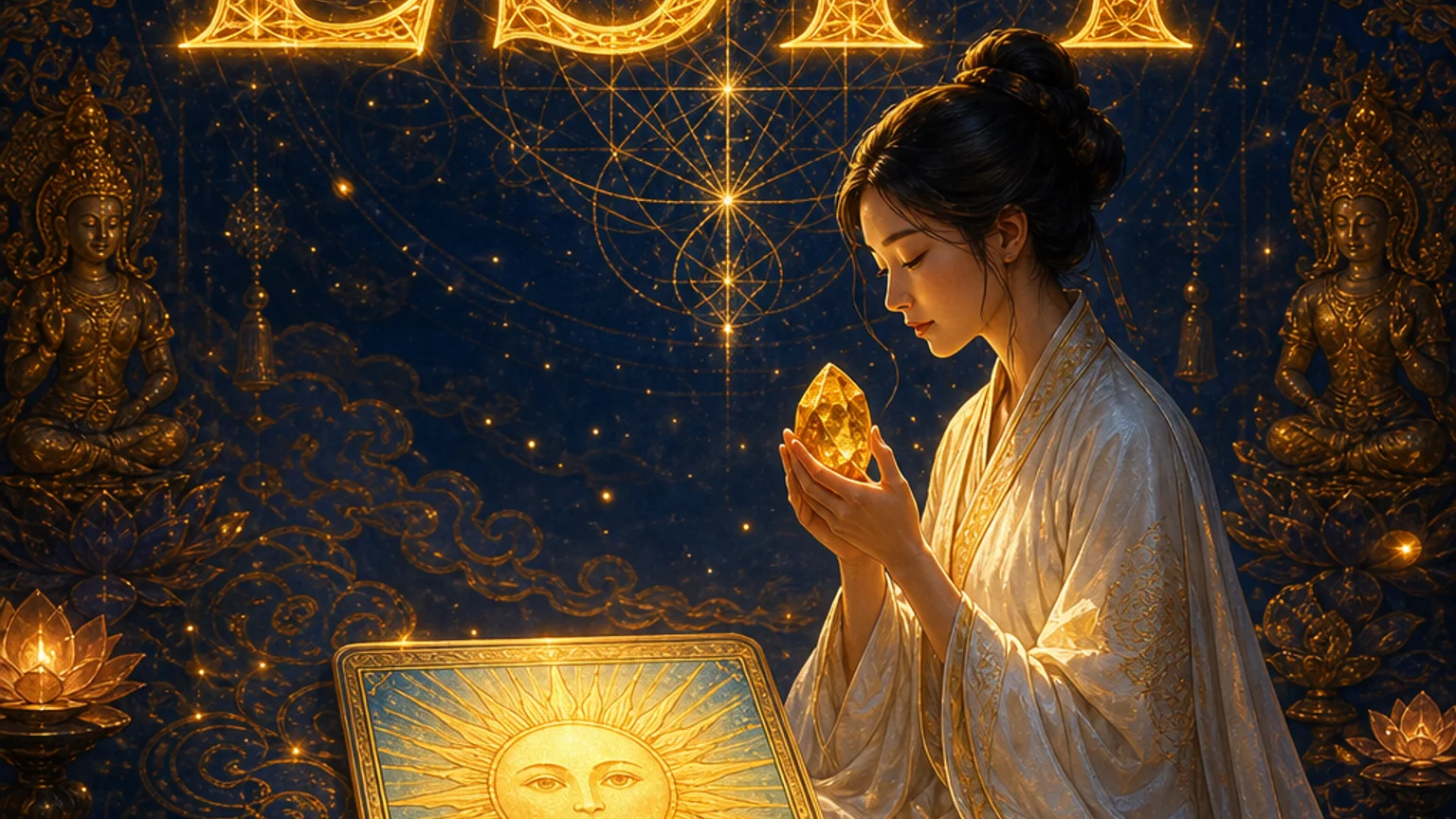
The Sun’s archetype is The Radiant. In the Rider-Waite image, a bright sun shines in the sky, a child rides a white horse, sunflowers turn toward the light, a banner flies. The sun isn’t decoration — it’s the load-bearing image. The Sun is unselfconscious radiance: the child isn’t performing; the child is alive, and the aliveness is the gift.
Here is where we have to be honest: of the sixteen MBTI birth card mappings, ESFP and The Sun is among the most direct. The metaphor is almost too on-the-nose. So the work here isn’t proving the pairing — it’s understanding what the pairing reveals about the discipline underneath the radiance, and the shadow that the sun casts.
Why The Sun Aligns with ESFP’s Se-Fi Dominance
Your dominant Se is the function that engages the present moment directly, in the body. You don’t live in your head; you live in the room, in the felt quality of this moment, in the body that’s actually here. Your auxiliary Fi supplies the value-check: of all the moments available, which ones are true for you? The Sun’s child on the white horse, sunflowers turning, is the image for exactly this: unselfconscious present-moment presence, attuned to what feels alive, radiating without performance.
This is why your warmth isn’t the same as performance, even though outsiders often conflate the two. The Sun’s psychological lens for ESFP is positive affect — the genuine felt-quality of being glad to be here, right now, which is contagious and which most adults have learned to suppress. ESFPs live this distinction viscerally in the Se-Fi axis. Your radiance isn’t a show; it’s the natural byproduct of being fully in the moment without the layer of self-monitoring that kills the moment for others.
Three Concrete Manifestations of Sun Energy in ESFP
- You show up fully in the present moment, in the body. Where others are half-elsewhere, you’re here — and the hereness is the gift you bring to the room. The child on the horse, alive to the day.
- You hold the felt-quality of the moment as truth. Fi checks each moment for authenticity; you won’t fake warmth you don’t feel, and the warmth you do feel is unguarded.
- You retreat to recharge in the body, not the head. Under stress, your instinct isn’t to analyze — it’s to move, dance, eat, walk, find the next moment that’s alive. This is the Sun seeking its ground.
Common Misreadings (and How to Avoid Them)
Misreading 1: “ESFPs are shallow.” This confuses present-moment presence with lack of depth. The accurate framing is: ESFPs hold depth in the body and the present moment, not in narrative and abstraction. The Sun’s child isn’t shallow — children are among the most fully present humans alive.
Misreading 2: “ESFPs are always performing.” This misses the Fi. Healthy ESFPs feel deeply and won’t fake what they don’t feel — the radiance, when it’s real, is the opposite of performance.
Misreading 3: “ESFPs can’t see the long arc.” This is the most damaging misreading, and it points directly at the growth work: inferior Ni means the long-arc question is developmentally expensive, not impossible. The Fool growth card is precisely the integration of that question.
For ESFPs who want a deeper, more strategically framed Explorer-type reading, the ESTP Chariot article (harnessing opposing forces into directed motion) and the ISFP Strength article (gentle power and emotional regulation) offer complementary frames that go further into the cognitive-stack architecture.
Your Growth Card: The Fool
The Fool’s archetype is The Innocent Pioneer — the figure at the cliff’s edge, eyes on the sky, about to step. Where The Sun shines in unselfconscious present radiance, The Fool steps toward an unknown that the present moment can’t yet see.
For ESFP, The Fool is the growth card — the archetype your inferior Ni reaches toward when Sun energy has over-matured into avoidance of the long-arc question. The mapping logic is precise: where Se-Fi (dominant/auxiliary) lives in the present-moment body, Ni (inferior) eventually asks “where is this going, and what is this moment adding up to?” The Fool’s step off the cliff is the image for exactly this — the willingness to ask the trajectory question without requiring the present-moment data first.
The growth invitation surfaces when you’ve over-invested in The Sun’s present-moment mode. ESFPs under stress — particularly in a Se-Te loop — can stay in the present-moment radiance long after the moments have stopped adding up to anything. The Fool appears at that moment with a quiet prompt: the moment is here. Now ask where the moments are going.
Three Concrete Growth Steps (Next 7–30 Days)
- Name one trajectory question you’ve been avoiding. ESFPs under Sun overload tend to live in the next moment, not the next year. Fool energy asks you to sit with one long-arc question — where do I want to be in five years, and is the next moment pointed there?
- Take one step toward the unknown, without requiring present-moment data. Ni develops through being trusted. The Fool asks you to step off the cliff once this month — act on the long-arc intuition without needing Se’s real-time confirmation first.
- Have the conversation that names the direction. Tell one person where you’re actually going, and let them ask you whether the present moments are adding up to that.
The growth card isn’t a destination. It’s the direction of travel when the primary card’s shadow has been sitting too long in the driver’s seat.
The Shadow Side: Reversed Sun
The Sun reversed, in an ESFP reading, points to three specific patterns — not a single “bad” meaning, but three recognizable shapes.
Shape 1: Se-Te Loop (Performance Mode)
When Se and Te loop without Fi’s authenticity check, you can slide into a pattern where every room gets the performance of radiance — charming, alive, adaptable — but the felt-quality underneath has gone flat, and underneath the warmth there’s a growing sense that no one sees the real you. The growth invitation isn’t to perform less; it’s to let Fi back into the loop — what’s actually true for me here, even if it isn’t radiant?
Shape 2: “I’m Just Spontaneous” as Trajectory-Avoidance
Ni is your inferior function, which means sitting with the long-arc question is developmentally expensive. The shadow move is to use “I’m just spontaneous, I live in the moment” as cover for avoiding the trajectory question. The Sun, in this shape, isn’t radiance — it’s evasion disguised as presence.
Shape 3: The Performer’s Disconnection
This is the shadow where the radiance has hardened into a worldview — “I’m the one who brings the energy, no one wants to see me tired or uncertain.” The growth edge here isn’t to become dim; it’s to notice when the performance is protecting a fear that the un-radiant version wouldn’t be loved rather than serving the moment.
The reversed reading is not a bad omen. It’s the card’s way of asking whether the radiance is still serving the moment or has started substituting for the long-arc question. The integration path runs straight into The Fool’s domain — the trajectory question that lets the moments add up.
ESFP in Daily Life (Relationships, Work, Growth)
In all the daily-life domains — relationships, work, growth — ESFPs bring the same vivid present-moment warmth, and face the same core tension: the gift of radiance vs the question of trajectory.
In relationships, you communicate through presence, warmth, and embodied attention, not long deliberations. You hold high standards for authenticity and you express care through showing up fully. The growth work is letting one or two people see the version of you that isn’t radiant — the one who wonders, the one who’s tired, the one with a trajectory question — and learning that this version is also lovable.
At work, you thrive in roles that give you real human situations, present-moment problem-solving, and an environment worth your full embodied attention. You see what the room needs before the org chart does. The growth work is letting Ni ask whether the rooms you’re lighting up are adding up to a direction — not just moments.
On the growth path, the integration of inferior Ni is the central work — taking one trajectory question per week and sitting with it without requiring present-moment data. Anything that lets the long-arc surface: solitude practices, journaling, conversations that name where you’re going. Ni develops through being trusted.
None of this predicts whether a specific relationship or career will succeed. It names the shape of the dynamic so you can choose it consciously.
Crystals for ESFP
Three crystals map to the ESFP birth card configuration, each serving a distinct function. These are not “lucky stones for your type” — they are tactile anchors for specific cognitive moves, chosen because their traditional associations align with the work each part of your stack is doing.
Citrine — The Overall Companion (Se × Sun Radiance)
Citrine carries the sun-quality warmth The Sun’s radiance demands in mineral form. For ESFP, it aligns with dominant Se — the function that engages the present moment and radiates. The traditional “merchant’s stone” and solar association map to exactly the kind of present-moment embodied radiance Se performs when it’s serving the moment.
How to use it: Hold Citrine for five minutes before entering a room you want to bring warmth to — a tactile cue to drop into Se’s present-moment presence, without performance. It’s a physical reminder that radiance is the natural byproduct of being here, not a show.
Boutique: Citrine meaning · Shop search
Sunstone — The Upright Ally (Fi × Authentic Confidence)
Sunstone supports the Fi-driven authentic confidence that your auxiliary Fi brings when it’s time to show up without performing. Where Citrine supports the radiance, Sunstone supports the authenticity underneath — the willingness to be seen as you actually are, including the un-radiant versions.
How to use it: Carry Sunstone on days when the temptation is to perform. It’s not an “enhancement”; it’s a tactile cue to let Fi check the radiance for truth rather than drifting into Se-Te performance loop.
Boutique: Sunstone meaning · Shop search
Carnelian — The Growth Invitation (Ni × Fool Trajectory)
Carnelian activates the Ni-driven trajectory-seeing and Fool-driven unknown-stepping that your inferior Ni tends to bypass. Where the first two crystals support the radiance and the authenticity, Carnelian is the one that asks where is this moment adding up to, and is the destination mine.
How to use it: Carry Carnelian on the day you’ve scheduled a Fool move — the trajectory conversation, the step taken without present-moment data, the long-arc question asked. It’s a tactile reminder that the sun shines brightest when the moment is part of a direction.
Boutique: Carnelian meaning · Shop search
ESFP: An Eastern Lens
The Tibetan Buddhist tradition has a name for what healthy ESFPs bring to the room. It’s called (míng xìng — “luminosity,” or more precisely in the Dzogchen tradition, “the natural clarity of the mind when it is fully present without fixation”), and it refers to the radiant quality of awareness when it is unguarded, unperformed, and fully here. The point isn’t that the mind produces light; it’s that when the layers of self-monitoring fall away, what’s left is naturally luminous, and that luminosity is contagious.
This is the Eastern frame that resolves the radiance-vs-performance tension at the heart of ESFP and The Sun. Your warmth isn’t performance; it’s a recognized contemplative quality with a name , a lineage (Dzogchen), and a trajectory clause (the Fool’s step). The question isn’t whether to radiate — it’s whether your radiance is grounded in authentic presence or has hardened into performance that protects you from the long-arc question.
The crystal tradition aligns here too. Citrine and Sunstone across lineages — Roman, Indian, contemporary — are the stones of the sun, of the embodied warmth that doesn’t perform itself. Not because they “attract abundance” in the marketing sense, but because their warm weight in the hand is the perceptual metaphor for being here, fully, without the layer of self-monitoring that kills presence. When an ESFP holds Citrine before entering a room, the stone isn’t changing the mind; it’s anchoring the question “can I be here without performing?” — the question The Sun asks.
The Taoist principle (guāng ér bù yào — “to shine without dazzling,” from the Tao Te Ching) adds another layer. The healthiest form of radiance, in this frame, isn’t the one that fills the room so completely that nothing else can live in it — it’s the one that warms without blinding, that lets others shine too. ESFPs who master this don’t become less radiant; they become the kind of radiant that makes everyone else more alive — the Sun that grows the sunflowers, not the Sun that burns them.
The Chan principle (dāngxià — “this very moment, right now”) is the ESFP’s natural home territory, properly understood. The Sun card is, in a sense, the tarot image of fully inhabited — and The Fool is the reminder that even needs a trajectory to add up to anything.
None of this is “Eastern traditions view crystals as energy amplifiers” — that’s the universal filler sentence. The actual Eastern frame for ESFP is specific: your radiance is a recognized contemplative quality with a name , a shine-without-dazzling principle , a present-moment principle , and a trajectory clause (the Fool’s step). The crystals are anchors, not engines.
Shop Crystals for This Guide
Explore crystal jewelry and stones from our current collection.


Om Mani Padme Hum Copper Ring


Om Namah Shivay Mantra Copper Bangle


Fair Trade Astamangala Copper Bangle
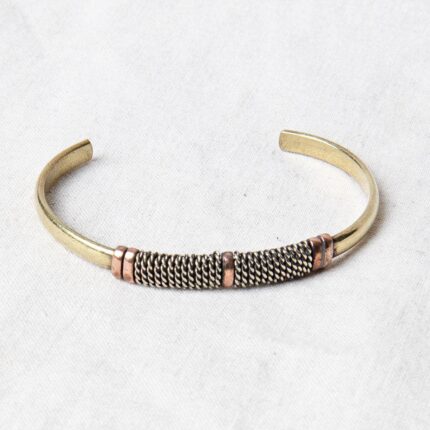

Tibetan Handcrafted Copper Bracelet
FAQ: ESFP Tarot Card
1. What tarot card is ESFP?
ESFP’s primary birth card is The Sun — the archetype of The Radiant whose unselfconscious present-moment warmth is the gift. The mapping aligns ESFP’s dominant Se (extraverted sensing) and auxiliary Fi with The Sun’s psychological lens of positive affect. ESFP’s growth card is The Fool, which represents the Ni-driven trajectory question that present-moment radiance eventually requires.
2. Why is The Sun the birth card for ESFP?
The pairing is direct — and we should be honest about that. ESFP’s dominant Se engages the present moment directly, in the body; auxiliary Fi supplies the authenticity check. The Sun’s child on the white horse, sunflowers turning, is the image for exactly this — unselfconscious present-moment presence. The work isn’t proving the pairing; it’s understanding the discipline underneath the radiance, and the shadow the sun casts.
3. What is the growth card for ESFP?
The Fool. The logic: where Se-Fi (dominant/auxiliary) lives in the present-moment body, Ni (inferior) eventually asks “where is this going, and what are these moments adding up to?” The Fool’s step off the cliff is the image for exactly this — the willingness to ask the trajectory question. The growth invitation surfaces when Sun radiance has over-matured into avoidance of the long arc.
4. What does reversed Sun mean for ESFP?
In an ESFP reading, reversed Sun isn’t a bad omen — it points to three specific patterns: Se-Te loop (performance mode without Fi check), “I’m just spontaneous” as trajectory-avoidance (Ni inferior bypass), and the performer’s disconnection (radiance hardened into “no one wants the un-radiant me”). The growth invitation is to notice whether the radiance is still serving the moment or substituting for the long-arc question.
5. What are the best crystals for ESFP?
Three crystals serve distinct ESFP functions: Citrine (overall companion, supporting Se’s present-moment radiance), Sunstone (upright ally, supporting Fi’s authentic confidence), and Cornaline (growth invitation, supporting Ni-driven trajectory). These are anchors for specific cognitive moves, not “lucky stones.”
6. How does the Eastern perspective view ESFP?
The Dzogchen tradition recognizes ESFP-style radiance as míng xìng, the natural luminosity of fully-present awareness — unguarded, unperformed presence. Taoism’s guāng ér bù yào, shine without dazzling describes the mature form: warmth that lets others shine too. The Chan principle dāngxià, this very moment is the ESFP’s home territory, with the Fool as the reminder that even present moments need a trajectory.
7. Is the ESFP tarot mapping official MBTI?
No. MBTI is a registered trademark of The Myers-Briggs Company, and this mapping is our independent editorial interpretation based on Jungian cognitive functions (Se/Fi/Te/Ni). It is not affiliated with, endorsed by, or sponsored by The Myers-Briggs Company, and does not represent official MBTI doctrine. The mapping is offered as a self-reflection framework, not a personality diagnosis.
Explore More
- Tarot card meanings: The Sun · The Fool
- Related Explorers types: ESTP · ISFP · ENFP (same Se/Fi axes / Explorers group)
- Crystal meanings: Citrine · Sunstone · Cornaline
- Find your own MBTI birth card: MBTI Tarot Tool
- All MBTI × Tarot articles: MBTI Tarot Hub
> Tarot birth cards and crystals are mirrors for self-reflection, not personality diagnoses or fixed forecasts. The cards name the shape of the patterns your cognitive wiring keeps returning to — what you do with that naming is your free will.