Best Heart Chakra Crystals: Stones for Balance, Energy & Mindful Rituals
Quick Answer: Best Crystals for the Heart Chakra
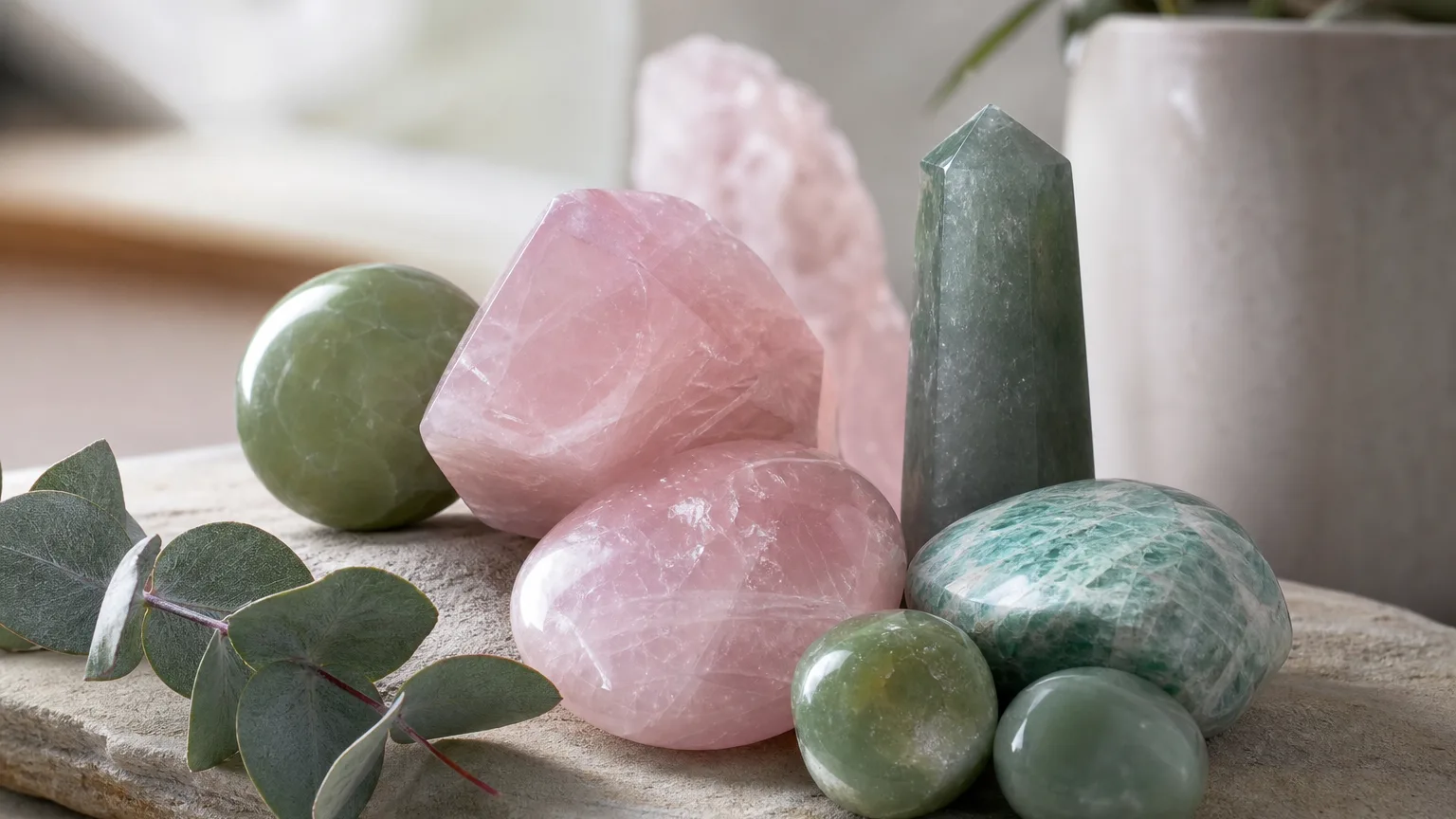
The best crystals for the Heart Chakra include Jade, Rose Quartz, Amazonite, traditionally used in mindfulness and spiritual practices. Crystal properties are complementary wellness tools, not medical treatments.
Understanding the Heart Chakra
The Heart Chakra, or Anahata in Sanskrit, sits at the center of the chest and acts as the bridge between the lower, grounding chakras and the upper, more expansive ones. It is the meeting point where instinct meets intention, where what we feel deep in the body rises into awareness. When people talk about an open heart, this is the energy center they are pointing to — the place that governs how we give and receive affection, how we hold boundaries, and how we stay kind to ourselves when life gets hard.
The color most often linked with Anahata is green, the hue of new growth and renewal, with pink appearing as its softer companion for matters of tenderness and self-love. Its element is Air — light, moving, expansive — which mirrors the way the heart wants to breathe freely rather than be held tight. Across traditions, from Indian yoga to Chinese five-element thought, the chest region has been treated as the seat of compassion and emotional flow, a place where grief, joy, longing, and gratitude all pass through.
In modern terms, the Heart Chakra offers a useful map for thinking about emotional wellbeing. Many people find that when they feel lonely, jealous, or stuck holding a grudge, the issue is less about willpower and more about an emotional center that has gone quiet or guarded. Working with Heart Chakra crystals is one gentle way to bring attention back to that center — a tactile reminder to soften, to breathe into the chest, and to treat oneself with the same care offered to a close friend.
Quick facts: Sanskrit Anahata · Position: Center of chest · Color: Green/Pink · Element: Air. Balanced: Compassion, healthy relationships, self-love. Out of balance: Loneliness, jealousy, holding grudges.
Not sure which chakra to focus on? Take the free Chakra Test ↗
12 Best Crystals for the Heart Chakra
Jade
Chakra: Heart
Color: Green, lavender, white, yellow, black
Element: Earth
Best for: Balance, Calm, Milestones
Best way to use: Wear as jewelry
Zodiac: Libra, Taurus, Virgo
Affirmation: I meet my life with steady, open-hearted balance.
Jade is a dense, tough stone — geologically a mix of jadeite or nephrite with a fibrous structure that has carved into ritual objects across Chinese, Mesoamerican, and Maori cultures for thousands of years. On the Heart Chakra page, its cool green body and soapy, smooth feel offer a tactile anchor when emotions run high, the kind of weight that quietly says, stay here. Spiritually, jade is traditionally associated with harmony, wise choices, and long-lived good fortune — kept close as a steadying presence during milestones and transitions. Psychologically, holding jade invites a slower breath and a reminder that steadiness, not intensity, is what carries love through the hard stretches.
Rose Quartz
Chakra: Heart
Color: Soft pink, rosy pink
Element: Earth
Best for: Self-love, Relationships, Grief
Best way to use: Wear as jewelry
Zodiac: Taurus, Libra, Scorpio
Affirmation: I am worthy of love, starting with my own.
Rose Quartz gets its soft pink tone from trace titanium and manganese set into a silicon dioxide (SiO₂) crystal, and its color can fade under long sun exposure — a fitting fragility for a stone so often linked with tenderness. From a Heart Chakra view, its rosy hue carries the psychological pull of warmth and care, the color of an open hand rather than a clenched fist. In spiritual practice it is widely treated as the classic stone of self-love and gentle emotional release, used in rituals for grief, new love, and reconciliation. Held against the chest during quiet reflection, it offers a simple self-care cue: soften the shoulders, breathe, and treat yourself first as someone worth loving.
Read full Rose Quartz meaning →
Amazonite
Chakra: Heart, Throat
Color: Blue-green, turquoise-green
Element: Water
Best for: Communication, Calm, Honesty
Best way to use: Wear as jewelry
Zodiac: Virgo, Aquarius
Affirmation: I speak my truth with a calm, open heart.
Amazonite is a feldspar mineral whose blue-green to turquoise-green color comes from trace lead and water in its crystal structure, giving it a cool, watery look that sits between Heart and Throat. Because it bridges two energy centers, it is often used when the heart’s feelings need safe passage into words — honest communication that stays kind. Spiritually it is traditionally associated with courage in expression, soothing overthinking, and aligning what you feel with what you say. Worn as a pendant near the collarbone, it works as a daily prompt to pause before speaking and let the message come from the chest rather than the reactive mind.
Aventurine
Chakra: Heart
Color: Green (most common), blue, red, brown
Element: Earth
Best for: New beginnings, Optimism, Calm
Best way to use: Wear as jewelry
Zodiac: Aries, Leo
Affirmation: I welcome new beginnings with a hopeful heart.
Aventurine is a quartz variety (SiO₂) flecked with tiny platy inclusions of fuchsite or mica that catch the light — the shimmering effect geologists call aventurescence, which gives green aventurine its soft, glittering depth. The green carries the calm, regenerative pull of a forest after rain, settling the chest without dulling the spirits. In spiritual practice aventurine is often used as a stone of optimism and fresh starts, a gentle companion for those stepping into something new after a setback. Held during a few slow breaths, it works as a self-care reminder that hope is a quiet, repeatable choice — not a one-time leap.
Read full Aventurine meaning →
Ruby
Chakra: Root, Heart
Color: Deep red (“pigeon blood” is the classic)
Element: Fire
Best for: Bravery, Vitality, Leadership
Best way to use: Wear as jewelry
Zodiac: Cancer, Leo
Affirmation: I love with full courage and full presence.
Ruby is the red variety of corundum (aluminium oxide), colored by trace chromium — the same element that, under ultraviolet light, gives it a fluorescent glow that seems to come from within. Because it links Root and Heart, ruby brings warmth and courage up from the base and lets it move through the chest, which is why it has long been tied to brave, devoted love rather than soft sentiment. Spiritually it is traditionally associated with vitality, leadership, and protecting what matters most. On a self-care level, wearing ruby can serve as a quiet prompt to stand behind the heart’s commitments and to love without flinching.
Bloodstone
Chakra: Root, Sacral, Heart
Color: Dark green with red spots
Element: Earth, Fire
Best for: Courage, Vitality, Grounding
Best way to use: Wear as jewelry
Zodiac: Aries, Pisces
Affirmation: I face difficulty with steady courage and a clear heart.
Bloodstone, or heliotrope, is chalcedony — a microcrystalline form of SiO₂ — flecked with red iron oxide spots that gave the stone its name and its long reputation as a talisman for warriors. Its dark green body with red splashes makes it a grounding Heart stone, the kind you reach for when compassion needs a backbone. Spiritually it is traditionally associated with courage, physical vitality, and standing firm under pressure. Kept in a pocket and turned in the hand during a tense moment, it works as a tactile anchor that reminds the holder to stay rooted while keeping the heart open.
Read full Bloodstone meaning →
Lepidolite
Chakra: Heart, Third Eye, Crown
Color: Lavender, Purple
Element: Air
Best for: Calm, Stress relief, Transitions
Best way to use: Wear as jewelry
Zodiac: Libra, Aquarius
Affirmation: I move through change with a calm, trusting heart.
Lepidolite is a mica rich in lithium — the same element used in mood-stabilising medicine — which gives its lavender-to-purple flakes their soft, scaly sheen and their reputation as a calming stone. On the Heart Chakra page it speaks to the overactive, anxious heart that struggles to rest, with a color psychology that leans toward quiet and gentleness. Spiritually it is often used during transitions, grief, and sleepless stretches, a soothing companion for the upper energy centers. Held against the chest during evening wind-down, it serves as a self-care prompt to set the day down and let the heart soften before sleep.
Read full Lepidolite meaning →
Malachite
Chakra: Heart, Solar Plexus
Color: Green (banded)
Element: Fire
Best for: Personal growth, Emotional release, Transitions
Best way to use: Wear as jewelry
Zodiac: Scorpio, Capricorn
Affirmation: I release the old and let my heart grow forward.
Malachite is a copper carbonate mineral whose deep green bands come from changing copper levels as it forms, and it is notably soft — keep it dry and away from salt water, since copper salts can be irritant. Its rich, layered green makes it one of the most visually intense Heart stones, the color of deep emotional work rather than surface calm. Spiritually it is traditionally associated with transformation, drawing out stuck feelings and protective shadow-work. Used as a focal point for journaling or a long breath, it works as a prompt to let old patterns surface and move on, approached gently and with care.
Larimar
Chakra: Throat, Heart
Color: Blue, White
Element: Water
Best for: Calm, Emotional balance, Communication
Best way to use: Wear as jewelry
Zodiac: Leo, Pisces
Affirmation: I let calm waters move through my heart and voice.
Larimar is a rare blue variety of pectolite found only in the Dominican Republic, colored by copper inclusions into patterns that often look like sunlight on Caribbean water. As a stone that bridges Throat and Heart, it carries the cool blue of clear communication paired with emotional ease — helpful when the heart’s feelings have been dammed up behind silence. Spiritually it is traditionally associated with calm, feminine energy, and the steady release of held tension. Worn near the collarbone or held during slow breathing, it serves as a gentle cue to soften the chest and let what has been unsaid finally find its flow.
Rhodonite
Chakra: Heart
Color: Pink-red with black veining
Element: Earth
Best for: Forgiveness, Heart work, Self-worth
Best way to use: Carry or hold in meditation
Zodiac: Taurus
Affirmation: I forgive and keep my heart open to love.
Rhodonite is a manganese inosilicate whose pink body is threaded with black manganese oxide veins, giving it a striking two-tone look — soft rose crossed by dark threads, much like a healing wound. That visual makes it a Heart stone specifically for forgiveness and emotional repair, where tenderness and the harder work of boundaries meet. Spiritually it is traditionally associated with healing after betrayal, rebuilding self-worth, and releasing lingering resentment. Held in the palm during reflection, it works as a tactile prompt that forgiveness is for the holder’s own heart first — a release, not an excuse.
abalone-shell
Chakra: Throat, Heart, Third Eye
Color: Iridescent blue, green, violet
Element: Water
Best for: Calming, Emotional balance, Ocean connection
Best way to use: Wear as jewelry
Zodiac: Aquarius, Pisces, Cancer
Affirmation: I move with the calm rhythm of the sea.
Abalone shell is the iridescent inner lining of a marine mollusk, built from layered nacre that bends light into shifting blues, greens, and violets — the same structural color that gives pearls their glow. As an organic, ocean-born material it carries a watery, flowing quality across Heart and Throat, useful for smoothing choppy emotions and easing tension. Spiritually it is traditionally associated with emotional balance, calm communication, and a felt connection to the sea and its rhythms. Held or worn close to the chest, it offers a self-care cue to breathe with the slow steadiness of waves rather than against them.
Read full abalone-shell meaning →
adamite
Chakra: Solar Plexus, Heart
Color: Yellow-green, yellow, white, pink
Element: Fire
Best for: Mood lift, Creative work, Display
Best way to use: Place in your space
Zodiac: Leo
Affirmation: I let warmth and color lift my heart.
Adamite is a zinc arsenate mineral that forms bright yellow-green to yellow crystals, often glowing strong green under ultraviolet light thanks to trace activators. Its cheerful, sunny color places it between Solar Plexus and Heart, useful when the heart needs a gentle lift rather than deep emotional work. Spiritually it is often used to brighten low moods, spark creative energy, and encourage a lighter outlook. Placed on a desk or shelf where it catches the eye, it works as a small visual prompt to pause, soften the chest, and remember that brightness is allowed back in after a hard stretch.
How to Choose by Your Heart Chakra Need
Not every Heart Chakra crystal does the same job. Some open, some steady, some mend. Match the stone to what your heart is actually asking for.
| Need | Best Crystals | Why |
|---|---|---|
| Self-love and tenderness | Rose Quartz, Jade | Soft pink and steady green tones traditionally linked with gentleness and self-worth. |
| Healing after heartbreak | Rhodonite, Malachite, Larimar | Often used for forgiveness, releasing old patterns, and soothing held grief. |
| Speaking feelings honestly | Amazonite, Larimar | Both bridge Heart and Throat, supporting calm, kind expression. |
| Courage to love and act | Ruby, Bloodstone | Warm and grounding stones traditionally associated with bravery and vitality. |
| Calming an overactive heart | Lepidolite, Aventurine | Lithium-rich lepidolite and shimmering aventurine are often used to ease worry and steady the mood. |
| A gentle mood lift | Adamite, Abalone Shell | Bright yellow-green adamite and iridescent abalone bring lightness and ocean calm. |
How to Use Heart Chakra Crystals
The Heart Chakra sits at the center of the chest, so most ways of working with these stones bring attention back to that spot. There is no single correct method — choose what fits your day.
- Wear as jewelry: A pendant or necklace resting near the sternum keeps a Heart stone close to its corresponding area all day. Rose Quartz, Jade, and Amazonite are popular for this.
- Meditate with placement: Lie down and place the crystal flat on the center of your chest, just above the sternum. Breathe slowly into that spot for five to ten minutes. Rhodonite, Lepidolite, and Malachite work well here.
- Carry or hold: A tumbled stone in a pocket or palm gives a tactile reminder to soften the shoulders and breathe. Bloodstone and Aventurine suit this everyday use.
- Place in your space: Set Adamite, Larimar, or Abalone Shell on a bedside table or desk where the eye lands often, as a gentle visual prompt throughout the day.
Where to place on the body: The Heart Chakra is located at the center of the chest, around the sternum and the physical heart area. For placement during meditation, lay the stone flat on the upper chest rather than the throat or lower ribs.
Not sure which chakra to focus on? Take the free Chakra Test ↗
Beyond Crystals: Other Ways to Balance the Heart
Crystals are one gentle support, not the whole picture. The Heart Chakra responds well to simple, repeatable practices that bring the chest open and the attention soft. A few traditional and modern approaches pair well with the stones above:
- Loving-kindness meditation: A few minutes silently repeating wishes of wellbeing — for yourself, then others — is a classic Heart Chakra practice. Try it with Rose Quartz resting on the chest.
- Chest-opening yoga: Gentle poses like a supported heart-opener with a bolster, or a simple cobra, physically expand the front body and can shift a guarded posture.
- Rose oil and scent: A drop of rose essential oil on the wrists is a long-standing self-care ritual tied to the heart. Scent is a fast, grounded way to cue the body toward softness.
- Gratitude practice: Writing three specific things you are grateful for each evening is a simple, well-documented way to tilt attention toward what is good.
- Green foods: Leafy greens, matcha, avocado, and herbs bring the color of the Heart Chakra onto the plate — a small daily reminder that nourishment and care go together.
FAQ
Where do I place a Heart Chakra crystal during meditation?
Lay the stone flat on the center of your chest, around the sternum and the area of the physical heart. This is the traditional location for the Heart Chakra. Breathe slowly into that spot for five to ten minutes.
How do I cleanse Heart Chakra crystals?
Rinse harder stones like Rose Quartz, Jade, and Aventurine under cool running water and dry them gently. Keep soft or water-sensitive stones like Malachite, Selenite, and Lepidolite dry — use smoke, sound, or moonlight instead. Avoid long sun exposure for Rose Quartz and Amethyst, which can fade.
Which crystal is best for self-love?
Rose Quartz is the stone most often used for self-love and tenderness. Many people also choose Jade for steady self-worth or Rhodonite when self-love needs to follow forgiveness.
Can Heart Chakra crystals help after a breakup?
Crystals are used as gentle emotional support, not as a treatment. Rose Quartz, Rhodonite, and Larimar are commonly turned to during grief and emotional recovery, often paired with self-care, time, and supportive people.
Are the healing properties of Heart Chakra crystals scientifically proven?
No. The associations between specific stones and the Heart Chakra come from tradition and personal practice, not clinical evidence. Crystals are best understood as complementary tools for mindfulness and self-care, not as medical treatments for physical or mental health conditions.
Can I wear more than one Heart Chakra crystal at once?
Yes. Many people combine stones, such as Rose Quartz for self-love with Amazonite for honest expression. Choose combinations that match your need rather than wearing everything at once.
How often should I work with Heart Chakra crystals?
There is no set schedule. A short daily practice — a pendant worn through the day or a five-minute meditation in the evening — is more useful than a long session once a month. Consistency and intention matter more than duration.